
Unlike this deleted scene in The Godfather, I don’t think Blade Runner suffers for the removal of these scenes. If anything, I think scenes like Dave Holden being in the hospital would have detracted from the movie. Still, it is interesting to see these scenes, especially if you are a fan of the film, as I am.
Tag: bladerunner
Thoughts on the baseline scene in BladeRunner 2049

I want to point out this fantastic essay on the baseline scene in Blade Runner 2049. I loved reading it because I learned some fascinating background about the film and I reexamined both films in a fresh light.
For instance, watching the sequel I didn’t think much about the lack of Voight-Kampff devices. Those machines are essential in the first Blade Runner. But in 2049 they are obsolete of course because replicants have advanced so much since then and there are different ways of identifying them. In 2049 the challenge is not identifying replicants: the challenge is keeping them from becoming something other than replicants. That’s what the machine above comes into play. I hadn’t thought of that until I read the essay.
My only insight into the machine above came from a recent CT scan I had. Lying on the bed below, I looked up and saw a device similar to the machine above! I was somewhat shocked. It’s not quite identical, but I would not be surprised if the set designers got the idea for it from the Siemens machine below. After all, both are providing insights into the head in front of them.

If you are a fan of Blade Runner like I am, read the essay above. You’ll be glad you did.
Blade Runner is 40!

My favorite film, Blade Runner, is 40! You’ll want to scan this good piece in Esquire on why it is “is still the greatest Sci-Fi of all-time”. Need more Blade Runner essays? Here’s this piece on the eyes and how they are a recurrent thematic element in the films of Blade Runner… worth a look. (All puns intended.)
For fans like me, check out the Walking Tour of the Blade Runner Locations in LA. Plenty to see there. 🙂
Where to buy neon signs from Blade Runner
This is pretty amazing. This Etsy account YesteryearPropStore seems to be selling many of the neon signs found in Blade Runner.
If I ran an establishment, I would love to have this one out front:

A fascinating side by side comparison of Blade Runner 2049 with the original
Can be seen in this video:
I knew there were many visual parallels, but I didn’t catch just how many there were until I watched that video.
Found via this link: Take a closer look at how Blade Runner 2049 subtly updated its predecessor
Cinephilia & Beyond on the Blade Runner Souvenir Magazine

A visit to this page is a must for Blade Runner fans: Blade Runner Souvenir Magazine: A Fascinating Blast from the Past from the Heart of Ridley Scott’s Masterpiece • Cinephilia & Beyond.
Pull quote:
The Official Collector’s Edition Blade Runner Souvenir Magazine is a wonderful source of information, abounding in great photos and articles; a genuine treat both for hardcore fans of the film and all the newbies who just got introduced to the world of Rick Deckard. There are a lot of fascinating stuff here, but we’re especially excited about the interviews with Philip K. Dick, Ridley Scott, Harrison Ford and Douglas Trumbull. We’re incredibly thankful to webmaster Netrunner from brmovie.com, who put a lot of effort into digitalizing the magazine and even contacted Mr. Friedman to get his blessing for the endeavor. While Netrunner shaped the material by separating photos from the accompanying text, we chose to offer you a .cbr file of greater resolution and quality, so you can browse the content more easily. If we may, we’d like to suggest using a little program called ComicRack for checking out this priceless blast from the past. Enjoy the read!
An odd thing happened to me on seeing Blade Runner 2049 for the third time
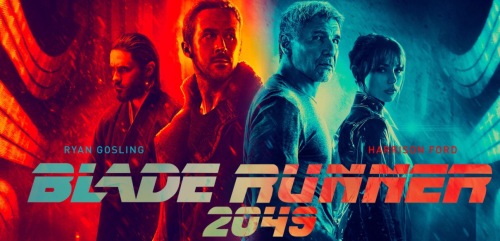 The first time I saw Blade Runner 2049, I found myself continually comparing it to the first Blade Runner. I loved it but I could not think of it without thinking about the first film.
The second time I saw it, I watched it for the details. It is an incredibly detailed film, and I found myself watching it for the all fine workmanship in the film (like the Japanese characters on the buttons of the jukebox that you barely see).
The third time I saw it, I saw the film in itself. That was the odd thing. It took me three tries to see the film as a narrative about these mostly new characters. I saw the film the way I would normally see any film that’s new. The other odd thing was that the film seemed to move faster the third time around than the first time. I thought it was slow the first time around and it was compared to the original film. But without that context and having absorbed all the details, I found the storytelling tight and essential.
I plan to see it many times. I think it is a masterpiece and every viewing yields something I missed in previous viewings. You may not want to watch it several times but I recommend you watch it more than once. You will be rewarded the second (or third) time you see it.
What people get wrong about Blade Runner (or Blade Runner as film noir)
The original Blade Runner is a film about the past, present and future. The future part is obvious: replicants, flying cars, off world colonies. It also remains fixed in the present of its time, the early 1980s, with the film’s characters wearing neck ties, reading newspapers, smoking indoors, talking on payphones, watching small screen TVs, and dressing like punk rockers. The past part may not seem so obvious, but it is essential to understanding the film.
The past of Blade Runner is film noir of the mid 20th century. Not just in the way it looks, though the look of film noir is spread throughout the film: the clothes Rachel wears, the office that Bryant works in, the style of clothes and music in Taffy Lewis’s club, the constant smoking, the hats of Gaff, the trench coat of Batty. It is noir in its morality and outlook. The world is a bleak place, the characters are not who they appear to be, and the morality of everyone is compromised and complicated.
I thought about this again when I read this piece, There’s Something About “Blade Runner” | Balder and Dash | Roger Ebert, as well as reading comments about Blade Runner 2049. In this piece, the author tries to establish who the good guys are and who the bad guys are. Assigning who the good and bad people are in film noir is pointless. No one is entirely good, and more often than not, everyone is some degree of bad. Film noir characters have to make difficult choices in a bleak environment where there may be no happy outcomes.
Likewise, some people are critical of Blade Runner 2049 and the role of women in this future. The assumption should be that in the future there should be progress and women should have better roles. But the future of Blade Runner is not one of progress. It is a future where despite technological advances there is no progress. It may not be the future you want, any more than the worlds of film noir are not ones you want to inhabit. It is the future the filmmakers want to explore, and get you to think about.
More on film noir here and here. A great example of what Blade Runner might look like cast as just a film noir film is in that clip above. While Blade Runner is gorgeous in colour, I’d love to see a black and white (sepia and white?) version of it too.
Three smart analyses (and one not so smart) on Blade Runner 2049
/cdn.vox-cdn.com/uploads/chorus_asset/file/9376599/blade2.png)
Here are three smart pieces on the latest Blade Runner film. I’ll touch on the last one separately.
- Life After Empathy: On Philip K. Dick and ‘Blade Runner 2049’ – Paris Review
- Inside the kaleidoscope mirrored heart of Blade Runner 2049.
- Blade Runner 2049: Identity, humanity and discrimination | Pursuit by The University of Melbourne
- Review: Blade Runner 2049 can’t replicate its predecessor’s mastery – Vox
Each of the first three pieces delve into themes and ideas and layers of the film, and among other things, what I took away from them is that the sequel to Blade Runner is going to be studied and discussed for as long as the original film was. I highly recommend these pieces.
The not so smart analysis comes from Vox. It makes the same mistake that others make, namely, in criticizing the film for being too slow and unlike the original Blade Runner. That is ironic, because Blade Runner 2049 seems to be intent on not making the same mistake as the original Blade Runner of shortening and dumbing down the film to make it more appealing. It took three tries until Ridley Scott could release the Blade Runner he wanted (the Final Cut version).
If you have seen the film, read the first three pieces (or any one of them) and then read the Vox piece, and you can see how they miss out on the richness and depth of the film.
I have seen Blade Runner 2049 twice now, and I understand the difficulty people might have with it. It is long. It doesn’t strive to entertain. It swerves away from the film noir genre that Scott stuck to. For all of his artistry, Scott is a traditional storyteller and filmmaker. He makes Hollywood films. Villeneuve strikes me more of an art film maker. He still works within the Hollywood system, but he is striving for something more. That something more is captured here in Blade Runner 2049.
Are you a replicant?
In honour of Blade Runner 2049 coming out today, here’s your chance to see if you are a replicant with this:
You say: I don’t need to take the test because I’m not a replicant. Some replicants believe that. 🙂 Better take the test.
Thoughts on the new Blade Runner 2049 trailer
Well, here it is!
Some initial thoughts:
- There’s many echoes visually of the first Blade Runner. In this trailer, there is the close up of the eye and the fight that goes crashing through the wall. Then there’s the cars, the cityscape and even the clothing that K (Ryan Gosling) wears resembles the first film. (Also the woman with K is wearing a transparent yellow raincoat similar to Zhora in the first Blade Runner. She seems to be a replicant.)
- Other echoes are the scene where K is walking with someone past suspended bodies. It looks like Deckard entering the Tyrell Corporation in the first film.
- Speaking of that scene, the suspended body that resembles Dave Bautista has a label of Nexus 08 prototype 01! So clearly the replicants have gotten better. The question is: how much better, and in which ways?
- There seems to be a number of locations for the film besides Los Angeles. The one Bautista’s character is in looks like Russia. (Also, there is a date on the tree that is tied up: is it the incept date of the tree? Or some other significant date?)
- Speaking of locations, where is Deckard living? It looks deserted, which makes me think it is on Earth. Also, there are Korean symbols on the building he is in.
- The sequencing of that scene where K meets Deckard is interesting. It looks like K mets Deckard, who tries to escape to his car, which get blown up. In other scenes he is fleeing with his dog when K bursts through a wall and saves him. After which it seems like K asks him questions.
- That K can burst through a marble wall makes me think he is a replicant.(Well that, and a number of other things)
- There are two scenes with insects: there are slugs at Bautista’s place and a fly at Deckard’s that lands on K’s hand. Are they real, or replicants too? The fly could be a drone that would tell Deckard someone is coming.
- There is a walled off city at the beginning of the clip. I wonder if that is breached somehow. It makes me think that that is what happens later when the water is flooding.
Lots to think about and get excited about too! Looking forward to more trailers soon! In the meantime, what follows is a collection of the previous trailers. Enjoy!
P.S. Oh, I missed this featurette before. Need to add it, too!
For Fans of Blade Runner and Typography

This article will surprise you if you are fan of Blade Runner: Blade Runner | Typeset In The Future. It speaks to a level of detail in the film that I hadn’t appreciated. Not just the typography, but a number of other aspects, too. I was surprised, since I had seen the film dozens of times and read countless articles on it.
Highly recommended for fans of type and especially fans of the film.
Blade Runner 2 tidbits!
Over at the Guardian is a piece revealing some details from the new Blade Runner 2 movie. It still has a way to go before showing up in theatres, but if you are a BR fan like me, you must see this: Ridley Scott reveals details of opening scene of Blade Runner sequel | Film | The Guardian
Elysium is like Blade Runner (and other reasons I really liked it)
If you were to read the reviews of Elysium in places like Rotten Tomatoes, you might think it was going to be mediocre at best. Instead, I think it is brilliant and will be appreciated more as time goes by. Here’s some random notes jotted down on why I liked it very much.
It follows the same pattern as Blade Runner: the longer I watched Elysium, the more it reminded me of Blade Runner. It is a immersive, dystopian world centered in Los Angeles. Only the poor live on earth, while the better off live off world, tended to by robots. In Blade Runner, the lowest form of life (the replicants) are in desperate need of expert attention to survive. In Elysium, it is the poor who need medical attention to survive. While they are trying to get help, they are being chased by killers trying to stop them.
While there are similarities in the story lines, there are also similarities in the reimagining of Los Angeles. Ridley Scott imagined LA as a dystopian mixture of punk club and Japan, all cast in darkness. Blomkamp imagines it as a sunbaked shantytown with no end. Both are bleak places, and both represent a vision of the times they are in even as they are cast into the future.
Like Scott, Blomkamp has a great eye for detail. In particular, with the wealthy. There are all sorts of details, from the Versace healing beds, to the watch Jodie Foster wears to the luxury vehicle that Matt Damon’s character attacks midway through the film. The wealthy live in neat, opulent spaces while the property of the poor is caked with dirt, dark, piled up and messy, and Blomkamp does a great job of setting the stage with a high level of detail.
Overtime, the influence of Blade Runner has grown and grown, as has it’s stature as a film. I predict that as Blomkamp makes more films, he has a chance to have his films seen the same way. Elysium may not gain the following that Blade Runner has, but over time, I believe it will be appreciated more than it currently is.
It’s an big budget action film: District 9 was impressive in that it managed to be embody many genres, from Science Fiction, documentary, horror, buddy film, action film, with lots of politics and even romance throughout. (Watch it again: it is dazzling to see it all come together.) Elysium is a big budget action film, and while that gives Blomkamp freedom in some ways, it restricts him in others. I think some viewers were let down by those restrictions and were expecting something closer to District 9. I was happy that he got to make another film like this that had a good chance of attracting a similar audience. Why?
It’s agitprop: I think it is amazing that Blomkamp got to make an agitprop film. A big budget agitprop film, with big international stars. Underlying all of the action and drama of the film is the message that immigration and health care restrictions are bad, and that the wealthy need to have a responsibility to share and help the less fortunate, not shun and ostracize them. To emphasize this, Matt Damon’s character is an ex thief and working class, and the woman he loves is a nurse, while his chief adversaries are cut throat politicians, CEOs, and the henchmen that do the ugly work on their behalf.
It’s not Costa-Gavras, but in this age when most big budget American films are based on cartoon characters, it is both extraordinary and influential. Maybe not influential for viewers who think about these ideas all the time, but for many people, this will have more influence on them than any serious documentary (which they would never go to) would have. Agitprop needs to go where people live, speak to them in their language: not have them come to it, speaking down to them.
It is the present dressed up as the future: watching Elysium, I was struck by how close this future is. LA is not a shantytown, but shantytowns exist everywhere. There is no city in space, but in much of the world there are resort hotels and resort cruise ships which may as well be in space for the people that live there. There are no flying cars or drones yet, but the drones are practically here and autonomous, if not flying, cars are just a few years away. It is a dystopia, but not a far off one. As well, immigration and health care are big topics of discussion in the United States of America right now: that they are a big part of Elysium can be no accident. Like much good SF, the future is near and drawn from the Now.
It has flaws: overlook them. There are a fair number of flaws with Elysium, but I felt that was because Blomkamp was taking current reality and moving it into the future, flaws and all. Or he was focused on illustrating a point. All SF has flaws — anyone who ever watched a SF film with time travel will tell you that. And to insert ideas into a fast paced action film risks introducing more flaws. But to write off the film for those flaws is to miss out on a lot.
It nicely pays homage to other SF, including District 9, Wall-E, 2001: A Space Odyssey, Blade Runner, and no doubt more. SF fans can enjoy watching the film just for references.
The Making of Blade Runner
Open Culture has a great clip that was used to promote the movie in the early 1980s before it was released as a feature film. Open Culture also has some background on that clip that is well worth the read. Meanwhile, here’s the clip, a must see for Blade Runner fans like myself
One thing I thought watching it is how it also the end of an era. While I am guessing some companies still use matte and large scale models like they did for Blade Runner, I suspect most now use computer generated images (CGI). Blade Runner was likely one of the last of the big SF films to use this for its special effects.
If Scott does make a Blade Runner II, I am willing to bet it will be with CGI, not what is used here.
From Inception back to Blade Runner: Final Cut (Trailer)
If you have seen and loved “Inception”, you might want to go back and see Blade Runner: Final Cut.
In many ways, there is not much difference between the “Director’s Cut” and the “Final Cut”. Ridley Scott lengths some scenes slightly, and there are some small additional scenes (like the strippers in the bar). As well, he cleaned up some things (e.g. visible wires). I recommend the Final Cut, especially if you have only seen the original version of the film with the voiceovers.
Here’s the trailer:
Blade Runner: Final Cut now playing in Toronto at the Regent Theatre.

Blade Runner: Final Cut is playing at the Regent Theatre in Toronto.
Blade Runner was released 25 years ago and while Ridley Scott made strong improvements to the film when he released The Director’s Cut of the film, the Final Cut is even better. Scott has the time and the luxury of telling the story without feeling the need to tighten it up and quicken the pace. That’s just one reason why you should see it again.
Not only that, but as they say at blogto.com, you should go to the Regent and take advantage of
the opportunity to see one of the great visual masterpieces of the cinema on an actual cinema screen, digitally projected no less, is too tantalizing to ignore. Scott’s restoration project has included digital fixes and cleanups
Plus, it is just fun to go the Regent Theatre! It’s a great old theatre on Mt. Pleasant just south of Eglinton. Go before the end of November!
 Smart People I Know