
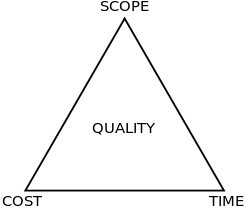
Everyone who works should be aware of the iron triangle of project management. In essence, it says:
- The quality of work is constrained by the project’s budget, deadlines and scope (features).
- The project manager can trade between constraints.
- Changes in one constraint necessitate changes in others to compensate or quality will suffer.
Another way of looking at it is with this formula:
- Quality = (Time X Resources) / Scope
If the scope increases without increasing either the time it takes to get done or the resources to get it done, then quality will decrease.
I think about the iron triangle a lot as a consultant. Clients often want to fix the values for time and resources while increasing the scope and not decreasing the quality. Sometimes consultants will want to increase the time and resources on a project without increasing scope in order to provide higher quality. It’s a balancing act, keeping all four measures aligned such that everyone is happy.
Anyone who provides a product or service to a client or customer should be aware of the iron triangle. Work makes more sense once you are aware of it.
 Smart People I Know