On the disturbing subject matter of Francis Bacon’s paintings


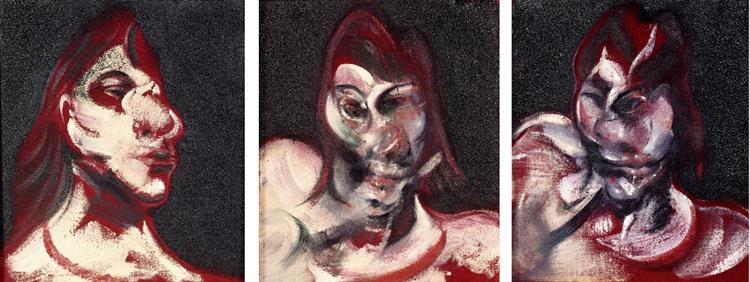
People are often struck by the imagery in Francis Bacon’s paintings. What could make someone paint such horrible things, I often see people ask.

The answer to their question is simple and can be found here at this page on the website for the Hugh Lane Gallery:

During the Second World War he volunteered to serve in the Civil Defence Corps, where his work involved black-out enforcement as well as assisting with first-aid and rescue at bomb sites. Responding to some people’s reaction to his work being disturbing, Bacon remarked that his work was no more disturbing than life itself.

No doubt being a first responder to victims of bomb blasts would have left Bacon with terrible images searing his brain. No wonder he painted the way he did.

P.S. I thought of this reading some of the posts that the web site Open Culture has on Bacon, here and here and here.

What will get lost if activists continue to vandalize paintings

Untitled

The above is a painting by Francis Bacon that I saw in 2022 in London at the Royal Academy. I am a huge fan of Bacon, and this show not only allowed me to see many of the works of this great artist, but it also allowed me to get up close and examine the paintings, like this:

Untitled

If you click on this link you can do so yourself.

I love being able to do that. You can see the brush strokes, the markings on the surface. You can better understand how the painting was made. You gain a different appreciation of the work up close.

That’s why it continues to bother me when people vandalize these paintings. I fear exhibits of paintings could end up looking like this:

Mona Lisa behind glass

Sure it’s fine if you want to send a selfie to your friends, but as far as looking at the painting, you might as well resort to a book.

The next time you go and look at art, look at it from all angles and all distances. You will gain an appreciation of it you won’t get any other way. And do it soon: someday you might not be able to.

(Top two flickr images by me. The bottom one from Valerie.)

What do tractors and leaves have in common? (What I find interesting in art, March 2025 edition)

What do tractors and leaves have in common? They are featured in the work of the artists I’ve been reading about recently.

The tractor is just one of the works I came across while reading about artist of Charles Ray.  The New York Times has two pieces on him  here and here, and this here piece (where the above image originates) is also good.

We lost some fine artists in the last while. The iconoclast John Wesley has died. (More on him, here.)  Ben Vautier of Fluxus has also passed on. As has noteworthy black Broadway producer, Ron Simons. I was struck by Simons story, how he skipped the arts as a young man to go into IT, only to return to theatre at a later again. It was inspiring.

Relatedly, here is a good piece on how artists deal with grief.

In happier news, here’s a good piece on Vivian Meyer, who has a show out on her work. Likewise  Mary Cassatt. Go see them if you can.

This is a fascinating piece here on Brecht’s collages, which feature Hitler among other things. This is a very insider-y piece on Francis Bacon’s contempt for the Marlborough Gallery. This is a good study on the intersection of art and luxury fashion.

Finally, I recommend you check out Susanna Bauer’s work (seen below). She does wonderous things with leaves and nature.