
For people who are used to winter, snow can seem a nuisance at the very least. But as these people show in this video, YouTube – Snow is a miracle!, it can be anything but:
Author: smartpeopleiknow
Installing Ubuntu on my Netbook
What propelled me to do this was simple: my HP Mini book had a “disk” failure and the operating system was unavailable. The problem with the HP netbook is that the restore CDs are …CDs! And the netbook has no CD of course. I tried various ways to get them onto a USB, but without much success.
Eventually this is what I did. I went here http://www.ubuntu.com/netbook and after being convinced this was a good idea, I followed this: http://www.ubuntu.com/netbook/get-ubuntu/download. It worked mostly well, save for my wireless. I needed to connect directly to the Internet via a cable, then install network drivers (the proprietary wireless broadcom driver. It’s the STA, not the b43). Then I needed to shutdown and restart the netbook and the wireless came on. I had to play around with it, but eventually I got it to work. That part required some patience.
Ubuntu gets installed on a USB pen drive, so you need one of those. It also uses some software called the Universal-USB-Installer. That worked well for me. However I found another software package, UNetbootin, that worked well for some other distros of Linux like Puppy. Both are worth a look.
I never went back to Windows XP. By the way, I had used a software package called MagicISO to turn my HP CDs into ISO files to burn to a USB drive. However, I was not able to boot from those USB drives this way: not sure why. Nonetheless, while I like XP, I am happy to move on.
The Death of the Music Industry?
From the CHART OF THE DAY: The Death Of The Music Industry, comes this:

I think there could be an argument made that the music industry overcharged in the prime of the CD era, and what could be seen as “death” is really the effect of competition in the form of digital and other sources. I am sure that the music industry would blame it all on free downloads, but I think there is more to it than that. For example, I’d like to add a demographic argument as well. I believe part of the decline is due to an aging population that doesn’t buy music as often.
Regardless, it is a dramatic drop.
Zoho Docs to Blog
body{background-color:#ffffff;direction:ltr;font-family:verdana;font-size:10pt;line-height:1.2;padding-top:0.5in;padding-right:1in;padding-bottom:0.5in;padding-left:1in;border:0px;margin:0in;}table { font-size: 10pt;}
Zoho is a great service, and I like their Docs service in particular. I see they have a new feature whereby you can post to a blog. I am going to test this out here.
Want to know more? Goto http://zoho.com
Technorati Tags
Good intentions resulting in bad design: A Coat to Help Detroit’s Homeless

I came across this on the GOOD web site: A Coat to Help Detroit’s Homeless – Design – GOOD. Here’s what they say:
Detroit has counted over 18,000 homeless people in its population… After spending months talking to people on the city’s streets, design student Veronika Scott envisioned a way she could help, by designing a coat which could allow homeless people to stay warm, but also preserve their dignity. She designed what’s essentially a wearable sleeping bag, which she named the Elements S[urvival] coat. Scott, who is a student at the Center for Creative Studies, has chronicled her work at a blog called The Empowerment Plan, where she goes into great detail about the coat’s development. She shelled out $2,000 of her own money to construct several prototypes made from Tyvek, the insulating wrap you see gracing new construction.
I admire much about this, but when I think of it, I ask myself: would I wear this coat, and the answer is no. It may keep the wearer warm, but it is like wearing a sandwich board that says I am poor and homeless. It’s not a coat I would want to wear, and I would be surprised if there are alot of people wearing this design of coat. Now if you asked me what kind of coat I would want to wear, poor or not, I’d say I want to wear one that keeps me warm and is the same if not better than most others. Given that, I would recommend designers design coats that way. Focus on designing low cost coats that are warm and don’t stand out, or stand out in a positive way. People may not be immediately be struck by the design of it, but people who appreciate good design will appreciate what you did. And people who are desperate for a warm coat will appreciate that, too.
You can read more about it here. I like what she is getting at lately in the blog, namely it is not about the coat but more about empowering individuals. I think that’s smart, and much more important. So kudos to her for that. As for the coat….let’s see.
Mood indigo: style and the importance of details
I like this image alot, from of course, The Sartorialist (On the Street….Mercer Street, New York)

There’s nothing extravagant in the way this man dresses, but there are lots of little things that add up to a great deal. Many of the items here are conservative or toned down, but the overall impression his look gives is anything but boring. He’s got a great haircut, for one. The glasses look to be RayBan Wayfarers, but they have a bit more style than that. The shirt and tie are classic patterns, but put them together with the scarf and the jacket, the great combination of white and indigo and light gray, and it is rather smart. Also the tie is a nice narrow width and the lapels of the jacket frame his face well. It all adds up to something very stylish and well done.
A great day in Egypt
Captured by al Jazeera.
The sound of jubilation.
YouTube – Tahrir Sq reacts to resignation of President Mubarak
“There is something in the soul that cries out for freedom”
President Obama on the resignation of President Mubarak and the revolution in Egypt.
A very subtle statement. And given how much aid the U.S. gives to Egypt and the Egyptian military in particular, it is a great example of speaking softly and carrying a big stick. I have great hopes for positive change in Egypt, and I hope the U.S. can play a part in supporting the growth of freedom and democracy there, even if it is first and foremost for Egyptians to do so.
YouTube – Obama on Mubarak Resignation: ‘Egypt Will Never Be the Same’
Four Reasons Why Americans (and Canadians?) Aren’t Saving Money
Why?
Household income is stagnant, the job market is dismal, the tax system discourages saving, and it’s still relatively easy for the poor to borrow money.
The debate here is worthwhile: Four Reasons Why Americans Aren’t Saving Money. It’s easy to take a Puritanical stance and say people should try harder. There is some truth in that. But if the above four reasons were relaxed, people would save more.
Thursday Night Music: Dirty Projectors Perform “No Intention”
Tough crowds: La Scala and the Apollo
Most audiences are polite. Most, but not all. Two venues noted for their tough audiences are La Scala in Milan and The Apollo in NYC. Here’s the famed tenor Roberto Alagna getting booed off the stage at La Scala:
And here’s a young Lauren Hill standing up to and winning over an audience initially booing her at the Apollo.
In Focus: The Atlantic makes a smart move towards The Big Picture
According to Jason Kottke, The Atlantic has taken on Alan Taylor, previously at boston.com’s The Big Picture, to work on their new similar like site: In Focus.
Naturally it has superb photography presented much like The Big Picture. Smart move of the Atlantic. Go see.
It’s great to see that publication becoming better and better online. Hats off to them, and any print publication that wants a lesson on how to make the move from print to web would do well to study what they have done and are doing.
Where to go to get something for your favourite nerd/geek for this Valentine’s Day?
Nerd Valentine‘s got you covered. For example:

I know! Ingenious! Seriously, you don’t need to know what it means, but your nerd valentine will immediately recognize it and love it. There’s something for font geeks, photography nerds, audiogeeks, and of course computer dweebs….you name it, they have something for that special someone on your list. Give it a visit.
Want to save a tree? Use this new PDF format from WWF, called…..WWF

Not WTF, but WWF. It’s a brilliant idea: create a document format that people can’t print and they won’t. Indeed, I have often heard people say, when they are printing PDF files, that they are not “printing” but “killing a tree”. You can take the ax out of their hands by using this format.
P.S. Yes, I know some tech savvy people will likely be able to get around this, but the other 99+% won’t bother and will go with this.
For more info, see: Save as WWF, Save a Tree : Home
Sarah Carr and Egypt’s Uprising

Sarah Carr is a journalist who has some great photos of Egypt’s uprising on Flickr. This is one of my favourites. Please a) visit her flickr sets and b) note her Creative Commons reserved rights.
How to make a perfect cake for Valentine’s Day?
Well, if you follow this Heart Cake Tutorial from the i am baker blog, you could end up with something as beautiful as this:
How DO you get the heart in there? Well, it is a very clever thing indeed, but not too difficult. (Well, not too difficult if you are used to baking cakes.) Go to the site and see.
The Oatmeal has a Tumble Log!

The Oatmeal has a blog on Tumblr! It’s rude and crude and very funny. You should check it out. (P.S. This depiction of old men in a locker room is bang on!…I don’t even want to know about old women in a locker room….I might faint.)
What NOT to put on your resume
Give HR people a reason to forward your resume on. How? Don’t use these words: LinkedIn Shows What Words to Avoid
You have a great resume. Make sure the right people see it. Be creative. And good luck.
Friday Night Music: LUST FOR LIFE – GIRLS
The world is getting heavier – and that is not necessarily bad
The Washington Post has a great interactive graphic showing how the “world” is gaining weight since the 1980s. (Weight of the world: Change in the world’s BMI since 1980 | The Washington Post). As they say:
With a few exceptions, the average body mass index in most countries has risen since 1980, according to a project that tracked risk factors for heart disease and stroke in 199 countries over 28 years
Some thoughts on that:
- Overall the average age of the world is getting older. Older people will normally be heavier than younger people. Aging may have something to do with weight gain.
- In the wealthier parts of the world, gaining weight could be seen as a sign of a poor diet overall. However, for the poorer parts of the world, gaining weight could be a sign of a better diet. Gaining weight is not necessarily bad.
- In Europe, the overall weight gain is less. Mind you, they also tend to be overweight. This could be a sign that in developed parts of the world, there is an effort to cut back.
I recommend you check it out. It is quite good.
How to be stupid using Social Media. Kenneth Cole sets the bar
As this TechCrunch article shows, it is amazingly easy to damage your reputation quickly using social media:
@KennethCole Sets New Bar For Social Media Stupidity [Update: And Removes Tweet]. The amount of backlash Kenneth Cole took from this one tweet is remarkable. It’s worth reading the article to see just how quickly things spiraled downward.
What is a fair price for Internet service in Canada
The Globe and Mail‘s Hugh Thompson has an excellent run down on this. The key quote from the article:
Assuming an inflated cost of 10 cents per gigabyte, it means that Bell, Shaw and Rogers are charging consumers between 10 and 50 times what it costs them to deliver data. This on top of their regular monthly Internet pricing! While I agree that heavy users should be prepared to pay more once they have reached their bandwidth caps, a fair price would be much closer to 10 cents per GB than the inflated $1-to-$5-per-gigabyte charge sanctioned by the CRTC.
I highly recommend the article: great analysis and reporting.
The Nicolas Cage Movie Matrix
What can I say? A) This is brilliant B) I have seen too many Nicolas Cage movies (though mostly the ones above the X axis).

Behold: The Nicolas Cage Matrix – Movie Feature – TheShiznit.co.uk
(Also found via The Daily What)
Why do people think professional wrestling is rigged?
I mean, c’mon, this is the most impressive use of hypnosis ever!
That’s the Most Illegal Thing I’ve Seen in the History of Wrestling! (via The Daily What)
Words: Stephen Fry on language
Great music: Florence + The Machine – You’ve Got The Love
Beautiful. Powerful. Soaring. Watch and listen.
Like commercial software but prefer an alternative?

Then head to osalt.com. There you will find find open source alternatives to commercial software. Well worth a look, for all your Visio, Photoshop, Dreamweaver, AutoCAD, WinZip, etc. needs.
The Best Times to Buy Anything in 2011
Lifehacker has a great rundown on when to buy things and why. Very much worth a look.
Make an Emergency Oil Lamp from a Can of Tuna
This is something you don’t see everyday

(Found on the Daily What)
Junya Watanabe
Brilliant designs, I thought. Junya Watanabe is Japanese and used to work for Rei Kawakubo at Comme des Garçons. Not surprising then to see clothes like this, though I am surprised how the elements are both common and unique.

More great photos over at The Sartorialist.
The value of people over 50
Dan Palotta at hbr.org has a good blog post on The Value of People Over 50 within organizations. It is a good read, as are the comments. Highly recommended.
My general take is that at every age, there are benefits and drawbacks to employees. Furthermore, the assumptions people make about employees and age are based often on assumptions or worse, prejudice. People should find out what it is that motivates employees, regardless of their age, and work with that to get the best out of them, regardless of how old – or young – they are.
The Beauty of Indian Block Printing
A beautiful film of a craft the produces beautifully printed fabric. Highly recommended.
Thanks to West Elm for this video on YouTube – India Block Printing
You are wonderful

I love this image: the phrase is simple and lovely and it was created from newsprint and pasted on rusted metal. Be we ever so rusted and tarnished, we are also wonderful in our own way.
I stole this from the always inspiring, oliveloaf design blog. It is wonderful too, and I recommend you go there and see.
Where to eat in Toronto? Follow Annie English and find out
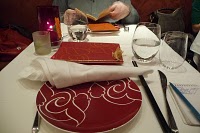
Annie English is a colleague of mine who blogs about her and her husband’s Dining Experiences in Toronto. Anyone who likes to eat in Toronto restaurants should follow her blog. I always find good advice from her, and I like the way she writes about places.
Dig in! And bon appetit.
Blogging Tools
I am a big fan of ScribeFire as a tool for blogging. However, a number of people I work with are fans of Windows Live Writer. I decided to try that out here and see how it looks.
The cost and benefit of the World Economic Forum in Davos
Andrew Ross Sorkin has a rundown of the various costs that come along with attending the annual meet and great at the W.E.F. (A Hefty Price for Entry to Davos – NYTimes.com). While the list of costs are long, the article implies the benefits are few. The impression I get is that Davos is like any other conference, just with more rich and powerful people. You still have the challenges anyone has with networking at such an event. Sometimes it goes really well and it is completely worthwhile. More often you think: that was fun, but what did I accomplish?
I also would not be surprised if China or Brazil or India decides to eventually have their own annual conference outside of Europe. Times are changing. We’ll see.
Speaking of Top Hats
Here’s Fred Astaire peforming Top Hat, White Tie and Tails. He makes wearing a top hat seem as casual as you or I wearing a T shirt.
And as good as that is, I think his Top Hat performance below is stunning and arguably beats the above. In the following, it’s not enough for him to tap dance with two legs: the cane becomes a third leg, adding additional complexity. Plus the magic of the rising cane and the mirrored images all add up to an astounding performance.
Fred Astaire – Puttin’ On the Ritz
P.S. Watch how he moves the camera to his left in order for the crew to presumably switch canes with one attached to a string that can be elevated….magic!
P.S.S. Wikipedia has a good compare and contrast of these two numbers here.
The Top Hat
I believed that the top hat died off at the beginning of the 20th century. It turns out that, at least for very formal occasions like Inauguration Attire, the top hat still was worn by no less than President Kennedy in the early 1960s. (Then it died off. But still, that is quite remarkable.)

Here is Kennedy and Eisenhower and the former’s inauguration. You can also see men in the background wearing less formal hats. By the 1960s, however, the only hats you would see on men would be informal caps. The notion of formal headwear for most men ended here.
How to take advantage of social media: a lesson from Canada’s National Post
Of course there is no cookbook approach to capitalizing on social media. But in this blog post: From Tumblr to TV: How our #Starbucks ‘Trenta’ graphic became an online hit | Editors | National Post, they show you what they did to be successful, at least for a (very stellar) day, and thanks to this superb infographic:

 Smart People I Know