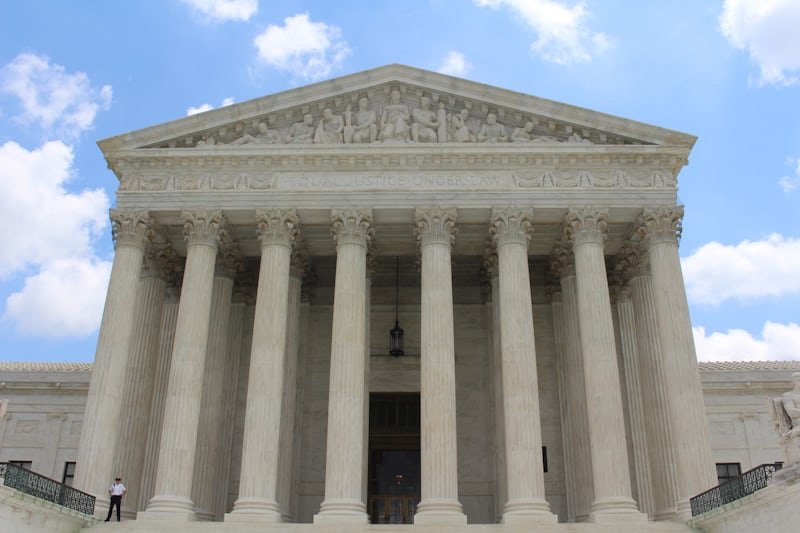
The wheels of Justice in America are turning forward

It is interesting to see the wheels of Justice turning in America. For a time they did not seem to turn at all. As Josh Marshall illustrates in this piece on January 6th, for some time there was a perception that right wing militant groups could act out the way they wanted to and no one could stop them. That changed on January 6th, as groups like the Oath Keepers and the Proud Boys are discovering. No doubt these groups may continue to exist in some form, despite their head being cut off. But it is something to see these groups finally being brought to justice after some time of being able to engage in riots and more with impunity.

After crushing some of the right wing militia, the wheel of Justice seems to be bearing down on members of Donald Trump’s inner circle, from Ron Navarro to Rudy Giuliani. Trump himself is under so many investigations that the New York Times had to build a special tracker so people can keep up with them all.

(If you thought this would change his behavior, you would be wrong. He continues to be a fountain of lies: the only difference now is how the news media covers him, as you can see here. He also continues to stiff people, as this story on Rudy Giuliani’s legal finance woes show.)

The wheels of Justice don’t just go right, they go left too, as the protestors of “Cop City” in Atlanta are about to discover via this indictment. Is it a bad use of RICO? Possibly. No doubt Trump and people would say the same thing. Regardless, it will be interesting to see if the Georgian prosecutors can make the cases, left or right.

P.S. Other American things I found noteworthy: Some school in Florida put restrictions on Shakespeare in their classrooms, which lead to this  really good essay on how Shakespeare is ribald and great. This story of disputes between left and right business in a small town of Virginia says more about America than a dozen essays can. Finally, the image below is of “the Byrna Mission 4. This pneumatic rifle shoots non-lethal rounds, incapacitating intruders without causing permanent harm.” Like the story of the business dispute, it too says alot about the America.

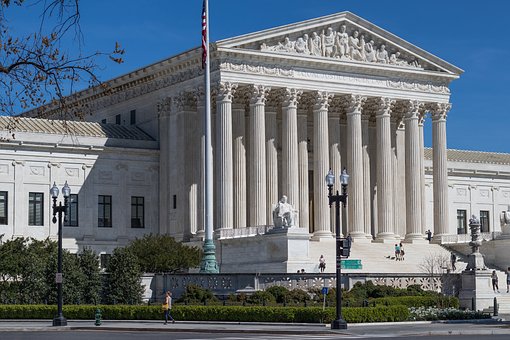
The worst of the Supreme Court of the US?


With all the news concerning the US Supreme Court, I did some digging to see how the current court measures up against its predecessors. Here some pieces I found on the worst decisions ever made:

And here are two articles on the worst members of that court:

Judge for yourself. 🙂


The U.S. Supreme Court is not what you think


There was much concern from progressives when Gorsuch and then Kavanaugh joined the U.S. Supreme Court. It was believed by myself and others that the court was going to vote 5-4 in lock step on every option, with the 5 conservative judges routinely beating the four liberal ones.

If you are progressive, it is still a concern. But as these two pieces show, the Supremes vote more independently than you or I might think:

  1. The Supreme Court’s Biggest Decisions in 2019 – The New York Times
  2. The Supreme Court Might Have Three Swing Justices Now | FiveThirtyEight

This is not to say it is entire unpredictable how they will vote on matters before them. The liberal and conservative labels are convenient and often useful, but there’s much more to consider than just that when trying to determine how they will vote. Read the two pieces and see if they change your mind.

(Photo by Claire Anderson via unsplash.com)

On the superior virtue of the oppressed

Unlike other essays in this collection, Unpopular Essays by Bertrand Russell (Google Books), “The Superior Virtue of the Oppressed” continues to be relevant today. It made a big impression on me when I read it, and I recommend it to anyone who has not read it.

You can read pieces by progressive writers still and find examples of this form of thinking. In some cases, oppressed groups do demonstrate exceptionally virtuous behavior in the face of adversity. My belief is they would rather be treated equally, fairly, and justly, and be free to go about their own business without having to take on the difficulty of pushing back on oppression. And rather than assign them a morally superior role, people in a position to break down that oppression should do so without elevating or denigrating them. (In other words, treating them equally).

Read the essay. Then read more of Russell. Regardless of your thoughts on his arguments, he is a good read for many different reasons, not the least being that he is a fine example of what philosophical writing can be: clear, concise, thoughtful, and accessible.