
It’s not A.I. or robots that are taking away jobs. It’s you.

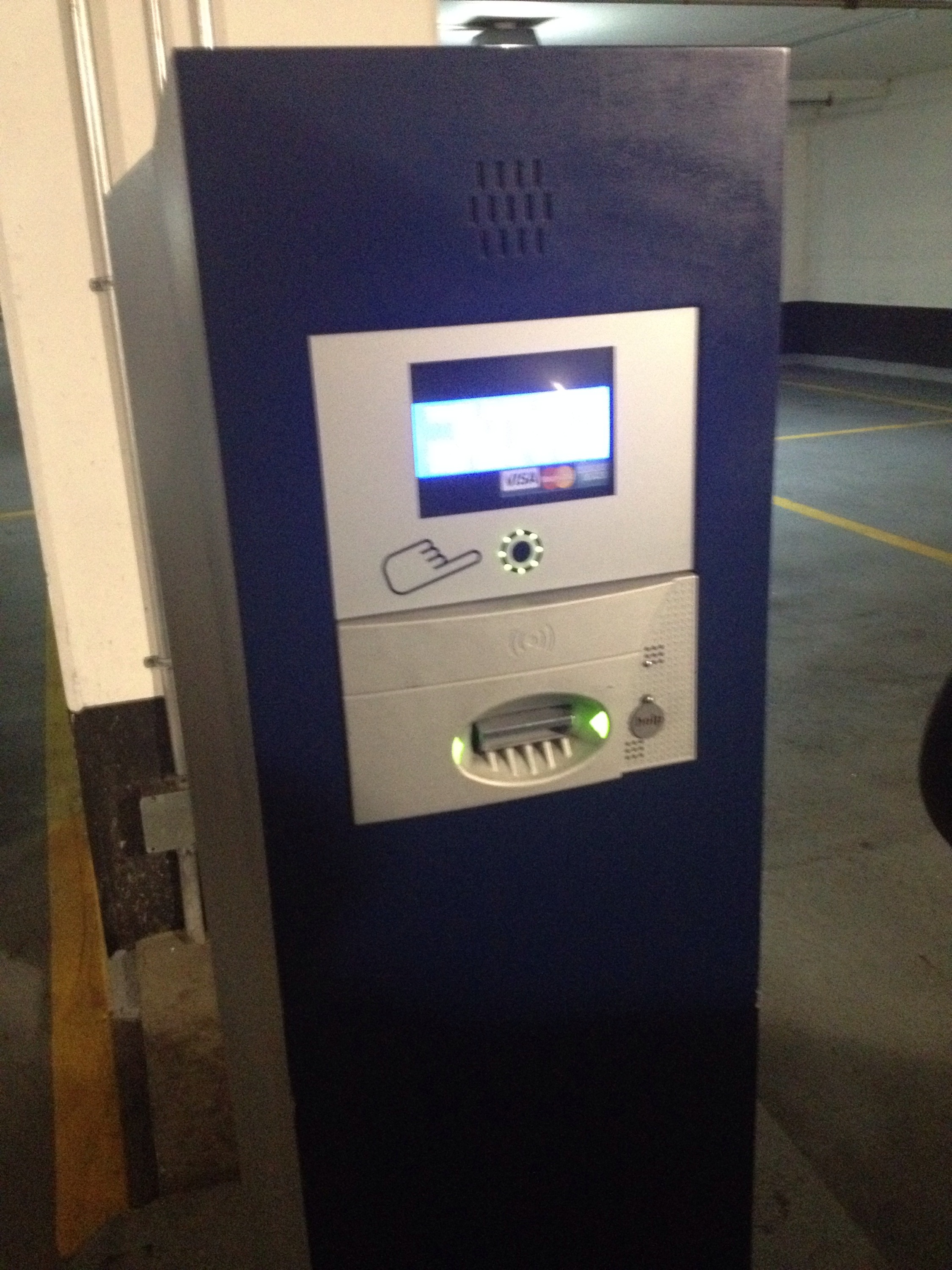
A year or so ago, a parking lot I use had a human in a booth to take tickets and provide other  services. That human booth was replaced by the thing in the photo above.

It’s not a robot and it’s not A.I., but it is replacing humans.

Stories about A.I. or robots taking over work makes them interesting. It’s also secondary to the real story. What is really taking people’s jobs is a willingness of others to use technology, and a willingness of companies to replace people with technology. People are not afraid to use technology. If anything, sometimes they prefer to deal with technology. This makes it easier for companies to go with technology as compared to using people, and if companies can save money or make money, so much the better.

It is happening in all sorts of industries, from food to sportswriting. The technology isn’t the driver of this: it’s the willingness of people to prefer technology that is the driver.

Thinking critically about robots. (Hint: think vending machines)

The following is anuncritical and hyped-up analysis of robots, from Wired (On Cyber Monday, Friendly Robots Are Helping Smaller Stores Chase Amazon). A key quote from it is this (highlighting by me):

… (Amazon) is relying on more than 100,000 temp workers this holiday season to supplement its already massive warehouse workforce, the advantages of offloading more of that work onto machines are easy to see. Robots don’t slow. They don’t tire. They don’t get injured or distracted or sick. They don’t require paychecks or try to unionize.

Now check out this robot:

Once you get over the word “robot”, you can see it resembles alot of the other machines you see in workplaces. Machines like high speed printers, scanners and even vending machines.  All of those things don’t slow, don’t tire and don’t unionize. They don’t get sick, but they break down alot, which is just the same. They don’t require a paycheck, but they do cost the organizations that use them. Sometimes they perform their function so poorly that people bypass them altogether.  As well, robots need others to take care of them. An army of robots just doesn’t show up: there is an entire process of testing, deploying, fixing and replacing them that is costly and non-trivial. There is a process for deploying human resources, too, but to say that that is costly and the process of deploying robot resources is not costly is wrong.

Robots will take over some functionality in workplaces, be that function blue collar or white collar. But that is no different from alot of other machinery already in place. The difference with robots will be that they are mobile. That’s it. We should get over the notion of robot as some magical creature and just accept them as another machine.