SNL turns 50

It’s been a year of celebration for the television show, Saturday Night Live. And why not? Any show that can last for 50 years deserves to be celebrated. And celebrate they did with a three hour prime time special.

I’ve started watching the show on TV at the very first season, when it was a new way to fill the dead hours of Saturday night. Now 50 years later I watch it mostly on Instagram. The Media has changed dramatically, but the Message has been consistent: 90 minutes of music and comedy every Saturday night in a strict format of cold open, monologue, sketches, music, Weekend Update, more sketches and music, closing. That it could continue to do that for half a century is a tremendous credit to the talented writers and comedians and musicians who create the show. And especially it is a credit to the producer, Lorne Michaels.

The influence of Michaels was apparent in how the show started with Paul Simon and Steve Martin and ended with Paul McCartney and Martin Short. But while it had a lot of his favourite old timers laced throughout on the show, it was not just a nostalgia trip. Which is why you had Paul Simon perform with Sabrina Carpenter and the new cast mixed in with the old. This show, like all shows, aimed to be current and successful. It was a bullseye.

For those who missed it, the New York Times has a good run down of the special: ‘S.N.L.’ Celebrates 50 Years With Star-Studded Prime-Time Special, while CNN has what they considered the best moments from ‘SNL’s’ 50th anniversary special, here. CBC also had a piece on it: Saturday Night Live celebrates 50 years with comedy, music and many, many famous friends. Of course being CBC they also had something on some of its best moments that have featured Canadians.

Theres been many a story written on the show this season. Here’s one on performers  breaking on SNL. This is a good set of interviews of the original  snl 1975 cast and crew.

Even with it being double a normal show’s time slot, it could not be all things to all people. This is a lament for what was not on the 50th special, here. And while it seemed like everyone who was ever on the show was there, a few big stars like Dan Ackroyd and Bill Hader could not make it.

P.S. I’d be remiss without mentioning this year’s film of the first episode of SNL. Sadly it got mixed ratings, such as this: Saturday Night mild? Jason Reitman’s SNL recreation doesn’t quite match the original’s rebellious spirit.
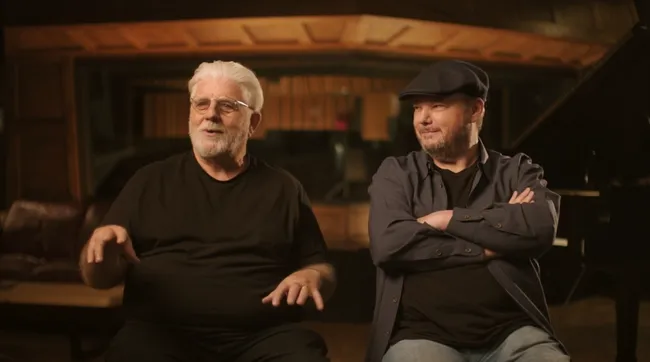
On Yacht Rock and the Yacht Rock “dockumentary”

I’m a fan of yacht rock, so I was keen to watch “Yacht Rock: A Dockumentary”. I’m happy to say it does a great job not only of reviewing the music being made at that time, but also in analyzing how a term (yacht rock) got applied to this music (since the term didn’t exist at that time).

that said, like some of the musicians involved, I have issues with the term. For one thing, I can also see why some of the musicians hate it, since it seems pejorative. For another, it’s also arbitrary and limited. For example, you can say Michael McDonald was Yacht Rock and Hall and Oates is not, but to me they’re all part of that soft rock era of the 70s. Likewise, Quincy Jones may have used Yacht Rock musicians on Thriller, but I just can’t think of it belonging to the same genre of music as Christopher Cross.

So enjoy the documentary…or Dockumentary. And if you find yourself liking what you hear, check out any of your favorite stream services: you’ll be bound to find a number of playlists serving up that easy listening sound.

P.S. How for to watch it online and stream from anywhere, see Tom’s Guide. Also my older post on Yacht Rock is here.

(Image from Tom’s Guide.)

Friday Night Music: Doctor, My Eyes (now and then)

What is that, you say? Let Open Culture explain:

The music collective Playing for Change is back. This time, they have Jackson Browne performing his 1970s hit, “Doctor, My Eyes,” supported by musicians from Brazil, Jamaica, India, Puerto Rico, France and beyond. Browne is also joined by Leland Sklar and Russ Kunkel, who played on the original 1972 song, and they still sound amazing.

They really do sound amazing. So many musicians I have loved have lost their voice, but Browne sounds as good as he ever did.

Don’t believe me? Here he is in 1978 doing it live:

The 70s, now romanticized, were a time of excess in culture


Every so often I see people like Martin Scorsese and others talk nostalgically of filmmaking in the 70s. They talk about the freedom they had to make the films they wanted to make, and how filmmaking went downhill after that. It is true, there were many great films made in the 70s, and many filmmakers like Scorsese and Coppola and DePalma and others who made them.

Whenever I start to think nostalgically of all that, I remember Michael Cimino and the disaster that was Heaven’s Gate. Everything that was wrong about that freedom and that auteur style of filmmaking reached its nadir in Cimino’s film. Indeed,  “the film’s financial failure resulted in the demise of director-driven film production in the American film industry, steering back toward greater studio control of films”.

Excess wasn’t limited to film. If you listened to music of any sort, you likely heard Carole King. If you flipped open a magazine, you saw an ad for a record club (“get 10 albums for a penny!”) and you saw a picture of a barefoot King on her Tapestry album, which was everywhere all the time. There was just so much of her. I would not be surprised if people dreamed of that photo at night.

That was the 70s. If an inch was good, then a mile was better. It was the time of baby boomers in their 20s with their sixties hangover trying to be as hedonistic as possible before they settled into their jobs and houses and families. It all had to end. I’m glad it did.

P.S. For more on Carole King — who I liked, in proportion 🙂 — see this: how Carole King revolutionized 70s music.

You Of All People can Live a Quiet Life

It’s funny and good and strange how something new can remind you of something very old that you barely remember. That happened to me recently.

In the early 70s (1972-4) there was a TV documentary show on CBC called Of All People. It was a simple show that did short profiles of everyday Canadians.

I would watch it as a preteen with my Dad, and afterwards we would talk about what we saw and how we thought about it. It was a great show to watch as a kid (and with your kid). I think it shaped my worldview to some degree. This idea, that a worthwhile life can be anything and anywhere, was a main theme of the series, and this idea has stuck with me ever since.

It was a lovely show. Watching each episode, you were left feeling better about people and the world. I wish I could write more about it and share more about it, but barely anything exists online.

And I thought of all that again when I listened to Denison Witmer’s new song, “It’s OK to Live a Quiet Life”. The people in Of All People lived lives that were quiet and fine and good. You can live such a life too. It’s OK. Maybe more than OK. But OK is good too.

Here’s two versions of his song. For A:

and E:

Go and listen to them on your favorite music service via this link.

You can find out more about Denison and his other work, here.

That 70s music post. On Harry Styles, Yacht Rock, and more


I have a confession: I have always hated the music from the 70s. If the music of the 60s was revolutionary and the music of the 80s was new wave and punk, the sounds of the 70s were dominated by excessive overproduced smoothness. What started musically in the 60s metastasized in the 70s until the spike of punk put an end to it. I was glad for that.

Lately, I have had a change of heart (ear?) and started to revisit and soften my stand towards that old 70s music. Maybe it was the Bee Gees documentary I recently watched that got me thinking. Or the notion that many of the bands I loved in the 80s got their start in the 70s, or that for every bad disco song there were songs from Bowie and Springsteen. Perhaps it was listening to just the good yacht rock artists like Hall and Oates, Robert Palmer, George Benson, and more. Whatever the cause, the more I listened to it, the more I thought I had thrown the baby out with the bath water, music-wise.

It also helped that I, along with many other people,  have been bopping along to Harry Styles and his music. There’s elements to his songs that reminds me of the best of the 70s. You could easily slide his songs into a Yacht Rock playlist and hardly notice the jump in time that occurs between those hits and his.

in fact you could take Harry S (seen below) and place him alongside Robin Zander of Cheap Trick or any of the androgynous rockers of the 70s and he would fit right in:

Now I don’t think Styles is going to lead to a great revisiting of the music of that era, other than for people like me. But who knows? Maybe the music as it was from back then will return for a spell. That would be golden.

For more on Yacht Rock, click here. Spotify users can click on the playlist above. Image of Styles from The New York Times.