On Churchill’s Daily Alcohol Consumption

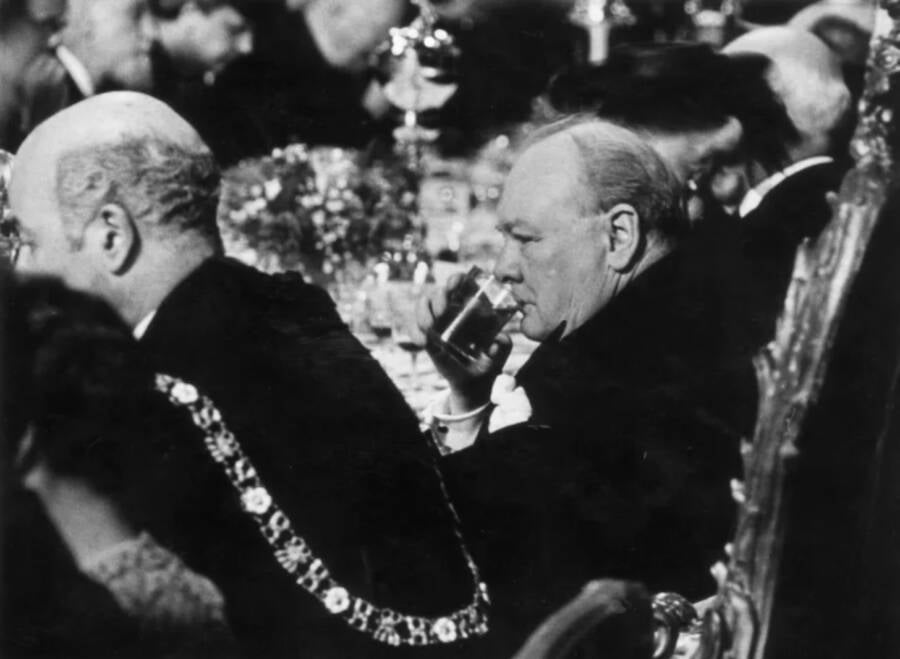
It’s no secret that Churchill drank a lot of alcohol, both daily and in his lifetime. Based on recent social media videos where young men try to drink like Churchill for a day, I think the latest generation is learning about it.

Despite some Churchill supporters downplaying his consumption, he was an epic drinker. He drank continually throughout the day, from watery scotches in the morning to snifters of cognac at night. A typical day looked like this (according to his supporters no less):

(1) Several whisky and sodas (less than an ounce of whisky) around 11am, teatime and bedtime and occasionally one other during the evening. (He never drank whisky neat.)

(2) An imperial pint (20 oz.) of champagne or wine at a 1pm lunch followed by a brandy, also likely an ounce.

(3) An imperial pint of champagne or wine at dinner followed by a brandy.

This translates into approximately six glasses (1½ 750 ml. bottles) of champagne or wine daily along with 5 to 6 ounces of whisky or brandy spread over a 12 to 15 hour period.

Whew.

It took years and years for Churchill to develop a tolerance for that much alcohol consumption: it’s not surprising that young men who experiment with drinking that much in a day fail to accomplish it. I wouldn’t recommend that for anyone.

P.S. For more on people trying to drink like Churchill, see this. For more on Churchill and his lifestyle, I highly recommend No More Champagne: Churchill and His Money by David Lough. I also recommend that piece from his supporters, The Myth of Churchill and Alcohol: A Distortion of the Record. It’s remarkable the lengths they go to downplay his drinking.

No more champagne: Churchill and his money


I was watching Downton Abbey recently, and some of the aristocrats were griping about running out of money and what they should do. On the surface they were well off and established, but beneath the white ties and silk they were on the road to a financial decline and fall.

A real life aristocrat following a similar path was Winston Churchill. This is a story well told in this book: “No More Champagne: Churchill and His Money” by David Lough. It’s a quirky history, in that it approaches a well known figure from a special angle. Fans of finance or Churchill or England find much to enjoy in the book. I was sad to finally finish it.

For more on the book, see this and this.

AJP Taylor, on Winston Churchill

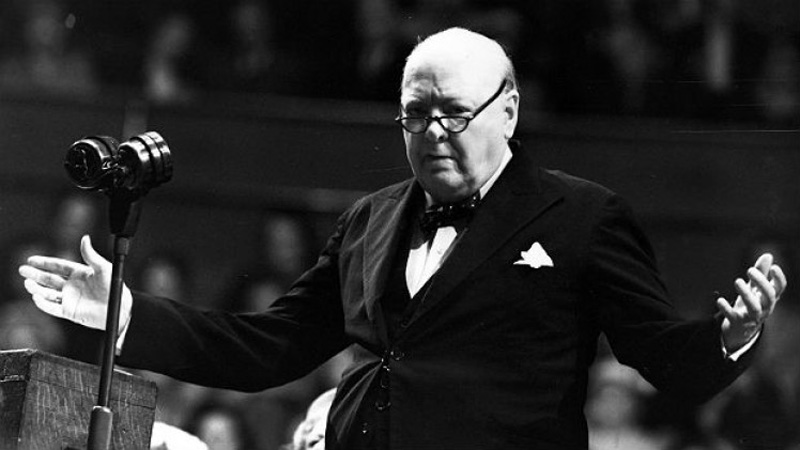
So there’s a new article/book critical of Churchill, and like most anti-Churchill work, it fails by emphasizing his faults and diminishing his accomplishments.

Of the many things I’ve read on Churchill, the one thing that convinced me of his greatness despite everything else is this 1974 essay by AJP Taylor: Daddy, what was Winston Churchill? – The New York Times. Taylor’s essay succeeds because he clearly sees Churchill for what he is. He sees a man who goes from an outcast to an unrivaled leader, his people fully behind him. He sees a leader making many mistakes but succeeding on the one essential thing he had to do. He understands how much worse the world would have been if he, and those he led, had failed. And after you read that essay, you should see and understand that too.

The criticisms of Churchill’s many failures are valid. But the one thing, the most important thing he did, leading the defeat of Hitler and Nazi Germany, should never be diminished.

Indeed, as Taylor starts his essay:

On Jan. 24, 1965, there died Winston Spencer Churchill, Knight of the Garter and, if he had not refused the title, Duke of London. Six days later he was given a state funeral in St. Paul’s Cathedral, an honor previously reserved for two great men of war — Admiral Lord Nelson, victor at Trafalgar, and the Duke of Wellington, victor at Waterloo. What brought Churchill into this select company? The men of the time had no doubt as to the answer. He was the savior of his country, the first Englishman to be so hailed since King Alfred the Great.

Perhaps Churchill’s stature will crumble under a constant eroding criticism. It has happened to other leading historical figures of England and it could happen to him. What should not be forgotten or diminished is what he accomplished in a way only he could have accomplished it. It’s an inconvenient truth for some. But it is a truth that will remain.

P.S. That essay also appears in a fine collection of Taylor’s works, Essays in English History. I highly recommend it. Among other things, it has a great cover. Like Cromwell, Churchill will remain relevant for centuries to come. Warts and all.

(Top image from Wikipedia. Bottom image from Goodreads.)

Colonialism, Churchill, and other things I find interesting in history, February 2022

Recently I’ve been reading more about colonialism, Churchill and more. Here are some links on this.

Recently there was  a controversial article that praised colonialism. This article shows colonialism’s real legacy was ugly. This piece also shows how colonialism was a disaster and the facts prove it.  More dismissal of the idea that colonialism was good: A Quick Reminder of Why Colonialism Was Bad. This argues that: All Britons Benefited From Colonialism, Regardless Of Class. While Britain was a big colonial power, there were others as well. For example, Russia: Empire of the steppe: Russia’s colonial experience on the Eurasian frontier. Finally: 500 years of European colonialism in one animated map.

Related to colonialism, here are some links on Winston Churchill. Here’s two pieces critical of him: The Case Against Winston Churchill and Why can’t Britain handle the truth about Winston Churchill? My thought is anti-Churchillians downplay his role in defeating Hitler, while pro-Churchillians focus mainly on his role in defeating Hitler and downplay everything else. Finally, for a piece that takes into account the complexity of Churchill and his legacy, there is this:  The best books on Winston Churchill.

I disagreed with the monocausal aspect of this piece, The Bomb Didn’t Beat Japan, Stalin Did. Many things led to the defeat of Japan. Russia was one of them, for sure. Still a good read.

I liked this piece by TNC that  talks about Tony Judt: The Man Who Freed Me From Cant. My minor criticism is that Coates has an American centric view and this prevents him to some degree to fairly assessing Judt. But it’s a minor one: I recommend it, as I do for anything Ta-Nehesi Coates writes.

How to write your own psalm

You may not ever want to write your own psalm, but if you do, here’s advice on how to do it.

You don’t have to restrict yourself to a psalm of lament, though. There are 5 kind of psalms: praise, wisdom, royal, thanksgiving, lament, according to this. Feel free to write the one you see fit.

P.S. I got interested in this after finding out Churchill wrote his speeches in psalm style. You can read more about that, here. Or see an example of it below.