
Cleaning is part of a cycle. Complete the cycle (though cycles are never done)

I have come across the idea of completing the cycle when it comes to cleaning and it has made a difference in how I perceive cleaning.

I hate cleaning, but a contributor to that was I didn’t complete the cycle. If I was making a meal, I’d start the cycle by getting out the ingredients, then cook them, then eat them. The end of that cycle is putting the ingredients away and doing the dishes. But I didn’t commit to that, which meant the dishes would pile up. The same was true of other activities: I would stop at the satisfying part of activity (e.g. eating).

Once I committed to completing the cycle, things improved. I recognized that doing any activity meant I had to clean up at the end. Cleaning wasn’t a separate activity: it was part of the overall cycle of the activity.

I thought of this again when I read this piece in VOX on the vicious cycle of never-ending laundry. In it they are so close to getting it. It’s true, laundry is a cycle. They seem to think of it as something you can complete. You can never complete doing laundry, any more than you can complete cleaning your bathroom or complete eating. They are all cycles. The best you can do is complete a cycle of whatever you are doing.

Think of laundry as part of a bigger cycle of caring for your clothes, which is an extension of caring for yourself. There are any number of things you do to care of yourself during the week, from getting good sleep to exercising to…well, washing drying and putting away your clothes. Laundry is all part of that cycle you do every day and week to take care of yourself. It’s part of completing that cycle. Don’t think of it as a separate activity. (Unless you actually love doing laundry. :))

Completing the cycle: a smarter way to clean up and stay clean.

P.S. For more on the “Complete the Cycle” Cleaning Method, read this.

I also thought that this piece in the New York Times has some good advice on  how to clean was good.

Finally, if it is all too much, the Washington Post has an article on how to fake clean your house. Hey, whatever works.
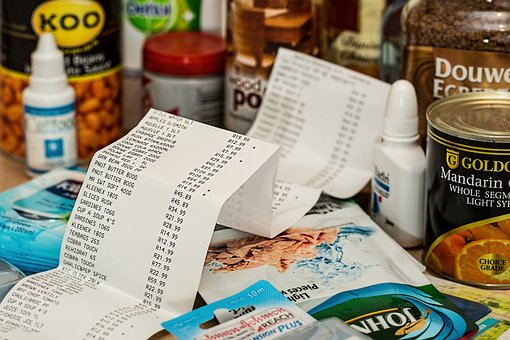
I switched from grocery shopping at Metro (and Loblaws) to Walmart in 2022. In 2023 I am switching to a combination of Walmart and Food Basics. Here’s why.

Last year I did the math and found that I could save around $1500/year if I switched my grocery shopping from Metro / Loblaws to Walmart. I wrote about it here.

This year I have switched from Walmart to Food Basics for some things. So what changed?

First, Walmart’s prices have been rising over the last year, at least in Instacart. The same groceries bought at Walmart in 2022 add up to over $1000 more in 2023. I started noticing the items I have bought went up by 10% or more. Week after week those increases accumulate into that $1000.

Second, Food Basics prices either dropped or were much lower than Walmart’s to begin with and I didn’t notice last year. In almost every category now their prices are lower: beverages, condiments, dairy, snacks, pasta, frozen food, and meat. Only in the deli and produce section can I get better deals at Walmart. It’s close, but not that different.

Third, I think Walmart has changed their pricing policy in Instacart. They now say their prices are higher than in-store prices. Food Basics prices are generally the same as in-store regular retail prices. I think Walmart was that way before.

Walmart has also changed their approach to Instacart in other ways. For many months they have not had any products featured in the Deals section of Instacart. Now they do. Food Basics also has deals.

Because of how Walmart has changed, my shopping via Instacart has changed. Before I would automatically buy my groceries from them. Now I make a list and comparison shop between them and Food Basics. Most of the time Food Basics wins and I buy the bulk of my groceries from them. I still get my deli and produce from Walmart and some specific products Food Basics does not have. And if Walmart has a good deal on something, I will also buy that from them.

At some point I should go back and compare  Loblaws, No Frills, Metro, Food Basics and Walmart to see what has changed, because the grocery business is dynamic and competitive. Who knows: in a year, No Frills could be the leader when it comes to good prices.

For now I am mostly happy shopping at Food Basics and Walmart. In both places the prices are good, and the quality is high. The things I used to buy from Metro at high instore prices in my neighborhood in 2022 are less expensive when I get them via Food Basics on Instacart in 2023, so that’s good. too.

P.S. Here’s my spreadsheet on Google Sheets. You can review my numbers and see if they add up. This is my experience with this. YMMV.

P.S.S. I had to revisit my spreadsheet. At first I had Food Basic saving me $1500 over a year vs Walmart. It’s actually somewhere around $171. Not nothing, but not that much.


In 2022, I switched from grocery shopping at Metro (and Loblaws) to Walmart and Instacart. It’s been much better. Here’s why

(2023 Update: I’ve recently switched from Walmart to Food Basics. You can read about that here.)

I did the math and found that I can save around $1500/year if I switch my grocery shopping from Metro / Loblaws to Walmart. I save much less and it gets more complicated if I include Instacart in the mix, though I am still doing it. Let me explain.

To determine what I could save, I built a spreadsheet of all the things that I typically buy. I set up the following columns:

  1. the price at Walmart (using numbers from the Instacart app)
  2. the price at Metro (same day numbers from the app)
  3. the difference in price. If the cell is green, Walmart is cheaper; if red, Metro is cheaper; if yellow, the comparison is off; if blue, the price is essentially the same (around 2 cents different). You can see almost everything was cheaper at Walmart, sometimes by a lot
  4. How much I save if I bought everything at Walmart that week
  5. How many times a year I buy that item
  6. How much I save a year if I buy it at all at Walmart
  7. The name of the item
  8. The category of item (Deli, Frozen, etc)
  9. The quantity of the item
  10. A description
  11. A comment

Here’s my spreadsheet on Google Sheets. You can review my numbers and see if they add up.

Of course I may buy different amounts,  and I may buy items not listed there. But that amount of savings for the year will be close, I think.

Now here’s the problem for me: I live very far from a Walmart. I don’t have a car, and there is no way I want to take that much groceries on public transit to get them. (If you can drive to any grocery store you want, then go to Walmart and you can save that much too. Maybe more.)

To solve my problem, I decided to sign up for Instacart. The problem then is all the savings turn into Instacart fees. I still estimate I save around $100 / year. (The spreadsheet has the details). Not much, but still. I essentially get the savings from Walmart to pay for my Instacart.

Overall, I see the switch to Walmart/Instacart as  positive for number of reasons:

  1. I used to shop 2-3 times a week to get all the groceries home. (This is because I don’t have a car.) It was a lot of time and effort. Now I shop with my phone on my couch and get all the groceries I need in one go. If I do any shopping in person now, it’s for speciality things. So my quality of life is greatly improved.
  2. I used to shop at my local Metro which I have hated for years. It was a crappy store for ages until Loblaws moved in. To compete, it did a make over and kept its prices low enough to keep me going there, for the most part. (I took what business I could to Loblaws). Last year they really raised their prices for the things I shop for by A LOT. There were no loss leaders. No discounts. All staples seemed to go up by 1-2 dollars. The prices were also much higher then what is in my spreadsheet. It really made me mad and frustrated. Taking my business elsewhere is satisfying: I don’t have to put up with that horrible store where I feel taken advantage of.
  3. I am budget conscious when it comes to grocery shopping. I want to best deal on food, and for commodity foods, I want the lowest price. Walmart gives that to me.

If you like grocery shopping in person and you can get to a Walmart, go to a Walmart. (Or possibly No Frills.) You can save a fair bit of money. And it’s not just my opinion. To see what I mean, read this: Which foods can you get at a big savings at discount stores? | The Star

If you hate grocery shopping and/or you don’t have a car, switch to Walmart and Instacart. You won’t save much, but the quality of life will improve considerably.

This is my experience with this. YMMV.


Foodism and the problem with home-cooked meals

I was prepared to argue with this article in Vox from some time ago: The problem with home-cooked meals , because I am a big proponent of such meals.  However, the closer I read it, I think the main issue I have with it is the title. If it was titled “The difficulties in preparing home-cooked meals”, I would have been more receptive. Read the article. If you are a foodist like myself, it might seem hard to understand at first that people have difficulties with home-cooked meals, but like many things, the difficulties arise from lack of time, knowledge, and resources (money but also access to good food, even if you have money).

I believe that there are a number of ways to address those difficulties. First, I think city governments need to treat access to food the same way they treat access to other things such as transportation, water, parks and even sunlight. If housing doesn’t have access to water or electricity or transportation, then developers shouldn’t be allowed to build it and people should not be expected to move there. Access to good food should be part of that set of restrictions.

Second, we need to better educate people on how to prepare food.  Too much of our education system is spent on academic topics. Kids should be taught a wide range of subjects, and one of those should be how to prepare food no matter how much time or a budget you have. (They should also be taught how to manage finances, how to do basic home repairs, and how to deal with personal difficulties, among other topics.) There is a wealth of information available on food preparation, but often to me it seems aimed at foodists and is aspirational. There’s nothing wrong with aspiring to make good food. In addition, though, people should learn how to make straightforward nutritious food, with anything from 2 ingredients on up, with or without a recipe, in 2 minutes or over 2 days.

Third, we need to change our emphasis on a form of eating. There is a belief that some North Americans have that home cooked meals should be prepared and eaten a certain way. Often this certain way involves 30 minutes to an hour of food preparation followed by an equal amount of time eating it. Culturally that may have been the way it was done, but there is nothing that says we must continue to eat that way. You should be able to prepare and eat good meals with the resources you have.  If that means a 5 minute preparation and a 5 minute stand up meal, so be it. Better that than 30 minutes spent eating over processed food in a chain restaurant.

Finally, we need a more expansive and less snobby approach to what constitutes good food. If you are a foodist and you want to cook with homemade stock, fresh herbs, wine and hard to source ingredients, and that works for you, that’s great. For most people, if you have limited access to good food, then you can still make good meals with what you have available, and there is no shame in that.  Besides, the social status of ingredients come and go: eat the best you can with what you have, be that a roasted chicken and a salad or a bowl of chunky vegetable soup.

For many people, food is a means to an end: I’m hungry, I eat food, I’m no longer hungry. For others, their life revolves around food. Wherever you fall on that spectrum, having an open mind about how others eat and being open to alternative ways to dealing with food will benefit everyone, including yourself.

(Image is of a ham, painted by Manet.)

P.S. In case you don’t think it is a word, here is the definition of definition of foodism, from the Oxford English Dictionary:  “A keen or exaggerated interest in food, especially in the minute details of the preparation, presentation, and consumption of food.” Therefore people who have foodism are foodists.