One reason to record

Bike at Dusk

Over at my other blog, I recently asked myself, “why record at all”. I didn’t have an answer to it until I looked at some old photos like the one above.

I like that photo, taken using a Diana camera of a wooden wall I made. The wall wasn’t very good: I didn’t know enough and didn’t have enough resources to make it properly. As a result, it flopped around and was prone to getting wrecked when a high wind came along. No matter. I was proud I could make that then. And I was happy with the way this photo came out. I am still proud and happy about that.

The record — in this case a photo — reminds me of what I am capable of. It states: you could do that again.  At a time when one is plagued by negative self-talk, a record can provide a voice to drown out the negativity. A record can be a voice of encouragement.

There are many good reasons to make a record in any form. A record that can help you regain your better self is surely a good reason to make it.


On letting go of the last of Twitter (with a PS on ephemerality of tweets)

A few weeks ago I downloaded my twitter archive from X.com and deactivated my main account there. I assume this will result in blm849 being deleted, but who knows with that site.

I was unsure of what to do with this archive of mine. I had a lot of good memories of posting and interacting with people on that site, but the archive was taking up too much space for the value it contained, so I deleted it.

I still have all the blog posts I wrote about twitter, here. And an old tumblr of mine still has quite a few tweets contained in it. But overall it was time to let it go. Twitter was good while it lasted.

P.S. I always knew tweets were ephemeral. All digital media is, but tweets seemed more ephemeral than most. If you want to create or maintain a presence or a record, consider less ephemeral ways to do it.  Don’t depend on a site or a tool that can be easily taken away from you, or a record that is hard to replay.

On the value of keeping a Christmas list (and why you might want to do so)

Back in 2005 I created a Microsoft Word document titled Christmas 2005. I did this because it seemed like Christmas was becoming a project in itself, with milestones and deliverables, and having such a document helped me keep on top of things. The document had a calendar, breakdown of things to do (e.g. get gifts for A and B, prepare food Y on date Z), and eventually it had lessons learned. (Hey, I’ve done a fair bit of project planning over my career…it’s a skill you tend to apply to everything.) Every year since 2005, I would take the previous year’s list, duplicate it, and modify the duplicate for the new year. Voila: new list!

But I kept the old lists, and I’m glad I did. I can see my life change year over year. People come and go. The gifts you buy for people change, especially kids.  Technologies change (no more need to buy VCR tapes to record the kids). Traditions evolve. Even details like the price of Christmas trees over the years makes an impression viewed over time. The list remains the same, but the content changes, sometimes dramatically.

I encourage you to keep your own such records for Christmas and other special events over the years. At first it might not seem like much, but if you keep at it, you will have a special journal of an event that meant much to you over time.

Everyone has their own way of planning special events, from structured plans like me to having it all in their head. However you do it, try keeping a record of it. This year. And next year. And the next.

Merry Christmas. Did you get all those things done you said you were going to? No? Better write it down and get to it. 🙂

Joan Didion, and why you should write

In the 1970s Joan Didion wrote:

I write entirely to find out what I’m thinking, what I’m looking at, what I see and what it means. What I want and what I fear. – Why I Write (essay originally published in the New York Times Book Review in 1976, here)

I think it is a good reason for all of us to write, regardless of our level of skill. I think I am going to be adopting that more, here and offline. I would hope the same for you, even if it is a matter of making notes in a composition notebook or a scribbler.

Writing as thinking. Not only deep thoughts, or correct thoughts, but thoughts in general.

A great collection of Joan Didion in her own words from the Guardian, here.

On the benefits of diaries, journals and notebooks


We’ve all have or had diaries and journals at some point. Sometimes they’re just a few abandoned pages: other times they are volumes of notes and information. If you are like me, you are in the former group, even though I’d like to be in the latter (no doubt smaller) group.

One person I know who is the group I am not is Austin Kleon. He has written extensively about them, and he creates several of them throughout a year (the photo above is of his collection). If you read him, you see he has a number of reasons to write them: to help him pay attention to his life, to give him something to write about later, and more.

Now if you are someone special like Paul Klee, then maybe someone will put them all online for others to study them (see here). Or if you are living in historic times, like the composers of these thousands of desperate vivid diaries from occupied europe, then historians may gather them and hold them in a special place like the NIOD Institute for War, Holocaust and Genocide Studies in Amsterdam. (That might happen to anything you write, especially if you kept one during the pandemic. Decades from now people will be curious to know what life was like during lockdowns.)

Regardless of what happens to your diaries, it is beneficial to record your life, as I argued here. The only beneficiary later may only be you, but that’s enough. If anyone else benefits from it, that’s a bonus.


Some thoughts on learning to appreciate Instagram as a recording media

Yesterday I wrote about using Instagram as a recording device to track special events, such as life during the pandemic. As I was writing about it, I started thinking about Instagram as a service.

A weird thing happened to that service in the summer of 2022. The folks at Meta (who own it) hamfistedly tried to change the app, only to face a backlash from famous and not so famous. Unlike Twitter, Meta actually backed off from some of the changes (though they are still trying to make Reels happen). I’m glad they did.

In some ways Instagram has become my default way of sharing my life, mainly through Stories. The same 50 or so people see all my posts and can keep up with what I find interesting, and that amount is fine with me. On Twitter you can imagine lots of people are paying attention to what you post: on Instagram, you know who is. I no longer use Facebook, and who knows who reads these blog posts. 🙂 So Instagram it is.

Like many people, Instagram photos are not my life, but rather a version of it. I realized that especially when I put together my collection of images from Year 1 of the pandemic. There were plenty of things that I took photos of but never posted there. Anyone not close to me might think that’s everything happening in my life, but it’s only a sliver of the pie.

It’s good that Instagram allows you to collect Stories in Highlighted sections. It helps with the ephemeral nature of them. In most cases, the fact that photos in Stories are fleeting is good. But not always. It’s good to shape some of them into a virtual scrapbook to display.

Of course I could use Instagram Posts, but like many people, I post to Post less and less. Now I mostly use it to mark  a moment in time.

Instagram may not be the best place to publish photos, but it’s pretty good. Of course everything could change tomorrow, and all of it could be gone. I keep that in mind and keep my photos backed up separately. You should too.

Instagram has plenty of problems. Anyone reading their Wikipedia page can see that. But it has its benefits and does better than most social media these days. At least for me. Find me there, at least for now, at bernie_michalik.


The PO-80 Record Factory Kit from Teenage Engineering is very cool

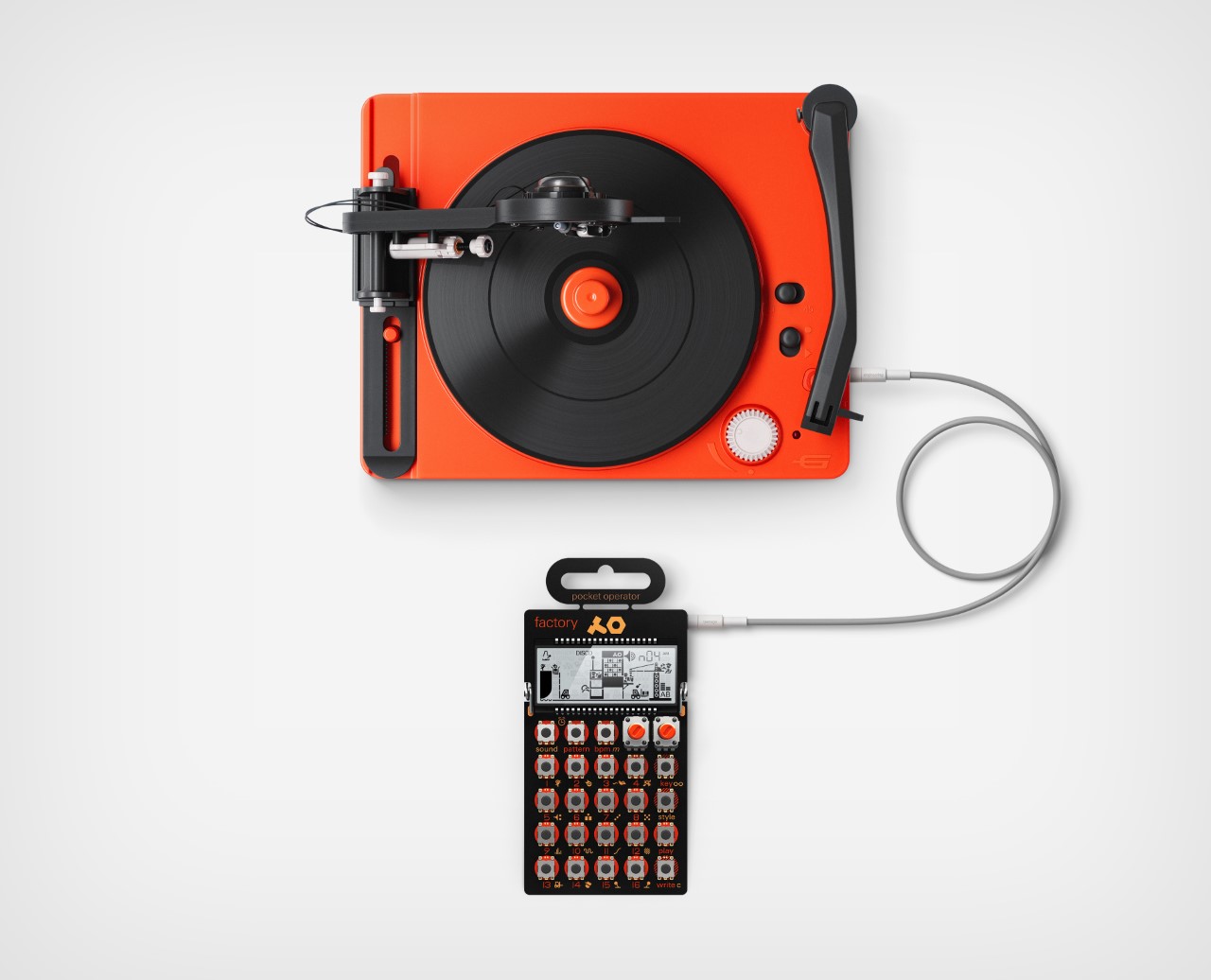
The smart folks at Teenage Engineering have produced another cool product. As Yanko Design explains….

The PO-80 Record Factory Kit is a record cutter that engraves audio onto 5″ vinyl discs, giving kids the ability to record their own LPs the old-fashioned way, quite like how millennials made mixtapes and burned their own CDs. The Record Factory, created in collaboration with Yuri Suzuki, lets you engrave and playback 5″ discs with an ultra-analog lo-fi sound. This isn’t studio-grade equipment, after all, but it does add a creamy muffled, effect to your audio that totally sounds like the 40s and 50s in a nutshell.

Love it! For more on the PO-80, see these write ups in Yanko Design and the Awesomer.com.

(Image link to Yanko Design)

On recording (why you should think about it differently, why you should resolve to do it)

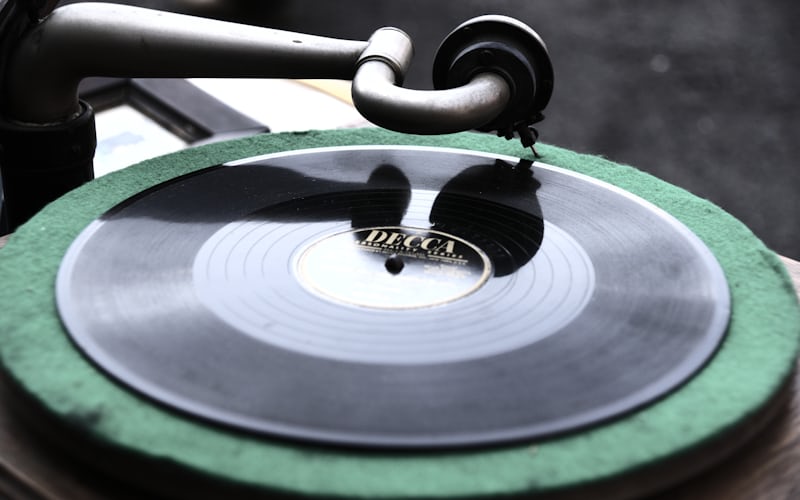
Recording. Record. To me those words bring up images of black vinyl disks to play music. Records are great, but there is so much more to making a recording.

A recording can be anything, on any media. All the photos you take on your phone and store on Instagram are a recording. All the receipts you collect in a box are a recording too: a recording of what you spent and where you spent it. Last year I wrote down all the dinners I had since the start of the pandemic: it too is a recording.

For 2021, a good resolution is to record some part of your life. Do it in a way that is easy to do regularly. Do it such that there is enough information to look at it later. Some of my recordings this year were terrible: books I read, runs I went on. Others were strong: things I enjoyed despite the pandemic, politicians I wrote, friends I kept in contact with.

Some people like to use paper for this. Austin Kleon, a master of recording, outlines his process here: The year in notebooks. As he says

If you’re looking for a New Year’s Resolution, keeping a daily notebook is a pretty solid one.

On the other hand, if you are a digital person like me, use a simple tool like SimpleNote or Evernote or just your smartphone camera to record that part of your life. Whatever tool works best for you is the best tool.

It doesn’t have to be a diary or journal format. It can be a log of the best thing that happened each day. Or the funniest thing that happened that week.  Or the weather. Just record something, even if it is a few words.

There’s a number of benefits to making these recordings. If you do it well, at the end of your year you may be able to build up a list like this: 100 things that made my year (2020) – Austin Kleon. Even if your list is smaller, what you may get out of such a list is a recording of what makes your life worth living and what made things worthwhile during times when perhaps things weren’t that great.

Later, as you go through it again, your memory will fire up and you may recall other good moments not captured on paper or computer but still there. That’s another great thing about recording things: it helps you remember so much more.

Your life has value and meaning. Recordings help show that. So get making them.
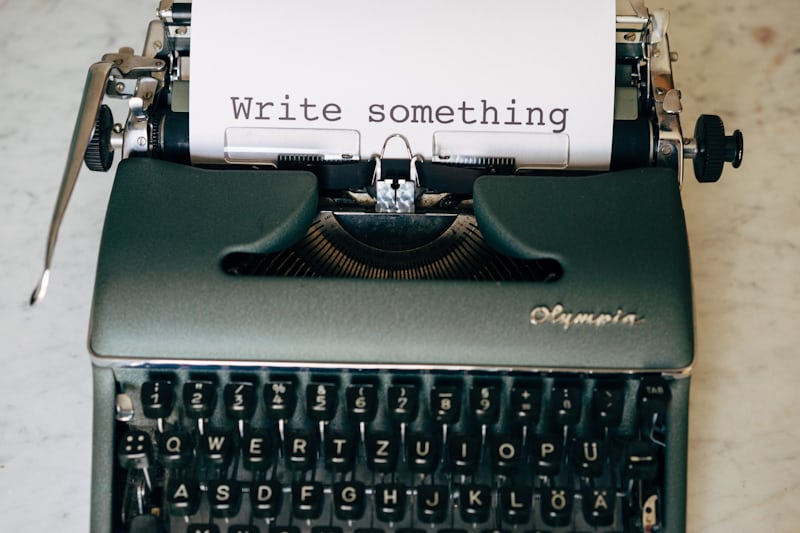
(Photos by Photo by Samantha Lam  (top) and  by Markus Winkler  (bottom) on Unsplash)

Some thoughts on the lost guitar solo from Here Comes The Sun

This post is fantastic:  Here Comes The Sun: The Lost Guitar Solo by George Harrison, from the blog Open Culture.

Not only do you get to hear the lost guitar solo, but you get to do so with Dhani Harrison (George’s son), George Martin and Giles Martin (the son of the great producer)

Even better, you get a sense of what George Martin was working with at the time, and you get a sense, at least I did, of how Martin thinks about what he is hearing.

A must for Beatles fan and anyone who appreciates popular music and how it is made.