
What’s it like to be an instacart shopper

I’ve written a number of things on Instacart from the viewpoint of a user of the service. Now here is something on what it’s like to be an Instacart shopper. The piece is centered on a day in the life of Larry Askew, who works for Instacart early in the morning and Uber at night. Larry alone is worth reading about.

One thing that struck me was how some shoppers use bots to scoop up the best of what Instacart offers its shoppers. I imagine it’s not unlike people using bots to snag tickets for events.

Besides that, I learned a lot about the service I didn’t know before. It’s a good piece, and if you use Instacart, I highly recommend it.

P.S. Always treat your shopper well, and that includes tipping. Do not tipbait, especially. Thank you.
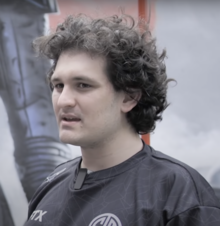
 

On the fall of SBF (Sam Bankman-Fried) and FTX


I got excited last week watching things unravel for SBF and FTX. It’s hard not to get excited when someone/some org goes from being worth $16B to $0 in the matter of a few days. It’s a story that reminds me of something between the Big Short, Theranos, and Enron.

This isn’t even the end of the story, as far as I can see. I suspect we will find out more in the next few weeks. I also suspect it won’t be pretty. It will definitely be interesting.

Meanwhile here are some good pieces covering the story for anyone interested:

The suit is dead! Long live the suit!

The suit is dead! Well, if not dead, likely on death’s door. To see what I mean, read this: The end of the suit: has Covid finished off the menswear staple?  The suit has been already dying off somewhat in the last few years, with the decline in necktie use and the introduction of more casual shoes to go with it, among other adaptations. Perhaps it will be gone altogether in the next few years.

I was thinking about the death of the suit when I was eyeing this work above in London last spring. That form of business attire has been dead for centuries! No doubt in centuries from now people will be standing in galleries looking at painting of men with neckties and double breasted  blazers and thinking how odd it looks, just like how we think the Dutch men above look odd. Suits — of all eras — eventually die off.

What will not die off, though, is the need for some form of fashion to indicate the person wearing it has a specific business function. What form that will take, I don’t know, but there will be something, some form of “suit”, that indicates you are talking to a doctor or a lawyer or a banker or a businessman (or woman) of some stature. Of that you can be sure.

The suit (as we know it) is dying: the suit (will come to know) is being born. Long live the suit.


On Sheryl Sandberg

Sheryl Sandberg is leaving Facebook/Meta. I used to think at best she was weak tea. Like Eric Schmidt, she was brought in to provide a degree of professionalism and organizational skill missing from their respective companies and leadership. And like Schmidt, she left when that missing skill was no longer needed or wanted.

I think Sandberg benefitted from having someone like Zuckerberg as her boss. The worst aspects of Facebook were associated with him, while whatever nefarious actions she was taking were unrecognized. This is not to absolve him or say that she was the one to blame. It’s just to note that many of the terrible things that happened on her time at that company should also fall on her.

Right now I think her legacy will change and darken over time. It will certainly  be less bright than it was in her Lean In days. But who knows: she may pull a Bill Gates and go on to be someone who spends her time and efforts in being philanthropic and charming.

Whatever her future, here’s some things I’ve been reading now in mid 2022 about her leaving:

On long lived institutions and companies

Most companies come and go, as do organizations. Even former great ones can collapse or merge with others.

Most do, but not all. Here’s two really good studies of companies and organizations that have lasted for a very long time:

  1. The Data of Long-lived Institutions | by Alexander Rose | Long Now | Medium
  2. See the oldest company in each country around the world


Good news. No one wants to become a Wall Street banker anymore


That may seem snarky, but it’s true. Despite efforts by firms like JPMorgan hiking entry-level pay, it remains to be seen if it will be enough to attract young people to come and work with them. It’s true, many are not attracted to the extreme hours required to do the job. It’s more than that, though. As Bloomberg argues, the real reason

… isn’t only the hours. All the exciting work has been regulated within an inch of its life, leaving millennials and Gen-Z employees searching elsewhere.

And that is great news. It means regulation of banks is working. Sure the work is boring. Boring banking is stable banking. After the Great Recession of 2008, the last thing we need for a long time (i.e. eternity) is exciting banks.

Let the young people looking for exciting careers look elsewhere. Let them go join firms and fight climate change, pandemics, world inequality. Leave the people looking for stable jobs to go into banking. Everyone wins that way. Even the banks. (Ask the people who used to work at Lehmans if you disagree.)

(Photo by Sean Driscoll on Unsplash )

On supply chains, using one tiny widget’s journey through North America


You may have a view of trade as being straightforward: one country either buys or sells a product to another country. However as this older piece shows, it’s never quite that simple: One Tiny Widget’s Dizzying Journey Through the U.S., Mexico and Canada.

That’s not to say all products are like that. As we learned during the pandemic, all it takes is for a shutdown of one country and suddenly we can’t get a product. But for many products, the journey isn’t from A to B. It’s from A to B to …Z? It’s complex. And if there is a disruption along the way, disaster can occur.

One thing for sure, given how the pandemic disrupted supply chains, I expect many companies are countries are going to be revisiting how they get products and how they can better protect themselves against not being able to get it in times of emergency.