

Bank architecture is not random. As this critical look at bank architecture explains:
“Bank architecture has conveyed a grandeur and stability essential to an industry that relies as much on public trust and confidence as hard-earned dollars,” says Barry Bergdoll, who has coordinated and installed the exhibition at Columbia. While architecture has played a fundamental role in establishing banks as “august and trusted guardians of wealth,” said Professor Bergdoll, the exhibition also reveals “the complex range of attitudes we hold as individuals and as a society to money.”
Banks used to look like this:
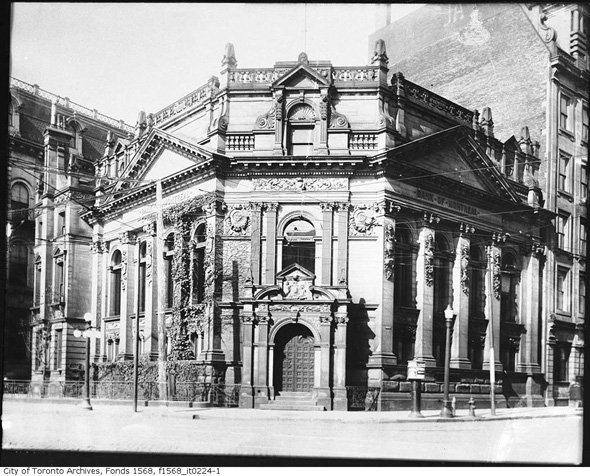
Very grand. Very stable looking.
The TD bank above does the same thing, but it reflects how we expect to see that now: modern, innovative, friendly, but still grand and stable looking. Their architecture needs to convey qualities you expect in a bank before you invest in their products or take out a loan. Then they did that with concrete pillars and fortress like doors: now it’s with neon and glass.

 Smart People I Know