Forget ChatGPT. Now you can build your own large language model (LLM) from scratch

Yep, it’s true. If you have some technical skill, you can download this repo from github: rasbt/LLMs-from-scratch: Implementing a ChatGPT-like LLM in PyTorch from scratch, step by step and build your own LLM.

What I like about this is that it demystifies LLMs. LLMs aren’t magic, they aren’t Skynet and they’re not some sentient being. They’re software. That’s all.

So ignore all the hype and handwaving about LLMs and go make your own.

Prefer to read it in dead tree form? You can get the book here.

AI and the shift from opinion to effect


Here’s some things I’ve been clipping out and saving concerning AI. The pattern I see emerging in my clippings is one where I am less interested in opinion on AI and more interested in the effects of AI on the world. There’s still some good think pieces on AI — I put some here — but the use of AI is accelerating in the world and we need to better understand the outcomes of that.

AI Think Pieces: For people who want to be really afraid of AI, I recommend this Guardian piece on  unknown killer robots and AI and…. well you read and decide. On the flip side of that, here’s a good piece critical of  AI alarmism.

Bill Gates chimes in on how  the risks of AI are real but manageable. My friend Clive Thompson discusses a risk of a different sort regarding AI, and that is the possibility of AI model collapse.

The mystery of how AI actually works is delved into at Vox. To me it is one of the potentially big problems AI will have in the future.

Practical AI: here’s a piece on how the  Globe and Mail is using AI in the newsroom. Also practical: How AI is working in the world of world of watches. I loved this story of how AI is being used to translate cuneiform. AI is also being used to deal with forest fires.

AI effects: This piece is on how AI’s large language models are having a big effect on the Web as we know it. To mitigate tithings, the Grammys have outlined new rules for AI use.

when it comes to writing, I think the “Five Books” series is great. They will ask an expert in an area to recommend five books in their field that people should read. So I guess it makes sense that for books on  artificial intelligence, they asked….ChatGPT. It’s well worth a read.

Not all articles written by/with AI turn out great. Ask the folks at Gizmodo.

Speaking of AI and books,  these authors have filed a lawsuit against OpenAI for unlawfully ingesting their books. Could be interesting. To add to that, the New York Times reports that “fed up with A.I. companies consuming online content without consent, fan fiction writers, actors, social media companies and news organizations are among those rebelling.”

On the topic of pushback,  China is setting out new rules concerning generative AI with an emphasis on “healthy” content and adherence to socialist values.

Asia is not a monolith, of course. Other parts of Asia have been less than keen to the EUs AI lobbying blitz. Indeed, India’s Infosys just signed a five year AI deal with 2bln target spend, and I expect lots of other India companies will be doing something similar regarding AI. Those companies have lots of smart and capable IT people, and when companies like Meta open their AI model for commercial use and throw the nascent market into flux, well, that is going to create more opportunities.

Finally, I suspect there is a lot of this going around: My Boss Won’t stop using ChatGPT.


AI AI AI AI: here’s some good, bad and scary stuff on AI


I am glad that Apple released a new device last week. It was a refreshing change from what most IT discussions are about recently. And what’s topic is most discussed? AI, of course.

And for good reason! There’s lots and lots happening in this space. New AI technology is coming out. New uses for AI are developed. It’s an exciting space. Like many, I am having a hard time keeping it with it all. But try and keep up I must. And as I do, I have found some interesting links for me (and you) to read:

Clive Thompson has a grim take on the boring apocalypse of today’s AI 

Also grim is this story in WiReD about  tessa, the eating disorder chatbot, and why it had to be suspended. Don’t leave your AI unattended!

Grimly funny: what happens when a lawyer misuses ChatGPT? Hijinx insue!

Not grim, but clever:  A Vienna museum turned to AI and cats — yes AI and cats — to lure visitors.

Also in WiReD is this thoughtful piece on how  non english languages are being left out of the AI revolution, at least for now. I see this changing really fast.

A good New York Times piece on how training chatbots on smaller language datasets could make them better.

Fascinating to see how much AI is listed in Zapier’s app tips here.

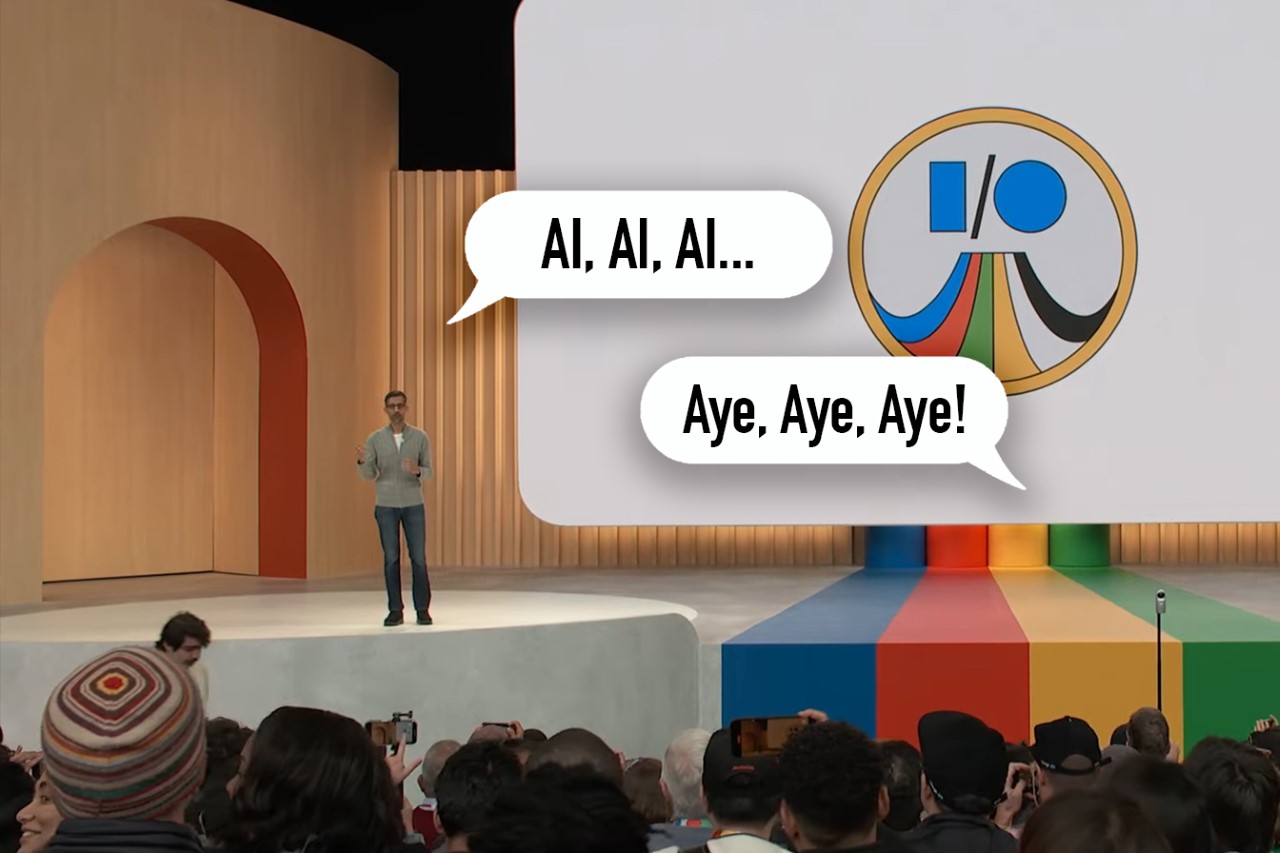
Also fascinating: Google didn’t talk about any of their old AI while discussing their new AI during their I/O 2023 event recently. I wonder why. I wonder if they’re missing an opportunity.

AI junk: Spotify has reportedly removed tens of thousands of ai generated songs. Also junk, in a way: AI interior design. Still more garbage AI uses, this time in the form of  spam books written using ChatGPT.

This seems like an interesting technology:  liquid neural networks.

What is falcon 40b? Only “the best open-source model currently available. Falcon-40B outperforms LLaMA, StableLM, RedPajama, MPT, etc. ” Worth a visit.

Here’s a how-to on using AI for photo editing. Also, here’s some advice on writing better ChatGPT prompts.

This is a good use of AI: accurately diagnosing tomato leaf diseases.

For those that care: deep learning pioneer Geoffrey Hinton quit Google.

Meanwhile Sam Altman is urging the US congress to regulate AI. In the same time period, he threatens to withdraw from Europe if there is too much regulation, only to back down. It seems like he is playing people here. Writers like Naomi Klein are rightly critical. Related is this piece: Inside the fight to reclaim AI from Big Tech’s control | MIT Technology Review.

Here’s another breathless piece on the AI start up scence in San Francisco. Yawn. Here’s a piece on a new startup with a new AI called Character.ai that lets you talk to famous people. I guess….

Here’s some things my company is doing with AI: Watsonx. But also: IBM to pause hiring for back office jobs that ai could kill. Let’s see about that.

Finally, this story from BlogTO on how “Josh Shiaman, a senior feature producer at TSN, set out to create a Jays ad using text-to-video AI generation, admitting that the results “did not go well.”” Not go well is an understatement! It’s the stuff of nightmares! 🙂 Go here and see.

In some ways, maybe that video is a good metaphor for AI: starts off dreamy and then turns horrific.

Or maybe not.

A plethora of good links on AI

There’s still an overwhelming amount of material being written on AI. Here’s a few lists of some of the ones I found most interesting:

ChatGPT: ChatGPT (3 and 4) still dominate much of the discussion I see around AI. For instance:

Using AI: people are trying to use AI for practical purposes, as those last few links showed. Here’s some more examples:

AI and imagery: not all AI is about text. There’s quite a lot going on in the visual space too. Here’s a taste:

AI and the problems it causes: there’s lots of risks with any new technology, and AI is no exception. Cases in point:

Last but not least: 

The profiles (beat-sweeteners?) of Sam Altman

Oddly (not oddly at all?) both the New York Times and the Wall Street Journal had profiles of  Sam Altman at the end of March:

  1. Sam Altman, the ChatGPT King, Is Pretty Sure It’s All Going to Be OK – The New York Times
  2. The Contradictions of Sam Altman, the AI Crusader Behind ChatGPT – WSJ

Given the contentious nature of AI and ChatGPT, you might think think that those pieces would have asked tough questions of Altman concerning AI. Especially since Leslie Stahl did something similar to execs of Microsoft, a few weeks earlier. Perhaps the work of Stahl is why Microsoft / OpenAI wanted Altman to get out there with his story. If that was the intent, then it seemed to work. Nothing too tough in either of these profiles.

Then again, perhaps they were written as beat-sweeteners. After all, getting access is just as important for tech journalists as it is for political journalists. If you want to write more about AI in the future, being able to ring up Altman and his gang and get through to them for a comment seems like something you might want for your job. No doubt profiles like that can help with that access.

For more on the topic of beat-sweeteners, I give you this: Slate’s Beat-Sweetener Reader in Columbia Journalism Review.


More reasons why ChatGPT is not going to replace coders

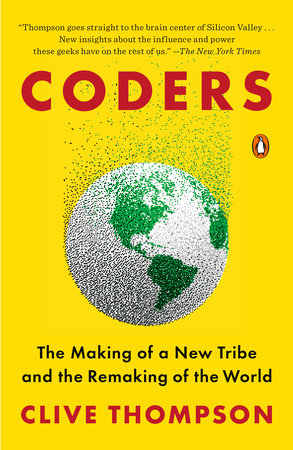
I have been arguing recently about the limits of the current AI and why it is not going to take over the job of coding yet. I am not alone in this regard. Clive Thompson, who knows a lot about the topic, recently wrote this: Why ChatGPT Won’t Replace Coders Just Yet. Among other reasons, the “‘bullshit’ problem turns up in code, too”. I recommend you read Clive’s take on the subject. And after you read that, check out his book, “Coders”. You can order it, here, from his publisher. I think it’s a classic and one of the best things written on software.

Will AI tools based on large language models (LLMs) become as smart or smarter than us?

With the success and growth of tools like ChatGPT, some are speculating that the current AI could lead us to a point where AI is as smart if not smarter than us. Sounds ominous.

When considering such ominous thoughts, it’s important to step back and remember that Large Language Model (LLM) are tools based in whole or in part on machine learning technology. Despite their sophistication, they still suffer from the same limitations that other machine learning technologies suffer, namely:

    • bias
    • explainability
    • overfitting
    • learning the wrong lessons
    • brittleness

There are more problems than those for specific tools like ChatGPT, as Gary Marcus outlines here:

  • the need for retraining to get up to date
  • lack of truthfulness
  • lack of reliability
  • it may be getting worse due to data contamination (Garbage in, garbage out)

It’s hard to know if current AI technology will overcome these limitations. It’s especially hard to know when orgs like OpenAI do this.

My belief is these tools will hit a peak soon and level off or start to decline. They won’t get as smart or smarter than us. Not in their current form. But that’s based on a general set of experiences I’ve acquired from being in IT for so long. I can’t say for certain.

Remain calm. That’s my best bit of advice I have so far. Don’t let the chattering class get you fearful. In the meanwhile, check out the links provided here. Education is the antidote to fear.

Are AI and ChatGPT the same thing?

Reading about all the amazing things done by the current AI might lead you to think that: AI = ChatGPT (or DALL-E, or whatever people like OpenAI are working on). It’s true, it is currently considered AI,  but there is more to AI than that.

As this piece explains, How ChatGPT Works: The Model Behind The Bot:

ChatGPT is an extrapolation of a class of machine learning Natural Language Processing models known as Large Language Model (LLMs).

Like ChatGPT, many of the current and successful AI tools are examples of machine learning. And while machine learning is powerful, it is just part of AI, as this diagram nicely shows:

To get an idea of just how varied and complex the field of artificial intelligence is, just take a glance at this outline of AI. As you can see, AI incorporates a wide range of topics and includes many different forms of technology. Machine learning is just part of it. So ChatGPT is AI, but AI is more than ChatGPT.

Something to keep in mind when fans and hypesters of the latest AI technology make it seem like there’s nothing more to the field of AI than that.

No, prompt engineering is not going to become a hot job. Let a former knowledge engineer explain

With the rise of AI, LLMs, ChatGPT and more, a new skill has risen. The skill involves knowing how to construct prompts for the AI software in such a way that you get an optimal result. This has led to a number of people to start saying things like this: prompt engineers is the next big job. I am here to say this is wrong. Let me explain.

I was heavily into AI in the late 20th century, just before the last AI winter. One of the hot jobs at that time was going to be knowledge engineer (KE). A big part of AI then was the development of expert systems, and the job of the KE was to take the the expertise of someone and translate it into rules that the expert system could use to make decisions. Among other things, part of my role was to be a KE.

So what happened? Well, first off, AI winter happened. People stopped developing expert systems and went and took on other roles.  Ironically, rules engines (essentially expert systems) did come back, but all the hype surrounding them was gone, and the role of KE was gone too. It wasn’t needed. A business analyst can just as easily determine what the rules are and then have a technical specialist store that in the rules engine.

Assuming tools like ChatGPT were to last, I would expect the creation of prompts for it to be taken on by business analysts and technical specialist. Business as usual, in other words. No need for a “prompt engineer”.

Also, you should not assume things like ChatGPT will last. How these tools work is highly volatile; they are not well structured things like programming languages or SQL queries. The prompts that worked on them last week may result in nothing a week later. Furthermore, there are so many problems with the new AI that I could easily see them falling into a new AI winter in the next few years.

So, no, I don’t think Prompt Engineering is a thing that will last. If you want to update your resume to say Prompt Engineer after you’ve hacked around with one of the current AI tools out there, knock yourself out. Just don’t get too far ahead of yourself and think there is going to be a career path there.

The rise and fall of Alexa and the possibility of a new A.I. winter

I recall reading this piece (What Would Alexa Do?) by Tim O’Reilly in 2016 and thinking, “wow, Alexa is really something! ” Six years later we know what Alexa would do: Alexa would kick the bucket (according to this:  Hey Alexa Are You There? ) I confess I was surprised by its upcoming demise as much as I was surprised by its ascendence.

Since reading about the fall of Alexa, I’ve looked at the new AI in a different and harsher light. So while people like Kevin Roose can write about the brilliance and weirdness of ChatGPT in The New York Times, I cannot stop wondering about the fact that as ChatGPT hits one Million users, it’s costs are eye-watering. (Someone mentioned a figure of $3M in cloud costs / day.) if that keeps up, ChatGPT may join Alexa.

So cost is one big problem the current AI has. Another is the ripping off of other people’s data. Yes, the new image generators by companies like OpenAI are cool, but they’re cool because they take art from human creators and use it as input. I guess it’s nice that some of these companies are now letting artists opt out, but it may already be too late for that.

Cost and theft are not the only problems. A third problem is garbage output. For example, this is an image generated by  Dall-E according to The Verge:

It’s garbage. DALL-E knows how to use visual elements of Vermeer without understanding anything about why Vermeer is great. As for ChatGPT, it easily turns into a bullshit generator, according to this good piece by Clive Thompson.

To summarize: bad input (stolen data), bad processing (expensive), bad output (bullshit and garbage). It’s all adds up, and not in a good way for the latest wunderkinds of AI.

But perhaps I am being too harsh. Perhaps these problems will be resolved. This piece leans in that direction. Perhaps Silicon Valley can make it work.

Or maybe we will have another AI Winter.….If you mix a recession in with the other three problems I mentioned, plus the overall decline in the reputation of Silicon Valley, a second wintry period is a possibility. Speaking just for myself, I would not mind.

The last AI winter swept away so much unnecessary tech (remember LISP machines?) and freed up lots of smart people to go on to work on other technologies, such as networking. The result was tremendous increases in the use of networks, leading to the common acceptance and use of the Internet and the Web. We’d be lucky to have such a repeat.

Hey Alexa, what will be the outcome?