So you want to stop shopping at Loblaw and you need an alternative but you are stuck. Here’s what you can do

Maybe you’ve read articles like this, Loblaw gave ‘underpaid’ CEO Galen Weston a $1.2 million raise last year, and thought: I ought to switch from buying my groceries from Loblaw and go somewhere else.  But what to do?

If that’s you, consider this. If there is a Walmart near you that sells groceries, go to the Walmart. And if there is not a Walmart near you but there is one on Instacart, then sign up for Instacart and buy your groceries that way.

I have been shopping at Walmart via Instacart for well over a year now and during this time I have been very satisfied with the goods I’ve received from them. The produce is excellent, the meat is excellent, the commodity goods are fine, and both high end and low cost items (“Great Value” vs “No Name”) are good. Most importantly for me, the savings are substantial. It never ceases to amaze me how the exact same product can be $0.50-$5.00 less at Walmart than Loblaw or Metro. Other than price, there is no difference in terms of what you get. You are essentially paying a Loblaw tax (or Metro tax) for buying from them.

I understand why people like shopping at Loblaw: the stores are pleasant, they have great selection, and their President’s Choice brand is still a treat. But you are paying a high premium for that.

Should you switch to Metro or Farm Boy or some other place? Not if you want to save money. What about No Name from Loblaw? Well, I checked it out, and many of the No Name products are still more expensive than every day Walmart products.

For more on this, see this article I wrote earlier this year. It has details on how the savings from Walmart add up.

If you want to keep shopping at Loblaw, it’s up to you. But if you do want to switch, you can.


Thinking numerically about CERB fraud

Thanks to Auditor General Hogan, there has been much discussion about CERB (Canada Emergency Response Benefit) and fraudulent claims. Indeed, this piece indicates it’s a problem: Canada paid out billions of dollars in CERB to people who lied about needing it. I mean billions of dollars is a lot! It must be really bad. So let’s look at what was said, and specifically, let’s look at the numbers.

The article states: “In the end, the federal government distributed $210.7 billion ($74.8 billion in CERB alone) to Canadians who were unable to work — or rather, those who told the government they couldn’t work.” So $74.8 B went out for CERB.

Why did the government do this? It goes on to say: “The government’s decision to take workers at their word, without any sort of screening, was criticized by some when the pandemic first hit, but Prime Minister Justin Trudeau argued that getting payments out swiftly was more important than verification.” It also states that: “Officials promised at the time that they would conduct extensive post-payment verifications to claw back anything taken by scammers or ineligible recipients, but according to Hogan, they have yet to sufficiently do so.”

Key word there: sufficiently. Let’s drill down further to see why that AG said that. The article says:  “In doing so, it (the Government) recognized that there was a risk that some payments would go to ineligible recipients. We found that overpayments of $4.6 billion were made to ineligible individuals, and we estimated that at least $27.4 billion of payments to individuals and employers should be investigated further.” Ok, so now we have some extent of how many billions were lost. But wait, we also have this: “Hogan noted that some $2.3 billion of errantly-distributed funds had been recovered as of this summer, thanks mostly to voluntary repayments from individuals who’d received them.”

In short, of the $74.8 billion that went out for CERB, the AG knows that $4.6 billion of that went out to ineligible individuals but it retrieved $2.3 billion of that. So around 6% of the overall money went out to ineligible individuals but then half of that was retrieved. Another way to look at it is 94% of the money went to eligible individuals, and of the remainder, half was recovered.

Now it’s possible that a good chunk of the $27.4 billion also went out to ineligible individuals. But based on the concrete data that was provided, it seems like the program was effective, based on percentages.

This doesn’t mean fraud is good or unimportant. Fraud is bad and payment systems and payment providers need to combat it. But in light of these numbers, the amount of fraud seems low. For what it’s worth, this piece argues that in the US medical system, fraud can be as high as 20% of all claims. In an ideal world, there would be no fraud. In a real world you want to get close to zero, but you proceed knowing there will be some fraud and make tradeoffs in comparison with other benefits.

In the case of CERB, the benefits were real and significant. I agree with the government on this: there was no time to put a rigorous benefit program in place. The pandemic needed quick solutions: you could not take 12 or 18 months to develop a system to get money to people you told could not work. That would have led to all sort of societal problems. You needed to get money into the hands of people now. Delay is fatal. The last time I saw government organizations fail to take action was at the beginning of the Great Recession: that failure almost led to the collapse of the global economy.

CERB was an essential program that kept parts of the Canadian economy afloat during the worst part of the pandemic. It’s upside was good, and despite what the AG says, the downside was not that bad.

For more on why CERB was good, see this.



A modern day root cellar and other zero waste product designs

Nope, that’s not a piece of sculpture: it’s a fridge. Yep! It’s meant to go underground, not unlike a root cellar. It’s part of the various zero waste product designs found here: A sustainable underground fridge + more product designs to help you lead that zero waste lifestyle! – Yanko Design

There’s some really interesting designs there worthy reviewing. Some of them smaller than the fridge above. 🙂

Is the FED broken? Some random thoughts.

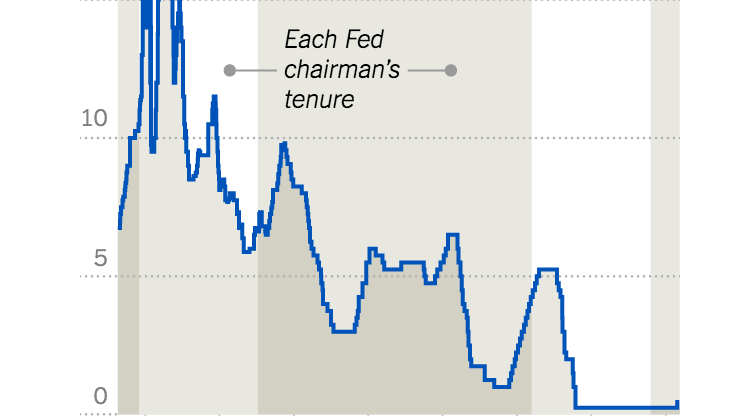
Is the FED  (Federal Reserve System) broken? If not broken then certainly being strongly tested, as this piece shows to me: The Fed Is Searching for a New Framework. New Minutes Show It Doesn’t Have One Yet. – The New York Times.

Since the start of the Great Recession, the target interest rate has gone from just over 5% to just over 0% and has more or less stayed that way for over half a decade. (See the chart). After a very long pause, the chairwoman of the Federal Reserve has begun the process of raising interest rates,  a process that her predecessors have engaged in over recent decades as they put their own distinctive stamp on the economy. (See A History of Fed Leaders and Interest Rates – The New York Times). Some of them, like Paul Volcker, have been hugely successful in shaping the economy. Others, like Alan Greenspan, also have shaped the economy hugely, but I would add, unsuccessfully. So what should the FED do?

Paul Krugman has his take, here. Perhaps an extreme inflation target is the answer, just like Volcker’s extreme interest rates were the answer for their time. However, I don’t think they are symmetrical, and the goals of a higher inflation target would be dampened down by other forces. Furthermore, the FED and most other central banks seem only capable dealing with tamping down inflation and not so capable when dealing with unemployment.

The Chairwoman is signalling she will be raising rates soon. We should see what the effect is, and how the economy and President Trump and Congress responds. If the economy goes into a recession, that would say to me the FED is broken.  If the economy does not go into a recession, I would say this means the FED still has a limited role in managing the economy. Let’s see.

Two good articles on the new economy (work is changing)

These two articles: In the Sharing Economy, Workers Find Both Freedom and Uncertainty and Is owning overrated? (both from the NYTimes) look at how people are changing their how they work and what they own in the new (American) economy. I don’t think there is one thing driving these changes. Partially it is how people feel about work, but also what type of work is available to them. Plus technology is allowing for people to work and own in ways not available before.

I found the first article depressing. My hope is that as more companies like this come along, they will need to compete more and this will be better for the workers. Indeed, this seems to be happening to Uber as Lyft (and likely others) come along. As for renting, I think there is a limit to this. While it makes sense to rent some things, I believe that subset is alot smaller than one may initially imagine. What may happen is that people own things for smaller windows.

What seems certain is that the days of working for one employer for along period of time is only going to decline further. Additionally people may conspicuously rent or hold for smaller periods of time and then release things.

Time and changes in the economy will tell.