Love and rockets (things I find interesting in math and science, Dec. 2022)

In the last few months my math and science reading has mostly been about space, with some smattering of other things. NASA in particular has been the focus. First up is a piece on the DART Mission which smashed into an asteroid and altered it’s path. No small feat, that. In other big feats, they are still in the planning stages of a a balloon mission to Venus . Given that landing on Venus results in a spacecraft being destroyed, a visit that stays in that planet’s atmosphere may be the only way for it to succeed.

One such mission that should definitely succeed is Artemis, NASA’s project to visit (revisit?) the moon, Here is the NYTimes on it. Relatedly, here’s the Atlantic with a piece on the the 50th anniversary of Apollo. We are clearly due for a return trip. I wonder if it will affect the new astronauts as much as it did William Shatner after his quick trip into space with Jeff Bezos? I suspect they will be more prepared than the TV astronaut was.

Speaking of space, here’s cosmologist Katie Mack talking about scenarios for the end of the universe. I got her book last Christmas and loved it. Another book on physics I want to read is by Sabine Hossenfelder . She’s a no nonsense type of scientist, which I think is good. For while I agree that when it comes to science and especially physics, there is no escaping metaphysics, I also agree with those who say that physicists sometimes get carried away with some of their loftier or wild ideas.

Then again, some of those ideas resulted in this year’s The Nobel Prize . And it had led to physicists creating “the Smallest Crummiest Wormhole You Can Imagine”. These wild ideas really makes you think. If you think too hard, though, you will likely get tired. The Guardian has a good explanation on why thinking tires your brain .

Finally, if you are interested in learning more about physics, I recommend you check out the web site DrPhysicsA. It’s good stuff. And you want to learn more about math, you can visit the blog of one of the best mathematicians in the world. Here is is writing on odds. Also good!

Forget going to Mars. Go to Iceland

I think going to Mars is a terrible idea, but if you are the opposite of me and would love to experience that, I have a suggestion for you. You can get the experience of going there today by going to…Iceland. NPR explains:

Iceland is like Mars — if the Red Planet had hot tubs. That’s the cheeky idea behind a new pitch from Iceland’s tourism board, which says people don’t need a spaceship to see otherworldly sights like red rocks, black sand and subglacial volcanoes. Plus, they note, oxygen is abundant in Iceland. To drive home the message, they launched a promo video and a space billboard with the tagline, “Iceland. Better than space.”

See? All you need is a plane ticket and a place to stay and you can go to Mars next week. If you think the tourism people are just making stuff up, listen to NASA. NPR again:

NASA agrees: the agency has repeatedly used Iceland as a stand-in for the Moon, and it’s doing so again as it prepares astronauts for new missions off-world. “Iceland is an amazing analog for both the Moon and Mars,” says NASA’s Kelsey Young, who researches the exploration of planetary surfaces and who has done geologic fieldwork in Iceland.

For more on this, see the NPR article, here: Iceland says it’s better than space. We asked NASA about that.

SpaceX tries to disrupt and partner with NASA at the same time

It’s not explicitly stated, but if you read this: If you think NASA is frustrated with SpaceX, you’re probably right in Ars Technica, then you may draw the same conclusion. It seems SpaceX is taking advantage of its partnership with NASA to position itself to get the point where it can get by without it and eventually compete with the space agency.

If that was not the case, then I would expect SpaceX to stick to missions that were separate from NASA and supportive of NASA. Instead they seem to be trying to compete with NASA for the same missions.

It’s a tricky call for SpaceX: if they are not careful, they could ruin their partnership and find themselves without a steady source of income to fund their ambitions. I’m all for both NASA and SpaceX both being viable for the long term. Let’s hope that happens.

You too can be like Elon Musk (@elonmusk) and fund a lunar mission

Really. There is a kickstarter going on right now you can contribute to: LUNAR MISSION ONE: A new lunar mission for everyone. by Lunar Missions Ltd 

The team there says….

We plan to send an unmanned robotic landing module to the South Pole of the Moon – an area unexplored by previous missions.

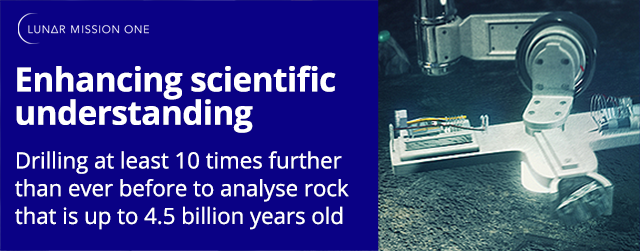
We’re going to use pioneering technology to drill down to a depth of at least 20m – 10 times deeper than has ever been drilled before – and potentially as deep as 100m. By doing this, we will access lunar rock dating back up to 4.5 billion years to discover the geological composition of the Moon, the ancient relationship it shares with our planet and the effects of asteroid bombardment. Ultimately, the project will improve scientific understanding of the early solar system, the formation of our planet and the Moon, and the conditions that initiated life on Earth.

I think this is the most fantastic Internet project I have seen yet. I highly recommend you check it out.

Thanks to Kottke for pointing it out.