Some thoughts on data centres and the environment

325 Front Street West III

People are worried about data centres.

People are worried about data centres and carbon emissions, especially if they read articles like these: Google’s carbon footprint balloons in its Gemini AI era, or Microsoft’s AI obsession is jeopardizing its climate ambitions or Google’s greenhouse gas emissions are soaring thanks to AI or Exxon Plans to Sell Electricity to Data Centers.

People are also worried about data centres and water usage after they read articles about how much water is used for each ChatGPT query.

And when people read pieces like this, Amid Arizona’s data center boom, many Native Americans live without power, they are no doubt worried about what data centres do to the communities where they reside.

My thoughts on this, as someone who has worked in data centres for 40 years, is that there are valid reasons to be concerned, but there are positive aspects to data centre growth and it’s important to keep those in mind.

Data centres are simply places with a concentration of information technology (IT). One time companies had data centres on a floor of their building, or in special buildings in locations like the one pictured about on 325 Front St in Toronto. These days, many companies are moving from hosting their own technology in their own buildings and moving that tech to cloud computing locations, which are just another form of data centre.

I believe that’s this migration to the cloud is a good thing. As this states:

Research published in 2020 found that the computing output of data centers increased 550% between 2010 and 2018. However, energy consumption from those data centers grew just 6%. As of 2018, data centers consumed about 1% of the world’s electricity output.

Moving workloads from on premise infrastructure to cloud infrastructure hosted in big cloud data centres saves on energy consumption.  One of the reason for the savings is this:

…normally IT infrastructure is used on average at 40%. When we move to cloud providers, the rate of efficiency using servers is 85%. So with the same energy, we are managing double or more than double the workloads.

You might think all this data centre growth is being driven by things like AI and crypto, but according to this IEA report:

Demand for digital services is growing rapidly. Since 2010, the number of internet users worldwide has more than doubled, while global internet traffic has expanded 25-fold. Rapid improvements in energy efficiency have, however, helped moderate growth in energy demand from data centres and data transmission networks, which each account for 1-1.5% of global electricity use.

That’s the key point: the demand for digital services is driving the growth of data centres. Every time you watch a video on your phone or pay your bills on your computer, you are using a data centre. Even things like the smart meter on your house or the computer in your car or the digital signs you see interact with a data centre. You use data centres pretty much all day, sometimes without knowing it.

The good news is that there are innovations to make them greener are happening with them, like this new method for liquid-cooling data centres that could make the waste heat useful. And it’s good that IT professionals are moving towards green cloud computing.  But it’s not good that with the rise of technologies like generative AI, IT companies are having a difficult time keeping up with the demand and sticking to their green targets.

Speaking of gen AI, I think energy costs associated with AI will peak and come down from the initial estimates. Indeed, when I read this article Data centres & networks – IEA, and in particular this…

Early studies focused on the energy and carbon emissions associated with training large ML models, but recent data from Meta and Google indicate that the training phase only accounts for around 20–40% of overall ML-related energy use, with 60–70% for inference (the application or use of AI models) and up to 10% for model development (experimentation). Google estimates that ML accounted for 10-15% of its total energy use in 2019-2021, growing at a rate comparable with overall energy growth (+20-25% per year over the same period).

… then I am optimistic that energy costs will not be as bad as initially estimated when it comes to AI. I am not optimistic that we will not decrease our demand for digital services any time soon. Because of that demand, we need not just more data centres, but better ones. It’s up to companies to build them, and it’s up to citizens to keep the companies accountable. The best way to keep them accountable is to better understand how data centres work. I hope this post went some small way to doing that.

P.S. All the opinions expressed here are my own and do not represent the views of my employer.

(Photo by Jack Landau on Flickr)

Private jets are a sign of excess in general. Not just for one individual.

There was a lot of chatter around private jets last week as a result of Taylor Swift’s lawyers threatening to sue a person tracking her jet on social media. There’s a whole bunch of PR and legal maneuvers around that I won’t get into.
One thing that came out of that hullabaloo for me was finding this site: climatejets.org. While I don’t hold the creators of the site accountable for total accuracy, I do think it is accurate enough to highlight the fact that many wealthy people in the world use private jets a lot. And why wouldn’t they? Private jets do four things for rich people: they are efficient, they are private, they are status symbols, and they use up the excess amounts of money they have.

The focus on private jets has been centred around climate change. I think some of that focus should be on economic discrepancy. People use private jets because they have vast amounts of money and we have great inequality in our societies. If tomorrow someone invents private jets that run on clean energy, they will still highlight a problem in our society. It just won’t be a climate problem.

In our age of great inequality, it’s not enough to own large mansions or fancy cars or be surrounded by body guards. In our age, you need your own jet to bounce around in, whether you be Jay-Z or Bill Gates.


Ten pieces on climate change (not all bad)

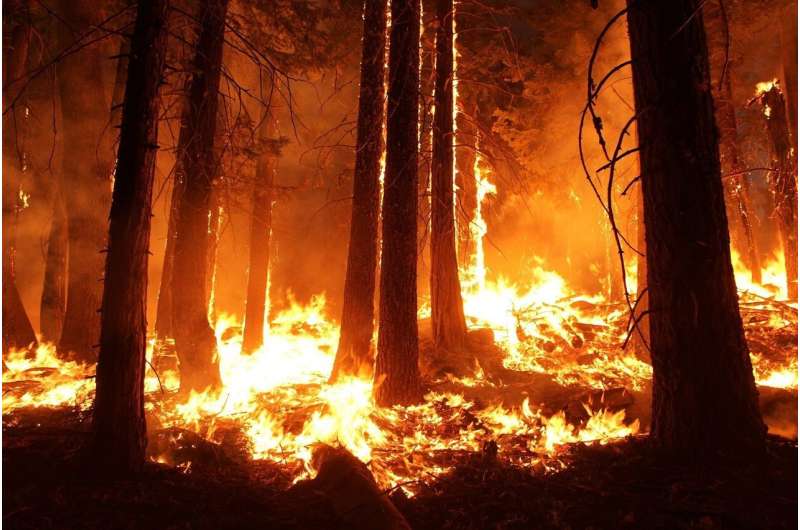
It’s hard to find any good news when it comes to climate change. First off, we have extreme weather conditions. That’s bad enough, but it also leads to additional problems, like wildfires. How bad is the problem with wildfires in Canada as temperatures climb? Very bad. To be specific, Canada wildfires have burned over 10 mn hectares this year. And it’s not just the loss of forests or the poisonous air people have to breathe. There is also the tragedy of lost homes and lives.

Climate change damage is not limited to Canada, obviously. It’s so bad in parts of the U.S. that insurers are pulling out of California. Something similar is happening in Florida. I suspect the list of states will not stop there.

Not everything resulting from climate change is bad, though. California’s weather catastrophe has flipped and become something of a miracle, as “gushing waterfalls, swollen lakes and snow-covered mountaintops (have) transformed the state’s arid landscapes”. You can read about it here.

So far that’s a good news story for that state. But the extremes of climate change might eventually overwhelm their infrastructure. Look at Texas, for example. Climate change is wreaking havoc on the Texas power grid transmission lines.

In searching for other good news, I see that the world is finally spending more on solar than oil production. Also, the New York Times reports that scientists at Purdue have created a white paint that, when applied, can reduce the surface temperature on a roof and cool the building beneath it. Every bit helps. Maybe even the new electric Cadillac Escalade iq vehicle is at least a sign of the shift we need to be making, if anything else.

Finally, here’s two more pieces on climate change I thought were worth reading:

On the stupid gas stove wars, and some other things regarding climate


Last week a small report leaked and set off an explosion of culture war nonsense, with people on the left advocating for getting rid of gas stoves and people on the right insisting they’ll never give them up. That the report had nothing to do with banning gas stoves was besides the point.

Regardless of how you feel about the matter, a gas stove ban could help climate and health problems. But it won’t happen because…well, for many reasons. One is the natural gas industry is fighting back with influencers and many things. I don’t know if this will be enough for them. In time they could end up looking like Big Oil or Big Tobacco. Maybe. As for me, I think the switch will happen if there is enough incentives for it to happen.

In the meantime, here’s a reminder that there’s nothing inherently good about “natural” gas. Indeed, natural gas is a dangerous name for a climate pollutant.

Speaking of incentives, governments everywhere are doing what they can to change. Here in Canada the government has put out a climate action incentive payment. The U.S. has also provided incentives. All good. One problem though: the contractors needed to do it, so says VOX.


When it comes to climate change and global warming, how well are we doing overall? There are a few encouraging signs. For example, US greenhouse gas emissions rose in 2022 but GDP grew faster. But there are also the usual discouraging signs, such as this: The last eight years have been the warmest on record researchers found.

It’s easy to get discouraged, it’s better to take action. For example, Smile Plastics Turns Yogurt Pots Into Terrazzo-Like Surface Panels. Smart. Also smart: companies are turning to alternative construction materials, like wood. Not smart is the fact that we could be using garbage dumps and landfill for solar farms but we aren’t. We need to strive to be smart and do more.

As for the rest of us, let’s pledge to waste less this year. This can help: New Year Less Waste. Remember and act on the three Rs.

Last but not least, here’s a mix of stories on climate change and the environment I thought were worth getting into:

Italy is a reminder not to be cheap if you want to tackle climate change


To tackle climate change, Italy provided what is considered by some a superbonus to homeowners to make specific renovations. That’s right, Italy reimbursed home owners 110% to upgrade their homes in a way that helps the environment. That prompted some to ask: ‘Why so generous?’. One reason? It resulted in a “surge of green home renovations” which is great for Italians and great for the climate.

Look, people know that something has to be done about climate change. People are also motivated mainly by their own self interests. Take advantage of that by offering generous benefits for people to change. We need to use every tool at our disposal, from alternate energy to alternative uses of energy, and more. Now is not the time to quibble about the price: that time is past. Now is the time to hurry things up. Throwing money at a problem can often do that. Italy showed it.

New parts of the world will become uninhabitable for humans


I think this will become true, and not just in India: Are parts of India becoming too hot for humans? – CNN.

Already we have parts of the world barely inhabitable due to extreme weather. Think of Antartica on one hand, and the Sahara desert on the other. Soon places in India will join them. Other parts will become inhabitable for different reasons: extreme weather and flooding.


Climate change: the bigger picture, from Bill Gates


If you want to understand the challenge of dealing with climate change, then read this: Climate change and the 75% problem | Bill Gates.

There are things you can do in your own day to day to reduce your contribution to climate change. But in the bigger picture, much larger changes have to happen. And soon. You can contribute there too, by supporting politicians and companies and other organizations that are working to make big positive changes.

You can’t do it alone, but every thing you do move us in the right direction. We are cutting out coal. We are getting energy efficient. We are eating more of the right things. Many many things are being done that help, and much more can be done to improve things. Keep up the good work, and work hard to avoid complacency and despair.