
The odd bun flight about The Odyssey, the Sea People, and the Bronze Age Collapse


It’s an odd thing, what Emily Wilson did in writing this piece, An Uncomplicated Man, for the London Review of Books. Suddenly the discussion of Christopher Nolan’s new film turned into a debate on whether or not Nolan gets the history right. I want to delve into the second part for a bit.

It’s a tricky thing to criticize such things as the film’s portrayal of ancient Greece, since almost everyone concedes that you can’t really be accurate about history when it comes to Homer’s epic work, since it is not historically accurate in itself. So I was especially struck by the strong dismissal of Nolan’s references to the Sea People.  Such dismissal came at the end of the Wilson piece,  as well as this piece by a Historian of Ancient Greek (which is very good otherwise).

While not an expert, I would give Nolan a break on that, for a few reasons. One reason, as this piece explores, Did Odysseus Cause the Bronze Age Collapse?, is that it is hard to get a good gauge on who the Sea People were, so I am inclined to cut him some slack. A second and more important reason, to me, is that Nolan is using artistic license here. He is no more being historical when it comes to the Sea People than he is with certain costumes, and he sacrifices historicity for the sake of artistry. That’s how I believe he uses the reference.

That bun fight aside, I think it’s great that Nolan’s “The Odyssey” has fired up people’s opinions.  And it’s great that subject matter experts are weighing in on the film, the history, and the literature behind Homer’s work. More films should do that.

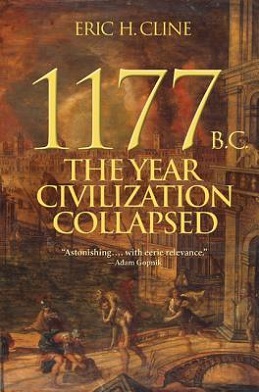
P.S. For more on the Sea People and the Bronze Age collapse, I highly recommend this book, “1177 B.C.: The Year Civilization Collapsed” by Eric H. Cline. It’s a fascinating story.

How art can make us more confident


According to this, art can make us more confident by providing us with stories and representations of people with characteristics we share that overcome similar obstacles that we run up against. After all….

Confidence isn’t the belief that we won’t meet obstacles. It is the recognition that difficulties are an inescapable part of all worthwhile contributions. We need to ensure we have to hand plenty of narratives that normalise the role of pain, anxiety and disappointment in even the best and most successful lives.

I agree.

The image is an extended version of the work highlighted in the article. Like the Stations of the Cross and other works, they illustrate the difficulties of a way of life, and by making us aware of them, allow us to best prepare to meet them and overcome them.

An astounding interview of Yanis Varoufakis

This New Statesman interview of Yanis Varoufakis is astounding. The way he describes negotiations between Greece and other members of the Troika should not surprise me, and yet it does.

You might think: that can’t be right….he’s exaggerating for his own benefit. But many of the things Varoufakis states I have read referenced elsewhere, but in snippets.

Well worth the time spent reading it.

P.S. He has some interesting things to say about Piketty, as well. The link to his critique of Piketty is here.

Two quick reads on Greece: one good, one glib.

Here’s two views on Greece: one good, one glib.

I’m a fan of Michael Lewis, but this piece of his, Greece Saunters Across the Autobahn – Bloomberg View, is glib at best. It feels like he had to bang out a few hundred words on Greece or he had this Berkeley story he’s been itching to use and finally found a place.

It’s still worth reading, because he is a good writer and his thinking is likely what many people are reading. But don’t read it thinking you will get a better understanding of why Greece is in the state it is in.

After skimming that, read this: Europe’s Attack on Greek Democracy by Joseph E. Stiglitz – Project Syndicate

It sums up what I’ve been reading by people who are more aware of what is happening in Greece. You will come away shaking your head, as you should. For what is happening makes no sense from an economic viewpoint. But then, much of Europe has been making poor choices with their economies since the Great Recession started., mainly for ideological reasons.