
Too often when I see pieces on work and what makes a good job, they downplay certain aspects, like pay or job title. That comes up in this piece by Arthur Brooks, How to Pick a Job That Will Actually Make You Happy, where he writes:
… this belief is based on a misunderstanding of what brings job satisfaction. To be happy at work, you don’t have to hold a fascinating job that represents the pinnacle of your educational achievement or the most prestigious use of your “potential,” and you don’t have to make a lot of money. What matters is not so much the “what” of a job, but more the “who” and the “why”: Job satisfaction comes from people, values, and a sense of accomplishment.
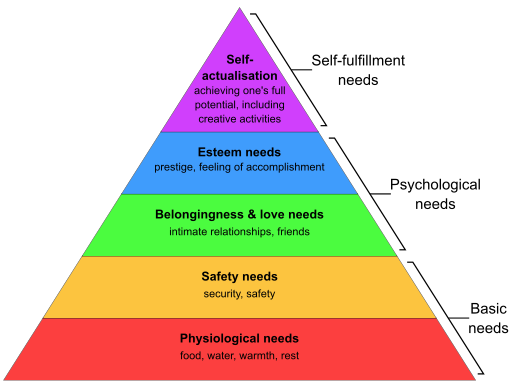
I don’t think he is wrong with this, I just think he is missing out on the bigger picture. The way to see the bigger picture is to focus on Maslow’s hierarchy of needs (shown above).
According to Maslow, we have several needs: basic needs, psychological needs and finally self-fulfillment needs. The lower needs are simple and obvious: the higher ones are complicated.
Our jobs provide for some or all of these needs. For example, our work environment should provide us with our basic needs, while our pay satisfies both basic and psychological needs. Things like job titles, promotions, awards, perqs, and other acknowledgements also help with psychological needs. As for the work itself, and the things Brooks is discussing, they satisfy our self-fulfillment needs. If you are fortunate, you have a job that provides for all those needs to a high degree.
That said, we all measure our needs differently. For people who work dangerous outdoor jobs, their basic needs may not be met nearly as well as someone who works in a warm office. For those outdoor workers, the satisfaction from the work itself (e.g. rescue work, emergency repair work) may more than make up for the discomfort and difficulty they face. Likewise, for a person working in an office, doing interesting work that fulfills their potential may be much more important than promotions and pay raises and other things their co-worker with different psychological needs has.
In Brooks’s piece, he emphasizes self-fulfillment needs and minimizes basic and psychological needs. That’s a common mistake, and the reason people might become dissatisfied with their job, even though on the surface what they have appears to be a great job. We all know about people quitting because of bad management: in that case you can see people’s needs at all levels not being met. But people can also struggle because they have a conflict that some of their needs are being met while others are not. For example, people can have a good job with lots of benefits, but it is very unfulfilling, or they can have a good job that is very fulfilling but it doesn’t meet their basic needs.
The best job can fulfill all of your needs to a satisfactory level. That’s the job that will make you happy, not just a job that satisfies your top needs. When you look to work at a new place, make sure you can get all your needs met to the level you need. You’ll be much happier.




 Smart People I Know