
My guide on how to use Michelin Guides to causally dine

You may think of Michelin guides in terms of deciding the best places to dine in a particular city or place. That is one way to think of them. If you aim to eat in the finest of establishments, their guides to 2 and 3 star restaurants can help you there.

On the other hand, if you want have a relaxing meal that doesn’t cost too much, you can still use their guides. Here’s two ways to do that:

  1. Go to restaurants with Bib Gourmand awards. As Michelin says, these are places with good quality, good value cooking. That’s how I ended up eating recently at Bao in London. It was delicious and super inexpensive. Same goes for Brutto, which I stopped at on my previous visit. If you were visiting Toronto, you would do well to eat at such places as Sunny’s Chinese or Bar Raval, all places with Bib Gourmands. Same goes for Russ and Daughters and Katz’s in New York, to name just a few more places.
  2. Go with restaurants with a price point rating of $ or $$. You likely won’t get fancy tablecloths or candlelight, but you will get really good food. Two examples of that in Toronto are PAI and CÀ PHÊ RANG, while in New York you get great meals at place like Via Carota and Momofuku Noodle Bar. Are you in London? Check out Barrafina or the Pig and Butcher.

Now, you can still causally dine in places that don’t meet the criteria above. I had a fantastic meal at Parcelles in Paris, but it is €€€, even though it feels casual there. Likewise I love St. JOHN in London, and it too feels like a casual place, but again, it is £££. But over all my guide holds, especially if you have no idea how to proceed and you don’t want to spend too much while still eating well.

Michelin is not the be all and end of all of where to dine in a city. Anyone who knows a city well can tell you that they pass over places that should be included, and underrate places you should check out. But you would do well to lean into their guides if you are aiming to eat well and eat causally in a city.

Restaurants loved and living: L’Express

L’Express restaurant: just the thought of being there again makes me happy. I’ve gone countless times in the last few decades. Whenever I am in Montreal, even if just for a day, I dine there. Everything about it is great: the bistro food, the great value French wine, the superb waiters, the classic decor, and especially the big jars of cornichons. I love the ravioli and the hanger steak, followed by one scoop of ice cream (preferably maple),  but I have never been disappointed with whatever is served.

I was worried about it during the pandemic, but they seem to have muscled through those lean times. No doubt because of its many fans who have been there since 1980, and who no doubt will still be going in 2080.

I suspect they will have even more fans now that Michelin has arrived in Quebec and awarded it a Bib Gourmand. While I am agree with Leslie Chesterman that Michelin got things wrong on their first swing at Quebec, the tire people did right awarding a Bib to L’Express. It truly is “good quality, good value cooking”.

So the next time you are in Montreal strolling the great street of St. Denis, pop in to L’Express, either to have some wine (it’s also a great wine bar) or better yet find a table, scan the wonderfully printed menu, and settle into a plate of savoury bistro food. You won’t be sorry.

For more on L’Express and it’s history, check out this piece in the New York Times.

(Photos here from the Times piece. For more restaurants loved and living, see here.)

Toronto: city with a future (random updates on Hogtown, October 2023)

It’s been a season since I last wrote about Toronto. In that time our new mayor has been in office roughly 100 days. The Toronto Star has a rundown of what election pledges by Mayor Olivia Chow that she already has accomplished, as well as what she is working on. Not surprisingly some of them have been rather straightforward to achieve (e.g. keeping libraries open on Sunday), while some will be much harder to do (e.g., stopping the Gardner expressway rebuild). It’s a promising start, and she seems to have momentum. Of course much depends on the will of other councillors, not to mention people like Premier Ford. I’m hopeful for now.

One good thing she is working on is expanding the TTC by spending $10 million on staffing to curb transit crimes. Good. The best way to keep transit safer is having more people on it dedicated to the task. Let’s hope they do a good job. We need a safe and vibrant transit system.

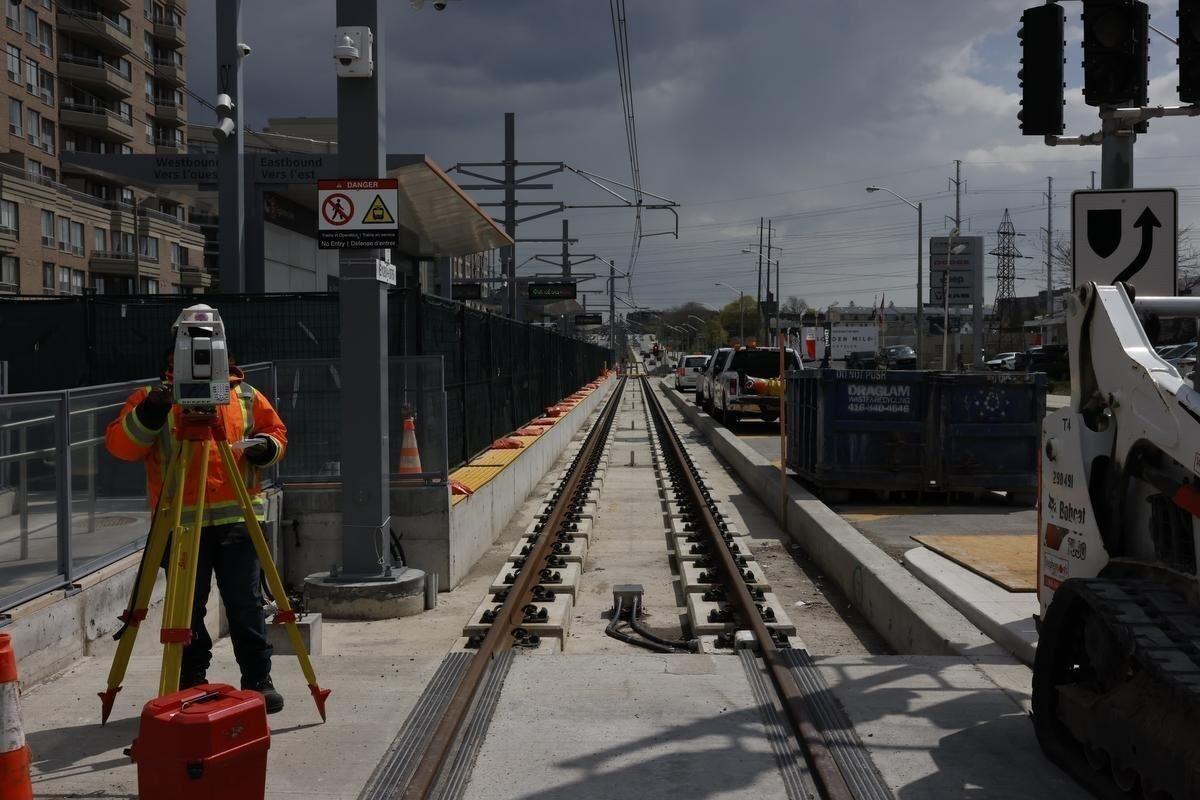
In other transit news, one of the things that will be more difficult to fix is the Eglinton Crosstown LRT line. I’m not hopeful for that being done any time soon. It doesn’t help that the communications of the people building it has been poor. For example, one time their website quietly disappeared. Another time Metrolinx straight up refused to say when long-delayed LRT might finally open (see here). Terrible and unacceptable.
As for the mayor’s partner, Premier Ford, he has been up to his neck in hot water, mainly due to his involvement in Ontario’s Greenbelt. After Ford apologized for his ‘wrong’ Greenbelt decision, and  vowing to reverse it, he finally cancelled the Greenbelt land swap. While that was good, he is not out of hot water yet, as there is another scandal with his plans to have Ontario Place developed, a plan blogTO says no one wants (other than Ford and the developers). I am sure there will be more news developing on that scandal before the end of 2023.

From a real-estate viewpoint, Toronto’s downtown core has major troubles as office vacancy rates soar. I know some businesses are trying to get people to go back into the office, but many workers are resistant and I don’t think that is going to be enough to reverse those troubles. In other real-estate news, experts revise Toronto housing forecast due to a tanking market. Prices are still going up, but for how long?

Other workers have been striking in Toronto since the summer. The Metro grocery strike is finally over after a month-long walkout. More on that, here. Meanwhile the TVO strike continues to drag on with no end in sight. 2023 is a year of striking workers.

In other business news, the book chain Indigo is looking to offer alcohol to its customers. I dunno how successful that will be. The company has suffered big problems, including losing $50M last year. It doesn’t help their execs are heading for the exits. Let’s hope it can get corrected: I’d hate to lose that chain of stores.

Foodwise, the folks from Michelin have come to town and passed out more awards. Last year was the first time they did that and it got a lot of attention. This year…not so much. The Star had something on it, here. BlogTO put together a list of all the restaurants here for easy reference. If that’s your jam, this links to the Michelin site with more info.

Raccoons continue to own Toronto: we humans just live here. Recently they’ve taken over the roof of Union Station. They are a weird nuisance: not as scary as rats and not as hostile as Canada Geese. Just charming enough to offset anyone taking major steps to get rid of them.

I really enjoy Jamie Bradburn’s blog and the pieces he writes on old Toronto. Here’s something on subway interlining, or why does lower Bay Station exists. If you ever get a chance to go down to lower Bay, I highly recommend you do. Other than the benches, it does not seem too out of place from the rest of the subway. It’s fascinating to see.

As I was poking around Jamie’s site I came across this post on the Book City store on Bloor in the Annex closing. That was a sad event for me when that happened. I had gone there for years, ever since I moved into the area in the 80s. I loved that store. Loved checking out all the magazines, the books on the tables on the first floor, and taking the funky stairs up to the second floor to just hang around. It was a great place. There are still Book City stores in Toronto and they are fine, but I miss that one.

I also came across the image below on his site. It’s an IBM ad from back in the day when it’s headquarters were in the Don Mills and Eglinton area. Toronto was a city with a future back then…and it still is.


From Michelin to Peter Oliver: thinking about how Toronto has changed in the last 40 years


Two noteworthy events in Toronto dining happened this month: one was the start of an era and one was an end. The start was Michelin came to town and tossed out stars and Bibs and otherwise paid attention to Hogtown dining. The end was the death of restaurateur Peter Oliver.

Decades ago if Michelin had come in and gave out stars, it would have been incredible. Not now. What I loved about the Michelin event this month was how many people could not give a hoot. Toronto’s food scene is excellent, and we don’t really need Michelin to come in and tell us. That can be seen in critiques like this the Star . Sure the places highlighted are great, but there is more to good food in Toronto than the places starred. Many great restaurants were passed over, as this piece showed, because we are a city wealthy in good places to go.

To be fair to Michelin, they did highlight quite a number of restaurants in Toronto, even ones that did not get an award. One of those was Canoe. Canoe is just one of the many restaurants that are part of the Oliver and Bonacini (O&B)  Hospitality group. The Oliver in the name belongs to Peter Oliver.

I have been eating in Peter Oliver’s restaurants since the 80s. Back then he had a cozy place on Yonge north of Eglinton that was a great place to meet up for brunch with friends. From that place he went on to open and close many places, some of which were truly great.

While he has a career of four decades, this piece from 2000 in the Globe really shows his career as he was becoming ascendent. He had a knack at making restaurants, even though some of them (Bofinger/Paramount on Yonge near St. Clair) were too ambitious. While the buildings themselves seem to spare no expense, the food was sometimes lacking, and leading critics at the time like Joanne Kates dismissed some of it as “tourist all the way.”

What really made a difference for Oliver was when he hooked up with Michael Bonacini in 1993 to open Jump, Then Canoe. And many more. The combined talents of the two of them lead to an entire string of successful restaurants in Toronto and elsewhere.

Over the next few years I expect Michelin will be handing out more stars in Toronto. I expect the some of them will go to O&B restaurants.

The food scene has evolved significantly since the 1980s. Peter Oliver and O&B has been a big part of that evolution. Over at their web site they have a warm  Tribute to Peter Oliver. It’s worthy of consideration, just like the man himself. RIP, and thanks.

P.S. Here’s all the Michelin star restaurants of Toronto. The Globe has more on the Michelin awards. So does BlogTO. Not surprising, here’s how hard it is to get a  table at these places. Here’s a story on the one place /chef that got  two stars: rich readers, take note. 🙂