On the No-Recipe Recipes cookbook from the New York Times

I want to recommend the cookbook above, one of my favorites.  The blurb for it says:

You don’t need a recipe. Really, you don’t. Sam Sifton, founding editor of New York Times Cooking, makes improvisational cooking easier than you think. In this compact, handy book of ideas, Sifton delivers 100 no-recipe recipes — each gloriously photographed — to make with the ingredients you have on hand or could pick up on a quick trip to the store. You’ll see how to make these meals as big or as small as you like, substituting ingredients as you go.

For experienced cooks, it’s a great book. For most others, I think you kinda need more detailed recipes, unless you are adventurous. If nothing else, it’s a fun book to read: Sam Sifton is a great food writer and every time I read him, I am inspired to cook.

Before you rush out and get it, take a look at this: You Don’t Need a Recipe – The New York Times. It’s a beautiful representation of the book. You can also get many of the recipes list here. I am a big fan of the pasta amatriciana on the fly and the pasta with chickpeas and a negroni! And you can’t go wrong with Italian subs with sausage and peppers.

If making a few recipes gets you wanting more, you can buy the book here: Cooking No-Recipe Recipes – The New York Times Store
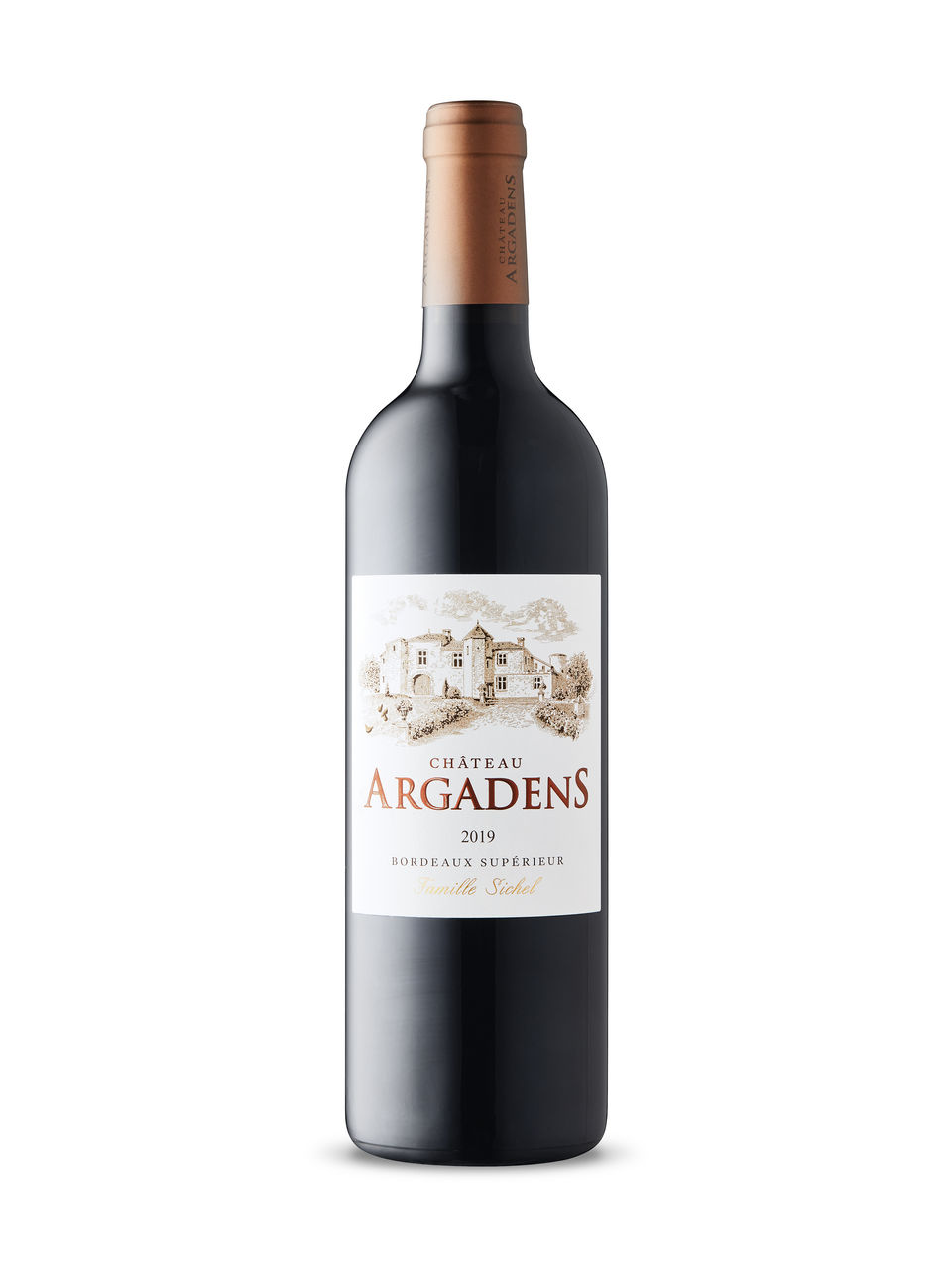


Château Argadens: good and cheap Bordeaux after all these years

I’ve been buying Château Argadens Bordeaux Supérieur since 2008! The LCBO says it has flavours of “Floral, Chocolate, Plum” (true) and goes on to say that this Bordeaux is “a great value” (very true) and “this popular, classically framed blend of Merlot and Cabernet is a great choice for grilled lamb.” (Also true.)

What’s crazy is that it now goes for $17.60. Seventeen years ago it went for…$18.95! How many great products do that?! Practically none.

Grab yourself a bottle or a case when you can. You won’t be disappointed.

P.S. My original post from 2008 is here: Good “cheap” Bordeaux at the LCBO this month | Smart People I Know


A guide to generative AI and LLM (large language models), February 2025


I decided to go through all my posts on AI and pull out information that would be useful to anyone wanting to learn more about generative AI (often referred to as gen AI or genAI) and the LLMs they run. If you have used chatGPT, you have used genAI. But there’s much more to the technology than what you find on that site. To see what I mean, click on any of the blue underlined text and you will be taken to a site talking about something to do with gen AI.

Enjoy!

Tutorials/Introductions: for people just getting started with gen AI, I found these links useful: how generative AI works, what is generative AI, how LLMs works,  sentence word embeddings which kinda shows  how LLM works, best practices for prompt engineering with openai api a beginners guide to tokens, a chatGPT cheat sheet,  demystifying tokens: a beginners guide to understanding AI building blocks, what are tokens and how to count them, how to build an llm rag pipeline with llama 2 pgvector and llamaindex and finally this: azure search openai demo. (Some of these are introductory for technical people – don’t worry if you don’t understand all of them.)

For people who are comfortable with github, this is a really good repo / course on generative AI for beginners. (and check out these other repositories here, too). This here on the importance of responsible AI. and here’s a step by step guide to using generative AI in your business, here.

Prompts and Prompt Engineering: if you want some guidance on how best to write prompts as you work with gen AI, I recommend this, thisthis, this, this, this, this, and this.

Finally:  Here’s the associated press AI guidelines for journalists. This here’s a piece on how the  Globe and Mail is using AI in the newsroom. Here’s a how-to on using AI for photo editing. Also, here’s some advice on writing better ChatGPT prompts. How Kevin Kelly is using  AI as an intern, as told to Austin Kleon. A good guide on  how to use AI to do practical stuff.

Note: AI (artificial intelligence) is a big field incorporating everything from vision recognition to game playing to machine learning and more. Generative AI is a part of that field. However nowadays when we talk of AI people usually mean gen AI. A few years ago it was machine learning and before that it was expert systems. Just something to keep in mind as you learn more about AI and gen AI in particular.


Strategic Voting in 2025 – what you should know

Canada flag on brick wall

I am still a supporter of strategic voting in Canada. My thoughts on it haven’t changed much since I wrote this in 2019: Strategic Voting in Canada – some thoughts.

What has changed is the site you should go to if you  also want to vote that way. It doesn’t look like this site, strategicvoting.ca, is working any more. However this site SmartVoting.ca, seems up to date, at least for the Ontario election this week. And it looks like they are preparing to work on the soon to come Federal election.

It’s good to check out regardless of how you plan to vote.

Tipping is dead (and some other thoughts about restaurants)

Two things killed tipping: the pandemic and the handheld payment device (show in the picture above).

For decades before the pandemic, the standard tip was 15%. It was something you figured out yourself, and you either added it to the amount on your credit card or you might even pay in cash.

During the pandemic, patrons were asked to contribute more the usual 15% because everyone was struggling during the pandemic and this was especially true of restaurant workers. So people would tip sometimes 20% or more.

Also around this time the handheld payment devices became ubiquitous with default payment amounts. Unlike the one shown above, 18% became the lowest amount in many places, although I’ve seen some places have 20% and some with the audacity to make the lowest 22%. The pandemic ended, but rarely do I see 15% any more.

It’s true, for some places the device provides you an option to put in another amount. But you have to press several buttons and do your own calculation of the tip. And I am sure people do that and it’s fine. Most people I dine with, though, just go with one of the preselected picks of 18% or more.

This got me to conclude that the tip is no longer a tip. It’s just a service fee. Indeed I’ve seen some restaurants recently come out and say that on their bills. We are becoming more like Europe, where service is included but you throw in a bit more if the service is really good. I am not a fan of this.

This forced tipping is part of what I don’t like about restaurants and fine dining any more. I dislike the rushed service where they bring out all your food within 20 or 30 minutes of sitting down (if I want fast food I’ll go to a fast food restaurant).  Or bringing out the first food while I am enjoying a pre-dinner cocktail (I’ve pretty much given up on ordering them because of that). Or the smaller menus. Or surly and inflexible front of house who insist you sit in the table they’ve assigned you because that’s what’s on the iPad at their station. Or the waiters telling you that you have to be done by a certain time as soon as you sit down. And finally the payment device with a hardcoded 20% coded in handed to you by a hovering waiter. Bah humbug to all of that. I feel like I am renting a table, as opposed to being a guest.

I’m not the only one who is unhappy about it. Before he retired from the New York Times, Pete Wells wrote about how restaurants have changed and not for the better. I have to agree with him.

Maybe there are too many places chasing the fine dining experience but unable to provide it. I understand that: it’s hard to do. I mean, even the the French Laundry hasn’t aged well, according to Melissa Clark (also of the Times).

Perhaps we need to go back in time to when chefs (according to Jacques Pepin) were more like labourers and less like the rock stars you see in the bear season 3 with it’s chef cameos. I’m not sure that’s even possible any more. Everyone in the kitchen want to be Thomas Keller or Gordon Ramsey or Matty Matheson. No one wants to be Anthony Bourdain before he was famous.

I still love going out to restaurants, and there are a few places that offer great service, delicious food and fine ambience. It’s never a given you will get all three though, no matter what the prices on the menu say.

P.S. For more on how tipping has gotten out of control, check out these pieces: Tip-flation has some restaurants asking for up to 30% in tips and More and more places are asking for tips. Hidden cameras reveal who is and isn’t getting them and finally  Tipping Isn’t about Service – It’s a Psychological Con Job and Waymo may let you tip — but there’s a catch in The Verge.


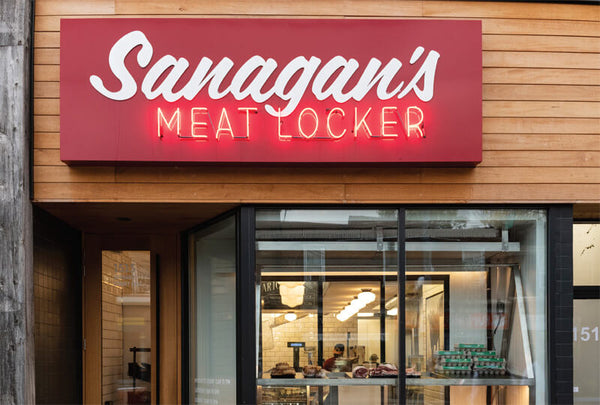
Meat is good. Delivery is good. But meat delivery from Sanagan’s in Toronto is great. Here’s eight good reasons why you should order from them

If you love good meat, then I highly recommend you get it from Sanagan’s Meat Locker in Toronto. If you can get to one of their locations — my fav is in Kensington — you should. But if you can’t, I highly recommend their delivery.

First off, their delivery rate, which was good before, is going lower, starting at $5. That less than the cost of commuting there. Spend over $150, and delivery is free.

Second, the quality of their meats and other goods is great. When I get a steak from Sanagan’s, it tastes like something and that something is delicious. So often meats from other places taste like nothing.

Third, the prices are reasonable. For example, here is what I paid recently:

  • Sliced Roast Beef × 1 – $4.89
    Duck and Green Peppercorn Terrine × 1 – $6.99
  • Metzger: Westphalian Ham × 1 – $5.20
  • Jambon de Paris × 1 – $5.69
  • Lamb Merguez Sausage × 1 – $9.99
  • Lamb Leg Steaks × 1 – $15.79
  • Paleron × 1 – $7.99
  • Flank Steak × 1 – $11.49
  • Pork Rib Chops × 2 – $11.98
  • Flat-Iron Steak × 1 – $9.79
  • Refundable Credit Card Hold For Overweight Products – $30.00

Those are as good if not better than the prices for comparable products at places like Loblaws or Metro.

Fourth, the selection is great. I can get cuts I can’t always get at the big grocery stores. Flank, paleron, tritip, and more. I didn’t get it last time, but I love getting their hanger steak and making myself a classic steak frites with it.

Fifth, you get points for every order which you can cash in and use on your next order.

Sixth, if you are a fan of charcuterie, they have everything you need for a great platter.

Seventh, they have lots of other great products too, from superb butters to great sauces, to mustards.

Eighth, they carry Blackbird bread, arguably the finest bread in Toronto and very hard to get (it sells out fast). I love that.

Ok, you get the idea. Sanagan’s is great, and their delivery is great. Check them out. You’ll be glad you did.


The cold plunge, or good things don’t have to last long to provide longer term benefits

Lately I’ve been going out on my porch or on my girlfriend’s balcony to do a dry “cold plunge”: stepping out into the winter air for a brief period of time until it gets to the point I can’t bear it. It isn’t long, but like people who do cold water plunges, I feel I get some of the same benefits. (If you make snow angels, I recommend dressing appropriately. :))

It’s a good remind to me that good things don’t have to last long to provide longer term benefits.  Sometimes 10 seconds is all you need, as I wrote about, here: My 10 seconds of happiness exercise | Smart People I Know


On how I am understanding Trump 2.0

Photo by charlesdeluvio on Unsplash.com

Since the inauguration it’s been difficult to avoid thinking about Donald Trump. Even if you avoid social media or the news, if you care about the world at all you are forced to consider what he and the people in his administration are up to.

With the flurry of actions his team has taken, many people I follow have been trying to make sense of it all. I’m no exception. So I wrote out this list of what I think are the things that motivate him or are in his comfort zone:

  1. making money
  2. being the center of attention / good publicity
  3. power / being the boss
  4. rewarding those who treat him well
  5. punishing those that treat him poorly
  6. not having to work hard
  7. not thinking (i.e. doing whatever someone recommends)
  8. real estate
  9. the 80s
  10. Mar-a-Lago

That list hasn’t changed much since Trump 1.0 and his first term in office. What is different is the intensity.

Unlike other presidents, he is not motivated to work hard, to give back to others, to be virtuous in any way, or to stay current with the culture. He may appear to concede some of these (e.g., letting Elon be the center of attention) if he thinks it will help him with something else (making money, not having to work hard).

The next time you see him doing something, you can look to this list and at least one if not more of these items for an explanation. Getting into crypto? #1. Taking over the Kennedy Center? #2.  Running for president? #3. Appointing people like Kristi Noem for anything? #4. You get the idea.

I’m sure there will be things you might add to that list. But if you see Trump doing something and ask yourself “what possessed him to do that”, it’s likely one of the items on this list.

My Charleston Favorites, 2025 edition


Chubby fish interior

I was recently in Charleston, S.C., a city I love.

I’ve written about Charleston several times here, but I am sure some people might wonder, what do I recommend for anyone visiting Charleston? Here’s a short list for the start of 2025. It’s far from exhausting.

  1. Maison. Simply the best French food I’ve eaten anywhere in North America, save Le Bernardin. Sit at the bar: the bartenders are tremendous. Get them to make you a french negroni to start, and then have them recommend wine by the glass as you go. The salmon tartar is a great starter, as is the french onion croquet. Not sure about things? Get the steak frites. But it pay to try something a bit more adventurous. And if you want more French food, hit up
  2. Fast and French. If Maison is fine dining, this is fun dining. Go for lunch and rub elbows in their cozy downtown space. If it’s too cozy, you need to go to…
  3. The Ordinary. Make it easy and get a seafood tower. Get a table on the second floor if you can and look out over the place. But no where is a bad seat. It’s a big place.
  4. Renzo’s has delicious pizza and great wines, though it is not a big place, so you may have to wait. Speaking of that, you should try to go to…
  5. Chubbyfish (shown above) if you can ever get in, it’s superb. It may be easier to head over to…
  6. Santis for margueritas and TexMex food. It’s a super fun atmosphere too.
  7. Ted’s Butcher Block makes superb sandwiches every day of the week and on Saturdays, superb burgers. Grab some meat and cheese and wine to bring home for later. If you need options, then….
  8. Cow Sheep Cow also has excellent provisions, including cheese and wine. Need a corkscrew? They have great ones. Likewise,  go to…
  9. Monarch Wines for a bottle of something special. After that, go next door to…
  10. Harbinger and grab a coffee and a cookie. Or head over to…
  11. Sightsee, which also has amazing coffee. A beautiful space too. Then head downtown to wander along…
  12. King St. So much to see here, but make sure you pop into…
  13. Candlefish. It’s a great place for souvenirs and gifts. I recommend their library for a classic candle, though everything there is great. Speaking of great products…
  14. J Stark is loaded with them. You can’t go wrong with any of their bags or wallets. Even their key chains are wonderful. While you are in that part of Charleston, grab some food at…
  15. EVO or Odd Duck. Or if you are driving and hungry, go to…
  16. Cookout. Their hamburgers and chili fries can’t be beat. Love milkshakes? Then you definitely need to go.
  17. Munkle is just one of the great local brewers there. Stop by for a pint. If you are lucky…
  18. Doughboyz will be onsite selling their pizzas from their truck. Get the pepperoni. You’ll be glad you did. Did I forget…
  19. Rodney’s or Lewis’s for BBQ? I did not. Nor should you.
  20. Hampton Park is never a bad idea, either. Grab a coffee from Sightsee or Harbinger and then wander around or just snag a bench and relax.

A long list, and I could easily double it. Go to Charleston when you can.


If you are stuck on what action to take next, remove one thing

person frustrated at desk

If you need to work on something and you can’t get started or you are stuck, then remove one thing. It can be anything. If you need to cook a meal and you don’t know what to do, remove things from your cooking area or decide to cook one less thing. If you are going to construct something and you are blocked, then cut back on the time you are going to spend or the steps you are going to take.

If you are still stuck, keep removing things. Too often we overwhelm ourselves. Removing things helps either that. It’s a form of editing, in a sense.

Plus removing things is an activity. You are no longer stuck. You are now making some form of progress.


Generative AI = relational databases

tables of information


Imagine you have a database with two tables of information: customer information and account information. The one piece of data that both tables share is account ID. With relational database software, you can use it to tie the two tables together. So if a customer comes to you and asks for their current balance, you can ask them for their account ID and some other personal info. Then you can query that database with the account ID and verify who they are because you can see their customer information and then once you validate them you can also see their account information and you can get the computer to print out their balance. The database, in this case a relational database, relates the two source of information (customer info and account info) and lets you retrieve that information.

Now the nice thing about relational databases is you can further relate that information to other sources of information. If you have a table of products you want to promote to customers depending on their net worth, you can query the database for the accounts that meet the product criteria and then pull up the customer information and mail them the information about their product. You’ve related three different tables of information to do this and pulled it together using a query.

When it comes to generative AI, the prompt you enter is also a query. The gen AI system doesn’t search tables though. Instead it searches a model it has that was build with sources of information it was trained on. If it was trained on Wikipedia, then all those pages of Wikipedia are not unlike tables being queried. The difference is the gen AI system uses its algorithm to determine how all that Wikipedia knowledge relates to your query before it gives you a result. But in many ways you are querying the gen AI systems just like you might query a relational database.

Of course generative AI has much more power than a simple relational database. But in many ways the two things are the same. We need to start looking at it then the same way. we can do many clever things with relational databases but don’t think of them as intelligent. The same should hold for generative AI.