On Palestine and Poland


When I read this story, Western recognition won’t change the reality on the ground: A Palestinian state has never seemed further away, I could not help but think of Poland. In the 19th century a Polish state also seemed far away, as you can see in this story: When Poland Was Nowhere: Foreigners Reflect on the Partitions & a Stateless Nation. It starts off by saying:

At the end of the 18th century, the Polish state, having been partitioned by neighbouring empires, was erased from the political map of Europe. Poland, as one French playwright would later put it, was ‘virtually nowhere’. And yet this did not mean that Poland and Poles would disappear from the political agendas and minds of members of the elite in Europe and elsewhere.

We can never know how history will turn. Maybe Palestine too will be ‘virtually nowhere’. I have my doubts that it will be, just like the Poles of the 19th century — my ancestors — had their doubts. Predicting the future of states is a fool’s game, and history never repeats. But anyone who thinks Palestine might as well be “a country on the moon”** should reconsider their statement in light of what happened to Poland as it went from the 19th to the 20th century.

** “With respect to us, Poland might be, in fact, considered as a country in the moon.” – Edmund Burke.

Just because you don’t want to see poverty, doesn’t mean it has gone away

It is easy to forget the poor. When you have enough of your own problems, or when other world problems loom large, the problem of the homeless and destitute tend to fall out of focus. So it’s understandable that people’a attention goes elsewhere. I’d like to bring your attention back to it for a moment with this post with links to stories on it. Thanks for taking the time to do so.

Restaurants loved and living: Côte de Boeuf


I love casual French restaurants. And my favourite thing to order in causal French restaurants is steak frites. That’s why  Côte De Boeuf is one of my Loved and Living restaurants. Ever since I left the sidewalks of Ossington Street to step inside, I’ve been a huge fan. I’ve lost track of how many times I’ve been there since that first time many years ago.

It’s a perfect little restaurant/grocer. You can stop and just purchase some of the beautiful meats they have in the window. During the pandemic, I would at least do that. But my preference is to go and grab one of their tiny tables along the wall with barely enough room for a plate and a glass and a single votive.

And what good plates and glasses of wines they have! While they do many things well, from oyster to charc’ to dessert,  I cannot resist ordering their steak frites. The fries are wonderfully prepared, and their steak is top notch.  Even when their steak prices leapt up, I still kept going, it was that good and worth the trip. Their wines? French, of course, and a perfect accompaniment for any thing you order.

If I lived nearby I’d go once a week. Alas, in recent years I have not  gone at all, due to it being overwhelmed with guests. Even in summer when they have a patio, it can take a long time to get in, if you can get in at all. And no they don’t have reservations. There’s nothing causal about that, I am sad to say.

This week my sadness turned to delight when I heard that they are creating a sister restaurant in my favorite neighbourhood in Toronto, the Annex. Even better, they’ll be taking over the space left by the closing of the By the Way cafe. That means more seating and more chances for me to go. I don’t think it will be once a week, but it will be with some frequency, that’s for sure.

Here’s hoping the new sister restaurant will be open come December. I can’t wait to go, no matter how big or small their table tops are. All I need is enough room from a plate, a glass, and a single votive.

"Steak

On Crémant, a great wine that’s terribly under-appreciated

Sure you can celebrate with a bottle of champagne. Or you can pop open some cava or prosecco if you want some every day bubbles. But if you want something in between that’s well priced and delicious, you want a bottle of Crémant. As Food & Wine notes:

Crémant has the unique distinction of being both deeply appreciated by many wine professionals, yet stubbornly under the radar among most consumers. Among the most delicious — and deliciously versatile — sparkling wines in the world, Crémant remains somewhat of a mystery.

In terms of how it compares to champagne and prosecco, F&W says:

At its core, Crémant is a category of French sparkling wines that are produced using the same traditional method as Champagne, yet from other regions, and often leaning on grapes other than the Big Three of the world’s most famous bubbly (Pinot Noir, Chardonnay, and Pinot Meunier)….

Because of the range of terroirs and climates in which Crémants are produced, as well as the different grape varieties, the category represents a wide range of styles and expressions. Still, they are all tied together by their method of production, which involves a secondary fermentation taking place in the bottle — as opposed to in a pressurized tank, as is the case in the Charmat method most famously employed for Prosecco — in order to convert the still wine into sparkling. This lends depth and complexity to the wine, as well as pastry and bakery-like notes from the extended contact with the yeast, which the law stipulates has to occur for a minimum of nine months prior to disgorgement, or clearing the individual bottles of that spent yeast.

If you are shopping around and wonder what makes a Crémant from the Loire different than say one from Alsace:

The main ones you’re likely to see on the market are Crémant d’Alsace (often made from Pinot Blanc or Pinot Gris, and sometimes a grape called Auxerrois, in addition to Pinot Noir and Riesling); Crémant de Bourgogne (Pinot Noir, Gamay); Crémant de Loire (Chenin Blanc, Sauvignon Blanc, and even, unexpectedly, Cabernet Franc); and Crémant de Limoux (Chenin Blanc, Chardonnay, and a local variety called Mauzac). Crémants are also produced in Bordeaux, the Rhône Valley (called Crémant de Die), Jura, and Savoie. There are eight total AOCs in France for Crémant production.

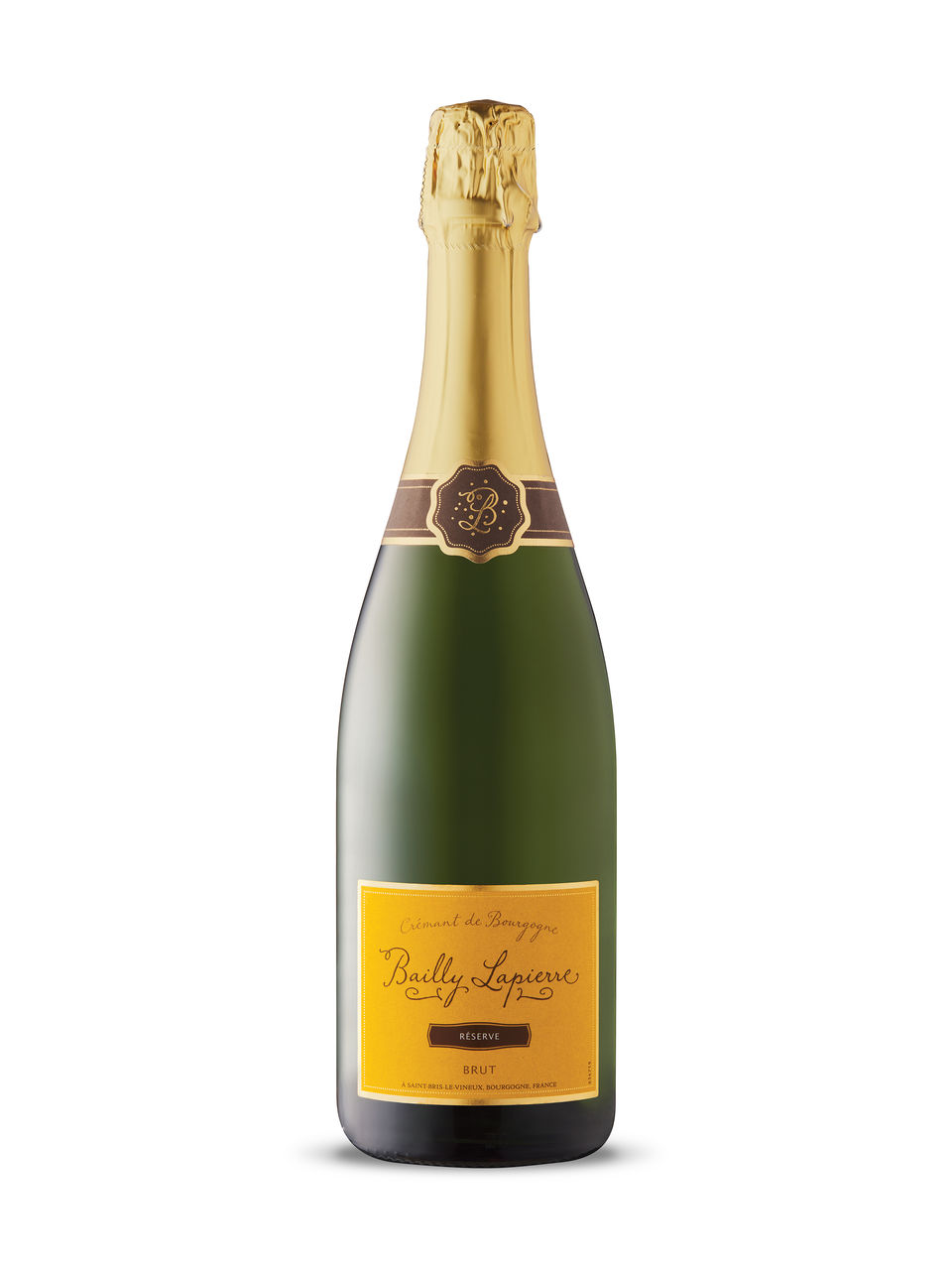
We are fortunate to have over a 100 different kinds of Crémant here in Ontario, including one of my favs, Bailly Lapierre Réserve Brut Crémant de Bourgogne. Next time you are in the LCBO, check both the main section and the Vintages section: in a large enough store, there should be at least a few products in both section. Make sure it has the word “Crémant” on the bottle, since some French sparkling wine is neither Crémant nor Champagne and often not that great. However I have yet to find a bottle of Crémant I did not like in all my years of drinking it here in Canada.

Here’s to more people knowing and drinking one of the best value wines France has to offer. Cheers!

P.S. The golden age for Crémant in Ontario was during the pandemic. I am not sure if the French wine makers were dumping it on the market, but there was a tremendously great selection of the stuff during that time. There’s still a good selection, but the selection at that time was great. Much of the pandemic was like a dark cloud: the abundance of Crémant was a silver lining.

On the disturbing subject matter of Francis Bacon’s paintings


People are often struck by the imagery in Francis Bacon’s paintings. What could make someone paint such horrible things, I often see people ask.

The answer to their question is simple and can be found here at this page on the website for the Hugh Lane Gallery:

During the Second World War he volunteered to serve in the Civil Defence Corps, where his work involved black-out enforcement as well as assisting with first-aid and rescue at bomb sites. Responding to some people’s reaction to his work being disturbing, Bacon remarked that his work was no more disturbing than life itself.

No doubt being a first responder to victims of bomb blasts would have left Bacon with terrible images searing his brain. No wonder he painted the way he did.

P.S. I thought of this reading some of the posts that the web site Open Culture has on Bacon, here and here and here.

Towering Toronto (my semi-annual update on Hogtown, September 2025 edition)

Since my last newsletter on Toronto, here’s what new and caught my attention in the city with the CN tower (and Skydome):

Politics/getting around: the battle of the Bike Lanes continues on. After an Ontario court struck down the premier’s plan to rip up the bike lanes, he’s stormed off and took it up with the Supreme Court. I am a supporter of the bike lanes, but even if I was not, I don’t think this is the best use of the government’s time or other resources. Let’s see in 6 months if this battle has subsided.

In transit news, the Eglinton Crosstown LRT which was supposed to be open in September? Yeah, that’s not happening. despite the TTC taking control of it the LRT from Metrolinx. At this point I’m just going to assume it’s never going to occur. And even when it does happen, my neighborhood is due for more turmoil. Sigh. More on that here.

a quick aside: for automobile drivers who wondered how they can they get a temporary parking pass, wonder no more! Instead click here for details from the City.

Speaking of the City, the mayor is talking about scaling back on some of the costs associated with hosting the World Cup. Despite all her efforts, the city is still in a bind financially, according to this. That said, she a resourceful politician. I’m confident she can manage.

Real estate: the last time I noted that one of my favorite places, Hot Docs, was up for sale. I was worried this could be the end of it. As it turns out, Hot Docs sells its cinema for $6.25M, but will continue leasing it. Whew. That’s good. Hey, go check out their web site and see a show or two when you can.

Apparently rents are dropping all over Ontario, including Toronto. Good news for tenants, not so good for landlords. Maybe some affordable places will be built out here in proposed extension at College Park, assuming it gets built. Am I a fan of that new design? Let’s just say I wish College Park was being built out the way it was initially envisioned, as I wrote and showed, here.

Food: if you are in Kensington Market, apparently there is a great new sandwich shop there called Made-Rite. Always good to see great sandwich places opening up to go along with strong line up we already have in place, like La Salumeria, Hot Pork, Ariete E Toro and Bahn Mi Boys, to name just a few.

Ariete E To is also one of the best new restaurants in Toronto, according to Toronto Life. Others on that list I can vouch for: Martine’s, Maven and General Public. I’m sure the others are worth a visit too.

Sadly one of the mainstay of Annex dining,  By The Way Cafe, is set to close after 40 years. I’ve started going there when it first opened and I lived in the area. That stretch of Bloor won’t be the same without it.  (More on its closing, here.)

Finally: with the passing away of Giorgio Armani, many a story was published on his life, including this one with a Toronto angle. When I lived in the Annex I would go to Hazelton Lanes often. I never did skate on their lovely rink (shown in the article), though I wish I did.

Do you remember that Toronto once had 326 different moose statues decorated in wildly different ways? Here’s a look back at the art project, 25 years later.

Untitled

Thanks for taking the time to read this. I appreciate it! I leave you with a date night photo from the restaurant Sorrel, overlooking one of my favorite buildings in the city.

On Giorgio Armani, Kate Moss, and other great things from the 80s and 90s

I don’t write as much about the 80s these days, possibly because the media has shifted their nostalgic articles and stories from that decade to the one that follows. So I have decided to combine both decades in this one post. Hey it’s my annual indulgence, so bear with me. 🙂

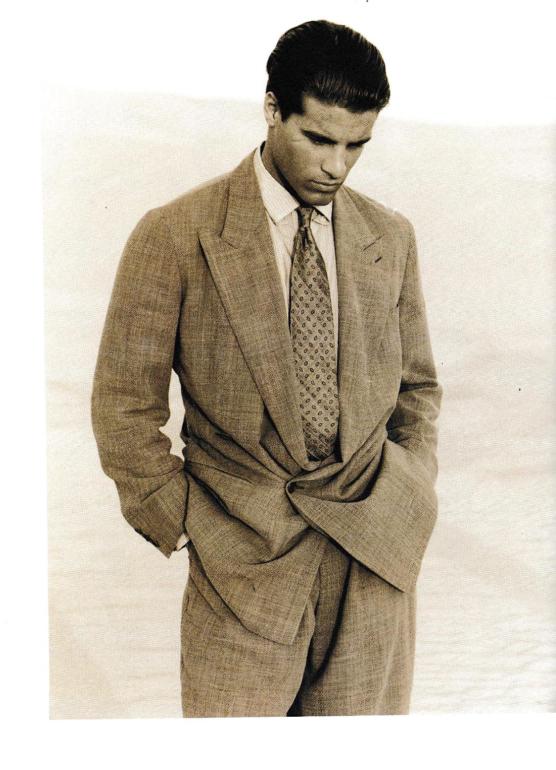
The fashion giant Giorgio Armani passed away last week. While his greatness spanned decades, he really dominated the 80s with his flowing and beautifully cut clothing. There was a number of things written about him on the day of his death, but this piece in Wallpaper I found was the best. I’d also recommend this older piece that explains why 80s Armani still matters. And while I was a huge fan of his back in the 80s, as this piece in the New York Times showed, the man never stopped.

I was not the only fan of Armani obviously. Scott Schuman a/k/a The Sartorialist had a special Instagram account dedicated to him. Worth visiting.

If you are in the mood for more great photos of the 80s, I think this photo essay is excellent:  the 1980s turned out to be magic… david bailey on the era of excess in pictures.

Not as many photos in it, but this essay on  The Cameron Public House and 1980s Toronto is a fine remembrance of the beginning of an era at that famous Torontoian establishment. Another famous Toronto establishment, By the Way cafe, also began then. Sadly that restaurant will be closing after 40 years. It won’t be quite the same on the corner of Bloor and Brunswick with it gone.

If you want to know what we were eating in the 80s, read this. If you want to know what were listening too, go here.

One of the people I was listening to back in the day was Tracey Thorn. Nowadays she has a reoccurring column in The Independent where she writes about our current times, such as this: seeing endless faces in the city brings me comfort and relief. Always worth a read. Check out her books too.

Did Tracey Thorn go to clubs like the Limelight in London? Possibly. Did I go into one of the clubs that Sharon Smith captured with her polaroids of NYC nightlife in the 1980s? Definitely. Was I happy to see ‘The Breakfast Club’ stars reunite for the first time in 40 years? You know it. Am I glad that Giancarlo Esposito found happiness and success after a difficult struggle? Most certainly.

Moving from the 80s nightclub scene to the 90s, I give you this story on the famous cafe tabac in NYC. If you had gone during that time, you might have seen Kate Moss there. Zara had a special collection devoted to her not so long ago: Collection Kate Moss. This led to coverage in places like British Vogue and  The Guardian. It may be the reason why someone decided to write this: why fashion keeps selling us the 90s.

PeeWee Herman was another celebrity who rose to the top in that era. Even if you are not a fan of the 90s or Herman, I recommend a recent documentary on him…it’s brilliant.

Finally, here’s a piece on technology that was big at the end of the 20th century. Also big at the end of the 20th century: Friends. For fans of that 90s show, here a recent review of  friends at 30…inside story writers and producers tell all. More friends at 30 sitcom cultural phenomenon here.


Every thing — everything — is a gift


It’s not true, of course: everything is not a gift.

But if you take a moment and think: what if this were a gift? How would I think of it differently? How can I benefit from this?

Some people believe every day you are living is a gift. You can expand upon that. Think: every day is a gift, and every thing in that day is a gift, too.

Try taking that perspective when difficult things come your way today. Take out a pencil and a pad and for a few minutes write down the things you gain from whatever you’re dealing with. If nothing else, adversity gives you the chance to get stronger and wiser. Strength and wisdom are certainly gifts. No doubt you can glean out more.

On natives and migrants

It’s difficult to not think about migrants and natives. So many problems in the world have their roots in who belongs to a place and when. So I was interested to hear about this book: Home Rule – National Sovereignty and the Separation of Natives and Migrants from Duke University Press. The Duke University Press says:

In Home Rule Nandita Sharma traces the historical formation and political separation of Natives and Migrants from the nineteenth century to the present to theorize the portrayal of Migrants as “colonial invaders.” The imperial-state category of Native, initially a mark of colonized status, has been revitalized in what Sharma terms the Postcolonial New World Order of nation-states. Under postcolonial rule, claims to autochthony—being the Native “people of a place”—are mobilized to define true national belonging. Consequently, Migrants—the quintessential “people out of place”—increasingly face exclusion, expulsion, or even extermination. This turn to autochthony has led to a hardening of nationalism(s). Criteria for political membership have shrunk, immigration controls have intensified, all while practices of expropriation and exploitation have expanded. Such politics exemplify the postcolonial politics of national sovereignty, a politics that Sharma sees as containing our dreams of decolonization. Home Rule rejects nationalisms and calls for the dissolution of the ruling categories of Native and Migrant so we can build a common, worldly place where our fundamental liberty to stay and move is realized.

A lot to consider there. Some questions I considered were: Why start at the 19th century? Why not go back to the age of European exploration? What about before that age? Should it be restricted to the Western nations? What are the differences between the Roma in Europe and Europeans in the Americas? What about other persecuted groups that are native but are never considered as a group that belongs to the native group?

No doubt you have your own questions. To learn more about the book, go here.

On risotto, a dish no one should fear and everyone should embrace


Everyone should learn to make risotto, and no one should fear it. I was thinking that again recently when I was showing my daughter the best way to make shrimp risotto with peas. 

I first recall risotto becoming a big thing in the 198os. Maybe it was risotto milanese, as this noted. At the time it was presented as a difficult dish that was hard to make and easy to mess up. It has managed to keep that reputation into the 21st century, as this piece shows.

I’m here to tell people to reject that reputation and embrace making risotto. As I wrote on my other blog, it’s a great dish if you make if you want to use up things you have in the kitchen. Plus it’s not hard. There’s just a few simple things to keep in mind:

  1. You just have to be patient when you make it, adding the liquids a 1/2 cup to a whole cup at a time, then stirring the pot as you add the liquid.
  2. You don’t have to stir non stop, but you should stir it every 10-30 seconds until the liquid incorporates into the rice. When you move the rice and you can’t see any liquid on the bottom of the pan, add more liquid.
  3. Stick to medium-low when cooking the rice in the liquid. Give the rice and the liquid time to do the work.
  4. After you add the 3rd cup of liquid, taste the rice. Is it still hard? You want it to be al dente, in my opinion. Do you prefer it softer? Then keep adding more liquid until it is soft. Generally with a cup of risotto rice, you will want four cups of liquid. Whenever I have used a ratio of 1:4 (rice:liquid) I have had success.

Here’s the recipe for Risotto With Shrimp And Peas by Marian Burros from the New York Times. It’s a winner. (My comments are in the parentheses.)

Yield: 2 servings
Ingredients:
  • 4 cups no-salt-added fish or chicken stock (I used chicken and I don’t worry about the salt. Also most recipes call for warmed up stock)
  • 1 tablespoon olive oil ( or any neutral oil)
  • ½ cup chopped onion (shallot or leek is also fine)
  • 1 cup arborio rice
  • ½ cup dry white wine (you can replace with stock but the wine is better)
  • ½ pound fresh peas, shelled to yield about ½ cup (canned peas are fine. Frozen cooked in the stock is also good)
  • ½ pound shelled raw shrimp (I used a bag of mixed shrimp and bay scallops and that was great)
  • Salt and freshly ground black pepper
  • ½ cup grated Parmigiano-Reggiano, optional (at least for fish based risotto)
Preparation
Step 1: In a large saucepan, simmer stock. In a heavy-bottomed pot, heat oil. Add onion, and sauté until it softens. Add rice, and stir to coat. Add the wine, and cook until liquid is absorbed.
Step 2: Add one cup simmering stock to rice. Stirring often, cook over medium-low heat until liquid is absorbed. Repeat with second cup, and continue cooking, stirring often. Repeat with third cup.
Step 3: As rice becomes soft but firm, add last cup of stock. If peas are large, add them and cook about 4 minutes. Then add shrimp. If peas are small and tender, add them along with shrimp. Cook shrimp just 3 or 4 minutes. Season with salt and pepper and serve, with cheese if desired.
P.S. Once you feel you get the hang of that, here’s 19 more risotto recipes you can make, courtesy of Chatelaine magazine. Image is from their recipe for lemony mint and pea risotto. Also check out my blog post for more risotto ideas.

My annual robot survey, 2025 edition


Time for my annual review of what I’ve seen happening in the world of robotics in the last 12 months. Progress in robots, unlike other forms of IT, tends to be slower and incremental. Not surprising: robotics is hard. If you look at the robots I featured last year and compared them to these robots, you won’t see dramatic changes. Still, it is interesting to note the progress made and the limitations still encountered.

Robots in factories are still where the bulk of robots can be found. Despite widespread adoption, they still have issues with basic tasks, as this study of robots in Amazon warehouses shows. Will that mean we are away off from amazon having package delivery humanoid robots? I’d say yes.

Home robots tend to be limited to one floor. But according to this, they are close to navigating stairs. That could be a game changer. Maybe some robots will get around your house like this tiny pogo robot does? Call me skeptical. Still, engineers keep trying to give robots more range, as we see here.

Not all home robots are limited to the floors of your house. This here contratrapion is a brainless soft robot that runs on air, while these 5 robotic lawnmowers hit the great outdoors. Speaking of robots and grass, there may come a day when your caddie is a robot.

It’s not all hard labour for home robots. These cute little fellows are mainly for emotional support for seniors. I question whether this pomodoro desk robot is an actual robot but I do agree it is the “cutest way to boost your productivity “. Speaking of desktop robots, this cute desktop robot gets gloomy when your room becomes unhealthy.

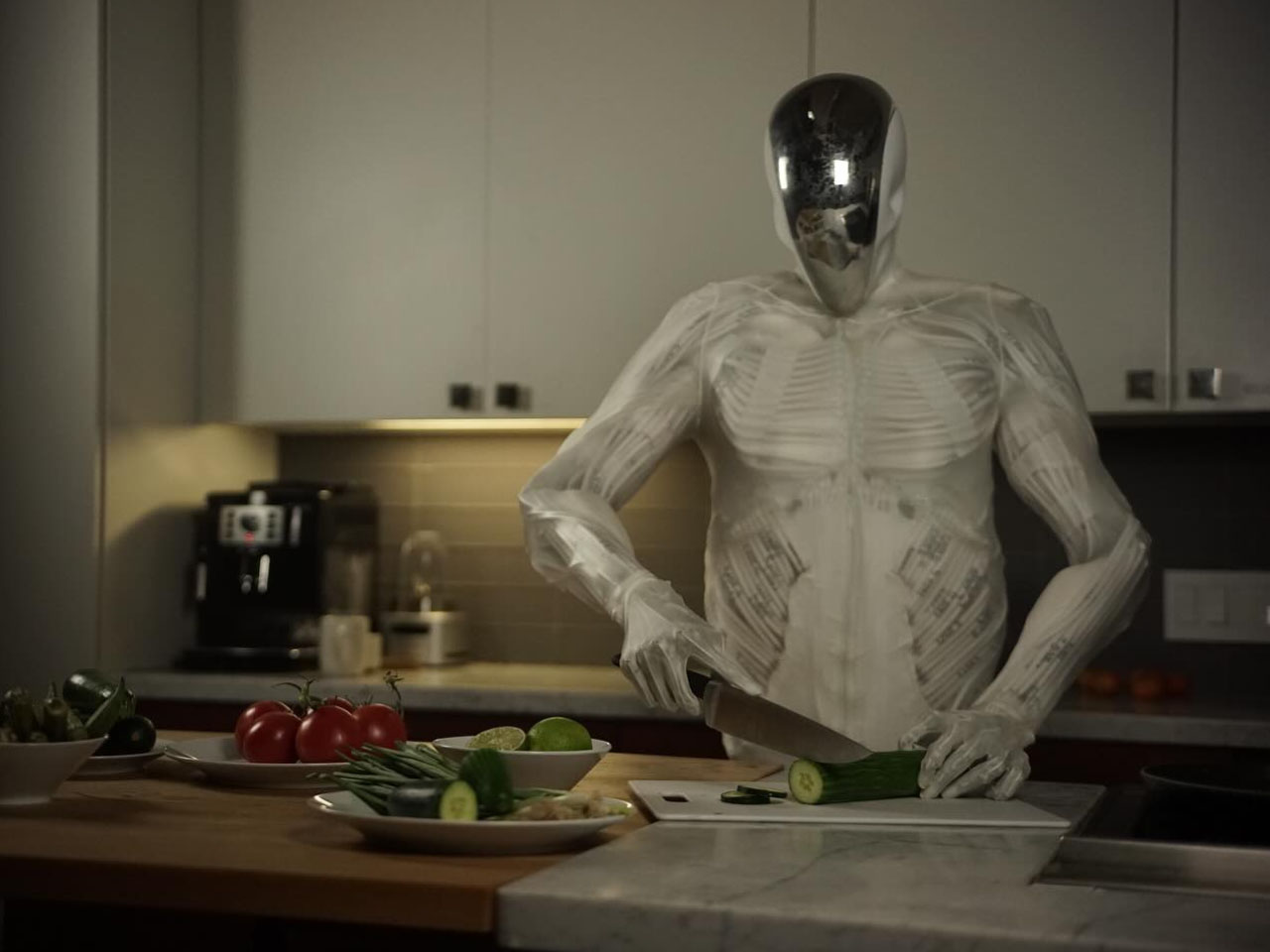
Finally, not all robots are cute: a lifelike robot that mimics human anatomy with complex muscular system is pretttttty creepy (see below).

One last note: the province of Ontario “began a ten-year pilot program in 2016 to allow the testing of automated vehicles (AVs) on Ontario’s roads under strict conditions, including a requirement to have a driver for safety reasons.” (In my mind, AVs are just another form of robots.) The program is still on going and I expect to see more developments on it. You can read more on that, here.

Thanks for reading this. I’ll be curious to see what happens with robots over the next year. Let’s see!

On life and death and the substack writings of Helen de Cruz

If you want to read some thoughtful posts today, I highly recommend the Substack of Helen de Cruz.

I used to follow her on Twitter while I was still a user of it. He posts there were always thoughtful and wise. To find out she was writing on Substack was a blessing. To discover (via Bluesky) that she passed away in 2025 was terribly sad.

While she was a philosopher by profession, her writing on Substack is very accessible. And thoughtful. And wise. Give what she wrote a read when you can.

(Image = link to one of her colored pencil drawings on her substack)