
Every so often the debt of a country becomes a political issue and writers start cranking out pieces like this in the Wall Street Journal about how:
“The U.S. national debt now exceeds 100% of gross domestic product, crossing a once-unthinkable threshold, on the way toward breaking the record set in the wake of World War II.”
There’s some interesting choices of words in there, like “once-unthinkable” and “breaking the record”, phrases that seem to indicate danger.
If you feel nervous about the debt, here’s some things to consider. First, remember that personal debt and national debt don’t work the same way. Second, it’s important to take a longer term view when considering national debt.
A good example of a long term view is this chart of the U.K. government debt as a percentage of GDP. You can see the debt to GDP ration rose substantially above 100% at two major events in British history: the battles with France in the 19th century and the battles with Germany in the 20th century. Indeed, the ratio rose as high as 250% in the 20th century, only to subside to below 50% in the postwar era.
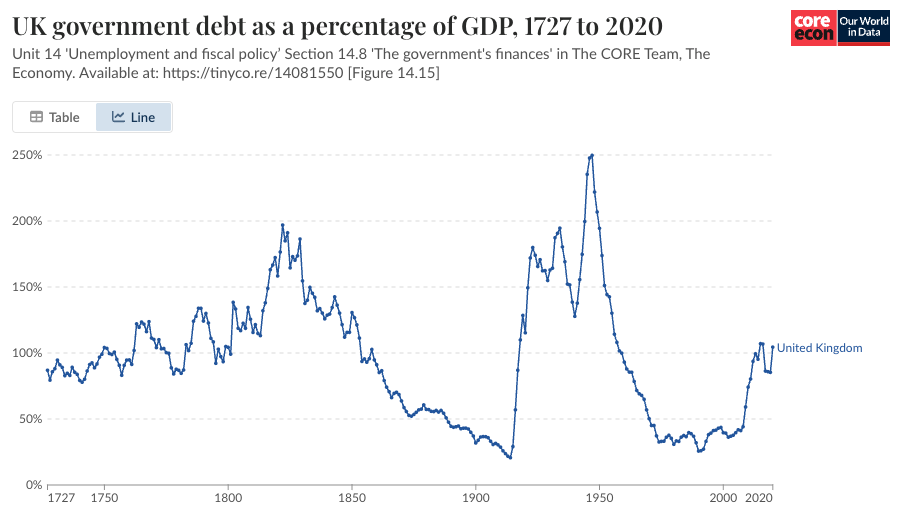
This is not to say that the ratio does not matter. It is to say that there is nothing magical about breaking the 100% ratio. The ratio could go higher. Chances are it will eventually go lower if for reasons of inflation if nothing else.
Writers — usually right wing writers — start bringing up the debt when left wing governments are in power. It’s a way for them to frighten people and pressure the government into spending less. (Such writers rarely bring up debt, especially for things like military expenditures, when the government is right wing.) Don’t be frightened. Governments have an obligation to tax and spend responsibility. They should not be basing their spending on this ratio.
(Image is from here.)