On the inscrutable oddness of Matt Yglesias

If you don’t know who Matt Yglesias is, the Washington Post has a good piece on him that includes this summary:

The Washington ur-blogger’s slightly contrarian, mildly annoying, somewhat influential, very lucrative path toward the political center

He is all of those things. He has been all those things since the early days of blogging. Andrew Sullivan, another major blogger from that era, used to give out something called The Matt Yglesias Award to other writers who were annoying and contrarian too.

Why I call him inscrutably odd is that I cannot tell if that annoying contrarianism is for effect or if it is just who he is. I used to think it was for effect, but I thought something different with his recent comments on Uvalde. As the Post describes:

Hours after the May mass killing at a school in Uvalde, Tex., he tweeted: “For all its very real problems, one shouldn’t lose sight of the fact that the contemporary United States of America is one of the best places to live in all of human history …”

Technically true. But …

“[W]hat the f— man,” New York Times columnist Jamelle Bouie, who also got his start at The American Prospect, replied in a tweet.

“Real people are experiencing actual anguish right now,” tweeted Yglesias’s former Slate colleague Dana Stevens, “and don’t need your middle-of-the-road ‘Well, actually’ garbage.”

For a smart guy to make such a comment makes me think there is something lacking within him that would say: time to give the contrarianism a rest. Perhaps it was a knee jerk reaction, a result of years of being that way that caused him to automatically blurt out something terrible like that. I don’t know. Like I said, he’s inscrutable.

When he is not being contrarian he can write really thoughtful pieces on topics like housing and the economy that I get a lot from. He is also good at skewering bad ideas from the left and right. To dismiss him like some do is a bad idea.

But then he writes something daft like a defense of the Austria-Hungary empire, a piece where he takes a contrarian position and like a good debater arranges the facts to support his argument, even if it means overlooking the obvious or assuming the opposite. No wonder he can drive people crazy.

To form your own opinion, if you haven’t already, you can catch up with him with this Washington Post profile, here:  Matt Yglesias and his Substack newsletter are thriving in Biden’s Washington. If you want more, this is another piece on him.

(Photo: link to the WAPO piece.)

On the Maritimes, Hurricane Fiona, Kate Beaton and Ann Terry, etc


The big news out east recently has been focused on Hurricane Fiona. As the local media showed, Fiona destroyed property all throughout the region. One place heavily hit was Glace Bay. A ton of damage occurred there in my hometown. Homes, buildings, you name it…even the airport between Glace Bay and Sydney was hit. To get a sense of the damage done, click on any of the links (also where the above photo comes from).

Sadly, a lot of the havoc that Fiona caused will not be covered by insurance. Here’s hoping the government steps in. And it wasn’t just damage: a woman in Port aux Basques, Nfld. was pulled out into the sea and drowned, as was this man in Lower Prospect, N.S.

Despite all this hardship, people from that part of Canada are resilient. Before the storm, the local media even had advice on how to cook when your power goes out for days: Storm day dining. Mari timers are in for some tough times, but they’ll pull through: they always do.

I’ve been thinking much about Cape Breton and Nova Scotia lately even before the storm. The great artist Kate Beaton has a new work out call Ducks which documents her life and time working in Alberta.  Anyone who is a fan of graphic novels should get it. Even if you are not, I recommend it.

Speaking of great Cape Breton women, I was thinking of Ann Terry lately. Growing up, you could hear her everywhere. She seemed like she was everywhere. Here’s a good introduction to her, and here she is broadcasting. She had a tremendous voice. A great presence, too.

In other east coast news, it looks like Westjet is suspending flights to NS . I always hate to see transportation reduced to the Maritimes. Here’s hoping that doesn’t last long. Speaking of reductions, here’s a story on how some churches are closing down in Atlantic Canada. I suspect that phenomenon is not limited to that part of the country, though.


On the passing of Queen Elizabeth II today

The Queen died today. There has been an outpouring of response to such an event. No doubt you’ve read a number of them. You will likely see many more in the days and weeks to come.

Of the ones I came across, I thought this collection by the BBC was good: Queen Elizabeth II: A life in pictures. I thought this summary by Helen Lewis also worthwhile: Queen Elizabeth’s Unthinkable Death in The Atlantic.

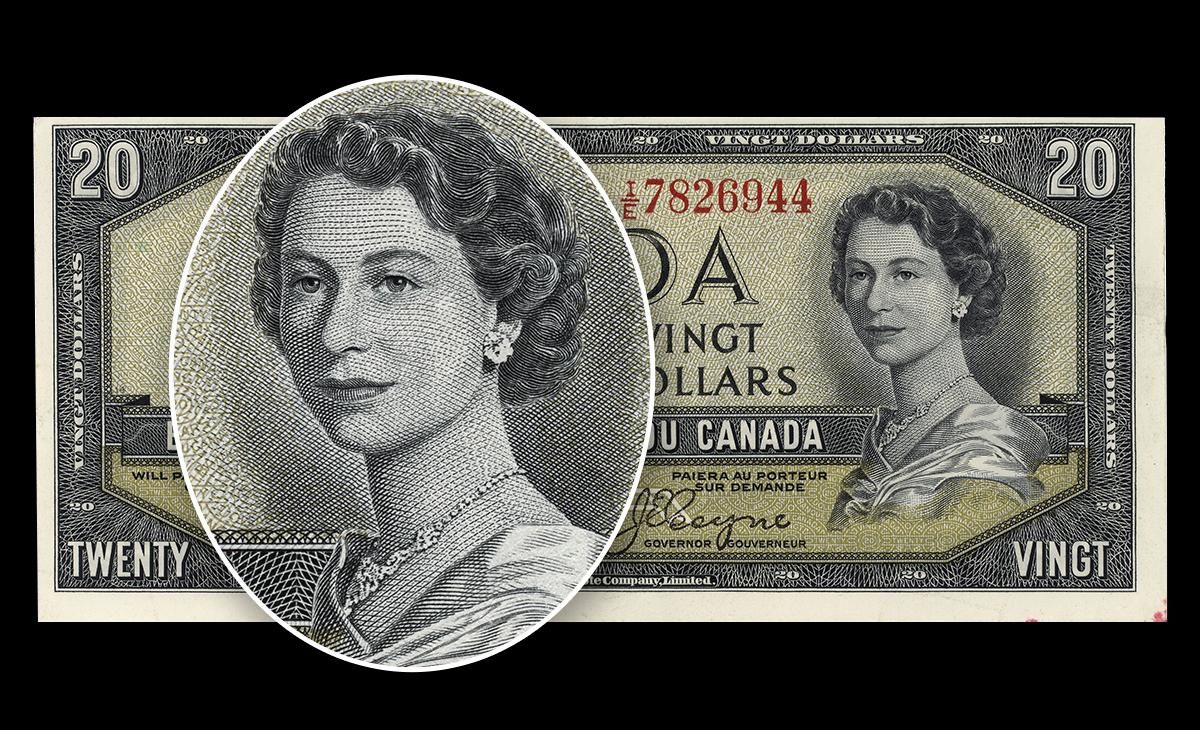
I have been familiar with the Queen since I was a young child. She was in post offices, on our stamps and on our money. Here’s an interesting piece on the Queen on the bank notes, from the Bank of Canada Museum.

I have written about her occasionally here. This was from 2015: What happens when Queen Elizabeth II dies? This touches on something I have always been curious about: Why did the Queen sit for a portrait painted by Lucian Freud? And finally, I will have to update this: On Liz 2 and Chuck too. (Monarchy Watch).

Rest in Peace, ER II.

(Image: link to image in Museum piece)


On Elon Musk, 2022

Elon Musk is a hard guy to categorize. Perhaps the easiest thing for me to say is that he is his own worst enemy. He creates companies that are revolutionary and worthy of great praise, but he also goes around posting idiotic memes like a sulky teen to unwittingly draw attention to the worst parts of himself.

Like the man himself, his SpaceX technology is a mixed bag. While it is great that he does this, Elon Musk activates Starlink in Ukraine, the technology itself is going to be damaging to astronomy if not space itself, as this shows: SpaceX’s Starlink Satellites Leave Streaks in Asteroid-Hunting Telescopes.

I have mixed thoughts on the Tesla too. Great car in many ways, though this review is tough: 2021 Tesla Model Y review: Nearly great critically flawed. I also think this feature calls into question “do you really own your Tesla?”: Tesla now monitors how often you adjust your seat position and will disable controls for certain drivers. Finally, I don’t think this is a good development: Tesla opens showroom in region of China associated with genocide allegations.

However problematic Musk seems to me, he is head and shoulders better than other plutocrats, like Peter Thiel. Could he be better still? Sure, he could emulate billionaires like Mark Cuban, who is opening an Online Pharmacy to provide affordable generic drugs.

I know there are plenty of fans of Musk, and I can see why they are. I also know many loathe him, and I get that too. I remain in the middle for now, and I hope he improves over time and I get to be more of a fan.

July 1st update:  As his companies continue to sink, he threatens to fire remote workers. So they all come in and there is not enough space for them. Amazing.

5 or 10 thoughts on the billionaire space race

Image of Jeff Bezos blasting into space

Jeff Bezos blasted into space today with three other people. Everyone, and I mean everyone, has an opinion about it. Even Variety magazine did. (That’s worth a read BTW).  So fwiw, here’s 1o things I thought about it:

  1. It’s good to see more interest in space in general. NASA and other space agencies do plenty in terms of space exploration, but often it is overlooked by people. Suddenly — for better or worse — people are talking about space again.
  2. It’s good to see money being spent on space travel. NASA has suffered for years with cutbacks. Decades. Here’s to more money being effectively used in space.
  3. These flights of Branson and Bezos are small steps in terms of space travel.  They are miles behind SpaceX even, never mind NASA or other space agencies. As we like to say in business: it’s a good start (implying there is a long way to go).
  4. Small steps can lead to big steps if they continue to pursue this and pour money into it. That’s a big if. Like any space exploration, it is hard to continue to make people interested in it after it starts to seem repetitive. They might find it much harder to get space tourists to pay a small fortune their 10th or 15th flight. Never mind after the first person dies (and someone will).
  5. Even if everything goes well, it could still fail  in the longer run. The Concorde failed and it was much simpler technology than this stuff. Not everything that is the best and fastest gets to succeed.
  6. I can’t see the ROI on space travel. Musk and SpaceX can get away with it because they have a client with the money to spend on it (i.e. NASA). Not sure if Bezos can wrestle some of that business away. Then again, perhaps there’s a global market for these services.
  7. I think there would have been a much more positive reaction if it wasn’t Bezos or Branson leading these endeavours. Give Musk credit: he lets the real astronauts do the work. Plus none of these men are inspiring to most people. They aren’t John Glenn or Neil Armstrong: they are billionaires. Bezos was at least smart enough to Wally Funk with him: that was a good distraction from the other members on his team.
  8. It will remain to be seen if they can catch up to Musk, or if they are even interested. Musk can act the fool, but he seems driven to push private space exploration to the limits. I can see Branson dropping out soon once some other thing comes along. Bezos is a bit of a mystery to me.
  9. People are criticizing them for spending money on space rather than here on earth, but Bill Gates spends his fortune on such things and he is criticized mightly for it. It’s a no win in terms of spending your money. They all should pay more taxes. (Although a lot of tax money in the US goes into the military budget. That’s a different but related issue.)
  10. Here’s to more inspiring people going to space soon, and to more inspiring space travel. Let’s hope this leads to that.

(Image: link from the Variety article)

Two pieces on the Canadian pipeline protests, with no special insight from me…

Two pieces on the Canadian pipeline protests worth reflecting on are here in The Globe and Mail and here in Macleans. Obviously there has been much more written, but these seem to capture at least some of the differences.

It’s a complicated situation, to say the least, and I have no clear insight or recommendations on how to assess it. How you assess it depends on how you see the world and Canada’s place in it.

My general thoughts are we need to strongly move away from fossil fuels and all of Canada needs to strongly move towards  strengthening indigenous people so they have more autonomy and better relations with and within Canada. Underlying that, my cynical and skeptical view is that there is money and power involved and nothing is as it seems because of this.  So I am hoping for the best and expecting the worst and in the end I believe there will be progress however tarnished.


Thinking about how topics of interest change


I was thinking about how topics of interest change when I came across this link I had saved since 2016: Should we have intervened in Syria? I don’t know – and neither do most armchair generals.

Back when Obama was president, whether or not the US should intervene in Syria was a hot topic. Articles like this struggled with whether or not something should be done about it. It was hard not to think about, both because it was terrible and because there was alot of media devoted to it.

Then Trump became President. Suddenly everything shifted. Terrible things went on in Syria, but it was no longer a topic of interest in much of North America.  I confess I barely know what is going on there now.

It’s a good reminder to me how much of what I think about is driven by who ever can get information in front of you. And it’s also a reminder of why disinformation campaigns will get stronger and stronger.

I don’t know what the answer is. I just know I have to constantly remind myself that just because it appears something is important or unimportant, my ability to assess that is shaped very much by others. There may be topics I spend a lot of time thinking about and researching. But most of the time, and for most people, that is not possible.

The further decline of Peter Thiel

The man who threw his lot in with Donald Trump continues to sink in the world. Case in point: Y Combinator Quietly Ends Relationship With Peter Thiel.

July, 2021: Here is a piece on how he exploited Roth IRAs to make a fortune and pay no taxes. Just a bad guy.

February, 2022: Further news on Thiel: he’s stepping down from Facebook’s board and going full time MAGA. He’d be tragic if he wasn’t so malicious.

July, 2022: this piece is on the “enigma” of Peter Thiel, but it’s becoming clearer the guy is a fascist.


Zeitgeist links for December, 2016

I often come across links that capture the spirit of the time, links that I save using Pocket or Instapaper.  Here are some of them, with quick comments.

Politics, mostly American:

Culture:

Psychology, mostly links about glumness in America

Work, mainly grim or putting a good face on work.

Some thoughts on Charlie Hebdo, outrage, and social media in general

Well before the end of 2014, I had decided that I was no longer going to participate or contribute to anything outrageous or political on social media generally, and twitter in particular.

This week I let down my guard and did participate and comment on the recent events in France, mainly because I was stunned by the act of violence.
After considering it for over a week, I think that was a mistake and I am writing this partially to insure I don’t make that mistake again. If you are curious, the next few lines explain my thinking around that resolution. The last four paragraphs talk about what I am going to do instead: feel free to skip down to there.
I have been using social media for a long time, relatively speaking. At first it was merely a curious experience. Then it went to being a positive experience. But more and more it has become a negative experience.
Once social media, and twitter in particular, was for people sharing status. It was random: some good, some bad, nothing focused. However, one really good thing about it was that you got to know people. People you might never get to meet before: the famous and the fabulous and the funny and the friendly. It was a great experience. I know from my own experience that my life was greatly improved by this greater network that I got access to.
While my feed of updates  was once rather random, over time people started focusing their use of it. Celebrities used to to promote their work. Politicians did too. Activists started to try and rally people to their cause. Artists tried to make it into a new form of writing. That was still good.
Among people on twitter, a growing belief was that the benefit of twitter over a site like Facebook was that you could hang out with people you liked but didn’t know (as opposed to hanging out with people on Facebook that you knew but didn’t like). I never agreed with that knock against Facebook, but I did like the people I encountered on twitter. They were good people.
Then not so good people came along. People with no other interest in twitter and social media than to cause problems. It was like a pile of aggressive drunks showing up at a party and getting into fist fights with the rest. Twitter, the company, seem to have no plan in dealing with this. Perhaps it was a result of this, or perhaps it was something else, but the level of aggressiveness and negativity rose on twitter as well. It was a variation of Gresham’s Law, where instead of the bad money driving out the good, the antisocial behavior drives out the positive social behavior. Whatever it is, what I found was that the amount of positive sharing seemed to diminish. People tended to communicate with people they had a previous relationship with, and people seemed more likely to share negative things.
I believe as a result of that, we now see these ever increasing outrage storms on twitter. Where once the outrage over events of the day — if you had any at all — would be limited to yourself or your small social circle, now you can share it with hundreds or thousands of people. Those people can take that and share it with the people they know. And then to add to that, there will be people who disagree with you, and they will express their displeasure to you directly in a way they never could or would if you knew them personally.  This all adds up to an enormous cloud of negativity.
Last December, I noticed people saying 2014 was a terrible year. That surprised me. I am older than many people on twitter, but most people on twitter are educated and experienced enough to know that relatively speaking, 2014 was not a particularly terrible year for many people in the world. I could think of many years in recent memory that were much worse economically, that had much more violence, that had much more disease and suffering. There were terrible things that happened in 2014, but terrible things happen every year and 2014 was no exception.
I believe that people thought 2014 was a terrible year because all of the feedback that they constantly get that gives a strong impression that it was terrible. And feedback is the right word. More and more of the things shared on twitter are negative. Either they are personally negative or there is something in the world that we see which is terrible.
I used to think that sharing such information on twitter could make a positive difference, and that by sharing such information, even if it is upsetting, then it was worth it if something good could come from it. I no longer believe that. Topics change so frequently on twitter now that it is easy to miss them if you are not on twitter for a few days.
Instead, I find social media to be more and more upsetting and aggravating with little upside. There are times when people need to be upset and aggravated if it helps them achieve something they want but can’t achieve otherwise. But too much “stick” and not enough “carrot” is just a form of voluntary suffering.
There have been many times when I wanted to give up on twitter. Back in the fail whale days, the lack of availability was frustrating. Then I was angry when twitter started taking over my stream. In both cases there were technical workarounds to those problems. But this is a social and a culture problem, and those are hard if not impossible to fix with technology.
Ultimately I could give up on twitter. But I have come to like a lot of the people on twitter I follow, and I would hate to lose track of them and what they are doing. It would be nice if there were better ways to filter and manage the information that shows up in my feed, but Twitter the company seems to have decided it is not in their interest for me to do that.
Given all that, my own remedy is slight. The one thing I can do is try and change my own contribution to twitter and try to focus on contributing more constructive and positive updates. I’d encourage you to do the same. Enough positivity and constructive updates can make a big difference eventually.
Also, I am going to try and spend less time vegetating in front of twitter much the way other people crash and vegetate in front of TV. I actually read every tweet in my feed. (Hey, the people I follow in India and Australia and Germany tweet later so I have to read it all:)). Instead of vegetativing like that, I hope to spend my time reading more books, making things (from bread to furniture) and generally get out and do things. I would encourage you to do that as well.
Finally, I am going to look for a select group of causes I can contribute time and money to and focus on the little I can do with the limited resources I have at my disposal. I think I can have more of a positive effect on the world that way than I can contributing to the latest outrage storm on twitter. I would heartily encourage you to do that as well.
If you have made it to this point, I want to thank you for reading this. You may not agree with it, but I hope you were able to take away from it something positive and worthwhile.