The New York Times knows what it is and what business it is in

500What is the New York Times? Based on those who have NYT Derangement Syndrome**, it’s a newspaper that has betrayed its progressive readers by publishing articles and oped pieces that are centrist or even right wing.

I have sympathy for such views. I love the Times and I wish it were solidly to the left politically the way a paper like the Guardian is. But is that what it aspires to be?

The best way to understand their aspirations is to look at what they say about themselves. We can see that recently in things they published here, here and here. The CEO himself says the Times is…

on the path to grow our subscriber base and become the essential subscription for every curious person seeking to understand and engage with the world. The combination of our world-class news destination plus market-leading lifestyle products means we have complementary offerings in big spaces, each with multiple growth levers fueling multiple revenue streams. Together we believe these make The Times resilient in a changing media landscape and well positioned for continued value creation.

That’s the business the Times is in. Indeed, it is reflected in things they produce, like the New York Times mobile app. Sure the News is still front and center on top of the app, but with a simple swipe left or right you have Cooking, The Athletic, Lifestyle, Great Reads and more. If you never ever read the news but digitally subscribe to get access to the Cooking section or The Athletic section, that’s fine by the CEO. Or if  you read / hate read Bret Stevens and Ross Douthat, that’s good for revenue as well.

The days of the New York Times being a city newspaper or even a national paper are long over. I suspect the days of it being a progressive paper are over too. Rather than be progressive it will be for everyone. Rather than be a Paper, it will be a Destination.

The days of the Manchester Guardian being a city newspaper or even a national paper are long over too. But if you want a progressive paper, that may be the place you want to go.

Meanwhile read the reports I linked to in order to see what the Times is focused on. Specifically, they have to grow digital subscriptions to increase ad revenue, especially as print subscriptions and the revenue associated with that is decreasing. As they state, “revenues grew 4.4 percent in the second quarter of 2024 to $585.2 million from $560.5 million in the second quarter of 2023. Subscription revenues increased 6.5 percent to $410.0 million from $385.0 million in the second quarter of 2023, primarily due to growth in subscription revenues from digital-only products, partially offset by decreases in print subscription revenues. Advertising revenues decreased 0.2 percent to $112.1 million from $112.3 million in the second quarter of 2023, due to declines in print advertising revenues partially offset by higher revenues from digital advertising”.  There you have it in black and white.

** NYT derangement syndrome is a derogatory term used to describe a form of toxic criticism and negative reaction to the newspapers articles and oped pieces. Not unlike Trump Derangement Syndrome.

Thinking about the non-endorsements of Harris using basic game theory ideas

No Presidential endorsements were provided by the LA Times or the Washington Post this year. This caught people by surprise, since it was expected these two papers would endorse a candidate and that candidate would be Harris. Soon it was revealed the endorsements were held up by the owners of both papers.

One way to assess the choices of the owners of the Times and the Post is to use a payoff matrix found in game theory and apply it to the moves available to them:

Action vs impact Harris Wins Trump Wins
Endorse Harris No Loss Huge Loss
Endorse No one Small loss Small Loss

My payoff assessment is based on an estimate of how much each paper has to lose by endorsing/not endorsing a candidate. If Harris wins, there is very little downside regardless of what they do. Likewise, if Trump wins and they don’t endorse, I suspect they will also lose subscriptions and staff, but overall they can manage that.

The wrinkle in all this is if Trump wins and they endorse Harris. I think the owners of both papers see a huge loss for them — either personal or financial — if that happens.

Both men have different things at stake. We already know that the team from Bezos’s other project, Blue Horizon, has been talking to Trump. No doubt Bezos would not want Trump to come into power and ban Blue Horizon from any future space exploration with NASA. That would explain why Bezos did not want the Post to endore Harris. As for Soon-Shiong, the owner of the LA Times, he tried to get a post in Trump’s first administration. Perhaps he hopes he will be successful the second time around.

If the above payoff matrix had a bigger payoff or a bigger loss regarding Harris, then they might have chosen differently. As it is, they decided to minimize their risk by endorsing no one. They are guaranteed to suffer losses, but not big ones for them personally. It’s a rational choice, but a disappointing one.

I wouldn’t be surprised if both of them got out of the newspaper business in the next four years. They clearly don’t have the appetite for the risk of running such publications.


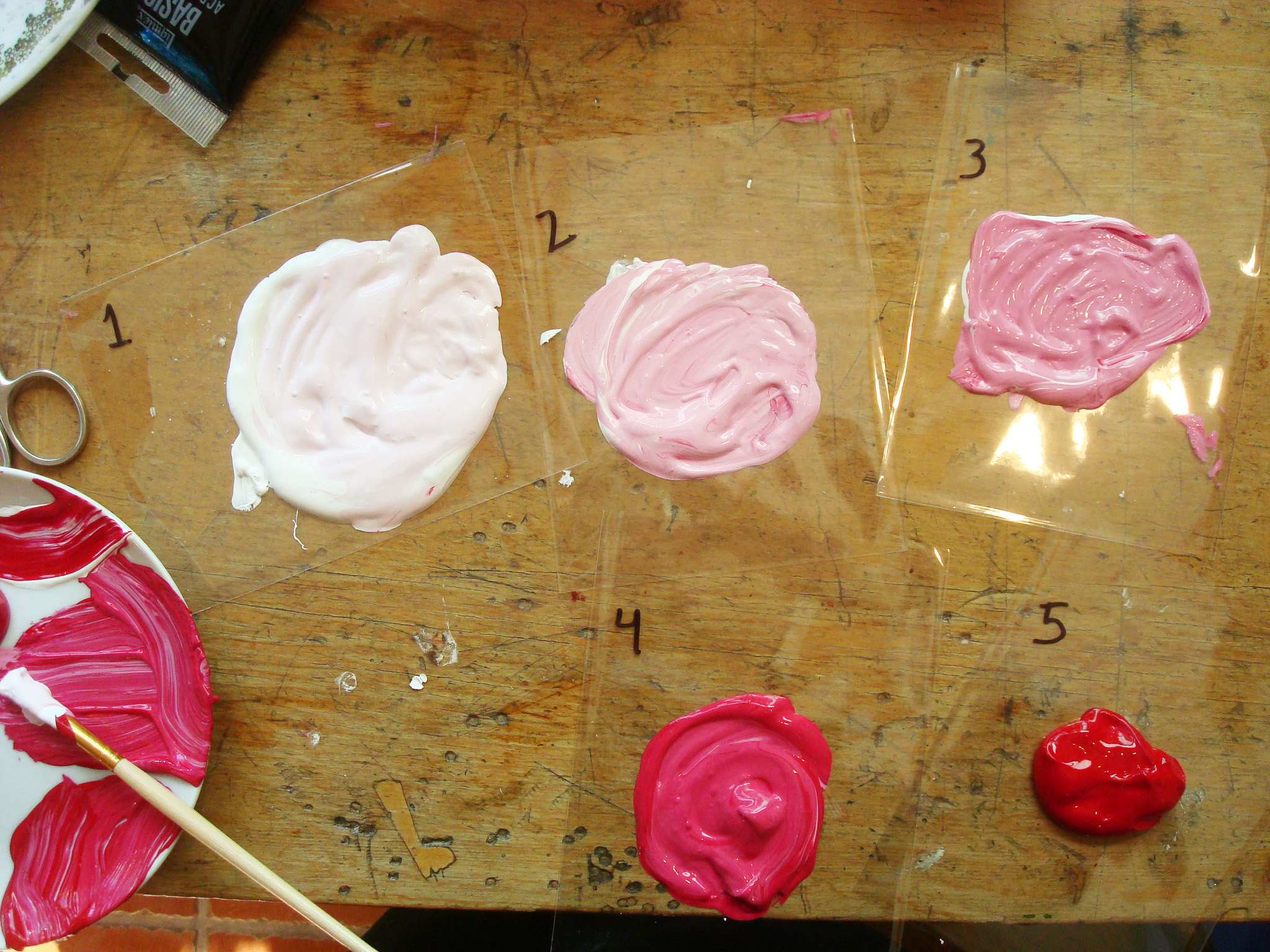
How to paint using one color, and more how to advice for artists


I’ve been working on drawing and painting again. During this work, I’ve collected a fair amount of good links on the subjects. Take a look:

Good luck to all who strive to create art!

Jerry Seinfeld, and the art of changing your mind in public

Jerry Seinfeld gives a good example of how to change your mind in public, here: Jerry Seinfeld says he was ‘wrong’ to blame ‘extreme left’ for killing comedy.

Not only does he says his old way of thinking was wrong, but he shows that he has considered what he thought before and contrasts that with his new way of  thinking.

If you have to change your position on a topic in public, it’s not enough to say, “well I thought A before, but now I think B”. You want to show why you no longer think that way. It shows you’re thoughtful and sincere.

No one likes having to change your mind in public. If you have to do so, consider the way Seinfeld did it.


Forget ChatGPT. Now you can build your own large language model (LLM) from scratch

Yep, it’s true. If you have some technical skill, you can download this repo from github: rasbt/LLMs-from-scratch: Implementing a ChatGPT-like LLM in PyTorch from scratch, step by step and build your own LLM.

What I like about this is that it demystifies LLMs. LLMs aren’t magic, they aren’t Skynet and they’re not some sentient being. They’re software. That’s all.

So ignore all the hype and handwaving about LLMs and go make your own.

Prefer to read it in dead tree form? You can get the book here.

If you get your blood pressure measured, make sure you do this

If you get your blood pressure measured, arm position is important. As this piece states:

When the arm is on the lap or the side, a blood pressure reading can be erroneously high. But when the arm is supported and at heart height, a blood pressure reading is more likely to be right.

Whenever I go to my doctor, she makes sure my arm is in that position. When you get your blood pressure read, make sure you do so too.

Don’t just take my opinion, though: ask your health professional.

Twitpic lives! In 2024 no less.

Is enjoying the colours of autumn (tho’ today’s temp is summer! :))

Twitter may be no more, but twitpic still lives! Photos I posted on twitpic back in 2008 still exist. To see what I mean, check out the link to the photo above with my accompanying tweet that went with it.

Back then, you didn’t have the ability to post photos directly on twitter, so new services like twitpics allowed you to do that. Of course that all died off as twitter grew and added photo posting into their core features.

What’s amazing to me is

  • the photos that twitpics still exist online
  • that anyone can see any photo posted by anyone that used that service
  • that you can just make up a URL to see a photo. For example, the URL of the above photo is https://twitpic.com/g26i but if you enter https://twitpic.com/g262 or https://twitpic.com/g26e or  https://twitpic.com/1234 you will see totally random photos.
  • At one point I had some code to crawl the URLs from 0000 to see if I could just find my own, and I did find some, but at some point I gave up

Anyway, fascinating to me that this archive still exists. Long after Elon ruined twitter and turned it into X. So check it out while you can.

P.S. For more context on twitpic, I wrote about it in 2008 here and here. And here’s one more from me: Saturday coffee at Indigo at yonge and Eglinton, Toronto

All taken from a Blackberry. 🙂

If you want to make a case for getting rid of cars out of public spaces….

If you want to make a case for removing cars from public spaces, I highly recommend you read this piece on Europe’s car-free plazas in Politico.

The pictures alone are striking — seeing these famous plazas jammed with cars instead of open and pulsing with pedestrians seems unbelievable at first. The article also illustrates the path these cities took to achieve these now great spaces (hint: it wasn’t easy at first).

For people who crave better cities, I highly recommend that piece.

On Ina Garten (a few thoughts)

Ina Garten has a new memoir out that’s generating much publicity. Sometimes when I think of her, Martha Stewart comes to mind. For starters, both women have a large following and their earlier career was in something other than food.

But this line from a review of her Memoir got me thinking of how they differ:

I also distinctly remember how different the book (her first cookbook) felt from Martha Stewart and Gourmet magazine and other big food names of that era — Ina’s food was messy and real, without making any sacrifices in quality.

I think that’s part of Ina’s unique appeal. As wikipedia describes her first cookbook, the Barefoot Contessa:

Garten deconstructs simple French recipes like boeuf bourguignon or Baba au Rhum cake. She focuses on preparing foods efficiently, allowing more time to eat and spend with guests.

Post World War II, North American cooking went away from traditional home-cooking and towards French cuisine. (See Julia Child.) later in the 80s it aspired to be broader than that, bringing in flavours from around the Mediterranean, from Asia and elsewhere. Despite this expansion, the cooking aspired to be excellent and involve much effort (See Martha Stewart and Gourmet magazine.) Ina and others who followed wanted to change that: they still wanted their food to be excellent, but without all the fuss.

P.S. to see what I mean, here’s Ina Garten’s take on Julia Child’s boeuf bourguignon recipe which is naturally streamlined.

In a conflict with significant bad actors on both sides, there are no good options for bystanders

In a conflict with significant bad actors on both sides, there are no good options for bystanders.In such a conflict, you have three options:

  1. you can take a side
  2. you can try to rise above the conflict
  3. you can do nothing

If you take a side, you will be associated with the bad actors on that side. If you try to say “I take this side but I don’t associate with the bad actors on this side”, you will come across as a hypocrite, or naive, or ignorant. And when the bad actors on your side do something wrong, which they will, you will be associated with that wrong too.

You might say, I don’t care. Or the other side is still worse. And that’s fine. But it doesn’t make this option a good one. It’s just an option you are willing to take.

If you try and rise above the conflict, then you will be criticized by both sides for ignoring the bad actors on the other side. In addition, you will be seen as ineffective and weak and irrelevant. Again, it’s an option, it’s just not a good one.

Doing nothing is the flipside of trying to rise above the conflict. You won’t be stuck with having to side with bad actors, but you will be criticized for being indifferent and uncaring, cold and thoughtless.

In life there are often situations where there is no good options to choose from. A conflict with significant bad actors on both sides is one of those situations.

On Jimmy Carter, the 39th president and responder in chief of the USA

Last week former US President Jimmy Carter celebrated his 100th birthday. This piece sums up how many think of Carter as president:

In the popular imagination, his presidency was viewed as a fiasco. Besieged by inflation and a hostage crisis in Iran, it ended with a landslide loss to Mr. Reagan after just four years.  … But Mr. Carter’s presidency was more consequential than is commonly remembered, said Stuart E. Eizenstat, his chief domestic policy adviser in the White House. Eizenstat’s 2018 book argued that Mr. Carter notched significant but overlooked wins, including on energy, the environment and foreign policy.

All that’s true, but it leaves out an important detail. Whatever Jimmy Carter was, he was Not Nixon. Indeed he came across as the anti-Nixon. President Ford was Not Nixon either, but he was still attached to his disgraced predecessor. Carter allowed Americans to turn the page on Nixon in a way Ford never could.

The Vietnam War, the Pentagon Papers and then Watergate were a lot for Americans to handle. Carter gave Americans an opportunity to move on from all that and restore the presidency by being everything Nixon was not.

Sometimes presidents come along and act like first responders to a crisis. FDR did that. So did Obama and Biden. In between them was Carter. He restored the country in a way he doesn’t get credit for. Here’s hoping that becomes a bigger part of his legacy.

For more on the aftermath of Watergate, see here and here.

What you mean when you say you’re wasting your time doing X

What does it mean when you say you’re wasting your time doing X?

This question came to me recently when I was sitting on my porch. I thought: why am I wasting my time here? And then I had the follow on thought: what should I be doing this is not a waste of time?

Before I moved though, I asked myself: why was sitting on the porch a waste of time? I concluded I was sitting on the porch because it was a nice summer day and I was enjoying it. In other word,  enjoying a nice summer day has no value (i.e. it’s a waste of time).

Now there are other enjoyable I do that I don’t consider a waste of time: talking with loved ones, eating a good meal, going for a walk. So why is this different?

I think I have been conditioned to think simply sitting around is a waste of time, best done on vacation. Otherwise I think deep down I should be doing something productive. it’s a weirdly puritanical view that conflicts with my non puritanical views on food.

So the next time you are doing something you enjoy doing, attach some value to that. 


How to shop for a duffle bag or gym bag on Amazon and get the right size

If you are shopping for a gym bag or duffle bag on Amazon, you might be hard pressed to know if the bag you are buying is big enough. Some of them will say they are large but they aren’t really.

One good way to gauge how big a bag is look for its litre size (e.g. 60L) Roughly speaking, there seems to be four ranges that gym bags or duffle bags come in:

  • 40 L – small
  • 60L – medium and a typical gym bag
  • 100L – large. Good if you have a lot of gear.
  • 150L – extra-large. Likely a good size for hockey gear.

If you just have a few items, a small might do it, but something in the medium range might be more versatile and typical for a gym bag. If you have equipment to carry, though, you want to get something in the large or even extra large size, depending on how much equipment you have.