On wills and death binders and Swedish death cleaning

If you don’t have a will yet, read this: The consequences for loved ones if you die without a will.

Besides a will, you might also want to set up a death binder. For Toronto Star subscribers, you can read this, Death Binder 101: How to ease the lives of your survivors, but if you do a web search on “death binder”, you can find many pages devoted to the topic, such as this.

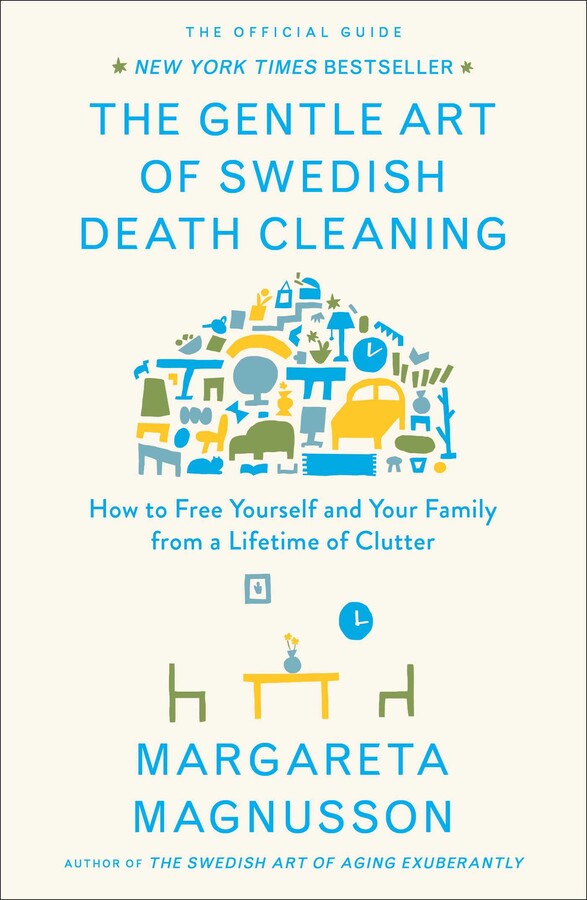
Since we are on the topic of your upcoming demise, I want to recommend to you this book:


Again, do a search on “swedish death cleaning” and you’ll see lots of  free material on the topic. But I recommend buying or borroing the book. Amazon has it here.

For those of you who find the process daunting, the NY Times has a good piece on how to break down the preparation.


How to paint with a limited palette and other art making skills you might find useful

As someone who is overwhelmed by the multitude of paint colors to use and make, the idea of a limited palette appeals to me, That’s why I liked this piece on the wonderful world of the limited palette as well as this one on the 7 benefits of painting with a limited palette. Relatedly, here’s an essential guide on the zorn pallette. More on the Zorn palette,here and here.  And here’s something on monochrome watercolour portrait.

Here’s a bunch of how to advice, including how to make diy packing tape transfers, how to do grisaille underpainting technique, plus an an unofficial guide to block printing. More on block printing here.

Want to paint using coffee? Why not. How about how to glaze with acrylics?

Here’s 5 Tips for Trois Crayons Drawing Technique. More how tos: How to draw leaves like John Ruskin, How to draw with ink, How to draw with graphite and How to draw with charcoal.

Some great trois crayons drawings here. Some great collage work here.

If you want to lay out a book, here’s  how it works. Related, here how to make a  booklet which is a half fold in the middle. Relatedly, here’s: How To Make An eBook.

Finally, here’s how to draw a portrait in pencil.

Inspiration: I found the following sites give me inspriation to make things. For example, block prints by svPhoenixStudio. More block print material  here.

Other things I found inspriring were these Italian renaissance drawings, these notable book covers and even these fonts for cookbooks. I like this guy who paints a lot of eggs, plus much more: egg painter. I like these illustrations by jason sturgill. The printing press work on display here: a man of letters. I loved these Istock photos of flowers on wallpaper. And these government prints that are free to use.

Do you like the color blue? Here’s some  blue to inspire you.

For fans of posters, take a look at this, on how give it a polish classic film posters with a twist in pictures.

Some photography help here, why i still shoot vintage kodak brownie hawkeye film camera and here,

Some inspiration from the beautiful film, perfect days.

Zines: I still love zines. If you do too, check out these quaranzines. Read  what the heck is a zine and What in the sam-heck is a zine? Then learn how to turn a google doc diary into a zine. Lots more zines here.

More art thoughts: on junk journaling benefits. Something on quantity and quality. Good advice: everything i make is a diary entry.

I really liked this book Brian Eno put out: Brian Eno Explores What Art Does in a New Book Co-Written with Artist Bette A. More Eno, here: Oblique Strategies.

Some insights onT he Highly Systematic Methodology of Dutch 17th-century Painting Techniques.

Why we need your art. Now go mess around and make something.


Project Esther, or how to demonize your opponents and for what purpose


When it comes to demonizing your opponents, I was really struck by how strong an example the Heritage Foundation demonstrates here: Project Esther: A National Strategy to Combat Antisemitism. Start with the first paragraph:

“America’s virulently anti-Israel, anti-Zionist, and anti-American “pro-Palestinian movement” is part of a global Hamas Support Network (HSN) that is trying to compel the U.S. government to abandon its long-standing support for Israel. Supported by activists and funders dedicated to the destruction of capitalism and democracy, the HSN benefits from the support and training of America’s overseas enemies and seeks to achieve its goals by taking advantage of our open society, corrupting our education system, leveraging the American media, coopting the federal government, and relying on the American Jewish community’s complacency. The National Task Force to Combat Antisemitism intends to enlist all willing and able partners in a coordinated effort to combat the scourge of antisemitism in the United States.”

Let’s unpack that paragraph. Do you find any room there for someone like me who opposes the actions of the Israeli government, never mind those who may be supportive of the Palestinians who are bearing the brunt of the Israeli army against the Hamas organization? I don’t. As far as Heritage is concerned,  I am “anti-Israel, anti-Zionist, and anti-American”. Furthermore, you cannot consider yourself  “pro-Palestinian”: you are considered instead part of “a global Hamas Support Network (HSN)”. Not only that, but by being part of the HSN, you and I are caught up with those “dedicated to the destruction of capitalism and democracy”.  If that’s not bad enough, Heritage states that we are hurting America by “taking advantage of our open society, corrupting our education system, leveraging the American media, coopting the federal government”.  The only way you could be any worse is if you were Jewish and adding to “the American Jewish community’s complacency”.

To generalize, the formula Heritage seems to be using to demonize their opponents is:

  • Ignore the spectrum of opposition, from those expressing mild disapproval to other engaging in violent action.
  • Instead, collapse that opposition and lump all your opponents together.
  • Make sure you collapse the opposition so that it is associated with the most extreme end of that opposition.
  • Relabel the opposition with a name and an acronym that ensures others associate it with this negative extremity.
  • Invent a list of nefarious actions to apply to the opposition.
  • Claim the leadership of those who would naturally go against such negative extremity.

This particular example revolves around the conflict in the Gaza Strip. But it could easily apply to any situation. For example, during the October Crisis in Canada, all those wishing for more autonomy for Quebec and opposing the Canadian government in various forms could have been lumped into the FLQ Support Network (FSN) and the Canadian establishment could have said anyone in this new FSN bucket was an enemy of Canada and democracy and more. As you can see, it’s an easy formula to apply.

Of course it is not just enough to demonize your opponent. Once you do that, you need to use that demonization to justify your future goals. For Heritage, some of their goals for Project Esther are listed below:

  • DE1: HSO propaganda purged from curricula.
  • DE2: HSO-supporting faculty and/or staff removed or fired.
  • DE3: HSO access to campuses lost and/or denied.
  • DE4: Foreign members of HSOs/HSN access to campuses lost and/or denied.
  • DE5: Money from foreign HSO supporters not accepted by schools.

Basically, any thing they don’t like in schools and universities they can label as coming from HSO (Hamas Support Organizations) and work to have it removed under the guise of attacking antisemitism. Attacks on free speech by right wing organizations is not new, and that is part of the point of Project Esther. First demonize your opponent, then use the demonization to ban them or strike them in some way while claiming it’s for a good cause.

Whenever a person or group use the formula to demonize their opponent, you can assume some follow on extreme action is being lined up by them. Don’t be that person or a part of that group, and don’t participate in that form of thinking.

Transportation is about class – some thoughts

You may only think of transportation in a practical sense of how you travel from A to B. However, there are many hidden assumptions in your travels, including ideas about Comfort, Cost and Convenience. And those three C words got me thinking about another C word, Class.

I started thinking about our underlying assumptions on transportation when I read this piece:  transportation is about bodies, by Navneet Alang. A key quote for me:

“I’m just saying that as a person who spends a lot of time in the suburbs: to “most people” — and I here I don’t mean most people in a generic, metaphorical sense, but in a literal and political sense — bike lanes and transit and so on don’t sound so much like options as much as the ravings of a crazy person. And it all sounds insane because the vast majority of them are concerned about their bodily comfort, and we are asking them to be less comfortable. We are saying what at least sounds to them like “you are going to have face your own body and feel more uncomfortable.” Any approach to changing transportation habits or making the case for why we should has to, in some way or another, deal with that simple fact.”

A light bulb went off when I read that. Transportation is about the best way to get from A to B. The best way can be defined in terms of speed, effort, convenience, comfort and cost. For biking advocates, bikes are the best way in terms of cost and convenience (e.g., easy to park, flexible routes). Automobile advocates think cars are the best way in terms of speed, effort (none), and comfort. For patrons of the public transit like the TTC, it is somewhere in between. In every case, travellers are thinking about their bodies, their physical selves, when they think about travelling. Some subway riders don’t want to be all sweaty when they get to work, and some car owners do not want to be crammed in a bus in winter with sick passengers. Meanwhile bike riders love the idea that their commute makes them physically fit, unlike the feeling they get stuck in a car or a bus. Each sees their means of transportation as the best way, depending on what they value.

Class is an additional way people think about themselves as they commute. This is especially so when they are travelling commercially. On trains and planes and ships there are different classes of  passengers, and while they may all get there with the same speed and effort, the comforts and costs and even conveniences differ depending on the classification of your seat.

As for automobiles, in cities where public transportation is lacking, class is assumed based on the type of vehicle you ride. People with expensive cars being of a supposedly higher class, people with beat up cars being a lower class, and riders of bicycles being the lowest class. Which is why you will see people driving cars they cannot really afford: they don’t want their vehicle to indicate in any way a lower class status.

Class is more difficult to discern in cities where public transportation is good. Wealthy people in cities like New York might ditch their expensive car and use the subway because it is faster and more convenient. That is also true with cabs: rich and poor hop in and out of the same yellow cars to go from updown to downtown (and vice versa). In New York and beyond, new transportation options like Uber and Lyft also tend to water down class indicators in terms of transportation. While services like Uber offer levels of class in terms of vehicle selection, you can also randomly get an expensive car with the basic Uber X option. Subways, cabs and Ubers all blur the ability to use someone’s commute as a class indicator.

Class and commuting tend to travel as a pair. I would extend this statement to say by daring to state that bike lane advocates and public transportation advocates are likely to fall in the left wing/progressive side of politics and their views on class tend to mix in with this, even as car advocates are likely to fall in the right wing/conservative side of politics. So when people are advocating for adding or removing bike lanes, they are promoting their ideas on class as much as they are promoting their ideas on the best way to travel. It’s hard to rationally argue for better cities with more bike lanes and congestion pricing with someone who for many years has worked hard and aspired to drive a very expensive car freely all around the city.

If you are going to advocate for certain transportation options, you need to account for speed, effort, convenience, comfort and cost. But you’d be wrong to leave out class: it is an essential element of any decision made when it comes to travel.

(Image of “Planes, Trains, and Autombiles” from Wikipedia, a movie as much about class as it is about transportation, with class being a theme that comes up often in John Hughes’s films.)

 

Some thoughts on using chatGPT to write a program to determine which foods are fresh in Ontario

It is easy to find out which foods are fresh in Ontario. There are several guides, including this one from Foodland Ontario, that can help you with this. However, I wanted a particular guide that would list for me all the fresh foods for a given month only.  And since I couldn’t find a guide like that, I decide to write a python program to make such a guide.

In the past, to write a program like that, I would go through sample code I have, pull out bits of code that were good, and cobble together something from all these bits. Lately, though, I simply ask a service like ChatGPT or others to write the code for me. I find nowadays it’s just so much faster to go that route. Call me lazy. 🙂

Since I wanted this done quickly, I pointed chatGPT at the Foodland Ontario guide and asked it to do the following:

Write a python program that strips out the text on this page https://www.ontario.ca/foodland/page/availability-guide?gad_campaignid=22412095602
and leaves just the foods and the month they are grown on. Include all food that states that is Year Round.

Did ChatGPT do that? Yes, it did. Was the program any good? No, it was not! It somehow looked at that web page and decided the values were stored in a table, even though they were not. The web page is more complex than that and so the program was a pretty failure.

After many prompts, I gave up and took an alternative approach. For this new approach, I stripped out the data manually and created a simple CSV file. I then asked ChatGPT to write a program to process the CSV file. Since it is a simpler file, ChatGPT was able to produce a workable Python program that was able to process the CSV file and output the information I needed.

Perhaps a more skilled prompt engineer could have written a better prompt to process the code. I dunno. I am finding that LLMs — not just ChatGPT — are fine with writing some straightforward code based on non-complex inputs and outputs. They are not so fine once the inputs or outputs get complex. But that’s just my experience. YMMV.

I have also concluded that even warmer months like May in Ontario do not have much in the way of fresh food. No wonder there are so many food stories on asparagus and rhubarb! 🙂 You really need to hit June or later before you get into a cornucopia of fresh produce.

If you’d like to see the end result of my coding, go here to this repo: https://github.com/blm849/ontfoods


The American Right is familiar with Carl Schmitt and you should be too (for different reasons)

Nuremberg Laws English.jpg

I would have thought that Carl Schmitt is someone who should have been assigned to the dustbin of history. I would have thought wrong.

According to this piece in the New York Times from the summer of 2024:

J.D. Vance, the Republican senator from Ohio who is vying to be Donald Trump’s running mate, declared: “The thing that I kept thinking about liberalism in 2019 and 2020 is that these guys have all read Carl Schmitt — there’s no law, there’s just power. And the goal here is to get back in power.”

Masterful bit of projection there by Vance of his own ideas on to the American left.

Give the rise of Nazi thought on the American right, it should not be surprising that some of its members are turning to Schmitt. For those who are unfamiliar with him, his Wikipedia entry starts with this:

Schmitt wrote extensively about the effective wielding of political power. An authoritarian conservative theorist, he was noted as a critic of parliamentary democracy, liberalism, and cosmopolitanism.His works covered political theory, legal theory, continental philosophy, and political theology. However, they are controversial, mainly due to his intellectual support for, and active involvement with, Nazism.In 1933, Schmitt joined the Nazi Party and utilized his legal and political theories to provide ideological justification for the regime. Schmitt supported many of Hitler policies including the Night of the Long Knives purge and the Nuremberg Laws.

Based on what we have seen so far, expect to see the Trump administration put more of Schmitt’s ideas in action over the length of Trump’s latest term in office.

To learn more about Schmitt and his ideas, you can read the Times piece and the wikipedia page. You can also check out a review of this book on him. For German readers, you can read his defense of the Night of the Long Knives, here.

(Image credits: By Government of Germany – Flickr: Nuremberg Laws English, Public Domain, Link. It’s important to see just where Schmitt’s ideas lead, hence why I included this terrible diagram. After all, “he praised the Nuremberg Laws for dispensing with the commitment to “treat aliens in species and Germans equally.” – NY Times)

On bike-shedding / the bike-shed effect

Anyone who works with a group of people needs to understand the idea of bike-shedding (as known as the law of triviality). Let me jump right to the Wikipedia entry to explain it:

The law of triviality is C. Northcote Parkinson’s 1957 argument that people within an organization commonly give disproportionate weight to trivial issues. Parkinson provides the example of a fictional committee whose job was to approve the plans for a nuclear power plant spending the majority of its time on discussions about relatively minor but easy-to-grasp issues, such as what materials to use for the staff bicycle shed, while neglecting the proposed design of the plant itself, which is far more important and a far more difficult and complex task.

The law has been applied to software development and other activities.The terms bicycle-shed effect, bike-shed effect, and bike-shedding were coined based on Parkinson’s example; it was popularized in the Berkeley Software Distribution community by the Danish software developer Poul-Henning Kamp in 1999 and, due to that, has since become popular within the field of software development generally.

Coming from the software development community, I’ve known about and seen countless examples of bike-shedding in meetings I’ve attended. I just assumed everyone knew the term. It was only when talking to people outside of software did I realize the term was not as well known.

Now you know it. And now that you do know it, you will see examples of it in many of the meetings you attend this week. 🙂


Venus if you will (What I find interesting in math and science, May 2025)


Venus

Here’s a number of pieces I’ve gathered in the last few months related to science and math that I found worth sharing. A few of them require deeper knowledge on the topic, but many of them are suitable for anyone to read.

in the area of space and astronomy:

Moving on to biology:

Emmy Noether

Regarding mathematics, physics and more:

(Photos – Venus, seen by NASA’s Mariner 10 spacecraft in 1974.Credit: NASA and Emmy Noether Credit: Kristina Armitage/Quanta Magazine)

Japan has 72 microseasons and why having more than 4 seasons is a good thing

lilacs
Right now lilac season is starting in Toronto. Shouldn’t that be a true season in it’s own right?

When you think of it, it makes sense that we have more than four seasons. Heck according to this piece, Japan has 72 microseasons. Meanwhile in Canada, we often joke about having many microseasons, too, and they go like this:

  1. WINTER (brutal cold)
  2. fool’s spring (don’t get used to it)
  3. second winter / bleak midwinter (oh well)
  4. spring of deceptions (is spring here? As if!)
  5. third winter (snowdrop flower season, snow melts fast, weird snowfalls in April)
  6. pollen season (lilac season, tulip season)
  7. SPRING (cool but green)
  8. Nice summer (perfect weather)
  9. SUMMER (brutal heat)
  10. false fall (where’s the sweaters?)
  11. second summer (that’s better)
  12. AUTUMN (leaves turn color and fall)
  13. Lovely holiday winter (not too cold)

I think we could easily get new names for all those seasons not capitalized.

Kurt Vonnegut took a stab at this and came up with six seasons: the original four plus two more, Locking and Unlocking. I think that is an improvement on the original four, but that’s just a start.

One good reason to have more seasons is that they remind you to appreciate the changes in the world around you. Another good reason is that it breaks down the seasons that can be difficult (winter for many, summer for me) and helps you get through them. Whatever the reason, having seasons based on the climate and less on solistices and equinoxes makes more sense.

I hope we get more seasons in Canada. For now we will have to stick with the four official ones and the many unofficial ones. Now go and enjoy the lilacs.


A rule to apply when books are banned or removed

booksThe rule I follow when I see actions taken against books is this: book bans or book removals are about preventing kids from learning about minority and oppressed groups in their society.
I was reminded of this rule when reading this piece about Arkansas threatening to put librarians and booksellers in jail “for providing material that might be considered harmful to minors”. Key quote from the piece:

The materials they have targeted are often described in policies and legislation as sensitive, inappropriate or pornographic. But in practice, the books most frequently identified for removal have been by or about Black or L.G.B.T.Q. people, according to the American Library Association.

Next time you see a book ban list, check to see what the books have in common. If what they have in common is that they are associated with specific groups (e.g., stories about gay families, black or brown authors), then the ban has nothing to do with publications that are “sensitive, inappropriate or pornographic”. The ban has to do with preventing kids from learning about the minority and oppressed groups.

On supply and demand curves and the one thing to remember

If you are like me, you struggle with supply and demand curves. Maybe it’s because I am used to drawing curves in mathematics, which are different than these curves, which tend to show a ‘before and after’ of where the curve shifts to on the graph when the price changes or the quantity changes. That change in price or quantity causes the curve to shift.

To see what I mean, I took these two examples from wikipedia. In these examples, we have right-shifts.


A right-shift of demand curve increases both price and quantity. Pretty straightforward: price goes up, quantity goes up. However…

A right-shift of supply curve decreases price and increases quantity. Here the price moves in the opposite direction of the quantity.

In short: with demand, price and quantity go hand in hand while with supply, they move in opposite directions.

P.S.These are supply and demand curves for most goods with elastic supply and demand. The curve changes if you have inelastic supply and demand. And they also change when you have Giffen goods or Veblen goods.

On police forces, gangs and prisons

I’ve been collecting articles on police forces, gangs and prisons over the last while.

I don’t have any great insights, and as someone who has not studied sociology at any length, I don’t have much confidence in any conclusions I might make from reading such a list.

I still believe that you cannot have a society without an effective armed authority (e.g., a police force) and some form of exile (e.g., a prison). The challenge I see is most societies do not do a good enough job with their armed authorities or their forms of exile, perhaps because most citizens in a society don’t care what happens to people who run a ground with the police or prison. Only recently in America, with Trump and his desire to use authorities like ICE to capture and ship people to prison in El Salvador, have citizens (mostly white, I suspect) turned to paying attention to this again.

You can read the articles I collected here and form your own conclusions:

Mark Zuckerberg doesn’t care about you and your friends

Mark Zuckerberg was roasted recently for saying the following:

“There’s the stat that I always think is crazy, the average American, I think, has fewer than three friends,” Zuckerberg told Patel. “And the average person has demand for meaningfully more, I think it’s like 15 friends or something, right?”

“The average person wants more connectivity, connection, than they have,” he concluded, hinting at the possibility that the discrepancy could be filled with virtual friends.

Some thoughts on that:

    • He’s wrong. The majority of Americans say they have four or more close friends, according to this Pew Study. And 2/3rds of Americans have three or more close friends. That just close friends. Obviously the list of total friends is much higher than 3 for most Americans.
    • Zuck just wants to find justification to start forcing AI into the social technologies that Meta owns so he can sell more ads. But he and Meta don’t seem to want to come out and say that. So he offers up these “virtual” friends as justification.
    • Meta’s products don’t foster real friendship and social connections.  Meta exploits people with technology that makes it easy and desirable to connect with others. Once you establish social connections there, they short circuit that by inserting ads into your communications. They also enable others (e.g., influencers) to insert their communications into your feed. In the end the technology you used to communicate with your friends becomes a firehose of others trying to get you to buy things.

You might push back and say: what do you expect? That’s the deal you made to use their “free” social media technology. There’s some truth to that. But there are degrees of exploitation, and Meta is the most extreme form of it and have been since Facebook first took off in the early 2010s. They aren’t just a parasite living off their host: they take over the host and eat it alive.

It’s instructive to compare Zuck’s proposition with what is being offered by the porn actress Sophie Dee, as outlined in this Washington Post piece. She too is offering up social connections, albeit of a different nature. In the end though, the game is the same: foster enough social interaction to push and promote the services she is selling.

There are ways to foster real friendship and enable communication with technology. That’s not what Mark Z or Sophie Dee are offering though. They are offering an illusion via AI to sell more things to you. Let’s be honest about all this. Let’s ignore this talk from Zuck about his virtual friends, for they are no friends at all.

Art Deco turns 100


Art Deco turns 100 this year, and Wallpaper celebrates it by highlighting some art deco buildings around the world in this piece.

All those art deco buildings are great, but for me, the Chrysler Building in New York is still the greatest. CNN has a fine feature on it, here. (More material on this New York City masterpiece, here.)

I highly recommend you check out both the Wallpaper and the CNN piece not just for the excellent photos, but for the in depth histories of the art deco era and the buildings that era produced.

(Image of the Dellit theatre in Australia is from the Wallpaper piece.)

Bernie’s basic questions that lead to writing better pieces by writing better paragraphs first.

Recently I’ve been trying to ask myself these questions whenever I write paragraphs for a new piece:

– For each paragraph, if I leave only the first sentence, does the collection of paragraphs still make sense?
– For each other sentence in the paragraph, does it help support the first sentence?
– Does each sentence do one thing in the paragraph?
– Are the sentences varied enough to make it interesting to read?
– Can I take words out of each sentence and still have a good sentence?
– Can I take out sentences of the paragraph and still have a good paragraph?
– Do the paragraphs hang together?
– Does the first paragraph make me want to read the next paragraph?
– If they only read the first paragraph, is that enough?

I came up with these questions because I wanted to make my writing better. It doesn’t matter what I am writing: an email, a press release, a blog post, you name it. Whatever it is, if I apply those questions, the collection of paragraphs gets better.

These questions are related to rules for writing paragraphs in many pieces you will find on the Internet. I thought I would share my version of that. I hope it helps!