Souped up IKEA (or how to hack the Malm, Billy and more)

If you are a frustrated furniture maker like myself, you might want to see what you can make by hacking some IKEA furniture. It’s not the same as getting out the circular saw and cutting your own boards, but it is a good way to combine traditional IKEA pieces with additional material to make something unique for you. Case in point, the raised bed above: made from IKEA without looking like IKEA.

If you need some inspiration, here’s two pieces on the topic: the best IKEA hacks of 2021 and the 10 most hacked IKEA products. Need more inpiration? Check out IKEAhackers.net. Good luck!


On good political art

I was thinking about what makes good political art after reviewing the work of Mike Monteiro. One of his encaustic works takes a traditional image seen on Portuguese tiles and underlines it with the message: All Portuguese ships are slave ships. While I like all of his work (seen here), that one especially resonated with me. Possibly because in Toronto (with a large Portuguese speaking community) you can see such art in many places, including the subway. I had always taken a benign view to the representation of such ships before. But this work got me to read up more on the leading role of Portugal in the Altantic Slave Trade. This work had me admiring it aesthetically as well as appreciating it for its political statement.

I think for political art to be good it has to strike such a balance between the aesthetic value of the work and the political value of the work. The work of Barbara Kruger or General Idea or Picasso’s Guernica all strike that important balance. Art where the political message is obscure or art that is merely an illustrated political message is out of balance and comes up short. It’s not that the work is bad: it’s that the work that strikes that balance is better.

For more and better thought on the power of political art, read this.  For more great political art, see this. Also much of the work of General Idea and Kruger is political and worth seeking out.

(Image above from the art group General Idea. For more on it, refer to this.)


Another smart blog to read (still!) is Norbert Hoeller’s blog

I wrote about my friend Norbert Hoeller and his blog back in 2023. I am happy to report he is still blogging two years later. While he doesn’t post as often as I do, whenever he does post, it’s very much worth a read. I am fortunate to lunch with him fairly often and whenever I do, I learn a lot from him. If you can’t sit down for a meal with him, the next best thing you can do is read his blog. For instance, you can read any of his posts and learn something: on travel / where my baggage, on travel / foreign currency, on hacks / air conditioner battery, on ticks and lyme disease, on hacks / monitoring refrigerator temperatures and on  paypal shopping notification.

Or you can just start at the beginning and go on from there.

I am always encouraging smart people I know to blog. I am always happy when they continue to do so.

60 or so interesting things I wanted to write about and maybe will some day

For the last few years I’ve shared interesting links I wanted to write about some day and maybe I will. Last year it was 28. The year before it was 85. As in other years, I think these links are all interesting, even if I don’t have much to say about them.

First off, let’s look at some cool links/sites. These retro design choices are cool. As are all the things Clive Thompson writes about. Anything Dan Sinker writes about is cool. Is Sonny Rollins cool? Of course he is. As was Min Matheson, the Labor Leader Who Faced Down Mobsters. Is the home of Roberto Gerosa home in Milan cool?  I happen to think so.

Moving on from cool, this story, on Only fans and being good, is interesting. Edmund White’s sex memoir may also be interesting to some. Same goes for this story of Stormy Daniels and the gofundme she set up to deal with alleged threats due to testifying against Trump.

I was curious about where does the expression “peace be with you” come from. I was also curious about Christian masses other than Christmas. For example, Childermas. Speaking of Christmas, I liked this piece on the shepherds and the Magoi and this piece on shepherds or wise men at the birth of Jesus. If you wonder if churches still matter, read this.

Some historical pieces I liked: this on 1177 BC bronze age societies and this on the world’s oldest known song, hurrian hymn no 6. Likewise, this story on rare anti-nazi resistance pamphlets. What’s this? A good reminder that there were still old people when life expectancy was low.

Three things on Canada worth reading: MAID has led to soaring euthanasia deaths, where the primary care crisis is hitting ontario hardest, and a story on a Canadian woman sentenced for inuit benefit fraud.

Not on Canada, but by a Canadian, are these two posts by Lloyd Alter: why i am thinking about giving up and if only i could sleep on the overnight train.

Some good articles on fashion and design/decor: a piece on how Google is reaping the benefits of big ad spending from fast fashion companies  temu and shein. Meanwhile, Burberry shows signs of decline with job cuts worldwide. Here’s a slight piece on wearing  white in summer. Here’s something on a minimal entrance way. And I liked this fake window for windowless rooms and this transformer table that goes from a workstation to dining table in seconds.
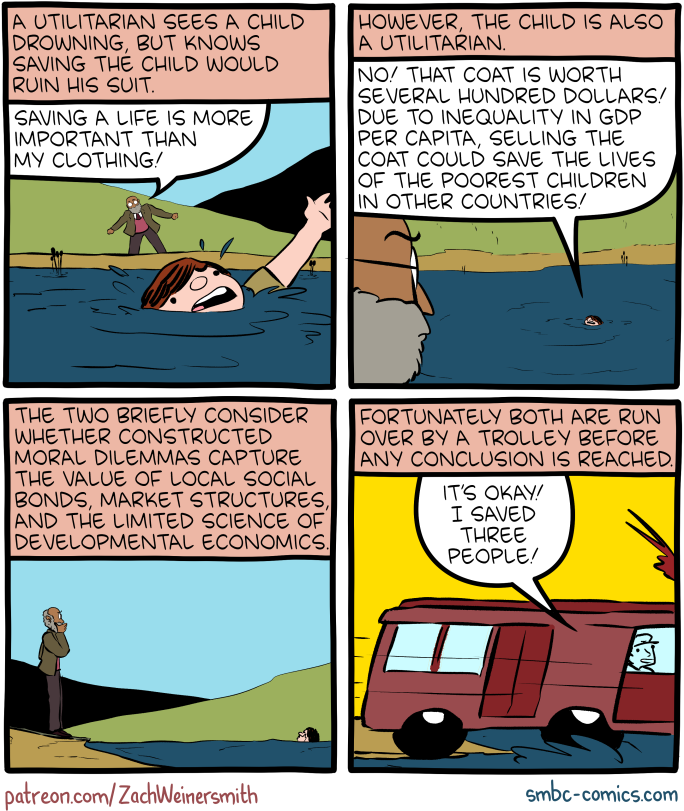
For some time I was wanting to write a critique of Peter Singer and his arguments about affluence and morality. So I read a number of pieces on him and his argument  here here, and here. In the end the cartoon shown above (and found here) summed up what I wanted to say, so I leave it at that for now. In addition, I wanted to also write on the correspondence theory of truth (more on it, here) but didn’t. Same goes for Compatibilism.

Did I care enough to write about  Ellen Degeneres and her netflix special? I guess not. Do I care about Bill Gates closing his Foundation in 2045? Not really. Do I think much of Niall Ferguson’s tendentious op ed? I do not. Do I think even less about Elon Musk and xAI? I do. Is any thought of RFK Jr (as seen here) worthy of consideration? Nope. Is Richard Hanania a terrible person? Yep.

Finally I thought these random pieces were worthwhile: on soldiers shortage due to population changes, when Dietrich Bonhoeffer theorized how stupidity enabled the rise of the nazis, on the changing of plant names that contain a racist slur, on antitrust suits, on whether or not you are entitled to severance pay, on how parents are stressed and how young undecided voters voted in the 2024 US election.

Two great hotels that reflect two things I am a fan of

Anyone who knows me and my blog will know I have always been a fan of Philippe Starck. I am especially a fan of his hotels. So of course I was delighted to hear about this new place he is working on, the Maison Heler hotel (shown above) in Metz in the north of France. It’s fantastic and fantastical, as many of his hotels are / were.  It’s worthwhile to read this here and check out the lots more great photos.

While I am a fan of Starck, I aslo a fan of the city of Charleston. Which leads me to point out another great hotel, The Nickel, that has just opened up in that city.

Just as the Maison Heler is a reflection of Starck, the Nickel hotel is a reflection of Charleston. Other than that, they are both very different hotels. To see what I mean, check out this piece here. That piece too is filed with details on the hotel, not to mention great photos.

If you liked those two hotels, I recommend you head over to the website Design-Milk for many more great hotel stories.

P.S. For even more on hotels, specifically hotels next to railways, read this.

Declutter challenge, part 2: using the pile method

Yesterday’s declutter challenge was all about getting the trash out of your home.

Today’s declutter challenge is about putting things away. To do that, you are going to use the pile method.  As this piece explains:

To use the “pile method” to declutter a room, start by gathering everything that’s not in its place into a basket. Then, dump it all in the living room, start sorting, and then put items away.

It seems counterintuitive, but it works. I’ve used it for clothes especially, but it can work for any bunch of things lying around.

Some thoughts:

  • One good thing is once you remove all the clutter, you already feel confident the place can be restored, even if you still have a pile to deal with.
  • If there are things you know have a place to go, put them to one side. If there are things to go in the trash, put them right in the trash. Hopefully at this point there is a place for everything in the pile. For those things that do not, consider donating them to someone.  Or try than the box and banish approach.


Declutter challenge, part 1: a 30 minute trash run

Inspired by this piece here in the Washington Post, I am going to challenge myself to do a “trash dash” and see how many of these things in my home I can get rid of in less than half an hour:

  1. Expired food, including spices.
  2. Branded freebies and promotional items like plastic cups, water bottles, koozies, insulated tumblers.
  3. Takeout detritus including plastic utensils, takeout containers, sauce and spice packets, and paper menus.
  4. Food storage containers.
  5. Reusable bags.
  6. Plastic dry cleaning bags and unused wire hangers.
  7. Clothing that is torn, stained or stretched, including items in need of repair
  8. Promotional swag like T-shirts, tote bags and bandannas.
  9. Orphaned socks.
  10. Paper bags.
  11. Receipts and product manuals.
  12. Magazines or books you’ll never reread.
  13. Calendars and newspapers.
  14. Junk mail.
  15. Expired or barely used beauty and personal care products, including makeup, sunscreen and bug spray.
  16. Hotel toiletries.
  17. Dried-up markers and pens.
  18. DVDs and board games you don’t use.
  19. Completed coloring books, puzzles with missing pieces and other kid stuff that has run its course.
  20. Decorative items.
  21. Unused hobby gear.

Give it a try. And if even that seem too overwhelming for you, set a 5, 10 or 15 minute timer and see how much you can collect. I bet you’ll be surprised by how much you get rid of, and how inspired you are to do more.

Don’t make it hard by overthinking it: just grab any old garbage bag or old box and start throwing things in it. If you aren’t sure, toss it in the bag/box and reconsider it AFTER the challenge. The need here is for speed, not contemplation. Go fast, toss things in the bag, and move on.


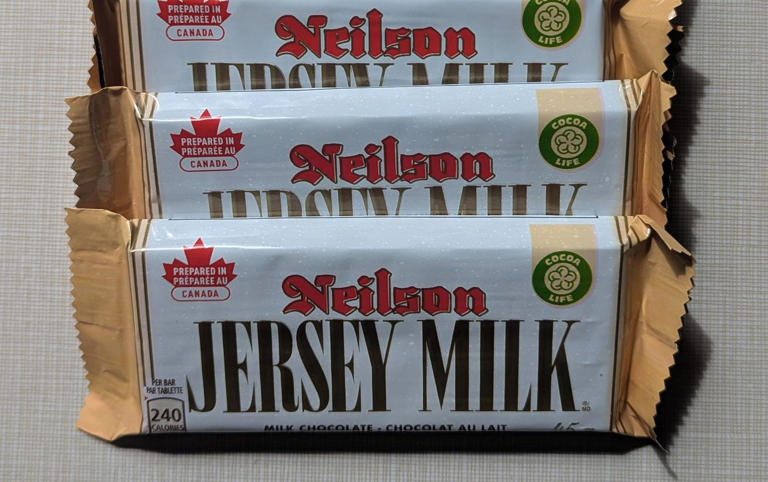
On the end of Jersey Milk and Cherry Blossom chocolate “bars”

Sad to hear that another Canadian chocolate icon, the Jersey Milk bar, is being discontinued. The company that owns it, Mondelez, said there was more demand for it’s other products. Hence, the discontinuance. Hey, I get that. It’s still sad to see part of one’s youthful experiences disappear. I really used to like Jersey Milk chocolate. It was different and dare I say better than other chocolate only bars.

Sad too was the demise of a “bar” I loved that many didn’t: Cherry Blossom. It wasn’t a bar so much as it was a mound of chocolate with a cherry filling. It was also a candy that brought up strong feelings, with many saying they hated it. What did they know: I thought it was unique and excellent.

How to live in wonderful small spaces

Over at the blog Cup of Jo is a story of the 175 sq foot apartment and the woman who lives there. She has lots of tips on how to thrive in a small space.

I like the bold use of black and white to simplify the decor and make it seem less busy.

Looking at this small apartment reminded me of another small space also featured on that blog, this one being Erin Boyle’s:

Like the first place, Erin’s place is full of well curated pieces. And also like the first place, she is not afraid to put big pieces of furniture in a small space. (By the way, Erin has a book and a substack devoted to her way of life. I recommend both.)

Check out both of blog posts featuring their homes. Anyone living in or dreaming of living in a small space of their own will be inspired.


Design that is neither digital nor minimal

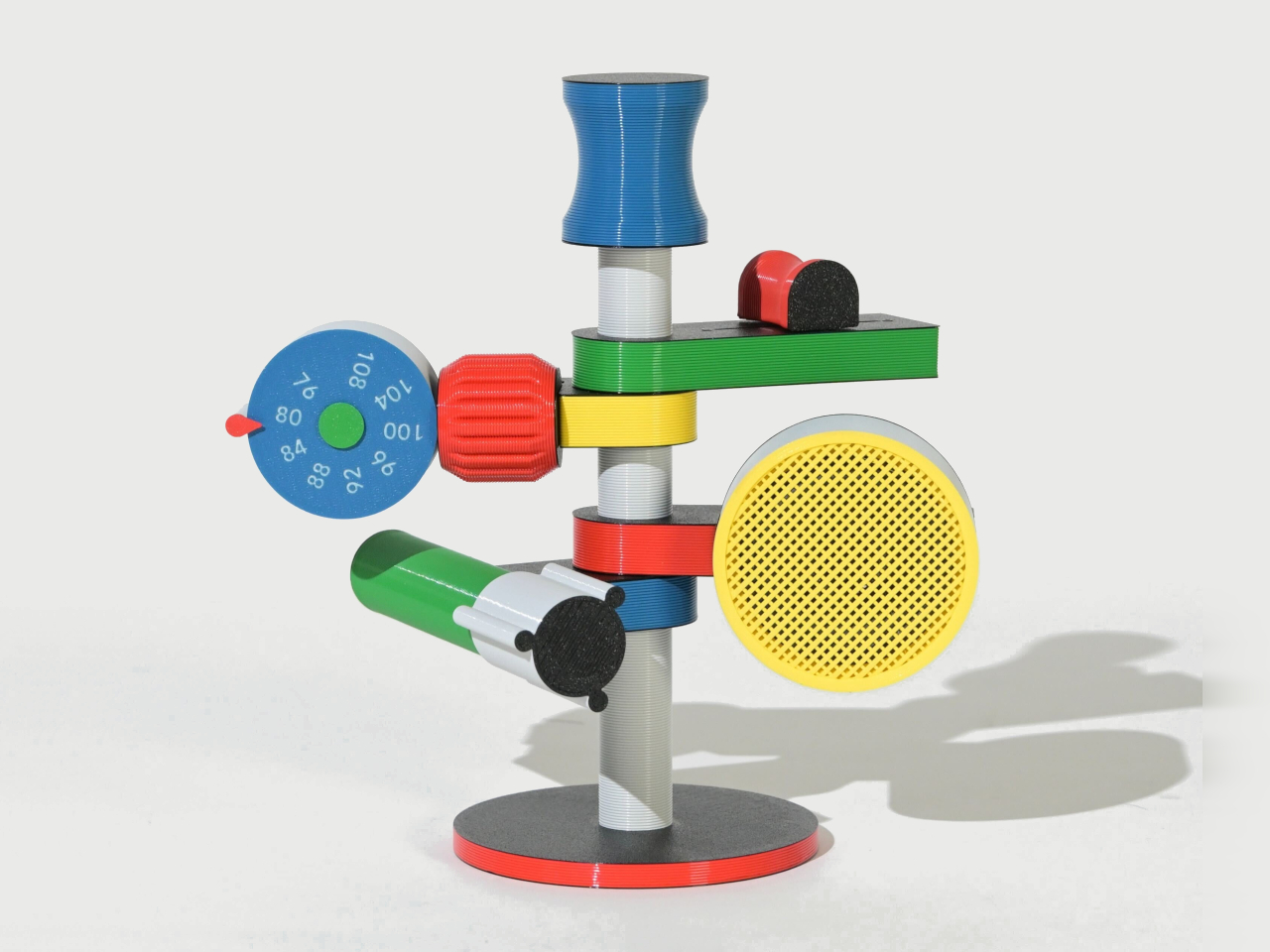
In an age when the default design approach for devices tends towards minimal and digital, it’s great to see devices that go in a different direction. Take this device:

If it weren’t for the dial, you might have a hard time determining it is a very fun FM radio. I love it. It reminds me of Italian design from the 1980s.

Or take this analog device:

It’s a brilliant way to know the weather outside! I highly recommend you go here to really get a sense of well it is designed and all it can do.

Check out the link for the radio as well. It’s also innovative in it’s design.

The Withings smart watches, for people who want their watch to look like one

While I am a big fan of the Apple Watch, I know some people are put off by the look of it. If you are one of those people, then consider the Withings ScanWatch 2. It’s a good alternative for those of you who want a smart watch that has a more traditional look to it.

Even though it looks traditional, it seem it can do all the health monitoring of an Apple Watch as well. Plus, it has a long battery life and it comes in different materials and colors and has a variety of bands. Nice.

If you need a less expensive version, Withings has a variety of watches at different price points. Lots of  other smart products, too. Check it all out, here, on their online Store.

P.S. It’s interesting how closely the product page for the watch resembles an Apple Product page. I’m sure that’s no accident.


How to become a birder and improve your life in the process

A good friend of mine who is an excellent birder forwarded me this self help guide, How to become a birder: 10 easy ways to start this life-changing hobby.

What’s great about it is not only does it provide good instructions on how to become a birder, but how in the process of becoming one, you also improve your life.

Any hobby that allows you  you to “broaden your horizons” and be a part of “something bigger” is an excellent hobby indeed.

Become a birder, not just to see birds, but to become a better person.

On the famous essay and subsequent career of Anthony Bourdain

Like many, I love the famous New Yorker essay by Anthony Bourdain, Don’t Eat Before Reading This, published in 1999. For some reason, I always thought he submitted it to the New Yorker as a whim, that the success of it was a fluke, and the great books that followed were simply a response to this essay’s success.

So I was surprised to read this interview of him in 1997, “Potboiler Dreams: Chef Hopes To Write His Way Out of the Kitchen”. He confessed in the interview that he already wanted to write his “dream book, a definitive, foody memoir, a ribald account of my 22 years in the restaurant business that would probably appall and horrify anyone thinking of hiring me.” That dream book was Kitchen Confidential, published in 2000. The man had a plan, and with some luck, the plan succeeded. A good thing it did too, for we all benefitted.

More on this, from VOX: “Bourdain’s first big essay shows off all the things that would make him a great food celebrity”.

P.S. Here’s an excerpt from the film, “The Big Short” in which the film writers get Bourdain to riff on his fish story to explain financial instruments.