29 IT links to things I am working on or interested in: AI, Python, Netscaler, automation and more

Things I am interested in or working on these days: AI, WebSphere setup, Python, Twitter programming, development in general, configuring Netscalers, cool things IBM is doing, automation, among other things.

  1. If you have the AI bug and think you want to do some Prolog programming, you need this: What Prolog implementation to choose? What’s fastest? Compatibility?
  2. Deep Learning is hot in AI. If you want more info, this is good: Deep Learning Tutorials — DeepLearning 0.1 documentation
  3. Sigh. This debate never goes away in AI: Why AlphaGo Is Not AI – IEEE Spectrum
  4. More on the hysteria that AI brings: The founder of Evernote made a great point about why AI (probably) won’t kill us all – Vox
  5. Ignore most AI hysteria, but do read this: What does it mean for an algorithm to be fair? | Math ∩ Programming
  6. Want to whip up a quick mobile app? Consider: Mobile App Builder – new service now available – Bluemix Blog
  7. For power users, there’s: How to create an insane multiple monitor setup with three, four, or more displays | PCWorld
  8. Need virtual images? Take a look at this: Images | VirtualBoxes – Free VirtualBox® Images
  9. For hardcore WAS users, this is helpful: Installing optional Java 7.x on WebSphere Application Server 8.5 (Application Integration Middleware Support Blog)
  10. A classic. Anyone tuning WAS needs this: Case study: Tuning WebSphere Application Server V7 and V8 for performance
  11. Want to learn Python? Write your own Twitter client? Or do both? Then there’s this: How To Build a Twitter “Hello World” Web App in Python | ProgrammableWeb
  12. More on programming Twitter: How To Use The Twitter API To Find Events | ProgrammableWeb
  13. Nice little project to try, here: Create a mobile-friendly to-do list app with PHP, jQuery Mobile, and Google Tasks
  14. Creating Simple Responsive HTML5 and PHP Contact Form | Future Tutorials
  15. Setting up a Linux system? Then you want to read this: Most secure way to partition linux? – Information Security Stack Exchange
  16. Want to learn Linux? This is essential! IBM developerWorks : Technical library concerning Learning Linux
  17. If you are doing performance work on Unix, you will likely use vmstat. Even if you know vmstat, this is good to review: What to look for in vmstat – UNIX vmstat command
  18. Wow! OS/2 is still alive! OS/2: Blue Lion to be the next distro of the 28-year-old – Yahoo Finance
  19. Talk about old tech! This makes OS/2 seem fresh! It’s Insane that New York’s Subway Still Runs on This 80-Year-Old Switchboard | Motherboard
  20. I was doing some work on Netscaler and found this useful in comparing the set up of one Netscaler config with another: Export Netscaler Config – NetScaler Application Delivery – Discussions. This is also useful:  Netscaler 9 Cheat Sheet.doc – netscaler9cheatsheet.pdf
  21. I thought this was a good development for everyone interested in Node: IBM Buys StrongLoop To Add Node.js API Development To Its Cloud Platform | TechCrunch
  22. Alot has changed with IBM’s OpenPOWER. Forbes gets you up to date, here: IBM’s OpenPOWER: A Lot Has Changed In Two Years – Forbes
  23. Cool stuff here: Access your Docker-based Raspberry Pi at home from the internet · Docker Pirates ARMed with explosive stuff
  24. I was using Perl scripts on Linux to send me messages to my mobile device via Pushover. This was good for that: pushover Archives – Perl Hacks
  25. I was also using WinSCP for that and this helped: Scripting and Task Automation :: WinSCP
  26. For all those trying to succeed in IT but feeling you are running into ceiling, you should read this: Tech’s Enduring Great-Man Myth or this When It Comes to Age Bias, Tech Companies Don’t Even Bother to Lie | Dan Lyons | LinkedIn
  27. Linus Torvalds is always interesting, and this is especially good: Linux at 25: Q&A With Linus Torvalds – IEEE Spectrum
  28. Very cool! Particle | Build your Internet of Things
  29. And finally some links to good stuff on UML online: Multi-layered web architecture UML package diagram example, web layer depends on business layer, which depends on data access layer and data transfer objects.

The problem with AI, Bots and social networks

Bots combined with AI and social networks are going to become an increasing problem. I thought of this when reading about the relatively recent Ashley Madison fiasco. Even if you wouldn’t be caught dead using such a service, this applies to you in other ways.

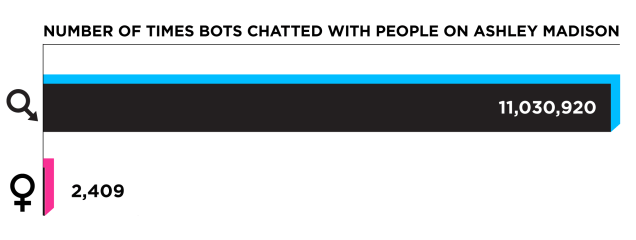
One of the fascinating aspects of Ashley Madison was just how many bots were employed by the company, at least according to this article: Ashley Madison Code Shows More Women, and More Bots. 

How many? Alot! From the article:

After searching through the Ashley Madison database and private email last week, I reported that there might be roughly 12,000 real women active on Ashley Madison. Now, after looking at the company’s source code, it’s clear that I arrived at that low number based in part on a misunderstanding of the evidence. Equally clear is new evidence that Ashley Madison created more than 70,000 female bots to send male users millions of fake messages, hoping to create the illusion of a vast playland of available women.

Here’s some examples:

This matters to you because chances are you will be interacting more and more with bots. Bots are cheap, and companies and organizations are going to go with them to meet their needs and yours.  Maybe the bots will be harmless, like customer service reps that are actually just software programs. However it is also possible, just like it was at Ashley Madison, that these bots will be customized to con you into thinking you are dealing with a real person so that you will give them more money in some form or another. Bots may be obvious now, but as AI improves, so will the ability of bots to fool you. It’s not inconceivable that we will spend more and more time interacting with software that we think is human. It is something we need to think about and talk to fellow humans — and not AI driven bots — about how it will affect us and if it is negative, what we are going to do about it.

Robots in the real world may not realistically resemble humans for a very long time. Online bots that realistically resemble humans will get there much sooner.  We need to quickly anticipate what positive and negative effects that will have and prepare for that.


It’s not A.I. or robots that are taking away jobs. It’s you.

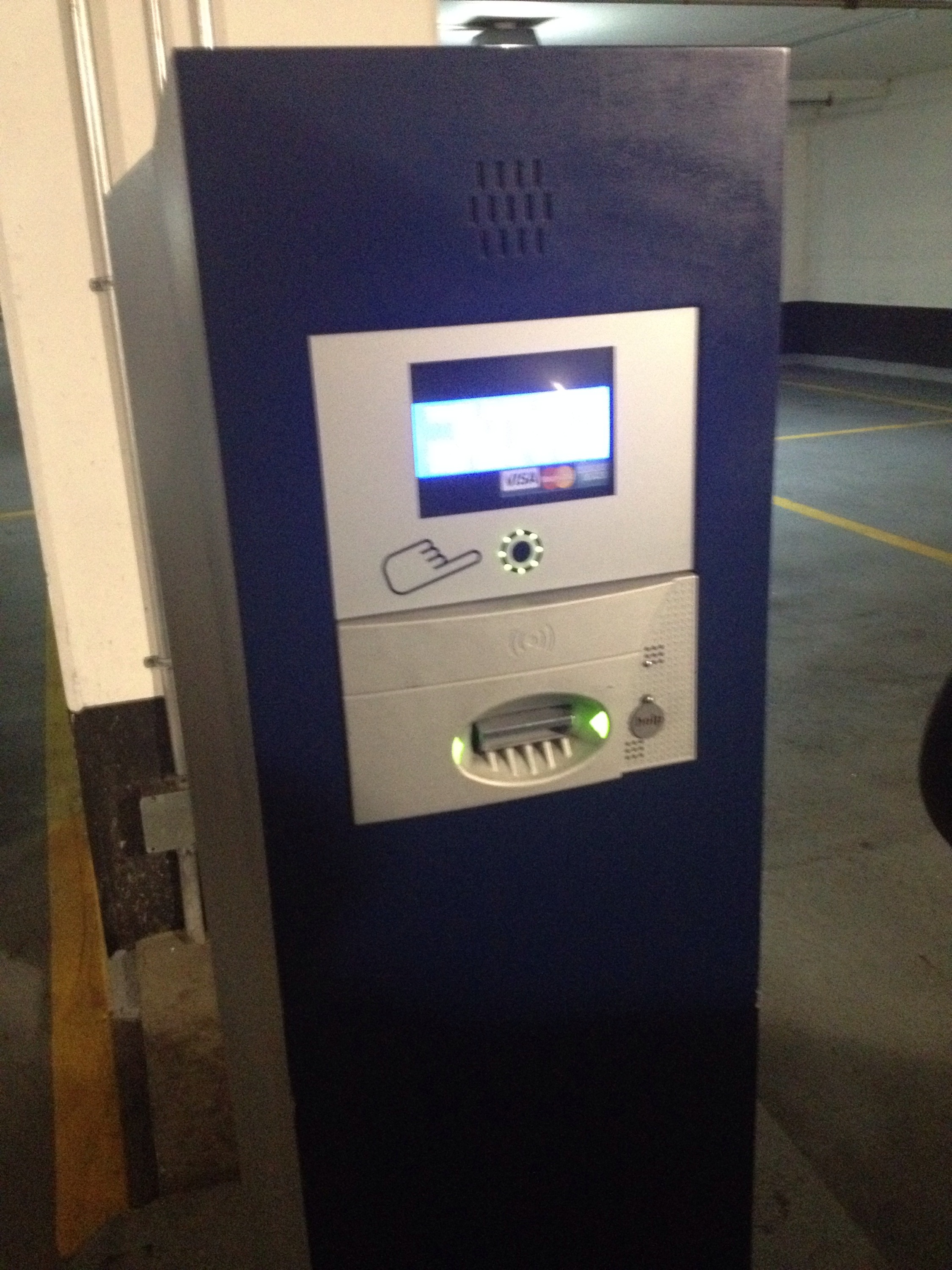
A year or so ago, a parking lot I use had a human in a booth to take tickets and provide other  services. That human booth was replaced by the thing in the photo above.

It’s not a robot and it’s not A.I., but it is replacing humans.

Stories about A.I. or robots taking over work makes them interesting. It’s also secondary to the real story. What is really taking people’s jobs is a willingness of others to use technology, and a willingness of companies to replace people with technology. People are not afraid to use technology. If anything, sometimes they prefer to deal with technology. This makes it easier for companies to go with technology as compared to using people, and if companies can save money or make money, so much the better.

It is happening in all sorts of industries, from food to sportswriting. The technology isn’t the driver of this: it’s the willingness of people to prefer technology that is the driver.

Forget self driving cars – the first big thing will be self driving trucks

While there is lots of discussion about self driving cars, it’s much more likely that self driving trucks will become standard and accepted first. Here are two stories that support that. First this: How Canada’s oilsands are paving the way for driverless trucks — and the threat of big layoffs. Second, over at Vox, is:  This is the first licensed self-driving truck. There will be many more. Key quote from Vox:

Last night at the Hoover Dam, the Freightliner company unveiled its Inspiration Truck: the first semi-autonomous truck to get a license to operate on public roads.

The Inspiration is now licensed to drive autonomously on highways in Nevada. It works a bit like a plane’s autopilot system: a driver will get the rig on the highway, and can take control at any time once it’s there. But the truck will be able to drive itself at high speeds, using cameras to make sure it stays within its lane and doesn’t get too close to the vehicle in front of it.

Self driving trucks are already up and operational. Additionally, the business case and the hurdles to overcome with self driving trucks will be easier to achieve than that of self driving cars in urban areas. Sooner than you think, you will commonly see self driving trucks on highways, especially during the hours when most highways are 80-90% trucks.

Transportation is changing. Self driving trucks are going to be leading that change. Self driving cars will be a distant second.