Pressing pause on the newsletter (i.e. what would have been the June 2026 edition of my not-a-newsletter newsletter)

The first half of 2026 is done. I was planning to write a recap over what has been happening since December, when I posted my last newsletter. Today I decided to change that plan.

I’ve been posting newsletters regularly since my first one in March 2020. Back then, they were monthly: lately they’ve become biannual. Back then, they gave me something to do in lockdown and they gave me a way to track the pandemic. Lately they have turned to the Trump administration, since like COVID-19, it has a big impact on the world.

Unlike the pandemic, however, I don’t feel like tracking tracking or writing about Trump and his administration any more. Perhaps I will at year end, after the midterms, when hopefully elections do to Trump what vaccines did for COVID-19. Perhaps things will feel different then and I will feel different and want to write about what he has done to America and the world. Until then, I think I’ll focus on other things on this blog.

I’m glad I posted about the pandemic. I’m glad I stuck with posting my newsletter here on this blog and not on a separate Substack newsletter. I find it interesting to go over back over them from time to time to see how things have changed. For anyone interested, you can find them all here.

It’s good to persist in an activity. It’s good to know when to change direction too.
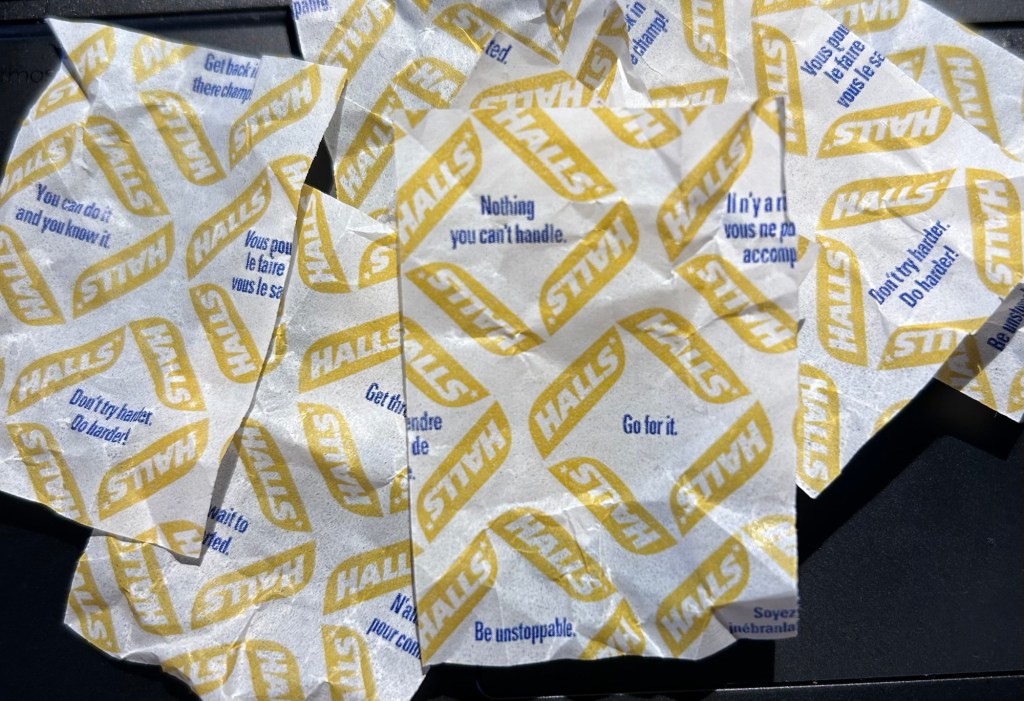


Things are tough? You need Halls as a coach!

I realized recently that Halls cough drops do more than assist with a cold. They also assist with your mental health! These are some of the phrases I’ve captured on the wrappers than come with each lozenge:

  • You’ve survived tougher
  • Nothing you can’t handle
  • Go for it
  • Be unstoppable
  • Get back in there champ!
  • You can do it and you know it
  • Don’t try harder. Do harder!
  • Get through it
  • Don’t wait to get started

Lots of good encouragement there. And the exhortations are in English and French. Formidable! 🙂

Kidding aside, I think this form of message is not bad. Any little thing to help you feel less miserable is a good little thing.

How to win the New York Times Crossplay game against the computer in hard mode (June 2026)

I have been playing the New York Times Crossplay game against the computer in hard mode and most of the times I win. Here’s what I’ve discovered:

  • In hard mode the computer “likes” to play longer words whenever possible. Many times these are uncommon words.
  • The computer will try and play the 2W and 3W tiles, but it seems to “prefer” to play longer words over shorter words, even if a shorter word on a 2W or 3W might gives more points.
  • The computer will stack shorter words but it tends to do that later in the game when it is harder to play longer words. It will stack longer words if it can.

These have been my observations. Give that, to increase my chances of beating the computer, I will:

  • hold back letters with higher values unless I can score at least 20 with them on my current turn.
  • wait for the computer to set me up for 2W and 3W tiles and then play the higher value tiles. I find it will play a long word to maximize it’s length, even if it is easy for me to stack on top of its word and get the 2W or 3W tile. It doesn’t seem to play defensively.
  • My expectation is the computer will do this at least 2 or 3 times a game, so being patient even when I am down is key to beating the computer.
  • if I can’t do anything good with an open 2W or 3W, I will take it if there is a chance the computer can reach it in 5 tiles.
  • I will set myself up for a 2W or 3W in the next move by holding back a tile. Let’s say I can end a word in S, but it means it is possible for the computer to use that S to play a word and to get to a 2W or 3W tile. If I was playing a person, I might be worried they were going to get that in the next round. But if there are open spots on the board where the computer can play a longer word, chance are it will go for the longer word instead, so in the next turn I can lay down the S and hopefully spell out a word to get the 2W or 3W tile.

I say most of the time I will beat the computer in hard mode. Crossplay is a game of chance as much as anything, and some games I will get a bad assortment of letters and the computer will get a great assortment of letters and I will lose. But by adopting the approach I described above, I can frequently beat the computer in hard mode, even though it knows more words than I do.

P.S. My overall general approach is to always aim for the highest score for each play. Often this means stacking words — even small words like “LI” and “OR” — on top of other words to maximize my score rather than playing long words, the way the computer prefers to do. Stacking words gives less openings for my opponent, which is especially effective against the computer, which will often open up the board by playing a long word.

How not to clean your house

While I have written a fair bit about cleaning on this blog — a chore I do not like — today I want to share something different, how not to clean. Specifically, 7 TikTok cleaning hacks to avoid according to The Washington Post. Some of the hacks are a waste of time, others could potentially kill you.

The hacks to avoid are:

  1. mixing cleaning products together – potentially lethal
  2. Mopping floors with laundry detergent
  3. Cleaning upholstery with a detergent pod and boiling water
  4. Boiling Pine-Sol – also potentially dangerous
  5. Vacuuming with laundry scent beads
  6. Putting laundry products such as detergent pods and scent beads into decorative jars for aesthetic reasons.
  7. Fabuloso in the toilet tank

For more detail, head over to the Washington Post.

On nominal amounts

I became interested in the topic of peppercorn rent when I read how the English Royals use it. That lead me to reading these two pieces (Peppercorn Rent: A Comprehensive Overview and What Is Peppercorn Rent – and why is it in the news?) I recommend them both.

That topic lead me to think of other such forms of nominal fees or payments. A good example of which is the One-dollar salary. Very nominal indeed.


A small note on Musk and SpaceX and the Mongolian Horde Approach

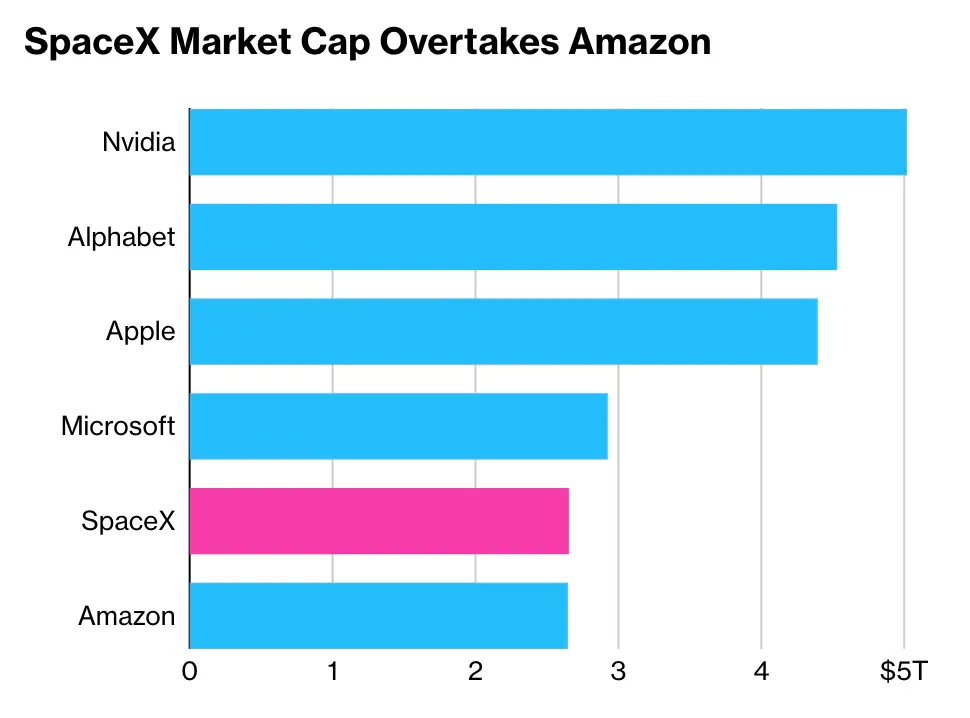
Just wanted to add a small note on SpaceX and the insanity around it all. Paul Krugman and others have been dismissive of the value of SpaceX. Is it a meme stock? Is it a scam? I can’t say.

I can say this. The value of SpaceX allows Musk to deploy his Mongolian Horde approach (something I wrote about here). In short, Musk solves problems by throwing massive resources at a problem until he achieves his objectives. So if he wants xAI to be successful, he can buy Cursor or whatever else he needs for it to be successful. If that doesn’t work, he can keep burning through money and acquire what he needs to get to where he wants to go.

I can’t say he is going to be able to do this indefinitely, but I think he can do it a lot longer than people thing he can. If indeed he is a Ponzi scheme, I do not believe he is one in danger of collapsing any time soon. But let’s see!

On Ponzi Schemes

Charles Ponzi

Over on his Substack, Paul Krugman makes the case for Elon Musk being a Ponzi Scheme. He says: “We have a term for enterprises that look successful because they keep drawing in new investors and keep drawing in new investors because they look successful. They’re called Ponzi schemes. And Elon Musk is basically a human Ponzi scheme.”

I don’t know. Musk is many bad things, but I think he is more than a Ponzi scheme, based on this entry in Wikipedia. Now Bernie Madoff: his enterprise was a Ponzi scheme. But I think there is still some substance behind the enterprises that Musk is running.

Paul Krugman obviously know economics, but I think he is stretching things to insult Musk. Check out these linked pieces and decide for yourself.

P.S. Elon Musk and his companies may not be a Ponzi scheme, but this piece in Techdirt makes the case for how they are a scam, in particular SpaceX.

(Image of Charles Ponzi from Wikipedia)

Bernie’s rule of business predictions of 5 years (or more)

If someone makes the following business prediction: event X will happen in 5 (or more years) think to yourself: they absolutely have no idea.


As I said in an earlier post:

For any business prediction, the time frame determines the probability. If they say in a year, they either are doing it themselves or someone they know is. If it is 1-2 years, it won’t happen this year, but someone is working on it. If they say 3-5 years, then it’s likely not in progress, but there is talk of working on it.

The only prediction that is useless is 5-10 years. If someone says 5-10 years, they are saying something like “I don’t want to say it will NEVER happen, but it is not even close to coming to fruition, so I will predict 5-10 because who is even going to come back and ask me about it in a decade from now?” 🙂

Books for reading when you’re going through hard times

The New York Times asked experts to “share the literature that has helped them cope with death, illness and despair” and the result was this article: 5 Books to Lift You Up During Life’s Hardest Times (gift link). You may have these or have heard of them already:

  1. ‘Being Mortal,’ by Atul Gawande
  2. ‘Meaty,’ by Samantha Irby
  3. ‘Gilead,’ by Marilynne Robinson
  4. ‘Blindsided,’ by Richard M. Cohen
  5. ‘Vigil,’ by George Saunders

If not, check out that gift link and find out more about the books, including why and how they can lift you up.

What’s better than 150 Extra Engineers? This blog post! (What I find interesting in tech, June, 2026 edition)

Ok, technically the IBM 604 Electronic Calculating Punch was better than 150 extra engineers. I can’t provide you with one of those, but I can provide you with this list of links on what I find interesting in tech lately (besides AI, which I have posted on separately since it is a big topic in itself).

Software:

Raspberry Pi :

Miscellany:

(Credit for the top image: File:IBM 150 Extra Engineers 1951.jpg – Wikimedia Commons)

AI: what people are doing and what people are saying (June, 2026)


When it comes to AI, there are 1) lots of people doing practical things with AI and 2) lots of people writing about AI. They rarely overlap. 🙂 

But overlap they do in this post! For those of you not doing practical things with AI, skip to the second section.

1) Here’s a bunch of links for people who are doing practical things with AI:

2) Here’s a bunch of links for people who like to read about AI:

How to be an artist, how to do art, and what art can do for you


As a frustrated artist, I not only gather links about artists, but I also gather links about art. Here are just some of the ones I’ve picked up recently:

If you want to be an artist, it might be good to ask established artists what their thoughts are. Artsy.net did a series on this, and I put together a list of just some of them:

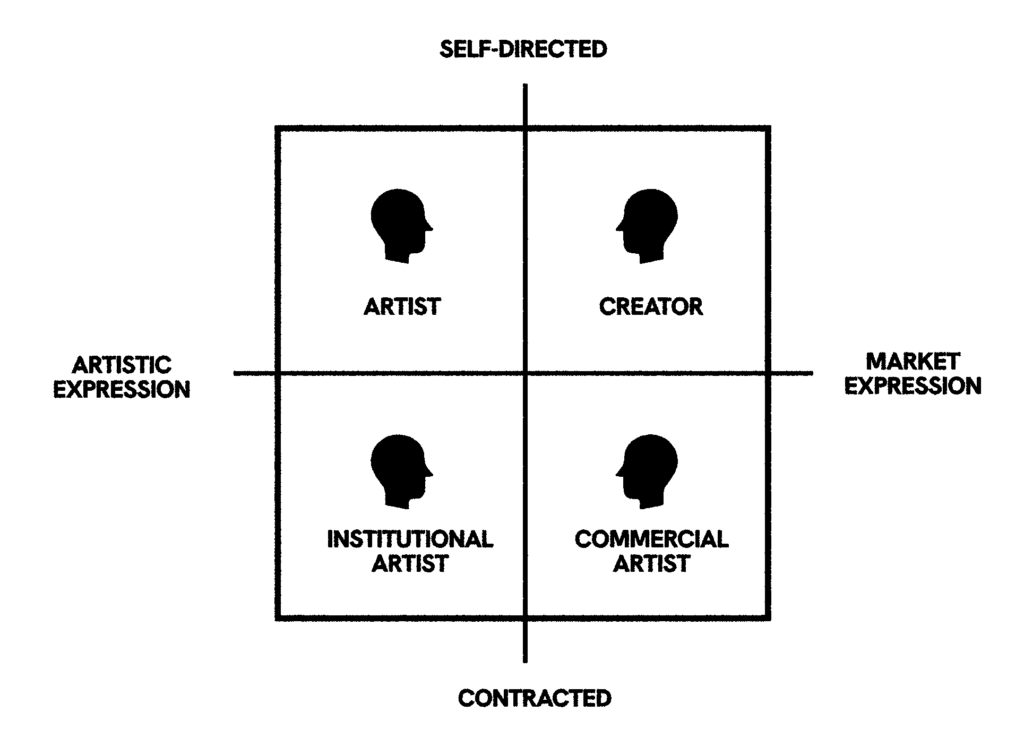
Also helpful, swissmiss has a good piece to help you determine the type of artist you are / want to be:Artist vs Creator

If you decide you want to be a painter, here’s some things to get you started. Sometimes all you need to do is to start. (These are taken from the book Learn to Paint in Acrylics with 50 More Small Paintings: Pick Up the Skills, Put on the Paint, Hang Up Your Art. I recommend it and Learn to Paint in Acrylics with 50 Small Paintings: Pick up the skills * Put on the paint * Hang up your art):

Maybe collage is your thing. If so, check out:

I am a big fan of trois crayons drawings, so I liked this: Chalk it up to three colors: bring together color, form and design by using the trois-crayons technique–traditionally only red, black and white chalk

Conceptual art isn’t for everyone, though it is for me. Perhaps you might want to consider that route: Conceptual Art 101: A Beginner’s Guide | DailyArt Magazine – www.dailyartmagazine.com

Finally, kintsugi is more than just a way of repairing things. To see what I mean, check this out: Trevor Noah Explains How Kintsugi, the Japanese Art of Repairing Pottery, Helped Him Overcome Life’s Tragedies | Open Culture – www.openculture.com

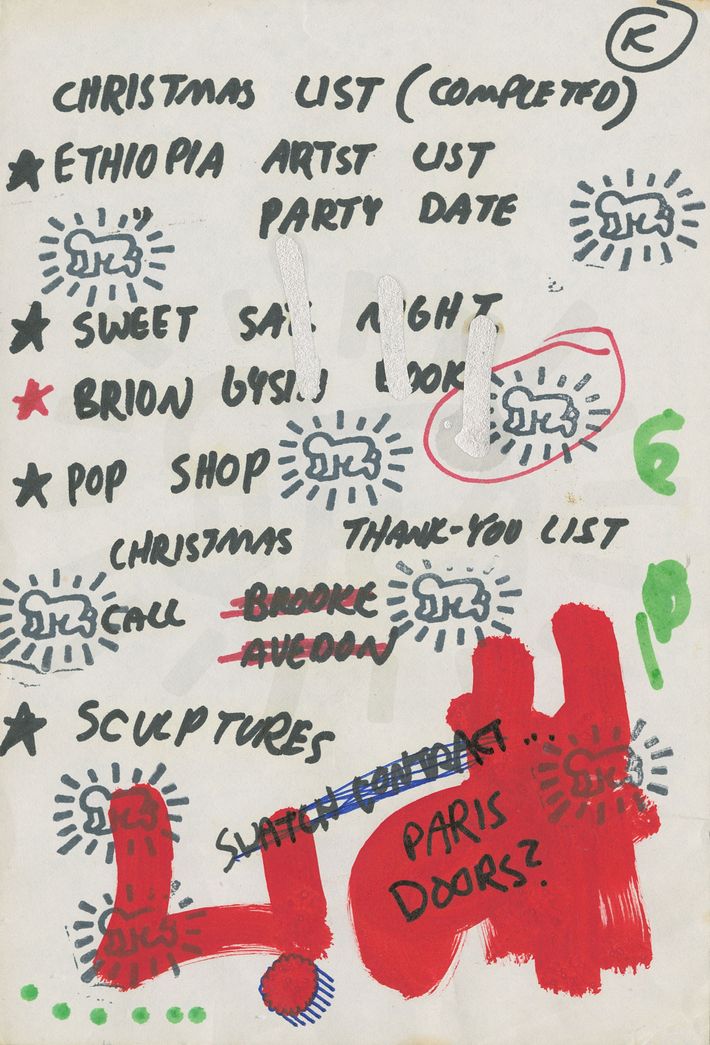
From the todo lists of Haring to the cutouts of Matisse as well as some stairwell drawings by Byrne (the arts on Wednesday, June 2026 edition)

Here’s the latest edition of #theartsonwednesday, a mini-newsletter within my blog highlighting recent stories on visual artists new and old that I’ve found interesting:


On the ubiquity of Paul McCartney

Paul McCartney is everywhere, it seems. He played 2 big shows in LA in March. He was at the recent closing of The Late Show with Steven Colbert. Not only was he a big part of the 50th anniversary celebration of SNL, but he closed out the 51st season. Now he has a new album coming out, “The Boys of Dungeon Lane”, so he’s on every platform promoting that, including The New York Times and The Guardian.

When he’s not performing current work, he’s plugging away at the past. We recently saw the release of “Man on the Run”, a documentary of his days in his band, Wings. (Trailer here, reviews here by the Guardian and the New York Times). And then there is his photo exhibit, “Paul McCartney Photographs 1963–64: Eyes of the Storm” at the AGO.

He’s in his 80s. He’s not the singer he was in the 60s — see points 13 and 14 here to see what I mean — but he still puts on a good show. He still looks healthy and fit. Hopefully he will be with us for some time to come. Lord knows he is not lacking for opportunities to perform.

Here are some odd and ends in terms of links I found which I am including in this post, to stick in my back pocket so to speak: ‘The Beatles Anthology’ Gets a New Ending: Director Oliver Murray on How Episode 9 Finally Put a Sweeter Cap on the Group’s Historic Docuseries, plus was Denny Laine ever properly paid (I think so) and also I thought this piece on his 3 hour show in Hamilton last year was good.
Lastly, I’ve written quite a bit on Paul McCartney. You can find it, here.