A mouse, a house, and an inflatable chair (what I am interested in when it comes to design and interior design, 2026)

Thanks to the good folks at Yanko Design (and some others), I’ve pulled together a list of interesting links over the last year that touch on the topic of design (e.g., smart phones) and interior design (e.g. chairs).

Devices: Let me start off with devices. Some IT based, some not….

IKEA: Ikea is continually doing interesting work, year after year. I think these links show that:
Furniture: IKEA is not the only furniture maker with well designed furniture. For example…
Living Space: finally…

On the high cost of Canadian beef in the summer of 2026


Like many Canadians, I’ve been wondering why the price of beef is so expensive. This article from the CBC explains why.

To summarize the article: supply is low, demand remains strong, production costs are soaring, and the processing network is highly concentrated with inter‑provincial regulatory.

Canadian farmers need to growth their herd sizes, but it can’t happen quickly enough. Even as they are doing that, the demand for beef is not declining, despite costs. So who knows if larger herds will make a difference. Does it help that the price of fertilizer is going up due to a war? It does not. Do other factors uniquely Canadian make a difference? Yes they do.

Perhaps beef prices will decline in the long term. In the short term, you might have to be like me and turn more to pork or chicken or even go meatless.

On using game theory to better understand and resolve DevOps issues (with help from LLMs)

I have seen a consistent set of issues when it comes to DevOps implementations.  The issues are:

  • Clients say they are emploing a DevOps lifecycle, but it’s more the case they are simply doing continuous integration and deployment (CI-CD) supported by an associated tool chain.
  • Many times the Dev (development) teams are separate from the Test teams and the Ops (operations/support) teams. Sometimes they are even in different silos in the organization. As a result, communication and collaboration — an critical part of a successful DevOps implementation — may be limited and weak.
  • As a result of that separation, the incentives may differ by team. In some cases they can end up almost competing against each other. (For example, I have seen Dev teams take time away from the Test teams in order to complete their assigned development tasks. The Devs “win” and the Testers “lose”.)
  • Quality standards held by the Test and Ops teams may not shift left to the Dev teams. As a result, quality responsibilities may lie mostly with Test/Ops, or there is a significant imbalance. (The Devs may do some limited unit or regression testing, but not enough to prevent bugs from being passed downstream in the DevOps lifecycle.)
  • Delivered functionality on time may become the primary driver for a project in order to meet the needs of key stakeholders, while the non-functional / quality of the system (e.g., performance, observability) may become secondary or even considered a Day Two problem.
  • As a result of all this, it’s not surprising to see Dev teams become focused and measured on delivering functionality at increasing velocities, while the Testers and to some degree the Operators have to maintain that focus / those measurements, while also being responsible for and measured on software quality.
  • In the end, you can get a situation where Devs are measured in terms of speed and functionality, while the Testers / Ops are measured on speed, functionality plus software quality. If delivering software is like a game, the Testers and the Operators are playing the game with a handicap due to quality metrics.

I have thought about these issues for some time and I wanted a framework to apply to them so I communicate in a more concrete way not only the issues but how to address them. I thought that one such framework to use could be supplied by game theory.

To apply game theory to DevOps, I started by considering the Devs as one set of players and Testers/Ops as another. To quickly work through some scenarios to see if such an approach was even valid, I decided to use LLM models. First I used GPT-OSS-20B to get my initial results. While it seemed promising, I noticed some errors creep into its analysis with regards to Nash equilibriums. I swapped out that model and used a larger LLM (provided by IBM Bob) to analyze and correct the initial results and produce a final analysis. You can read that final analysis, here.

I learned a few things from this exercise:

  • when the Devs are not bound by quality, a Nash Equilibrium is achieved, but it is one where they get a bigger payoff for going as fast as possible and the Testers/Ops have to settle for a situation where they suffer and get a worse payoff.
  • If the Devs are bound by quality, they get a lesser payoff but the Testers/Ops  get a better payoff and overall software quality can be increased. It seems obvious to do this, but working out a pay-off matrix helps with this.
  • Under certain conditions the Nash equilibrium can become weak for the Devs and that may result in them being less quality focused in order to succeed. Again, not surprising.
  • Game theory can show why Developers rationally can decide to forgo quality, but it may not be the best way to practically analyze your project. I’d simply recommend you continually work to spread quality measures throughout your DevOps lifecycle and to continually work to improve quality as the software matures.
  • LLMs can speed up the production of documentation just like it can speed up the production of code, but you don’t want to solely depend on it to get the documentation correct. Based on my understanding of game theory, I think its output is correct. If someone with a better understanding wants to correct me, I’d be happy to hear about it and I’ll be happy to amend this post.
  • For a more important project I would heavily modify the LLM documentation and take more ownership of it. This is more of a side project / exercise for me, so I decided to leave it as it is and move on to bigger things with bigger payoffs, to use the language of game theory. I hope you can still find it useful. I’d suspect the number of people who read it can be measured in one hand.

(P.S. The opinions expressed in this post are mine and do not necessarily reflect those of my employer.)

On the decline and fall OpenAI?

Is this the beginning of the decline and fall of OpenAI and their leader Sam Altman? I thought that recently, when I read how Apple was suing OpenAI for supposedly stealing its secrets.  And that’s not the only lawsuit against them: the New York Times and other media companies are also suing them for theft. (Elon Musk also sued OpenAI  but lost. A good run down on that lawsuit is here.)

Now I am thinking differently. I wanted to say the decline started with staff breaking away and forming Anthropic in 2021, though even that isn’t straightforward.  This loss of former staff has been mitigated by other things, like large investments from Microsoft. Those investments, the growing user base and the lack of scrutiny from the press gave the impression that all was well at the powerful company. (As recently as 2023 publications like the Times and the Wall St Journal were providing highly positive coverage about Sam Altman and his company and he and OpenAI were the darlings of the tech world.)

I am still inclined to think that competition from Anthropic which will lead to losses for OpenAI. It’s still difficult to tell, but observers like Motley Fool are saying Anthropic is pulling into the lead and a gap is opening. I believe that gap is only going to widen.

In addition to Anthropic, there is other competition coming from China and elsewhere. That increasing competition and the declining Microsoft support will also put a squeeze on OpenAI. (You can see from this piece, which notes that Microsoft is moving towards their own models, while others are looking to Chinese models for business use.)

Losses or not, perhaps OpenAI will not suffer a decline but a displacement from the top spot. Perhaps OpenAI can become profitable and grow despite having to share the AI marketplace with others. (It works for Apple: they own 1/5 of the smartphone market and they are doing fine).

Beside competition, another thing that could cause their decline is the leadership of Sam Altman. No one is providing positive coverage about him now, as you can see from this and this and this and this and more. Even if all that is true, it would not be the first time a terrible leader has lead a successful IT company. So perhaps OpenAI can succeed despite being lead by the current CEO.

I started writing this piece thinking: OpenAI is going to fall, and I wanted to put a marker in this blog to note that. By the end, I am undecided. I’ll put this here for now and revisit things in a year.

P.S. Thanks for reading this. I wrote this so I could learn what I thought. Even though I changed my mind in the writing, I still think it is worth putting down this marker for now.

On parenting, getting older, torture, and being useless (i.e., interesting things I wanted to write about and maybe will some day, 2026 edition)

Every year I like to let go of these links I wanted to write about but never found a way to and likely never will. They’re interesting still. Last year it was 60 or so. This year it’s a little less.

A few travel stories I liked were this, 21 US airports that let you walk to a gate without a ticket, and this, The longest train journey in the EU.

I enjoyed several historical pieces, such as this 13th-Century Cookbook Featuring 475 Recipes from Moorish Spain that recently was Published in a New Translated Edition, and this Historical Photos Taken Just Before The Iconic Moment. I found this piece from February 1970 in the Vassar Newspaper & Magazine that was critical of IBM during the Vietnam war to be worth a read.

Lloyd Alter shares interesting ideas on his Substack. For example, this one on how it’s time to dump Railway Time and War Time and go Local Time, and this one on why we need deposits on everything.

Cincerning matters of privacy, I thought this collection of Dark Patterns and Unethical Designpatterns were Ring Cameras, with the Ring company dark patterns is this: ICE, Secret Service, Navy All Had Access to Flock’s Nationwide Network of Cameras and this Zenni’s Anti-Facial Recognition Glasses are Eyewear for Our Paranoid Age. No doubt such abuses lead people to ask Hackaday: How Do You Detect Hidden Cameras?

I started to collect articles on getting older, like this one, When You’re ‘Fired From Retirement’. It was a bit grim. Less grim and easier to read is this post about a 72 year old woman who graduated medical school and was starting  residency.  This was also positive: I’d Like to Stay 85 Forever.

Parenting is a difficult job, to say the least. Some might say impossible at times. I thought that when I read this, consider the parents caring for adult children not in work or education, and also this, This could happen to us: Parents who see themselves in the Reiner case

I don’t imagine too many will want to read about Lee Geun-an, Infamous ‘Torture Master’ Under South Korean Dictator who recently died at 88. I like to remember things like that. Likewise, I like to remember what Michael Ignatieff said about torture in Macleans: here. Never forget.

Finally,

I liked this, on Nudge theory. Also…


On the Cagots


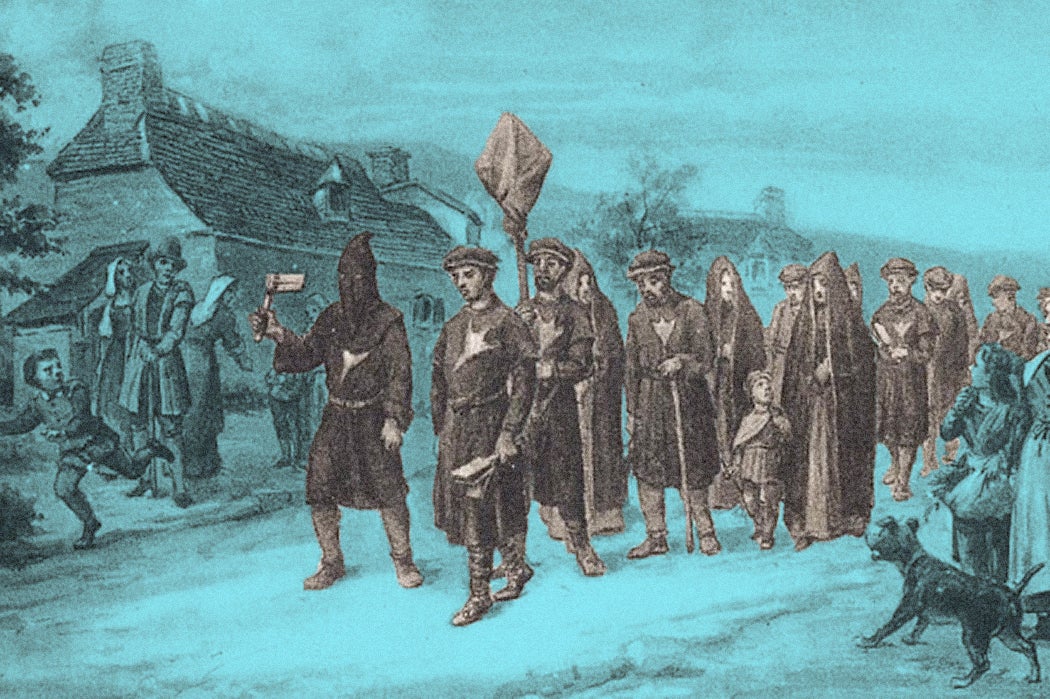
By accident I came across this article in Jstor on the Cagots, the forgotten untouchables of France. They suffered discrimination  for many centuries, but no one knows seems to know why, although there are many theories. They were erased as a group from France through assimilation, even though up until the beginning of the 20th century it was shameful for a non-Cagot person to marry a Cagot.  You can still see evidence of the discrimination they felt in churches in France, where the Cagots had a separate entrance and separate fonts.

All in all, a fascinating story of a mysterious people. I find them especially fascinating because this shows how a group can suffer discrimination and persecution, even though there is nothing different about them, other than the fact they can be labelled and considered worthy of such poor treatment.

For more on the Cagots, see wikipedia. For a story on someone who claimed Cagot ancestry, see this.

Friday Night Cocktail: the Lower-Alcohol Dirty Martini

I have not published a Friday Night cocktail post in some time. Possibly because I have been drinking much fewer cocktails than I did a few years ago, especially during the pandemic. While I have enjoyed many different cocktails in that time, my preference tends to be a martini, which I have often posted about here.

Ley me add one more post of a recipe for a particular form of martini because it captures the zeitgeist: it has a low A.B.V. and it is not just A martini but A DIRTY martini. If you are like many others, those two things will appeal to you. To be honest, I am curious about this myself!  Now I still wouldn’t start making them on a school night, but YMMV.

Whenever you have one, I hope you enjoy it. Cheers!

On the problem of popular restaurants not taking reservations


I get why popular restaurants don’t want to take reservations. Case in point, the very popular Chubby Fish restaurant in Charleston, S.C. According to this piece:

Chubby Fish doesn’t accept reservations because London (James London, Chubby Fish chef and co-owner) doesn’t want the restaurant to be exclusive. The goal is for people to be able to show up at 4 p.m. and be able to eat dinner the same night.

In some way that makes sense: you don’t have empty tables ever and the people who really want to go will line up.

Alas there is a problem:

Now that some people are paying extra for line waiters to arrive early and claim desirable dining times, others in line aren’t getting the same opportunity they once had. As a result, they’re having to arrive earlier and earlier, London said.

“We never wanted that for our guests. It’s not the hospitality we wanted to display,” he said.

Recently, London spoke with the line-waiting businesses…about limiting the number of reservations they’re allowed to procure at a time, he said. But he worries about what could happen if the businesses continue to grow.

“I don’t want to be forced into having to take reservations to eliminate the professional line-waiting services, but what does it look like three years down the road?” he said.

And how much are these line-waiting services charging?

Ella Ward, a senior at the College of Charleston, realized that made for a good business opportunity….Ward has turned waiting in line at Chubby Fish into a thriving side hustle. She charges $60 on weekdays and $80 on weekends to wait out the line and snag seating times on behalf of others. She recruited other CofC students to help her manage requests, and the team is booked through June.

This is just a form of line jumping and is not unlike someone slipping FOH some money to get a good table. And not for a small amount either. If everyone is paying $60 or more to get a seat in your restaurant, you are an exclusive restaurant, whether you like it or not.

No reservations (i.e., supply) is fine for restaurants that have roughly the same demand. But if demand vastly outstrips supply, you are going to have problems like line-waiting services. You are going to be transformed into an exclusive restaurant by the marketplace. In the era of social media and vast tourism where the marketplace is gigantic, this is going to become more of a problem for some restaurants like Chubby Fish.