On restaurants loved and lost: Martine’s Wine Bar

What was Martine’s Wine Bar? One way to describe it: “It was a wine bar that turned into a restaurant that focuses on wine…There’s no specific style of cuisine, a lot of French, Italian. It’s got vaguely Euro-bistro vibes”. Another way to describe it: perfect.

It was barely open for two years, and in those two years I went over 20 times, despite it not being close to my home. I went there by myself, I went there with my loved ones, I went there with groups of friends. Every time it was a delight.

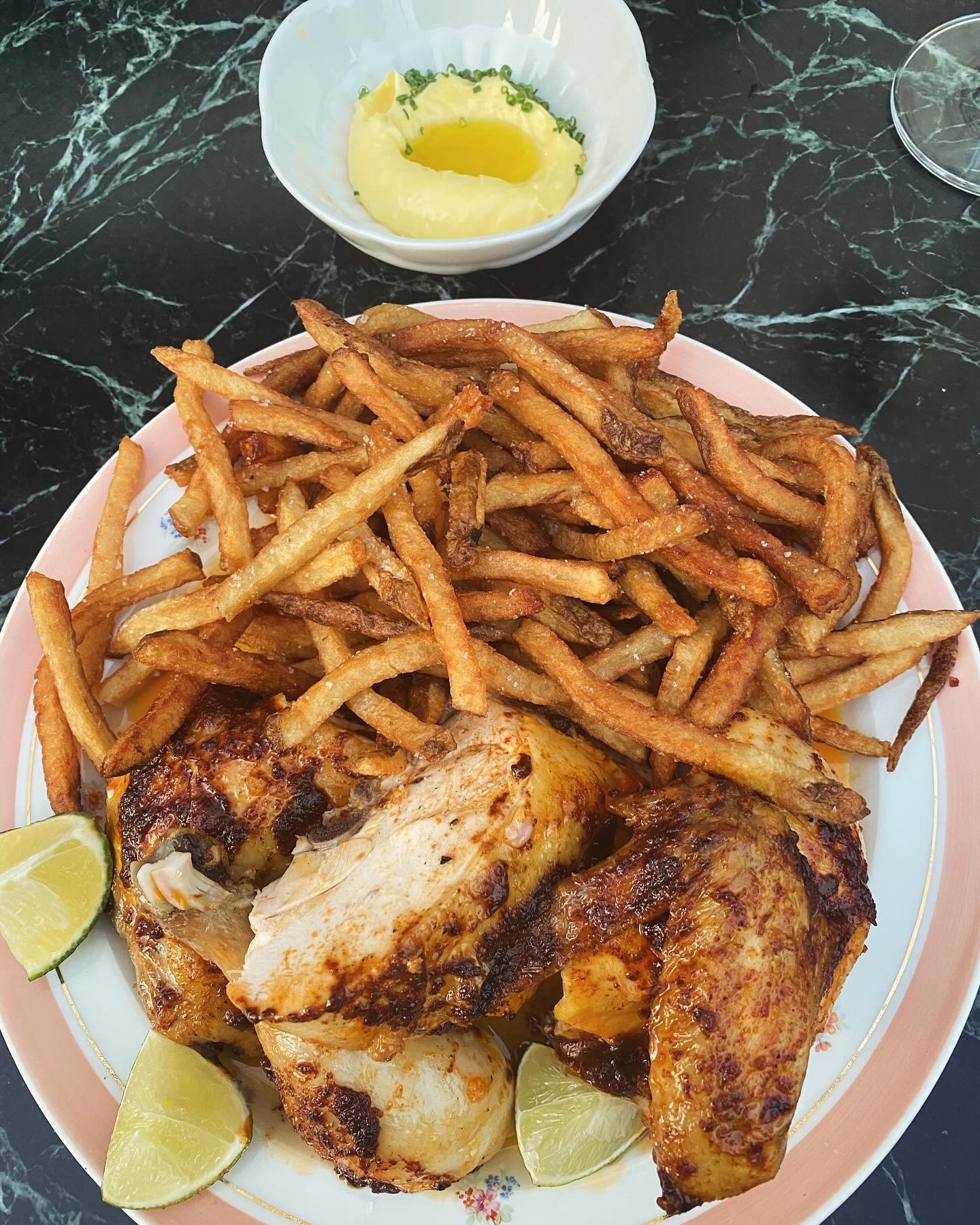
The menu frequently changed, and there was some sadness when something like tempura green beans with gribiche sauce suddenly dropped off the menu. Thankfully one menu item was a constant: spicy chicken roasted in a wood fired oven and accompanied with lime and frites and aioli covered in chives. I tried not to order it every time, but it was so good and so well priced and so great for sharing…well, I ended up ordering it almost every time. The vegetables were great, the pastas were great, the crudo also great, and of course the desserts were great, but the chicken was the greatest. It’s been said that you can tell you have a good kitchen if they can make a good roast chicken and let me say the kitchen was very very good indeed.

What can be said for the kitchen can also be said for the staff. They were warm and friendly and efficient…simply the best staff I’ve had to pleasure of meeting anywhere. Every time we went we felt like we were meeting friends.

While there were no bad seats, the best place for my girlfriend and I was at the lower bar. There we could chat with the bartender and staff about what wines were good with what and watch while they made great cocktails. Like the food, the wines by the glass frequently changed, but the high quality never did.

I can’t say for sure why Grant Van Gameren and Hailey Burke (the owners) decided to close it up after only two years and turn it into Casa Rubia. Maybe chefs Van Gameren and Luke Haines had enough and wanted to stick closer to PEC. Maybe the owners wanted to try something new with chef Zach Smith. I went to Casa Rubia to see the staff again and it was…fine. It’s a good new restaurant. But Martine’s was a perfect restaurant. I’ll miss that, as much as I miss and lament the loss of Brothers and Cafe Cancan.

P.S. For more on Martine’s see this in Toronto Life or this in BlogTO.

P.S.S. Photo below taken by me.

Why the best two months of the year are September and October

For many, the two best months of the year are July and August. (You summer people know who you are!)

I’m here to make the case for why September and October are truly the best months. Here’s just some reason why I love them so much:

  • you get the best of both Summer and Autumn. In September you still get to enjoy the warm of Summer, and in October you get to enjoy the slight chill of Autumn. The Summer part is mild: the Autumn part is mild. No other two months give you such a range of pleasant weather.
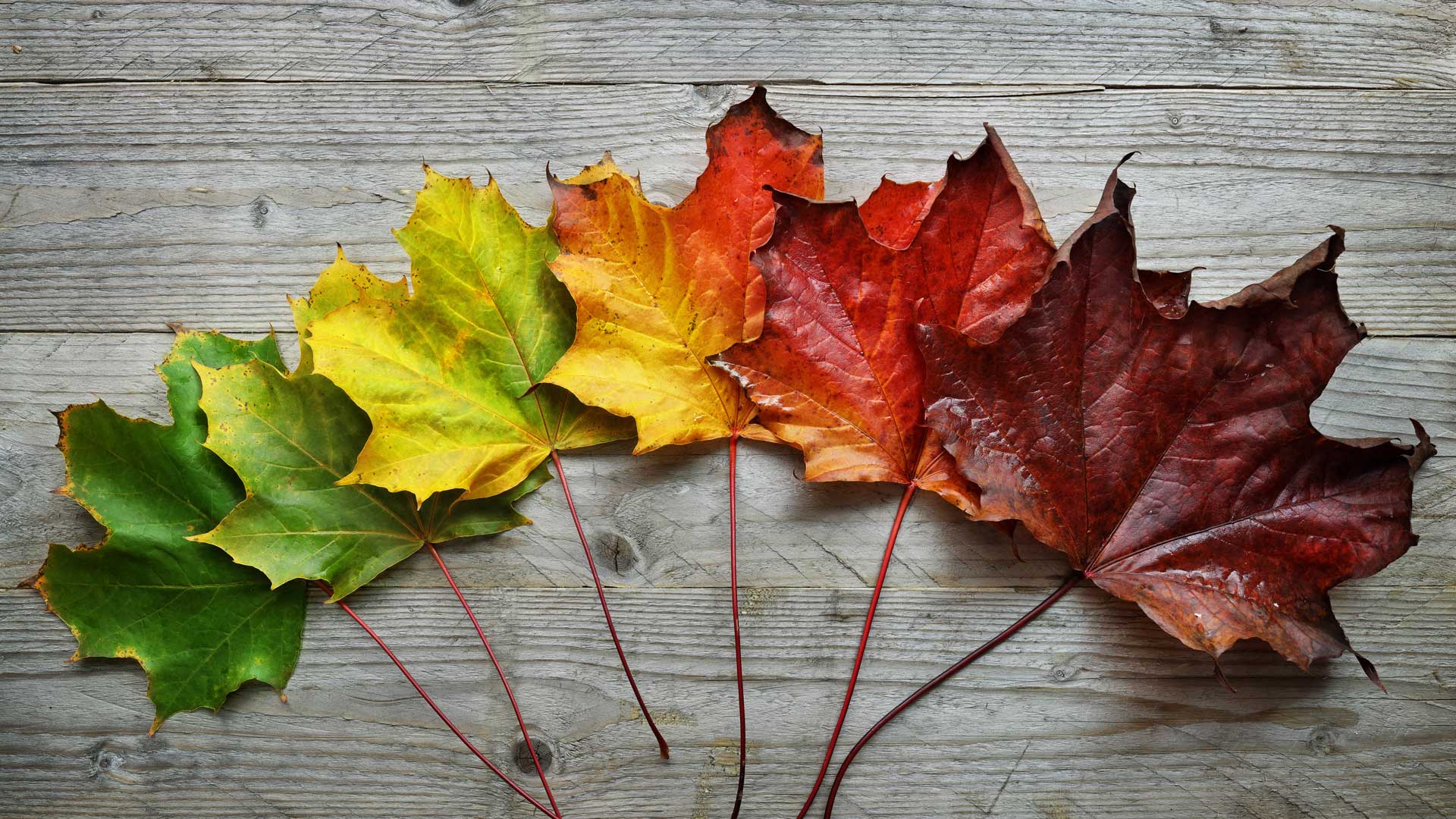
  • you get a great range of color. In September you still can see lots of flowers. As October rolls on, you get all the leaves turning from green to red and gold. Such a beautiful time of the year.
  • you get all of the bounty of the summer growing season. Here in Ontario you get plenty of wonderful produce to eat in September and October… everything from apples to tomatoes. It’s a great time to cook and it’s a great time to eat fresh.
  • while the nights get longer, there is still plenty of day light in these two months. The nights also get cooler which is great for people who like to sleep, while the longish days are great for people who like to get out after work.
  • September feels like the start of the new year, and I love that. It’s a good time to plan new things.
  • there are great holidays to celebrate in these months: Labour Day weekend, Canadian Thanksgiving and Hallowe’en. Oktoberfest isn’t a holiday, but people do celebrate it like one.

I could go on, but I think I made my point. As for the other months…well, July and August are…fine. June in Ontario is a great month, but September and October are better than May and June, although they are my second favourite month pairing. December is wonderfully festive, but January and November are blah. February is too cold and dark, and March and April are too weird, weather-wise. Nope, give me September and October any time.

Some thoughts on Anthopic’s approach to DevOps

Anthropic published a piece recently on how they are redesigning source control at their company. It starts with this:

“At Anthropic, coding is no longer the bottleneck to building systems or doing research. Claude is able to autonomously iterate on research loops, micro-optimize complex programs, and build new services from the ground up at a speed and scale we haven’t seen before. The bottleneck, now, is all of the developer infrastructure built for human scale: source control, builds, and CI.

In May 2026, Anthropic averaged around 2,500 code changes merged per day; as of September, we merged over 30,000 per day. We don’t expect this rate of growth to slow down anytime soon; the latent demand for merging code is practically infinite, and every bottleneck we remove immediately leads to a further increase in the amount of code we produce.”

The work they’ve done seems impressive. I highly recommend you read the piece. I have reread it a few times, and I jotted down a few thoughts:

  • It is impressive that they are able to remove these bottlenecks, but as they say, this approach isn’t for everyone, and it’s not likely to solve the problems that I mentioned here. The stress for others in DevOps roles — testing, operations and application support — isn’t going to go away as the CI part is streamlined.
  • While the focus is on CI improvements, Anthropic does touch on how they are are working on improving testing and operations, but the details are limited in this piece. They admit: “What does CI even mean when hundreds or even thousands of changes can merge while tests are running? We haven’t been able to effectively replicate the industry standard of a global repository lock on the merge queue, so instead, we’ve invested in post-merge and pre-deploy automated testing. ” Likewise, it sounds like they are dumping lots of telemetry into Slack and having agents monitor that. I’d like to know more about that part of their DevOps lifecycle and how effective it is and anything we could learn and apply.
  • Anthropic is clearly an organization that has the need to make massive amounts of changes to their code base. They have plenty of requirements and constraints to meet, and they need to meet them yesterday. Likewise they have an enormous user community wanting those changes. All that adds up for the need to pump out software at the rate they do. It’s very unlikely your organization has any of that. Even if you can pump out more code faster with AI, and even if you could speed up your DevOps processes to integrate and deploy and test and operate as efficiently as Anthropic, chances are your user community will not be able to keep up with the changes. That’s why “Plan” is an important part of the lifecycle. Otherwise the user community becomes the ultimate bottleneck.
  • The planning part is also important  to make sure your deployed code does not impact the non-functional/quality aspects of the system it runs on. It’s great that you can use agents to monitor if the system is at capacity due to these exciting new changes, but do you have a plan to increase capacity before you hit your limit? Do you have a plan to fix or roll back changes if serious new security problems occur? If downstream systems suddenly start crashing due to increased use on your side, what is the plan to improve the overall availability of your entire system? Getting more and more code deployed faster is only good if there isn’t a degradation of the system it runs on. You need to do more than ramp up your software development: you need to ramp up your ability to maintain the health of the systems that software lands on (and hopefully it lands gently vs crash landing).

I may revisit this piece when I hear more about what Anthropic and other organizations are doing to deal with the impact that AI software development has on the DevOps lifecycle. These are my thoughts for now.

(The opinions expressed above are mine only and not necessarily those of my employer.)

Out and about or oot and aboot? (what’s new in the Maritimes, 2026 edition)

Here’s a fine set of stories I came across in the last year concerning my home town (Glace Bay), my province (Nova Scotia), and the region (the Maritimes, with a shout out to Newfoundland).

Like all places, A.I. is having an impact on people in the Maritimes. So much so that Nova Scotia is launching 5-person team to help government staff incorporate AI into their work. That’s not uncommon.  Using A.I. to harvest blueberries…that’s a bit more uncommon.

Speaking of food, I was sad to see that Kay’s Kozy Korner was  closing after nearly 75 years in business. They had a good run. Speaking of cosy (Kozy?), if you are dining on the east coast, consider getting what is considered Canada’s coziest comfort food (hint, it’s not poutine).

In terms of law and order stories, we had the story of a Cape Breton legion having to pay $250 over Chase the Ace regulation violations. A very Cape Breton crime. As is this story of vandalism in Glace Bay. In other violent Nova Scotian news, protesters surround Premier Tim Houston’s car and his windshield was smashed after a speech he made last year.  Such actions may be why the Truro police have add an armoured vehicle to fleet.

Finally when it comes to news from out east, this priest says he regrets comments about ‘residential’ school in Honduras during CBU convocation speech. Yeah, I can imagine.

On the topic of Maritimers in the news, I was sad to see the great Colleen Jones has passed away. Not passed away but passing the baton is ‘Big Jim’ MacLellan, the last of the original performing member of Cape Breton’s The Men of the Deeps. May the remaining Men of the Deeps continue to sing on. As for other Cape Breton singers, this high school choir from Sydney was excited to sing with Foreigner when they performed there. I can imagine!

I’d like to close out this with a few things concerning Glace Bay, my home town:

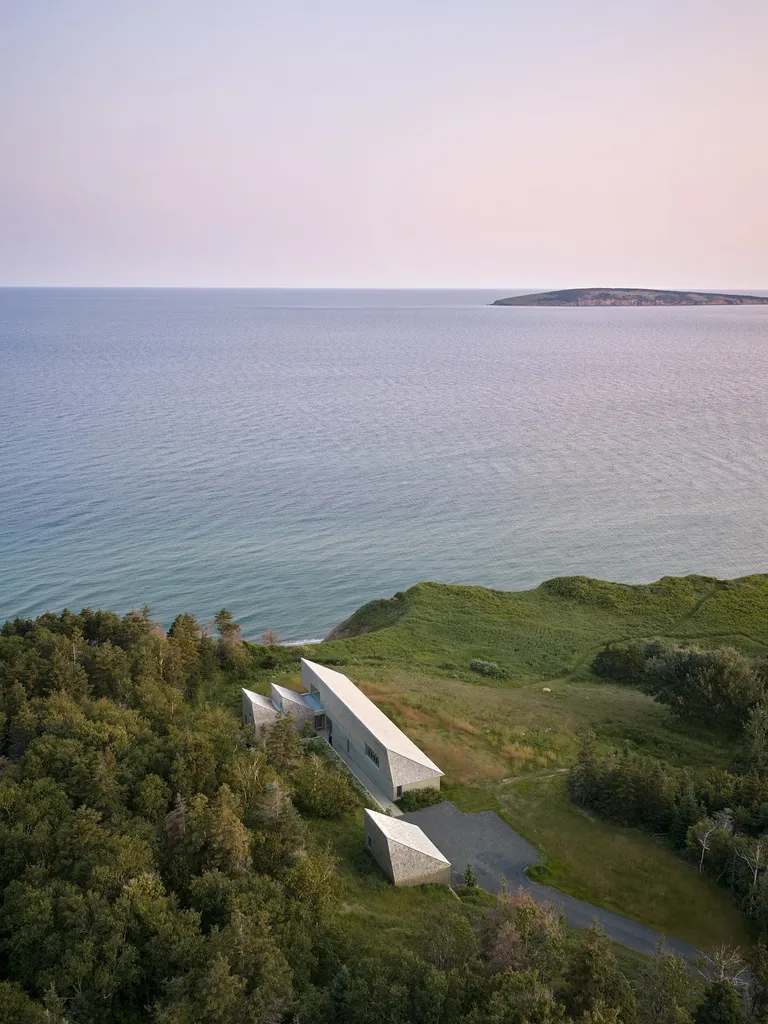
And lastly this beautiful drone shot of the Bay:

P.S. The building shown is from this piece in Wallpaper*. The link to the Glace Bay drone shot is here: https://www.youtube.com/watch?v=HYXCjRSYRcI

What I learned from tracking my dinners for 365 days in 2025/2026

Do you struggle with deciding what to make for dinner each week? Do you find yourself making the same meals over and over? Do you want to dine out less or order less? If you answered Yes to any of those questions then you need to start tracking your meals. That’s what I did over the last year.

Since last October I’ve logged my dinners/suppers in a spreadsheet. I typed in the date, the meal, the quality of the meal, what was the main component of it and what were the sides, as well as who cooked it.

Why? I believed this could help me discover which dishes were the best, so I could resort to repeatedly cooking the same food every month. I wouldn’t have to wonder: what should I eat this week? I wouldn’t think: is this going to be any good? I could become a person who sticks to meal plan I could eat every month.

What I discovered that I was not someone who can eat the same thing over and over. In fact I was the opposite: of the 365 meals I had last year — some I cooked and some cooked by others — 2/3rds of them were unique! That’s 232 different dishes! The reasons for such variety vary. Some of that was due to eating dinner in a restaurant for one time only. Mainly though it is because I am always looking forward to having new dishes for dinner. I wish I was the kind of person who has spaghetti and meatballs every Monday and pizza for dinner every Friday, but I am not. I mostly love cooking and having new things to eat, and that shows in my logs.

What’s the star of the plate? The logs show mostly meat. Maybe too much meat. The leading meat is chicken, followed by ground meat, pork, beef and fish. It would be good to work more non-meat meals into the mix. Also more fish or shellfish.

As for the sides, it’s a range, from roast veg to potatoes to salad to rice. A nice change from when I was a kid and felt like I ate mashed potatoes every night. (I didn’t but it felt like that. So much so I rarely eat mashed potatoes now.) My goal in the new year is to eat less starchy sides and tracking can help with that.

Most meals I felt were Excellent or Very Good.  The lowest I’ve ever rated any meal — takeout, restaurant or home cooked — is Fair. I don’t think I had a Poor or Bad meal in the last year.

The other thing I discovered is the majority of meals I had were made by someone else: either my partner, or a restaurant. This has been a big change for me. For decades most of my meals were cooked in my own pots. It’s been a joy to simply sit down and enjoy someone else’s fine cooking every day.

The good thing about tracking meals like this is a) it is fast and easy to do b) it gives you a tool to think about how you are eating and change if you want. So if you want to change the way you eat, I highly recommend you do what I did and keep a log.

Good luck!

(Photo by Davey Gravy on Unsplash)

Why you should blog, be it 2006 or 2026 or 2046

First up, what is a blog? According to Wikipedia, “A blog (a truncation of “weblog”) is a website whose basic unit is a “post” or “entry”, with posts typically presented in reverse chronological order.” So, a website made up of posts.

Now if you share anything on social media — and you likely do — you are already posting information in reverse chronological order already. Why not blog too? Blogging is just a different form of what you are already doing.

So why should you blog over posting on Instagram or Bluesky or some other places? Well, I have several reasons:

  1. If you contribute to Instagram or Threads or Bluesky (or god forbid, X) on a regular basis, then you should consider blogging. All those posts will be more or less lost: your blog posts won’t.
  2. If you discover new ways to do things, blogging is a way for other people to find it.
  3. If you want to demonstrate your expertise, a blog is a way to do that.
  4. If you want to keep a record of parts of your life, blogging is a good way to record it.
  5. If you find good things on the web and you want to comment on them, write that comment up in a blog post.
  6. If you find yourself sharing the same information with others regularly, write that information on your blog and then point people to it. This is one of my favourite reasons to blog.
  7. If you want to improve your writing, blogging regularly can help with that.
  8. If you want to know what you think and improve your thinking, blogging can help with that too.
  9. If you want to remember what you thought or how you felt 1, 2 or even 10 years ago, your blog posts can remind you.
  10. If you want to create something, a blog is something! 🙂

Now you don’t need a blog to do all these things. You can simply have a website, or a private journal, or any number of recording devices. But a blog is a good way to do these things.

Some people will say you can still make money blogging in 2026. I dunno. Maybe if you have a large following already, then blogging or newslettering can help you make money. I personally don’t blog for anything other than the 10 reasons listed above.

Do you have to blog every day or every week or what have you? No. You can blog one post and be done! Or you can blog incessantly like Paul Krugman on Substack! It’s up to you. It’s your life and your blog. You can even end it after a month, or a year. It’s all your choice.

As to what to use to host your blog, it depends on how technical you want to be. I have quite a few blogs and websites, some more active than others. Some on Blogger.com, some on Tumblr.com, but mainly I put my blogs on WordPress.com and if I had to recommend one place to put them, I’d go with that.

If you want to start a blog on WordPress, then you can ask DuckDuckGo and it will tell you something like this:

“To create a blog in WordPress, sign up for a free account on WordPress.com, choose a theme, and start writing your posts. You can customize your blog’s appearance and manage it easily without any coding skills.

The Steps to Start a Blog on WordPress. (Steps 1 to 3 are all you really need, though it will help if you do everything on the list below. – blm)

  • Step 1: Sign Up for an Account
    • Visit WordPress.com and click on Get Started.
    • Create a free account by providing your email address and choosing a password.
    • Select a domain name for your blog. You can use a free WordPress subdomain or register a custom domain.
  • Step 2: Choose a Theme
      • After signing up, browse through various themes available on WordPress.
      • Pick a theme that suits your blog’s style and purpose. You can customize it later.
      • (The theme for this blog is https://wordpress.com/theme/colinear – blm)
  • Step 3: Write Your First Post
    • Go to your dashboard and click on Posts.
    • Select Add New Post to start writing. Introduce yourself and explain what your blog will cover. (Or just write what ever is on your mind. Remember, it’s your blog. -blm)
  • Step 4: Customize Your Blog
    • Adjust your blog’s appearance by going to the Appearance section.
    • You can modify colors, fonts, and layouts to make your blog unique.
  • Step 5: Create Essential Pages
    • Add important pages like About, Contact, and Home.
    • Use the Navigation Menu to help visitors find these pages easily.
  • Step 6: Publish and Promote
    • Once your first post is ready, hit Publish.
    • Share your blog on social media and invite friends and family to follow it.
  • Additional Tips
    • Consider using plugins to enhance functionality, such as SEO tools or social media sharing options.
    • Regularly update your blog with new content to engage your audience and grow your readership.
    • By following these steps, you can successfully start and manage your blog on WordPress without needing any coding skills.”

Now you have your blog. Congrats! So what’s next? Obviously you need to post.

One way I encourage people to come up with new blog posts is to do these things:

  • Go over what you’ve posted on other social media. Those posts can be extended to make a good blog post. When I sit down every Saturday morning to write, I look at what I posted on Bluesky. You might do the same thing if you use Threads or Instagram or even Teams or Slack.
  • What did you share with others via email last week? Sometimes I go through my email, find something, and copy and edit it into a blog post. (Being respectful of others people’s privacy, of course.)
  • What did you learn this week? It could be a new way to get to work, an easier way to cook a meal, a better way to use a particular technology….you name it, it could be a good blog post. Remember: it doesn’t have to be the best way of doing it. It doesn’t even have to be the first time someone learned how to do it. It just has to be something you learned that you think other people might benefit from knowing too. (I wrote this piece on how to better use the NYTimes app and it’s now my #1 post. You never know what information people need. Type in “nytimes app fix” in your search engine: you might see it.)
  • What did you think was good this week? Take a photo and post it. Or simply write about it. (You can write about what you thought was bad about something too, but in my experience focusing on writing about good things is a better approach.)
  • What was something you know now that you wish you knew 1, 2, 10, 20 years ago that you know now? Write about that. Someone 10 or 20 years younger than you will be looking for that information.
  • Write about something you know very well that you wish others knew about. Be very specific. Provide lots of detail. There are lots of things written about the Chrysler building, but this post I wrote gets lots of attention: On appreciating the Chrysler Building (my favorite building in the world). Can I say why? Nope. I can say this though: people often will type in different combination of strings, looking for just the post or page that contains what they are looking for. By being specific and detailed in your post, there’s a better chance they will find it.

Don’t worry if you write something and a week or so later you read it online and think: oh that could be better. Go onto your site and edit it! Blogging isn’t permanent like a book…you can change things or even delete them if you think you are wrong.

Don’t worry if no one will read it. You read it! You can send it to people you know and they will read it. If you’re lucky, people you don’t know will also read it. And if not, that’s fine.

Can you use A.I. to write your blog? You can, but I don’t recommend it. A blog will be better because it came from you, regardless of how well (or not well) you write. Take the opportunity to improve your communications skills as you blog. That alone is a good reason to write it.

Good luck with your blog! Post a link to it in the comments.

P.S. I think the blog / tumblr 52books is a great reason why blogging is never wasted. The blog is a nice snapshot of a project this person had to read 52 books a year. You might be an avid reader who wants to try that yourself: this blog can give you tips on this. You might want to read the best books of that time: this blog can show you them. It’s good this person blogged this, and it would have been great if they had kept it up, but it’s still good it exists.