A dearth of stories on poverty

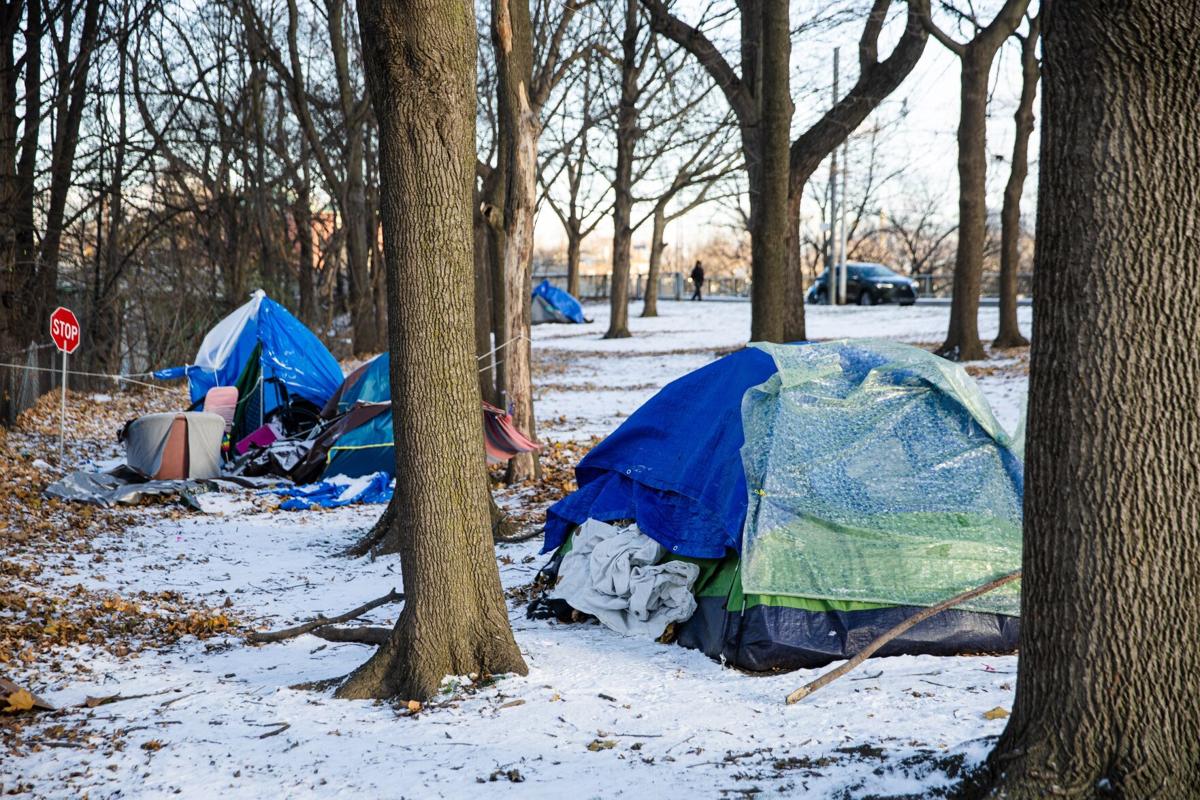
It is inexcusable that in the wealthy part of the world — like Canada — there continues to be such poverty, especially because the problem of poverty is simple and solvable. (If you think Canada doesn’t have enough money, here’s what is happening with defense spending.) And that’s too bad, because just in Ontario alone, Nearly 85,000 people are homeless, up 8% in one year. What would it cost to house every person on Toronto streets? The Star estimates $444M. That is a lot, but also a fraction of the money spent on defence. We need to do more.

I didn’t collect as many stories on poverty this year as compared to last year. I can’t say why. Perhaps the news source I follow have been downplaying it. Perhaps politicians have been focused on other issues, like inflation and affordability. Perhaps I have been worn down. Regardless, I did collect these stories which I thought were noteworthy:

Politics, pizza and the planetarium: my annual update from Toronto, 2026 edition

I’ve decided to do a once a year update on the city I live in. They used to be somewhat random, but once a year seems right.

First up is local politics. In a month Torontonians will go to the polls for the 2026 municipal election. The key thing I’ll be watching is whether or not Olivia Chow gets to be mayor for another term. The mayor and her challengers have already had a debate and perhaps because of that the race has tightened. Whoever wins, two things to pay attention to are, 1) whether or not we see the new mayor using strong-mayor powers 2) whether or not we see new councillors continue / ramp up opting out of initiatives.

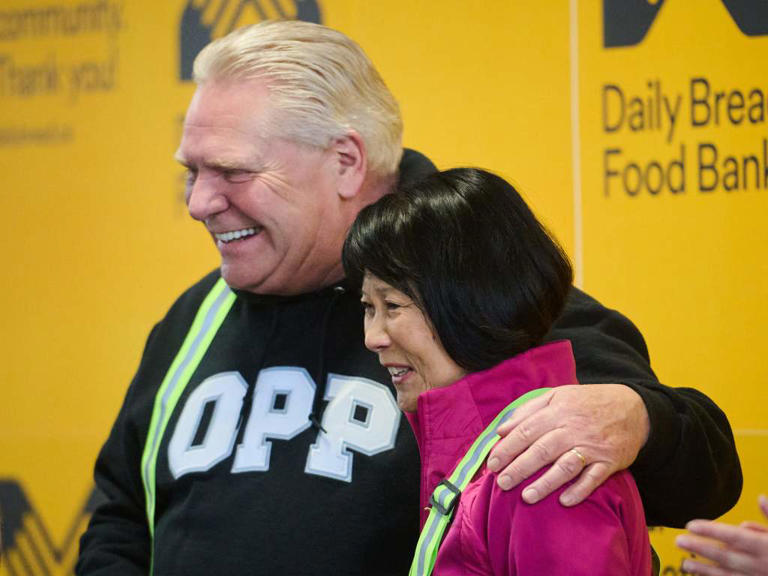
Not on the ballot but always in the mix is premier Ford. He all but endorsed Chow in a recent press conference, which must have been unpleasant for her right wing opponents. Let’s see what if any the effect of that is.

Ford looms large in anything to do with Toronto. Some of his Toronto MPPs got into trouble for expenses this year, which led Ford to axe the rule that allowed Toronto MPPs expense hotel stays in city. Then there is the ongoing saga of Ford wanting to take over Billy Bishop airport (which has too many links to insert here). Not to mention the even longer ongoing saga of Ford and the Toronto bike lanes. The man likes to get involved with running the city. It would be interesting if the Premier was from another part of Ontario, say Kingston or London….I wonder if we would see the same involvement?

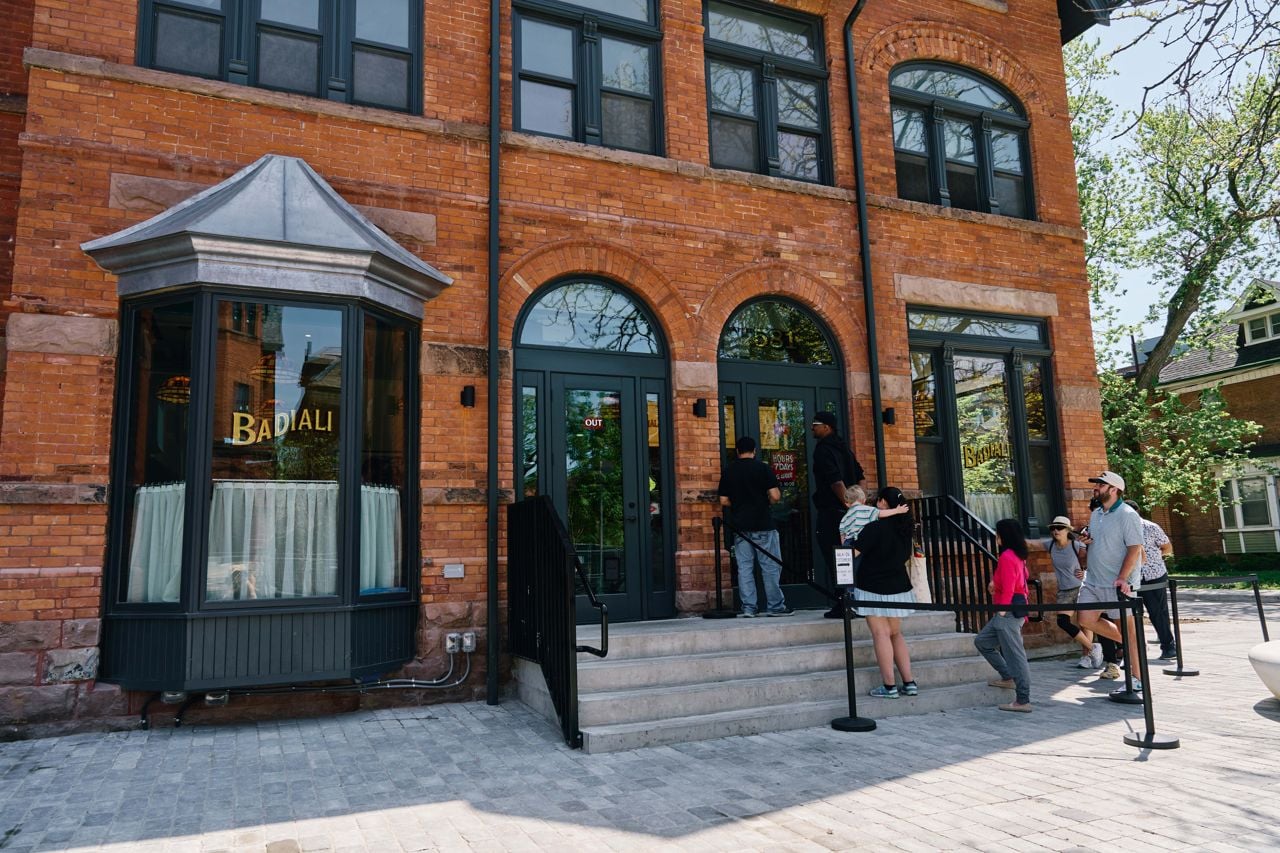
Moving on from politics to food, lots of dining news has been happening in one particular part of Toronto: Mirvish Village. One of Toronto’s best bakeries, Blackbird,  just opened its biggest location there. Next door to it is Book Bar, which Toronto Life says “is the perfect mix of books, booze and schmooze”. As well, Pizzeria Badiali’s opened a new Mirvish Village location and yes, it is busy with line ups out the door, just like it’s original location. Mirvish Village is still in the process of opening, but it already is a great destination for food.

Not far from Mirvish Village is the very difficult to get into Brasserie Cote. If you can’t get in and perhaps you just need a slice, then head over to Nice Slice Toronto with it’s New York-style za’atar and pickle pizza. Rose’s Pantry is another great spot close by to grab and go some fantastic food. Indeed Harbord Street is packed with great places to dine and sip wine (hello Canary Counter!)

Not only is Toronto a really a great city to dine in, it doesn’t have to be too expensive either. To see what I mean, check out these 10 restaurants with prix-fixe menus for $60 or less or this list of Toronto’s best 100 restaurants under $100. Or maybe you just want to grab a great doughnut? If so, Yonge and Eglinton has what you need.

If you head downtown, you can great tickets to see Toronto’s newest professional sports team: the Toronto Tempos of the WBNA. Here’s a story of their debut game in May. Were there celebs in attendance? Of course!

In other entertainment news this past year was Sneaky Dee’s. There was plenty of fear that it could be demolished for condos. In fact, there still is. But it won a reprieve and it seems it will live to rock on for another day.

Also at risk is the Hot Docs theatre on Bloor near Bathurst. Here’s a piece on “the high-stakes ‘long game’ to bring Toronto’s Hot Docs back from the brink”. Let’s hope that happens. I’d hate to see it demolished, the way Toronto’s abandoned planetarium was torn down this year.

Besides restaurants and entertainment, other things good and noteworthy about Toronto this year were:

Some noteworthy things that were less than good about Toronto:

Finally, here are some links about Toronto I feel are worth a read:

Thanks again for reading these Toronto stories. Come back next September and we will see how the new mayor and other municipal politicians are doing. Will there be stories about restaurants too? Of course there will. 🙂

Computing in the 90s vs now: the fear factor

Were we always fearful of information technology? I was wondering that recently as I considered the current wave of hysteria over A.I. I know in the 80s there was a fear of people losing their jobs due to PCs in the office. In the 90s there was a fear of people using the Internet to easily build bombs in the same way the Oklahoma bombers did. I am sure that in each decade of computing since then, people feared something due to new technology.

It seems that the fears of IT goes hand in hand with the possibilities of the new IT. The 90s was the decade of networking: networking of PCs in offices via LANs connected to each other by a network of networks (a/k/a the Internet). In a short time we had so much more capability and more information than we previously had: much of it good, some of it very bad. While adapting to using the new technology and the information it brought, we adapted to the new fears that arose from some of this information. Fears like bombers everywhere.

Some day there will be a good history of computing in our current era and the fear will be put into context. Personally, I am not fearful because I suspect the A.I. of our current era will suffer the same fate as A.I. did in the early 90s. I posted this on Bluesky recently:

My only thoughts on AI are the ones I’ve had from the beginning: 1) gen AI will experience the “AI effect” 2) no one will talk about gen AI after the next “AI winter” occurs (timing depends on next American recession)

— Bernie Michalik (@berniemichalik.ca) August 21, 2026 at 8:49 PM

The AI effect and AI winter happened back in the 90s to the AI work being done back then. The same thing will happen to gen AI in this time.


On A.I. hysteria: what is driving it, the anxiety it can cause, and how to personally deal with that

Many people are succumbing to hysteria(1) when it comes to A.I. I understand why people feel this way. But I think it is important for people to know that some of this hysteria is being whipped up by many of those in the A.I. industry. To see what I mean, I recommend you read this piece by Dave Karpf: The A.I. Industry will never rein itself in. Some of his key points:

  • What A.I. insiders say “isn’t just marketing hype. These guys do believe what they are saying.”
  • “But, also, just because they believe it doesn’t mean we should believe them. Practically the entire AI safety community is also part of the Rationalist community….Rationalism is essentially a cult. They have all talked themselves into the same extreme belief structures and conclusions. These are not impartial scientific experts. They are ideologues, imbued with practically limitless resources.”
  • “And, also, one byproduct of these dire warnings is yet another cycle of marketing hype. As Ryan Broderick puts it, “the AI industry wants us to keep talking about AI like this.”
  • “An important thing to understand about these Rationalist fanatics is that they fundamentally believe they are more gifted and talented than everyone else.”
  • “Sam Altman and Elon Musk and (yes, even) Dario Amodei will say whatever is in their best immediate-term interest to say. And any promises they make will be abandoned as soon as those promises become inconvenient. Each of these companies wants to win the AI race. Each of these individuals has convinced himself that the fate of humanity rests on his company essentially building-digital-god first. (And, certainly, before China builds-digital-god.)”

I don’t have specific recommendations to the bigger problems that A.I. might cause that can be typed up in a blog post. I do have a recommendation that could help people think more rationally about A.I. which can reduce the fear you might have towards this new technology. That solution is based on what I learned by using cognitive based therapy.

To see what I mean, let’s take some examples of thoughts you might think about A.I.:

  1. All A.I. output is garbage
  2. A.I. is going to take all the jobs
  3. A.I. is going to kill us all
  4. A.I. is going to fill the world with slop (slop music, slop art, slop writing)
  5. Everyone is going to cheat because they have access to A.I.
  6. Everyone is going to stop thinking and just use A.I.
  7. I hate A.I., it makes me sick

In each of these cases there is a form of irrational thinking that can be replaced by more rational thinking. Using this worksheet, you can label such thoughts as: Emotional thinking, Black and white thinking, Catastrophic thinking, Rejecting the positive, Jumping to Conclusions and more. Examining your thinking and adjusting it to be less irrational doesn’t mean you have to like A.I.: it just means you can think about it in such a way that it doesn’t cause you to feel…well, hysterical.

All new technology that is widely adopted is socially and personally transformative. Since we don’t know how we are going to be transformed, it can cause us to feel anxious. And when others fan the flames of our anxiety, it is not difficult to go from feeling a bit anxious to feeling unmanageable fear (i.e. feel hysterical). I would urge you to examine how you are thinking about this new technology and do so in a way that is rational and does not cause you to fear. Because if you can do that, you can better manage how you deal with the transformation (even if that means rejecting the technology all together).

(1: Hysteria in this case takes the textbook definition of “exhibiting overwhelming or unmanageable fear or emotional excess”)

P.S. there is more to CBT than taking a worksheet and applying it. But it is a good first step.
Robots on the rise (what’s new with robots, 2026 edition)

Robots are on the rise!

It felt like the last few years have been a sleepy time for robots. When I wrote about them last year, I felt there were plenty of stories about them, but nothing dramatic. Even the year before that, I wrote “Sorry robots: no one is afraid of YOU any more. Now everyone is freaking out about AI instead“. People used to be afraid of the latest developments from Boston Dynamics, with their walking humanoid and dog robots,  but that attention has died off and it seemed like no one cared about robots anymore, despite developments.

Recently though, attention has been paid again, especially after recent news about how a Chinese robot beat Usain Bolt’s 100-Meter Record. Sure, some of that attention was ridicule, but nonetheless, people were talking about robots again.

It’s easy to mock robots that suddenly collapse or run into walls rather than gracefully stopping like Bolt does, but the recent World Humanoid Robot Games in Beijing were a good measure how far robotic development has come. And not surprising, that development seems to be taking place in China. Here’s two stories showing what is happening with the technology in that country:

While China is doing a lot with robotic technology, they are not the only country. For instance, Amazon plans to replace more than half a million jobs with robots in the US. And Google Gemini is taking control of humanoid robots on auto factory floors. No doubt there are robots springing to work everywhere there are factories.

Not that recent robots are limited to factories. Here are a slew of new bot buddies to help you at home:

And here’s a few more robots for good measure:

All in all, the robot revolution is rising up. Or is it? As this piece argues, at least when it comes to a certain type, the roboguard revolution is short-circuiting.

Let’s see where the world of robotics is in a year from now.

On the beginning of the end of the baby boom

Dolly Parton and Tim Curry died last week, both 80. While their endings were significant events in their own way, they’re ending also signified something more general, which is the beginning of the end of the Baby Boomers. Both Parton and Curry were born the year when the baby boom occurred, post World War II. Like Curry and Parton, more and more of that demographic is getting up there in terms of age. I suspect that means we will see a lot of news on famous people dying, if only because it is a big demographic. (Not only them, but as the above chart shows, there is still a significant number of the Silent Generation who also have one foot in the grave.)

So if you were sad about the passing of Dolly and Tim this week — I was and so were many others — then brace yourself. There’s likely to be a wave of that happening in the next few years.