
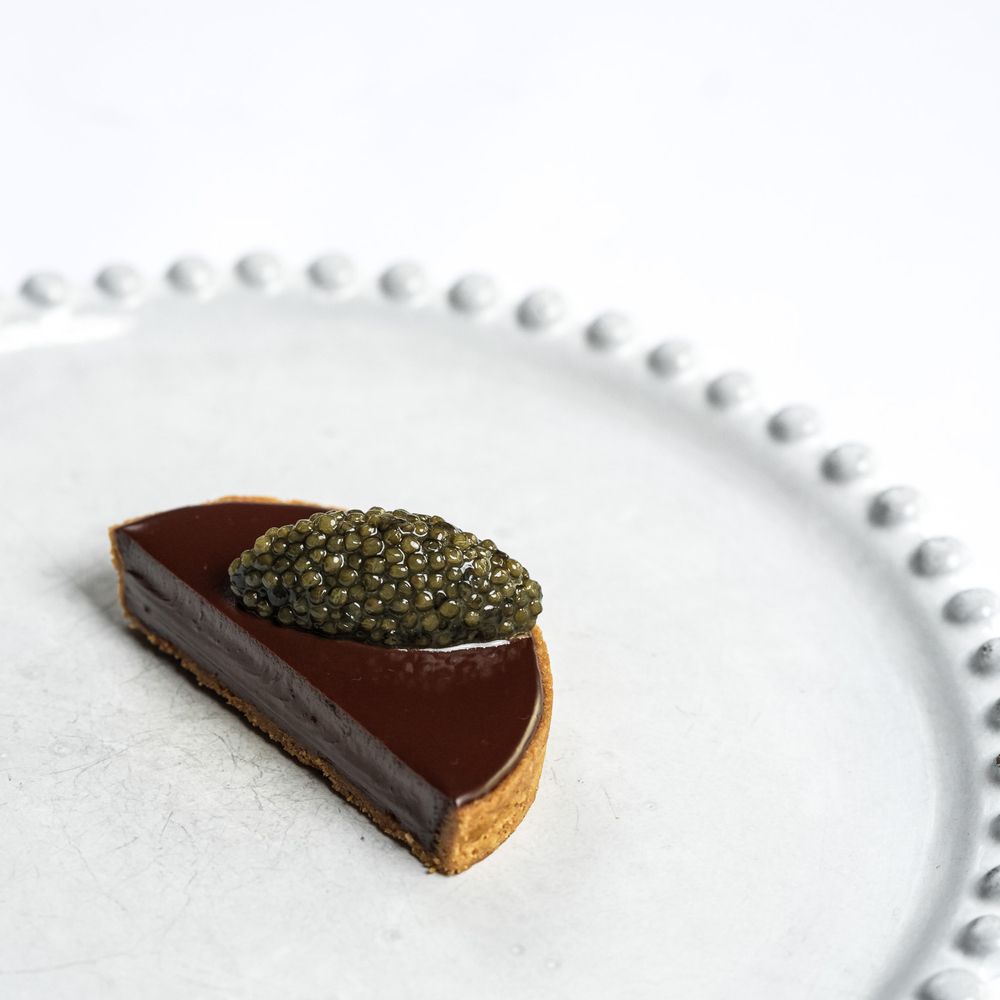
On the end of fine dining?


The great David Lebovitz posted this recently with regards to fine dining:

We don’t go to fancy restaurants much since so many mid-priced restaurants in Paris are turning out great food these days. There was one highly-regarded restaurant that I finally decided to give a try. But when I went to their website, the meal was a breathtaking €480 ($535) per person, which meant one would be paying close to €1300-1500 (~$1450-$1650) for lunch or dinner…or more, depending on the wines you choose.

The owner of that restaurant, Table, finally decided to close next month, saying that fine dining is over, and he was getting out. Having eaten at a few Michelin-starred restaurants, in my experience, the food isn’t substantially better than a great bistro or restaurant. However, you’re paying for the service, the comfortable chairs, and, as is the case of restaurant Le Jules Verne in Paris, the view from, and the experience of, being perched on the second floor of the Eiffel Tower.

I think there’s a lot of wisdom there. First off, there are plenty of mid-priced restaurants not just in Paris but many other cities that are turning out great food.  Secondly, while I don’t have his experience, I’d agree that the food likely isn’t much better in places with multiple Michelin stars (though they have other things going for them, including ingredients that may be rare as well as innovative cooking and serving techniques).

I think the Internet has much to do with this. Not only are diners better educated on what is achievable, but cooks and chefs can see what is possible from the wealth of video out there. All this has raised the bar at a wide range of restaurants, just like how wide distribution of knowledge has raised the bar on so many things.

It’s easier to skip fine dining places that are very expensive because pretty good dining is widely available and we are aware of it. If you don’t need multiple servers or fancy tableware and other luxuries, you can eat well for much less than the top end places. And I suspect that is what many people are doing.
 

The AI trap: when human experts are hard to find, and AI experts are everywhere

I ran across a problem recently I’d call the AI trap. I couldn’t find an expert on an important matter so I used an LLM* to get advice. They I used a frontier model** to critique the first LLM and it found lots of errors and omissions. And the frontier model could also be wrong. Luckily I found a human, who confirmed to me what advice I should follow.

But that’s the thing. People struggle to find experts that will take the time to explain things authoritatively to them. LLMs have all the time in the world but they are not authorities: they are at best a source of information to further your research. But people will stop with them rather to go further on.

So my strategy nowadays is to have a way to test any information I get back. I ask the LLM for sources, I run the output from one model through another, I’ll ask a second model to play devil’s advocate on the first model, and I get runnable code and even tests to verify the runnable code. Always be verifying is my motto with AI now. Never settle for the answer you get back from it. Never fall into an AI trap.

(* GPTOSS120B running on the cloud at ollama.com)

(**Claude)

IBM Redbooks from the 90s

IBM has published redbooks long before the 90s. When I first started, you would have to put in an order for them and eventually a manual with a red cover would come to your Internal mail slot.

In the 90s theses were some of my favorite redbooks. It’s a blast from the past looking at them:

The Internet was a hot topic, of course. As was OS/2 for a time. Later on I moved into a group doing software development on the Web, so MQ and Java and e-business were hot topics.

It all seemed and was cutting edge at the time, which may be hard for people much younger than I.

On Abbey Road (What a difference half a decade makes)

I was reminded again of the cover of Abbey Road this summer when I read this piece in the Guardian about it.

One thing that struck me was how different the album cover photos of that album in 1969 were from the cover photos of this album from 5 years earlier

In 1964 they seemed so much younger and almost from the 50s, with their uniforms and uniformity. In 1969 they seem grown up, individuals all. The older photo is dated for many reasons: the newer photo feels timeless.

Of all the individuals, McCartney stands out the most to me: out of step, barefoot, having a smoke. Soon they would all stride in different directions as the need for individuality overtook the need to be in a group.

P.S. For outtakes of that famous photo shoot, check out this.

Remembering when the (world wide) Web was fun (and how it still is)

It seems like a century ago, but when the web (or WWW for world wide web)  first started in the 90s, web sites were fun. There were no standards and very few rules, which meant people were free to do what they wanted within the restrictions that HTML and web servers put on them. As a result, you never knew what you might get when you first went to a new URL. And if you followed sites that highlighted other noteworthy sites, you were sure to find something cool or fun or even mind-blowing.

Nowadays, most web sites are anything but that. Informative, yes. Useful, mostly. But fun, rarely.

If you yearn for fun web sites again, I’d like to point you to this site: Tiny Awards. That particular page shows you the sites up for the honour of Best Tiny Web Site for 2026. These listed sites might not be informative or useful, but they are fun. Better still, the finalists and winners for previous years are down at the bottom of that page. So you have plenty of fun sites to browse.

Check out Tiny Awards and all the sites listed. Also consider digging around. I noticed one site had a URL of https://neal.fun/cursor-camp/ so out of curiosity I went to https://neal.fun and much to my delight I found out that Neal has plenty more fun sites.

Enjoy. Have fun!

P.S. I was reminded again of how in the beginning, all websites started with www (e.g. http://www.cnn.com). This made sense at the time from a technical point of view. Also sometimes people would enter http://www.siteabc.com:80 to tell the server you wanted to get information from port 80. These days most servers send information over port 443 and don’t need the www any more. The things you forget!

How to think about life, death, the past, and more

I have been saving these good links on life, death, the past and more. On a Sunday, when you are thinking about such things, these could be just the links you want to read.

  • Finally

On the benefits of Kanban boards (and how Workflowy supports them)

I am a big fan of Kanban boards, and I am a big fan of the tool Workflowy. So I was delighted to see that Workflowy now supports Kanban boards.

I first came across the use of Kanban boards while doing software development. They are an effective way to plan and track work that needs to be done on a project. For software development, our Kanban boards often look like this:

But Kanban can be used by anyone, not just software development teams. For most people, a Kanban board for home or work projects might look like this:

As you can see (and as this Atlassian piece argues) Kanban provides the following benefits:

Benefit What it helps teams do Why it matters
Planning flexibility Reprioritize backlog work without disrupting active tasks Helps teams stay adaptable as priorities change
Shortened time cycles Move work through the workflow more quickly Improves predictability and speeds up delivery
Fewer bottlenecks Limit multitasking and surface blocked work sooner Keeps work flowing and reduces delays
Visual metrics Track cycle time, flow, and blocked work with charts Helps teams identify issues and improve over time
Continuous delivery Ship smaller increments of value more frequently Helps teams deliver faster and respond to change more easily

Kanban boards aren’t perfect. It’s easy to overflow your Todo column with so many tasks you don’t know what to do next. In that case you might create a Backlog column to the right of Todo, and then pluck a few things from that and move them to the Todo column. That way you don’t forget items (because they are still in the Backlog column) but you also get to focus on the things that actually need focus.

Perfection aside, Kanban boards provide many benefits. The next time you are trying to manage the many tasks on a project, consider creating using such a board and using a tool like Workflowy. You’ll be glad you did.

P.S. Images from Workflowy.com. Table from Atlassian.


Retail kiosks suck for everyone

Retail kiosks suck. They kinda suck for customers, and they definitely suck for workers. So why do companies turn to  them?

One reason companies turn to them is the rising cost of workers. Indeed, as you can see from this, any time minimum wage goes up, kiosk promoters publish dreck like this:

You can see why retailers are tempted to get a kiosk or three. It would seem that at least for retailers, kiosks do not suck.

It might seem that way, but what is actually happening for retailers is shown in this piece: Retailers are pulling back from self-checkout after years of theft, errors, and questionable time savings.  In short:

  • Increased theft: Self-checkout has led to increased theft, both accidental and intentional, contributing to higher retail losses (a/k/a shrinkage).
  • Reduced savings: Retailers must hire staff to monitor and assist customers at self-checkout lanes, reducing the expected labor savings.
  • Longer lines: Shoppers often scan items slowly, make mistakes, or encounter technical issues, leading to longer lines and frustration.
  • Slower checkout: Despite the promise of faster checkout, self-checkout often takes longer than traditional cashier lanes, especially for larger purchases.
  • Unhappy customers: While some shoppers appreciate the convenience, others feel self-checkout is impersonal, difficult to use, or akin to “free labor.”

This is not to say kiosks are never good and employees are never bad, but the way I see kiosks used in retail spaces is all kinds of bad. (For the record, kiosks at airports are good. And Starbucks self service via an app is a much better customer experience than say the kiosks at fast food places like McDonald’s or Subway. As for grocery kiosks, they are among the worst.)

Here’s to retailers figuring out how to get the right combination of self service that results in happier customers and happier workers and ultimately happier retailers.