
It’s an odd thing, what Emily Wilson did in writing this piece, An Uncomplicated Man, for the London Review of Books. Suddenly the discussion of Christopher Nolan’s new film turned into a debate on whether or not Nolan gets the history right. I want to delve into the second part for a bit.
It’s a tricky thing to criticize such things as the film’s portrayal of ancient Greece, since almost everyone concedes that you can’t really be accurate about history when it comes to Homer’s epic work, since it is not historically accurate in itself. So I was especially struck by the strong dismissal of Nolan’s references to the Sea People. Such dismissal came at the end of the Wilson piece, as well as this piece by a Historian of Ancient Greek (which is very good otherwise).
While not an expert, I would give Nolan a break on that, for a few reasons. One reason, as this piece explores, Did Odysseus Cause the Bronze Age Collapse?, is that it is hard to get a good gauge on who the Sea People were, so I am inclined to cut him some slack. A second and more important reason, to me, is that Nolan is using artistic license here. He is no more being historical when it comes to the Sea People than he is with certain costumes, and he sacrifices historicity for the sake of artistry. That’s how I believe he uses the reference.
That bun fight aside, I think it’s great that Nolan’s “The Odyssey” has fired up people’s opinions. And it’s great that subject matter experts are weighing in on the film, the history, and the literature behind Homer’s work. More films should do that.
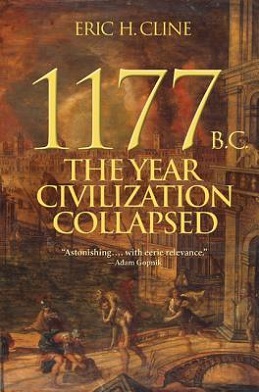
P.S. For more on the Sea People and the Bronze Age collapse, I highly recommend this book, “1177 B.C.: The Year Civilization Collapsed” by Eric H. Cline. It’s a fascinating story.

