60 or so interesting things I wanted to write about and maybe will some day

For the last few years I’ve shared interesting links I wanted to write about some day and maybe I will. Last year it was 28. The year before it was 85. As in other years, I think these links are all interesting, even if I don’t have much to say about them.

First off, let’s look at some cool links/sites. These retro design choices are cool. As are all the things Clive Thompson writes about. Anything Dan Sinker writes about is cool. Is Sonny Rollins cool? Of course he is. As was Min Matheson, the Labor Leader Who Faced Down Mobsters. Is the home of Roberto Gerosa home in Milan cool?  I happen to think so.

Moving on from cool, this story, on Only fans and being good, is interesting. Edmund White’s sex memoir may also be interesting to some. Same goes for this story of Stormy Daniels and the gofundme she set up to deal with alleged threats due to testifying against Trump.

I was curious about where does the expression “peace be with you” come from. I was also curious about Christian masses other than Christmas. For example, Childermas. Speaking of Christmas, I liked this piece on the shepherds and the Magoi and this piece on shepherds or wise men at the birth of Jesus. If you wonder if churches still matter, read this.

Some historical pieces I liked: this on 1177 BC bronze age societies and this on the world’s oldest known song, hurrian hymn no 6. Likewise, this story on rare anti-nazi resistance pamphlets. What’s this? A good reminder that there were still old people when life expectancy was low.

Three things on Canada worth reading: MAID has led to soaring euthanasia deaths, where the primary care crisis is hitting ontario hardest, and a story on a Canadian woman sentenced for inuit benefit fraud.

Not on Canada, but by a Canadian, are these two posts by Lloyd Alter: why i am thinking about giving up and if only i could sleep on the overnight train.

Some good articles on fashion and design/decor: a piece on how Google is reaping the benefits of big ad spending from fast fashion companies  temu and shein. Meanwhile, Burberry shows signs of decline with job cuts worldwide. Here’s a slight piece on wearing  white in summer. Here’s something on a minimal entrance way. And I liked this fake window for windowless rooms and this transformer table that goes from a workstation to dining table in seconds.
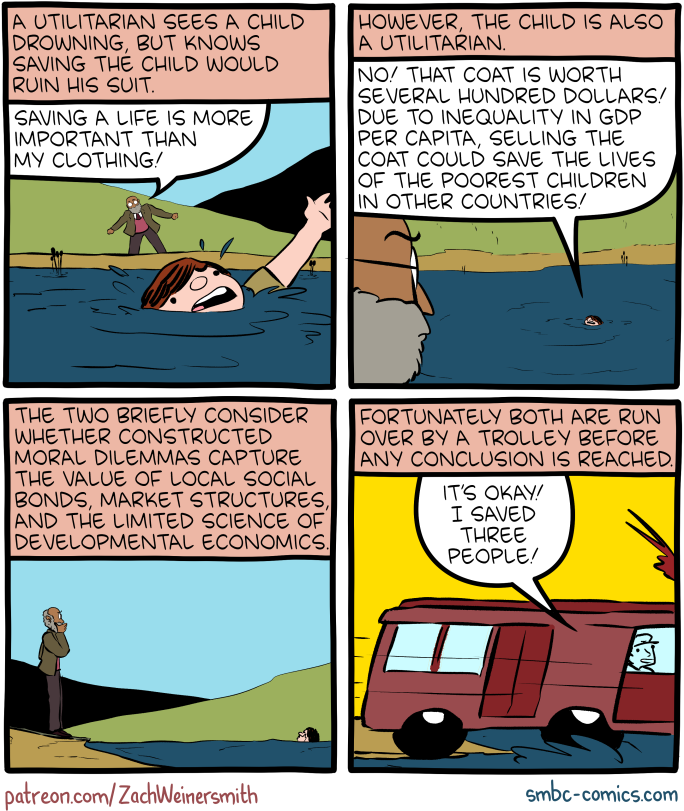
For some time I was wanting to write a critique of Peter Singer and his arguments about affluence and morality. So I read a number of pieces on him and his argument  here here, and here. In the end the cartoon shown above (and found here) summed up what I wanted to say, so I leave it at that for now. In addition, I wanted to also write on the correspondence theory of truth (more on it, here) but didn’t. Same goes for Compatibilism.

Did I care enough to write about  Ellen Degeneres and her netflix special? I guess not. Do I care about Bill Gates closing his Foundation in 2045? Not really. Do I think much of Niall Ferguson’s tendentious op ed? I do not. Do I think even less about Elon Musk and xAI? I do. Is any thought of RFK Jr (as seen here) worthy of consideration? Nope. Is Richard Hanania a terrible person? Yep.

Finally I thought these random pieces were worthwhile: on soldiers shortage due to population changes, when Dietrich Bonhoeffer theorized how stupidity enabled the rise of the nazis, on the changing of plant names that contain a racist slur, on antitrust suits, on whether or not you are entitled to severance pay, on how parents are stressed and how young undecided voters voted in the 2024 US election.
The Matrix is an Easter Movie (as are the Alien films)

People often joke about which non-traditional films are Christmas Movies, with “Die Hard” being at the top of the list. Unlike Christmas, not many non-traditional films are associated with Easter.

I’d like to nominate the Matrix to non-traditional Easter movies. The movie is soaked in Christianity. As this really good piece on The Matrix explains:

Neo’s buyer also jokes that Neo is his “own personal Jesus Christ,” a moment that sets up the many biblical allusions in the film — the city of Zion (a biblical name for Jerusalem as well as the idea of the city of God), Cypher’s Judas-like betrayal, a very important character named Trinity. At the time, this was catnip to youth group leaders looking for a way to make religion cool.

And “The Matrix” as religious allegory has stuck. The last 25 years have seen books published with titles like “Escaping the Matrix: Setting Your Mind Free to Experience Real Life in Christ,” “The Gospel Reloaded” and “Christ—The Original Matrix.” If you’re looking for it, it’s definitely there.

Neo escapes the Matrix when he is released from his pod (an egglike device). He is considered The One, before he is betrayed by Cypher. He is killed by the Agents who could be stand-ins for the Romas, but then is resurrected. If you look, you can see all sorts of similar themes.

Of course that films has many other good themes in it. To see what I mean, check out that piece in the link above. The Matrix really is a good way to think about much of our current world.

P.S. I got the idea for this from this post on BlueSky, which pointed to the Alien films as great Easter films. This post got me thinking that The Matrix also has all this too.

Eggs, sacrifice, resurrection … the perfect Easter films?

— Daniel Benneworth-Gray (@danielgray.com) April 18, 2025 at 10:12 AM

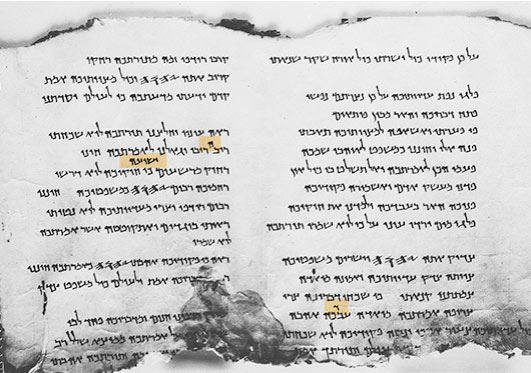
The Dead Sea Scrolls (Digital Library)

This site, The Dead Sea Scrolls Digital Library,

offers an exceptional encounter with antiquity. Using the world’s most advanced imaging technology, the Digital Library preserves thousands of scroll fragments, including the oldest known copies of biblical texts, now accessible to the public for the first time.

It’s quite something to see what they have on display, especially for non-scholars like me who would never get this close to such ancient pieces. It’s well worth taking a look, especially during Passover / Easter.

28 or so interesting things I wanted to write about and maybe will some day


Last year I wrote about 85 or so interesting things I wanted to write about and maybe will some day. This year I am down to 28. Progress? I’m not sure.

Like last year, over the last 12 months I have found things I would like to write about but never do. I think people should check out these things/links at least, so I am including them all in this Sunday post to read at your leisure. Maybe you can write something worthwhile with them.

For fans of TV, you might like this piece on how Netflix dominates. Or this, on the end of peak TV. Read this if you are a die hard  film fan who refuses to surrender to streaming. I keep track of how the big studios are doing, so I found this worth a note, on Disney woes with Jonathan Majors. Speaking of woeful is this item on the troubles of Justin Timberlake.

As I continue to blog, I was interested in these blogging myths. If you have a newsletter, you might want to make it more like a letter. Here’s some dated words to avoid. Here’s some beautiful words to take a moment and read: When i am among the trees by Mary Oliver.

Is the money is in all the wrong places? Of course. This, on the problems of the silicon valley bank and the federal reserve clampdown, shows it to some degree. Speaking of money, this is a good piece on debt free college.

I like to write about decor, but had nothing to say regarding this Kohler’s Brutalist Toilet. (Shown below.)  Ditto for Sherwin Williams least popular paint color for 2024. (Shown above.)

All I can say on this is… nice: creative growth art center in san francisco; neat: on the price of the Costco hot dog; cool: analyzing my emacs time over the last 11 years or so.

Some LASS (Liberal arts, social science) pieces I collected recently are these two pieces on the Bengal Famine here and here; more brutal history: The chilling sound that signalled death for IRA ‘informers’; also terrible: homosexuality was considered a disorder in psychiatry. I thought these religious writings were worthwhile: a good essay on Jewish beliefs and practices, on the great flood, and how we are reading the Book of Job wrong.

Do I like a good piece on John Rawls? I do. Do I agree with what is going wrong with Liberalism on the west coast? I do not. Do you need to know how to clean house with micro decluttering? I’d say yes.

As before, and always, thanks for reading this blog. I truly appreciate it. I hope you found a link or two — or ten! — worth your while.

On Lent, Sacrifice, and Giving Things Up


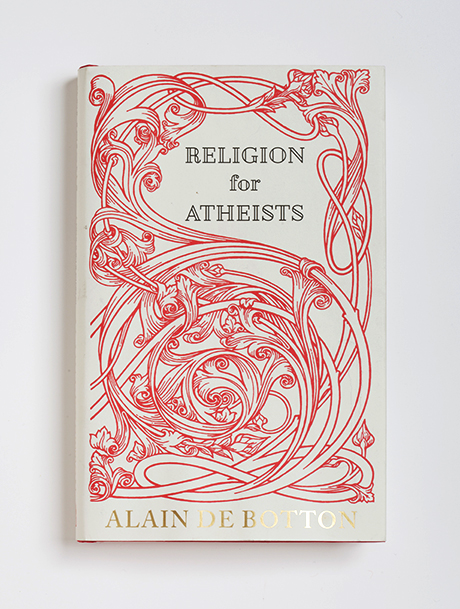
Atheists and agnostics like myself sometimes find themselves longing for or at least missing elements of the religious life. (Alain de Botton explored this in his book, Religion for Atheists.) One of these are periods of reflection and sacrifice, like Lent. Some people support something like a secular Lent, while others argue that “secular Lent” misses the point, and that:

Lent, fundamentally, is about facing the hardest elements of human existence — suffering, mortality, death. That the season has turned into giving up Twitter shows that we haven’t gotten good at talking about them yet.

Agreed. But that doesn’t mean you can’t benefit from making personal sacrifices for a period of time in order to see yourself and your place in the world in a new and different way. A period of chosen sacrifice can be a spiritual practice no matter what you believe. And choosing to do it at this time of year may be the best time to do it.

If you agree and you want help with quitting something, this can help. If you want to know more about Lent, this can help. If you are not religious but this appeals to you, consider reading de Botton’s book.

Good luck with whatever you decide to do.

Is El = Yahweh, and other links for amateur Biblical scholars

I’ve been interested in the history of the Bible and older religions for some time. That online research led me to a site by an actual Biblical scholar who has a site devoted to Biblical Contradictions. So there’s some good stuff there on specific things I’m interested in, like does Yahweh = El, found here and here. There’s other good pieces there, including some sections based on the Documentary Hypothesis.  You can find them here Yahwist Source (J), here Elohist (E), here the Deuteronomist  (D) and here Priestly Writer (P).

Like much concerning Biblical study, there are many areas of disagreement, including that of the Documentary hypothesis. Keep that in mind whenever you read anything that sounds too definitive. That said, I found the Contradictions site well done and worth a review.


On the Pope’s visit to Canada in 2022, and more

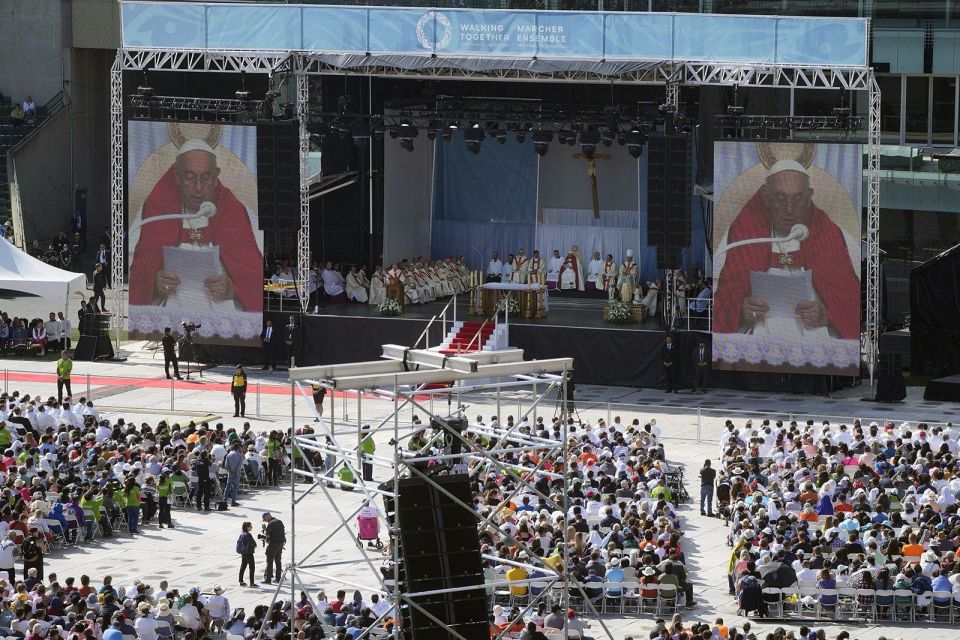
The Pope was recently in Canada to apologize for the role of the Catholic Church in the residential school system and the suffering that was inflicted on indigenous people within Canada. Here’s the  NYTimes on the visit. Here’s NCR onlineEven our Prime Minister weighed in.

When it was over, we got follow up stories from the NYTimes, from America Magazine and from NCR online, each assessing the visit, as well as highlighting statements like: Pope Francis Calling the Abuse of Indigenous People in Canada a “Genocide”.

Overall, many seemed unsatisfied with it, as you can see from this piece, Why Pope Francis’ Canada school apology isn’t enough, and this piece, ‘Indigenous representatives had no voice’ at Quebec City Papal event. Even during the events, some indigenous people expressed their negative feelings towards it all, as this story showed, ‘I couldn’t stay silent ‘ says Cree singer who performed powerful message. It didn’t help that some  bishops seemed to be raising money from it.  Even prominent Catholics did not see it as a success, though for different reasons than indigenous people did: 3 views on pope’s visit to Canada.

During the time he was in Canada, there was much focus on certain Papal Bulls from the 15th century. It came up in this tweet from cblackst. At first I could not figure out why this was an issue. I was ignorant to the fact that indigenous people have been demanding revocation of the 1493 papal bull since at least the year 2000. As far as some Catholics are concerned, the Catholic doctrine of discovery is already null and void.

I am not sure what revoking it would accomplish. Papal Bulls are weird documents. During times of good popes, they could be good. During bad popes, they could be evil. Anti-semitism drives many of them. If you want to read more on them, here’s some links that could be helpful: Papal Bulls – Doctrine of Discovery, and Dum Diversas – Doctrine of Discovery, and finally, Sublimus Dei On the Enslavement and Evangelization of Indians.

While the Papal Bulls got a lot of focus, what seemed to get less focus was money that the church had pledged but failed to deliver. The church failed to provide $25 million in compensation for the victims of residential schools, as this story showed. Despite claiming they could not raise the money for their sins, the Church did manage to raise much more than that amount for their properties. It was maddening to me that the media did not focus enough on that. (Later on they did report on a deal the government made freeing Catholic entities from $25M campaign for residential schools. You can read about that here and here. That would have been useful to know about before the visit.)

I had hoped for more from the Pope, the Church, the media, even activists. I hope at least the victims of the residential school system benefited from the visit and the actions of the Pope.

On a different topic, one thing I think everyone will benefit from is the appointment of Michelle O’Bonsawin to Canada’s Supreme Court. We need more indigenous leadership in the justice system, and she is in one of the key roles to provide that. You can read more about that here and here.

Finally, this New York Times interactive study on Benjamin West’s painting on the death of General Wolfe is relevant in many ways to the topic of this post. I recommend you check it out.

(Image: link to an image from one of the NCR Online pieces)

A brief post on the Church

In my case, the Church is the Catholic Church, which I have been estranged from since my teenage years. There are a great many good Catholics that I know, doing great acts of charity and service, such as paying off medical debt. And when I read pieces like this one, I think: yes, Catholicism can be a force for good.

But then there are the many terrible actions by the church and those within it that remind me of why my estrangement still exists. Like how Catholics who promised residential school survivors $25M instead spent $300M on a new church. or the political actions of Bishops in the United States. Or finally, laicized cardinal Theodore McCarrick.

McCarrick is being charged with a fraction of the things he got away with for a very long time. Things everyone knew about. And just so you know, McCarrick is not the end of it. If you can bare it, here’s more about it.

Finally here’s an editorial in a Catholic Church publication talking about just how messed up the church is.

That’s all I have to say for now.

P.S. April 4, 2025: The New York Times has McCarrick’s obituary here. The Times seems to struggle, in their obit, to deal with the two sides of McCarrick, the good and the bad. But the bad parts prevent me from appreciating any of the good parts. No RIP for him.

(Image: Damon Winter/The New York Times)

Sodom, or when science collides with early religions and folklore

I thought this was fascinating: New Science Suggests Biblical City Of Sodom Was Smote By An Exploding Meteor.

There is an archaeological dig happening that seems to say that a meteor hit the region at some point and destroyed the place people were inhabiting. You can see how this could have been taken for divine retribution, just like the Great Flood was. Then this great event is incorporated into folklore and early religion.

Now how good is this new science? If you read the wikipedia page for Sodom, you can see at the bottom in the section Historicity that shows the claims made and how debatable they are. So maybe this isn’t the actual site and it’s possible Sodom was not wiped out by a meteor. Still, it is fascinating to think about.

(General Photo by John Ballem on Unsplash of a site hit by a meteor.)

On being grateful despite duress

Grateful sign
It is said that being grateful is good for our mental health. But being grateful when living under duress can seem next to impossible. To see others do so is educational.

So I give you this piece on someone who is grateful in a way many of us might not be. I found it educational. I am still absorbing the lesson. I hope you gain something from reading it.

(Photo by Dylan Ferreira on Unsplash)

How to write your own psalm

You may not ever want to write your own psalm, but if you do, here’s advice on how to do it.

You don’t have to restrict yourself to a psalm of lament, though. There are 5 kind of psalms: praise, wisdom, royal, thanksgiving, lament, according to this. Feel free to write the one you see fit.

P.S. I got interested in this after finding out Churchill wrote his speeches in psalm style. You can read more about that, here. Or see an example of it below.

Invisible cities: the eruv of Manhattan

What’s the eruv of Manhattan? Well according to the article below:

The eruv encircles much of Manhattan, acting as a symbolic boundary that turns the very public streets of the city into a private space, much like one’s own home. This allows people to freely communicate and socialize on the Sabbath—and carry whatever they please—without having to worry about breaking Jewish law.

Here’s a map of it:

You might think that it is hard to believe such a thing could last for long, but as this piece shows, it is diligently maintained.

I found this fascinating. There’s many interesting aspects of New York, but this is one of the better ones. For more on this, read: There’s a Wire Above Manhattan That You’ve Probably Never Noticed

A new book on The Book of Job


The book of Job is one of my two favourite parts of the Bible (the other being Ecclesiastes). If you also have a keen interest in it, there is a new book out on it and The Atlantic has the goods on it, here:  The Book of Job in a New Light.

The new book casts Job in a different light than other interpretations. It’s not a terrible interpretation, and worth thinking upon. After all, that is what the Book of Job is about.

For more on the strangeness that is the Book of Job, see this article.

On exhibit: the Slave Bible

A fascinating exhibit in Washington, DC on the Slave Bible. What is the Slave Bible? It was a heavily reacted book with anything removed  that could have supported slaves seeking their freedom. It’s a sad but also interesting story, and more of the details are here: Slave Bible From The 1800s Omitted Key Passages That Could Incite Rebellion : NPR.