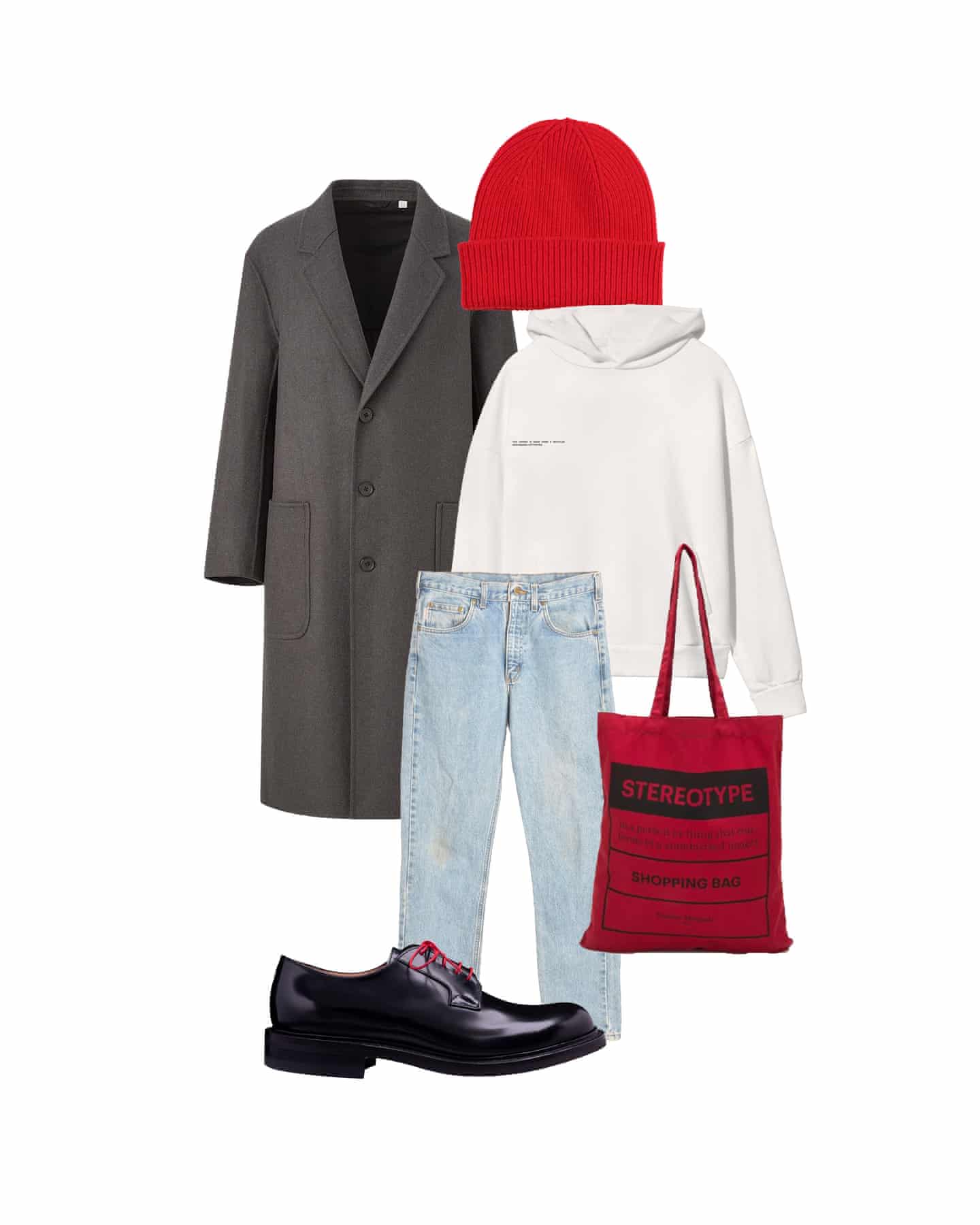
‘Unexpected red’ works for clothes too.

According to this piece, What Is ‘Unexpected Red’? in The New York Times

“The ‘unexpected red’ theory is basically adding anything that’s red, big or small, to a room where it doesn’t match at all, and it automatically looks better,”

That makes sense for homes.  It also makes sense for men’s clothing, especially if the colour palette of your clothing is neutral, black or navy. A pop of red — a toque, some shoelaces, a tote bag — can add some pop to your look. So grab some red accessories and add them to your wardrobe.

If you like to shop online, do what I do and on the search line type in “men red”. I find it will come back with all the men’s clothes that are red or have red in them. I’ve found toques, scarves, T shirts and socks that way.

For more thoughts from me on red in fashion, go here.

P.S. I think this theory could also apply for colours like purple and yellow.
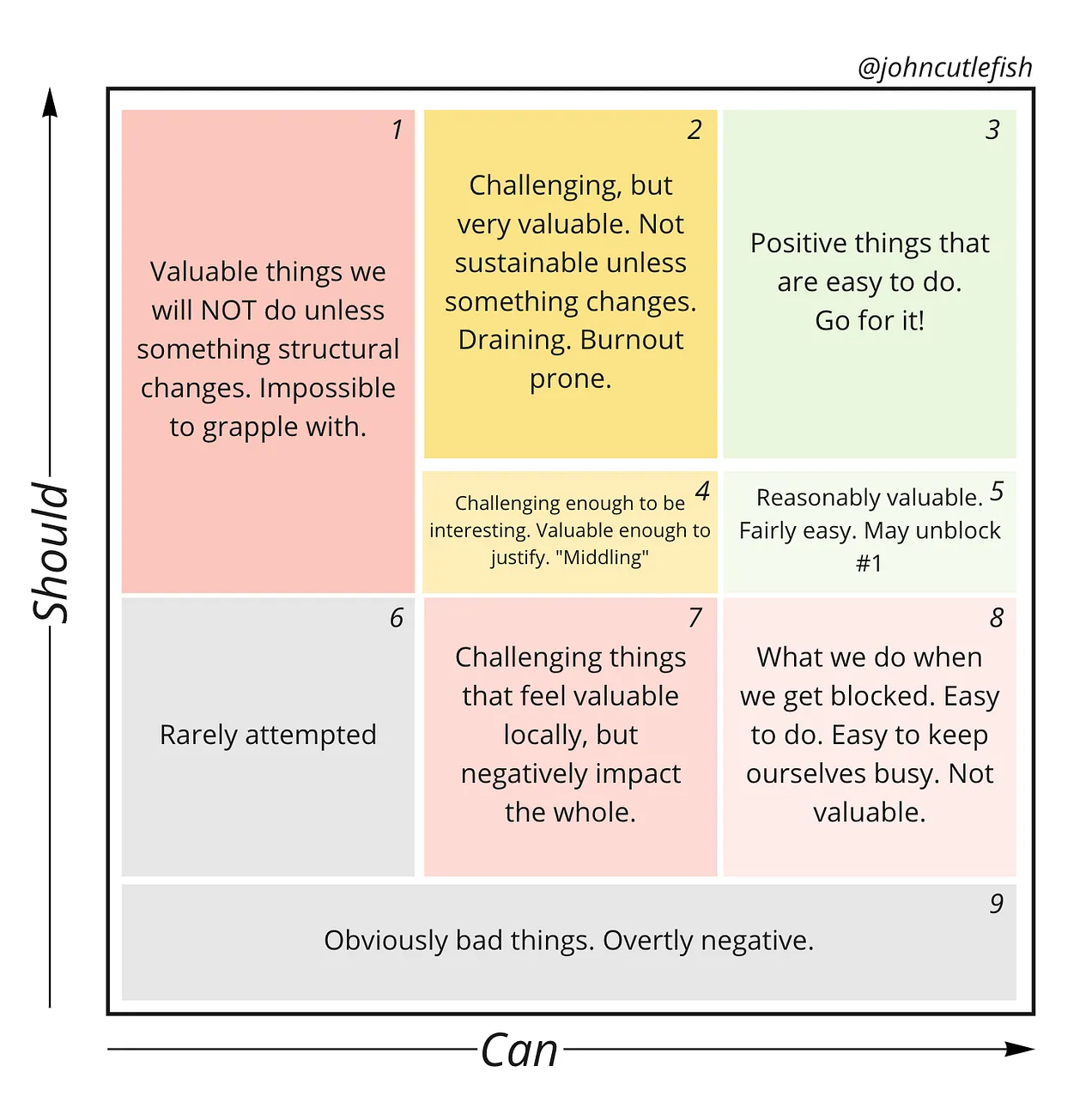
What should you do? Here’s a chart to guide you

I like this chart, found at substack TBM 16/52: Can Do vs. Should Do by John Cutler. I use a similar one when working with clients.

If you have a list of tasks you feel need doing, list them out and grade them on a scale of 1 to 3 (or 5 or 10). We grade them usually on a scale of Low, Medium and High. If you rank a task High for you Should do it and High for you Can do it, then that goes up in the top right corner of this chart (#3). Those are the tasks you want to do first.

See #1 and #2? The way we tackle them is by breaking them down and finding a part of them we can do. That part we move into the #3 section. There’s always some part of #1 and #2 you Can do, even if it involved asking someone for help with them.

Obviously those things you shouldn’t do (#9) should move off your list, no matter how capable you are of doing things. Likewise #6-#8 should be avoided, but sometimes we do #8 when we are blocked or tired (which is a form of blocked).

Anyway, a great chart. Check out the substack post for more insight on it.


Robots, robots and more robots.

I haven’t written about robots in awhile. That’s not for a lack of news stories about robots. We are finding them popping up all over the place.

Robots have always been used in manufacturing. Now they are moving into other businesses. Here’s a story of how robots are moving into restaurants. I’ve already seen one of these…it was less than impressive.

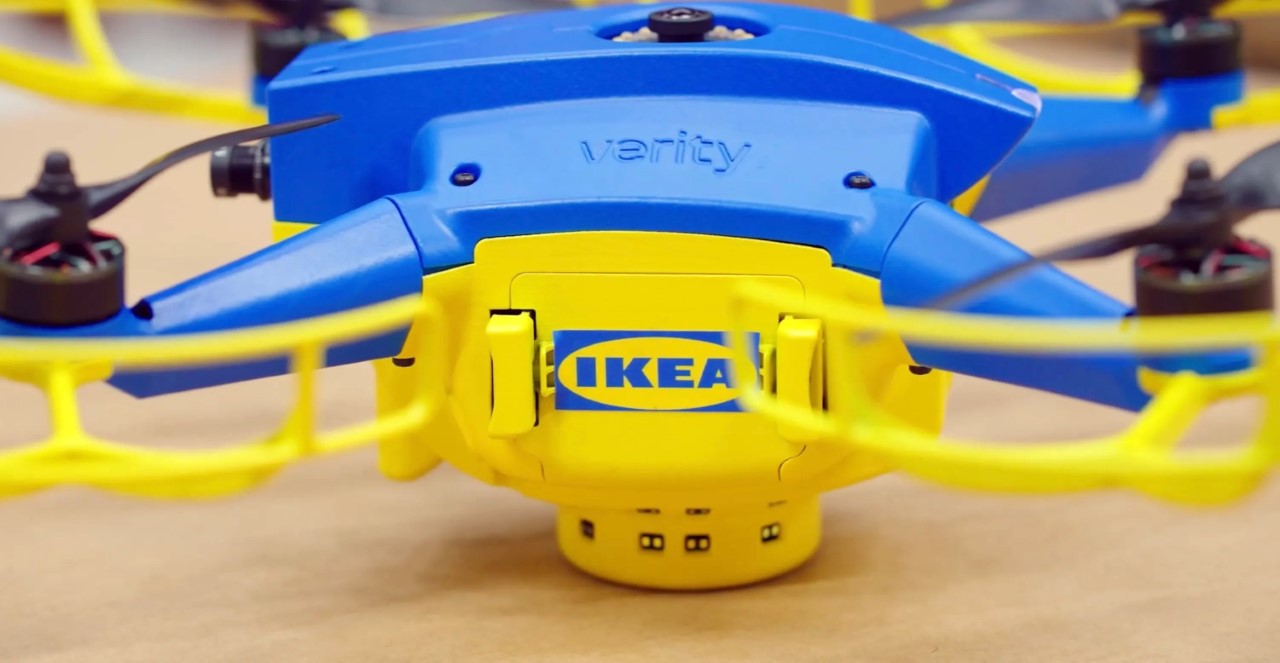
Drones are a form of robot. Here is a story on how IKEA is using drones for inventory management.

Wildlife has to be managed, too. This robot dressed up like a predator makes flights safer at airports by keeping wildlife away from runways.

The military is known for using robots. Here’s a piece on gun carrying robot dogs in the Chinese army. Not to be outdone,  the Canadian armed forces are ramping up with the use of drones.

Back at home, this unit from Samsung can vacuum and steam clean your floors. And this home robot comes with an arm. (No word on if it can unload the dishwasher.)

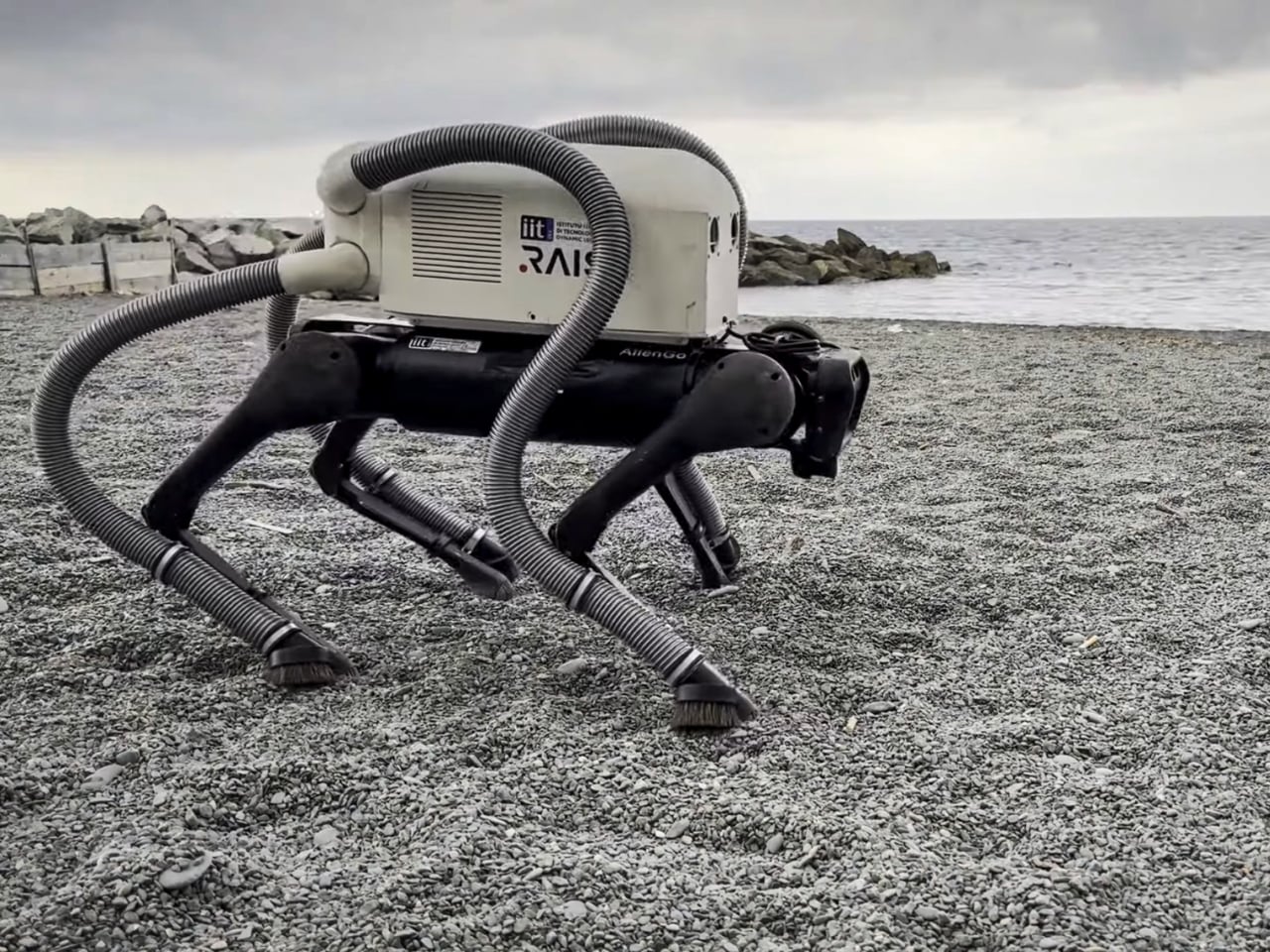
Speaking of vacuuming robots, this quadruped robot can pick up cigarette butts on beaches. That’s a good use of robots.

Back at work, these BMW robots being tested in their factories in South Carolina give off Terminator vibes. (see below.) More on them, here.

Boston Dynamics has it’s own Terminator like robots too. This dog like robot gives off Boston Dynamics vibes, but isn’t from B.D.

Here’s a robot that can become your child’s protector, teacher, and even playmate. Meanwhile, this one hangs out in your  kitchen and acts as an air purifier.

Here’s is a robot that is part of a work of art.

Finally, is the robot backlash starting? It already has in San Francisco, where a crowd vandalized a Waymo driverless taxi.

Forward: the new Shepard Fairey


Just as he did for Obama, you can find his latest imagery for Harris by Fairey,  here.

I’d add it’s smart he did this. I’ve been seeing all sorts of remixes of his old work, applied to Kamala Harris. It’s good to see his version.

(Art by Shepard Fairey. Reference photo by Lawrence Jackson / Biden for President is licensed under CC BY-NC-SA 2.0; For personal, non-commercial use only.)

In praise of teenage engineering

How great is Teenage Engineering? Let me count the ways. Or devices. In this case, three very special devices designed by them.

Device #1: the play.date

First up is the Playdate, a unique game playing device with a black and white screen and a crank. Is it any good? It is according to this: Playdate, all it’s cranked up to be (The Verge). You can read more about it, here:playdate – teenage engineering.


Device #2: Rabbit R1

For the second device, there is a chance you’ve heard of the rabbit, a pocket companion that moves AI from words to action”. I have one and I like it. Is it good AI? Yes. Is it brilliant design? Definitely.

If you’ve only ever read disparaging things about the device, then read this: Rabbit R1 Explained: What This Tiny AI Gadget Actually Does (CNET) and this:I just spent my first day with the Rabbit R1 — here’s what this AI gadget can do | Tom’s Guide.

Device #3: the EP–1320 medieval.

finally for the third device, you might exclaim, what is that?? Well let the folks from Wallpaper explain: Teenage Engineering EP-1320 Medieval: back to the Middle Ages.

What I love about the 3rd device is a) who knows what kind of market there is for this if any, and b) they don’t care, they made it anyway!

I love how different these devices are from most current handheld devices. The form factor is different, the colors are bold, the inputs are unique. They are small pieces of equipment, but they are not minimalistic pieces of equipment. I love them.

For more of teenage engineering’s great products, go here. For the longest time I wanted to have something from them, but most of their musical devices would be wasted on someone as non-musical as me. (Although if I ever get around to building my own computer, I am getting this:)

How can you learn about Project 2025? Three ways

If you are curious about Project 2025 — and if you are an American, you should be — there are at least three ways you can learn more about it.

The first way is to go to a web site set up to describe it, Project 2025: Presidential Transition Project.

Personally, and as a progressive person, I found this the best way to understand the effects it could have, 25and.me: How Does Project 2025 Affect Me?

However, if all that is hard to get a handle on, or if you want something more neutral, you can also check out: Project 2025 in Wikipedia.

Chances are if Donald Trump is reelected president, many of the things proposed in Project 2025 will come to fruition in the four years he is in office. So before you vote, read up on Project 2025 and know what you might be in store for.

It’s ok to hate August and love February (and vice versa. Or neither)

It’s ok to hate August and love February (and vice versa. Or neither.)

If you live in the northern hemisphere and you say you hate February, many people will get it. It’s a month of darkness and cold, they will say, of course you hate it.

Not all will agree. For many others love the middle of winter. They love doing winter activities. They love snow. They love staying indoors and being cozy and warm.

However, if you say you hate August, many people will not get it. They will ask you what’s not to like about warmth and sunlight? They love doing summer activities. They love BBQs, going to the beach, being outside. How could you not love that?

But like February, August is a month of extreme temperatures. And for those of us who don’t do well in high heat and humidity, it’s a brutal month to get through. Especially if you can’t go to the beach or the pool, or if you don’t like being outside so much. Or if you have to be inside and don’t have AC. For people of that group, August is easy to dislike.

I am no fan of either February or August. I prefer more moderate temperatures of September and June. But to each their own. Not everybody has to like what you like, and that is especially true of the weather.

I am glad for the folks who love July and August. As for me, I am patiently waiting for September and October.

Some thoughts on using the Digital Holga

Untitled

I bought a digital Holga for two reasons (some time ago):

  1. I love the images produced by cameras like the Diana camera and hoped the digital Holga would give me similar images
  2. I was happy to have digital images and not have to deal with film

Alas, my thoughts on the camera are similar to the ones expressed here. The images I captured were disappointing. I didn’t get what I had hoped for despite taking photos in a variety of light sources.

It’s true, you can make it better with with Adobe Lighthouse, as that piece argues. That kinda defeats the purpose of having the camera, to me.

If you are going to get one, then read this review: it is good for helping you understand the device.

Here are some of my photos. If you want to see more photos of this sort, this section of Flickr can help.

Finally, this here talks about the Holga in general.

(Top photo by me.)

New York in August – hot time in a hot city

Untitled

New York is always great to revisit, and revisit it again I did last week. Like my visit in March, I stayed with my girlfriend in the Lower East Side, eating and walking around and even taking in a Broadway show (“Illinoise”).  We hit up Freeman’s Alley and Lafayette for the breakfast, because they are always good. Plus Clinton Street Baking Company. We also dined at WildAir and King. The best of the lot, though, was Via Carota (seen above). Is it New York’s most perfect restaurant? This piece argues it is. It’s hard to disagree, although it is a bold claim, since New York has so many great restaurants. Not just now, but in it’s entire history. Read this piece on the social history of the city, told entirely through its restaurants, to see what I mean.

During the pandemic New York adopted outdoor dining and many places like Via Carota set up a big outdoor area to serve people. It’s still going strong, although the city is cracking down on outdoor dining. If you like that kinda thing, you may want to do it while you can.

Speaking of New York City post pandemic stories, here are two: this one on a 23 floor midtown Manhattan office building going for a 97.5% discount. (Practically free). And this one about how people are returning to the Met Opera, but selectively.

Here’s three good stories on NYC history: 1) a fascinating history of  Lincoln Center you might not know about, 2) the abandoned islands of New York in pictures, and 3) a bio on Lorne Michaels.  Hey, when I think of the recent history of New York, Michaels figures prominently in it.

When we were visiting, New Yorkers were talking about an impromptu goldfish pond set up outside a leaking hydrant in Bedstuy. (See above.) It was all going well until an animal lover thought she was doing the right thing by freeing fish from the pit. The man who created the pond saw it differently. Mayhem ensued.

I am not sure who thought it would be a good idea to put up a Portal between New York and Dublin, but they did. More mayhem ensued.

Finally a non-story about how the M.T.A. wanted runners of the New York City Marathon to pay bridge tolls. Needless to say, this did not happen.

Computers and the Vietnam War: a cautionary tale

500
This piece, According to Big Data We Won the Vietnam War, should be read by everyone who  strongly believes the next new technology (e.g. gen AI) will be able to make decisive predictions to solve big problems (e.g. the Vietnam War).  The best computers and minds at the time thought they could win the war with technology. They were wrong then, and they will be wrong again.

If you think newer computers will win this time, reconsider that. If you think we learned our lesson last time, read this.

It’s summer. Time to hit the beach with a good…list of tech links :) (What I find interesting in tech August 2024)

The last time I wrote about what I find interesting in tech, it was winter. Now it’s anything but, and I have lots of things I’ve been studying in IT. Lots of material on COBOL and mainframes since I am working on mainframe modernization. But there’s stuff regarding Python, cloud, Apple computers and so much more. Let’s see what we have here….

Software: this section is so big I need to break it up! First up, COBOL:

Next, here’ some good stuff on Python:

And lastly here’s some general software links:

Mainframe


Apple…a few good links:

Some helpful cloud pieces:

  1. Getting start with the Container Registry,  here
  2. On  deploying a simple http server to ibm cloud code engine from source code using python node and go 
  3. Provisioning on ibm cloud using terraform with a sample_vpc_config 
  4. On  how set or restore remote access windows vsi 
  5. How to create a single virtual server instance (VSI) in a virtual private cloud (VPC) infrastructure on IBM Cloud, here.
  6. File Sharing through RDP from MacOS  here 

And finally, here’s a good set of Random links that were too good to pass up:

So you want to publish a cookbook? If so, read this.

If you are thinking of publishing a cook book, then you owe it to yourself to read this piece in Eater. Eater interviewed three cookbook authors on how they got their first book deal and touches on all aspects of the process they followed. It even talks about how much money you might make. (Emphasis on the word, might.)

Obviously this isn’t the last word on how to get published, but you will come away from it with a better sense of what those authors did to become successful. In one case, author Priya Krishna went on to become very successful with a prominent position at the New York Times. Who knows where you and your stack of recipes — or Instagram posts — will end up?