Heat dome! Some thoughts – hot and not – and the usual ramblings midyear year (i.e. the June 2025 edition of my not-a-newsletter newsletter)

The first half of 2025 is done, and if you’re living in Central Canada, you’ve just suffered through some face melting heat caused by a heat dome. That was a new experience for me. I’ve suffered heat waves, but not a heat dome. It’s a new way of suffering. Fortunately it did not last long, and cooler temps have brought some relief.

Once the main focus of this newsletter was the pandemic and COVID, because for the previous 5 years that was the thing that most preoccupied people. While COVID is still around, it has diminished to the point that the flu is deadlier than it in some parts of the world.

In the last year the thing that mostly preoccupies the world are the actions of the second Trump administration. I suspect that this will also be the thing that preoccupies this this newsletter for the next few years.

Trump 2.0

Tariffs were pretty high on the agenda for Trump’s second term in office. I think he dreamed he could eliminate income taxes and replace them with tariffs. (Never mind that tariffs are just another form of tax, which everyone but Trump seems to know). Turns out, it’s not that easy to get rid of income taxes. And while trying to switch over to a tariff based form of revenue, you get things like shipments freezing up just like in the bad old days of the pandemic. Does any of Trump’s tariffs make any sense? Some try to explain away his actions, but the constant changing of tariff rates on various places seems like madness to many.

When Trump hasn’t been applying tariffs on everyone including penguins and seals, he has been out seeking revenge.  It’s pretty common knowledge that Trump has a revenge list.  For those on the list, it will be interesting to see who he attacks over the term of his administration. I suspect he’ll get to most of them. Of those already attacked, many are struggling to respond. The ones that did respond by caving to Trump are losing in other ways.

It’s not only individuals that Trump is after. It’s also institutions, such as U.S. universities. While his administration has gone after a number of schools, Harvard has been hit especially hard, as you can see here. Why Harvard? Perhaps because they are fighting back, unlike Columbia University, which quickly threw in the towel.

He’s even taking his fight to the Justice system itself. Some are wondering if the Supreme Court would stop him. Short answer is nope, it didn’t, although they are pushing back ever so slightly. While the SCOTUS is giving Trump a pass, judges in lower courts are struggling to provide some sense of justice despite this onslaught from Trump attorneys in the Justice Department.

As for other attacks, I’d be remiss if I didn’t mention his wrongful deporting of individuals to other countries, the wrongful arrests of citizens by ICE, and the sending of marines to Los Angeles.  Honestly it’s too much to cover, but that’s the point.

It’s not all tariffs and attacks, mind you. For instance, he’s found time to redo parts of the White House. Much has been written about his weird Oval Office decoration (this is the guy who keeps a fake Renoir painting in his New York Home). Not surprising, the new look doesn’t even seem to be expensive, just cheap and gaudy.

What else? He picked up a free plane from Qatar, just one of many corrupt acts. He also got his wish of having a military parade on his birthday. In the end, many thought it was a failure. What does not seem to have been a failure were the No Kings protests that happened at the same time.

Musk

Speaking of failure, Elon Musk has slunk off from Washington, black eye and all. Like so many others, Musk learned that Trump will use you and then be done with you. There was some initial speculation that he was not really leaving, but that seems unfounded. (It didn’t help him that he got into literal fights with other members of Trump cabinet, which likely explains these leaks about his weird beavoir and drug misuse).

Musk really believed he and DOGE boys would find 2 trillion dollars in savings as they slashed and burned through much of the administration in Washington. Instead he cost the US government massive amounts of revenue, largely due to IRS cuts. And while DOGE was a failure in itself — some are already calling it over — Trump’s spending bill undermined any savings DOGE might have achieved. (For those interested, check out this DOGE tracker for more info.)

Elon Musk leaves behind a legacy of disease, starvation and death during his short time in Washington. Hope it was worth it for him.

The Pope

While all that was happening, Pope Francis died this Easter Monday. After a relatively short conclave, an American was chosen as the next pope, Leo XIV.

Needless to say, this lead to a slew of news stories, such as  how the new pope came up with his name and how the Cardinals were watching the movie “Conclave” for guidance. Of course while Trump was at the funeral he drew attention for the way he dressed and his supposed desire to be Pope. Whatever. Unlike Trump and Musk, Pope Francis left a good legacy and tried to live a good life, as seen here.
Canada

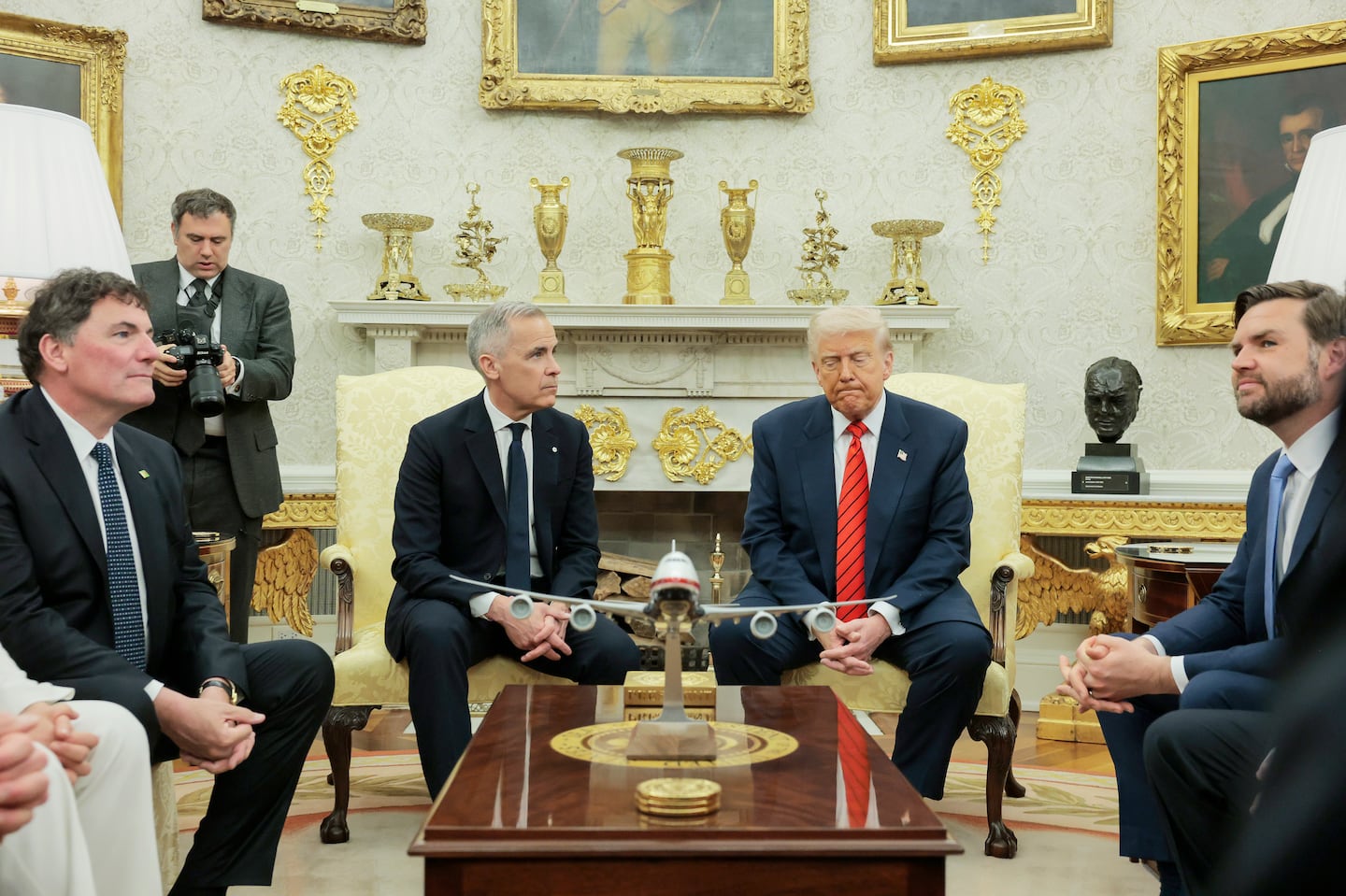
One weird counter-effect Trump has had on the world is damaging political parties that are aligned in some way to him. This happened in Canada, with Mark Carney and the Liberals surging from behind to win the recent Federal election. (Results here.) It helped that Carney’s Liberals won big in Toronto, despite Conservatives flipping key 905 seats.

Carney has since paid a visit to Trump and it seemed to go well, but one never knows what will happen at any given week in the White House. Meanwhile Carney has also been courting other world leaders like King Charles and members of the G7, no doubt as a way of dealing with our neighbor down south.

In other news

Are things still terrible in the Middle East? Of course. If anything, things are only getting worse. Ukraine? Yes. Is crypto making a comeback? Sadly I think so.

Are we in for a wave of disease and suffering due to people like RFK, Jr? It’s likely. Mind you, measles is surging in Alberta. Foolishness like this doesn’t help.

Michelin, which has been to Toronto a few times, has now expanded their Canadian presence by going to Montreal and Quebec and reporting back on all the goodness that part of the country has to offer.

Finally

The great Brian Wilson of Beach Boys fame passed away recently. I’ve always loved his song, “God Only Knows”, and here he is with an abundance of new and not so new musicians to perform it with him for the BBC:

As always, thanks for reading the June 2025 edition of my not-a-newsletter newsletter! Enjoy your summer.


 

One reason to record

Bike at Dusk

Over at my other blog, I recently asked myself, “why record at all”. I didn’t have an answer to it until I looked at some old photos like the one above.

I like that photo, taken using a Diana camera of a wooden wall I made. The wall wasn’t very good: I didn’t know enough and didn’t have enough resources to make it properly. As a result, it flopped around and was prone to getting wrecked when a high wind came along. No matter. I was proud I could make that then. And I was happy with the way this photo came out. I am still proud and happy about that.

The record — in this case a photo — reminds me of what I am capable of. It states: you could do that again.  At a time when one is plagued by negative self-talk, a record can provide a voice to drown out the negativity. A record can be a voice of encouragement.

There are many good reasons to make a record in any form. A record that can help you regain your better self is surely a good reason to make it.


What’s cool? These seven links are cool

Summer’s starting, and when the weather gets hot, you need something cool. These links below aren’t cool in that way, but they are cool nonetheless:

For example, this moped design by teenage engineering is definitely cool. Other cool transportation is this solar-powered chocolate factory supplied by a sailing ship.

When people first started putting things on the Web, virtual tours were very cool. Guess what? They still are. Check out this recent virtual tour of the Basilica Santa Maria.

The great Gina Trapani has built a page showing her Life in Weeks. Cool stuff. Speaking of the Web, here’s some cool stuff you can do with the web site, Bluesky

If you need a cool place to get away, how about these Postcard Cabins? Some of them are awesome. Also awesome is this clip of an Olympic gold medalist runner dominating the 100m at her kids sports day event! Any time someone says they would have a slim chance against an elite athlete, show them this.

It’s getting hot out there. Stay cool.

The arts on Wednesday: from Ruth Asawa to Wim Wenders

Wednesday seems to be a good day to take a break from your work and feast your eyes on the work of artists covered in these 10+ pieces. There’s something for everyone’s taste, from classic painters to conceptual artists. Enjoy!


The century is a 25% over. Here’s the best books and movies of those 25 years.

It’s hard for me to wrap my head around the idea that the 21st century is 1/4 completed. When I was young, the 21st century was far off in the future. Now so much of it has already past.

Given this milestone, it seems a good time to look at what some of the best books and films have been of this era.

For films, I recommend this essay in the New York Times of the best films of each year from 2000 to 2024.

For books, I recommend this piece from Kircus Reviews.

What do Paris and London and Detroit have in common?

What they all have in common is they are included in the links below (plus something on Venice and Budapest too).

Here’s a story on the secret vineyard in the middle of Paris where the wine has ‘an air of mystery’.

Fans of Parisian cafes will want to read this: Parisian cafés are a cherished part of French culture. Here’s why they might be in trouble.

I once wanted to go here very badly, but I no longer do. For those that feel otherwise, here’s an old piece in Vanity Fair on L’Ami Louis.

I would not mind checking out Paris’ Hôtel Balzac, which has reopened its doors following a 1930s-inspired renovation.

For the less rich – of which I am one – here’s a good piece on where to eat in Paris on a budget.

Finally, as a Torontonian, my first thought was, “was that all it costs??”: Karl Lagerfeld’s futuristic paris apartment sells for 10m euros.

Swtiching from Paris to London, here’s a good run down on London’s Smithfield meat market which will close after 850 years in operation.

Meanwhile, over in Milan, we have this detailed story on the famed La scala opera opening night.

As for Venice, Budapest and Detroit, here’s three guides from the New York Times on….

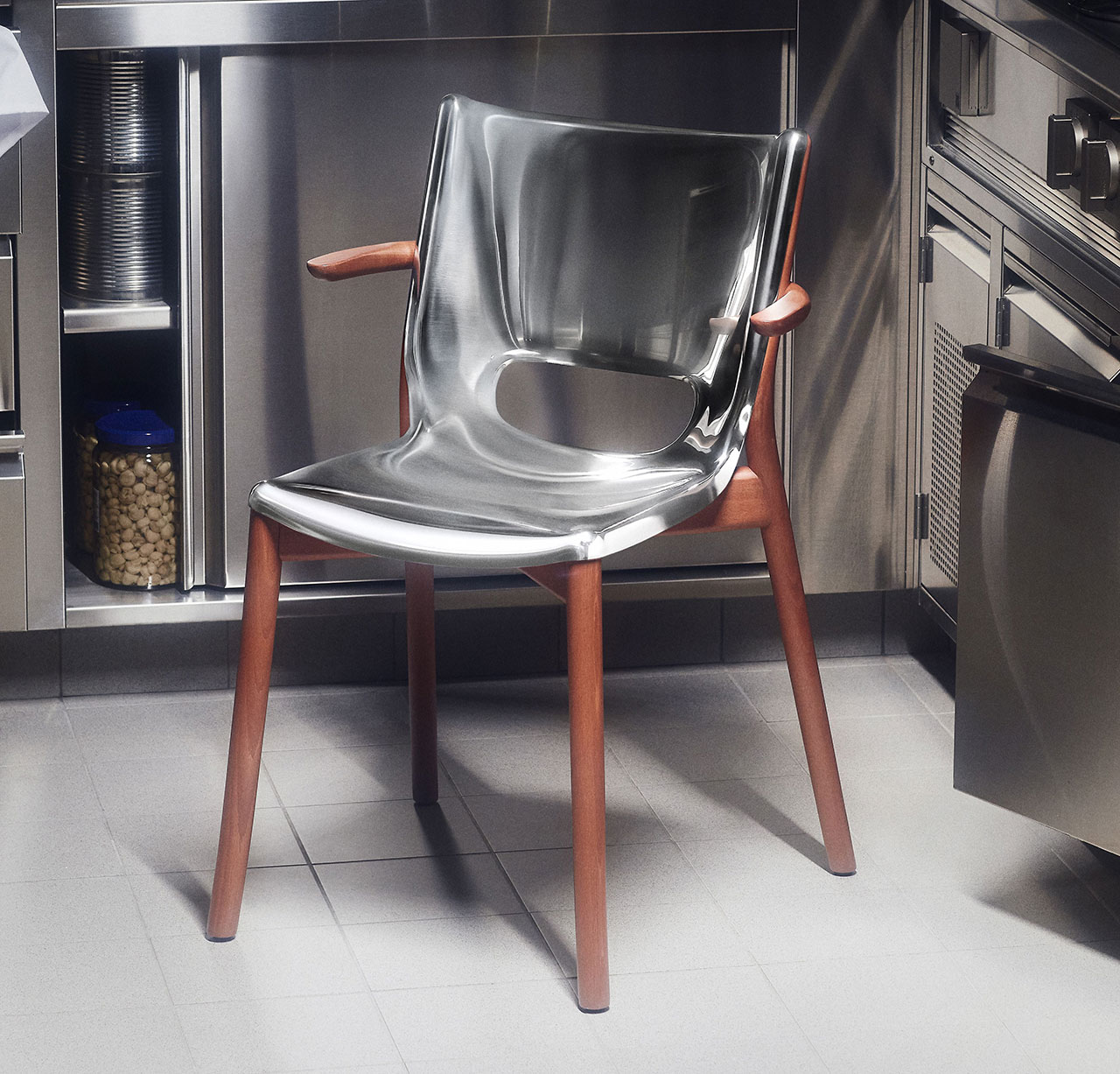
Three fantastic chairs

I love each of these chairs: one all metal, one all wood, and one a composite of both. All very stylish and elegant.

First up, is the PolarisGo Limited-Edition Chair:

Next up is this plywood chair from Nathan Martell Studio (same chair, but three different colours):

Finally, one from my favourite designer, Philippe Starck:

Each of them is as sculptural as it is practical.

For more on the chairs, go here, here, and here.

A good formula for anyone who likes flowers but is terrible at buying them

I love buying flowers, and there are several good green grocers near me that sell many different types of flowers. The problem I have is, what to buy and how much should I buy? I am always disastified with what I end up as I leave the store.

So I am excited to try this formula which I found at Cup of Jo. You can too! You need to buy:

  • a seasonal flower (tulips, daffodils, whatever)
  • a filler flower (like one with little buds on it, like baby’s breath)
  • a flower that fits the color palette (spray roses look good with everything)
  • greenery (“I generally like bigger wider leaves,” she says)

Once you get home, grab a vase and fill it like so:

  1. Greenery goes first, since it’s the foundation to hold everything together.
  2. Add the filler flower.
  3. Layer in the spray roses.
  4. Lastly, add the seasonal flower, which is usually the most delicate, but everything else will hold it up.

With any luck, it will look just like the ones in the blog post (which is where the rules and instructions also come from).

Want more guidance? Head on over to Cup of Jo and read the original source of this great advice.

The best way to become a minimalist is not to buy different stuff, but to downsize and have less

There was a Japanese influencer I used to follow on Instagram mainly because I was fascinated by his minimalist life. As someone who has too much stuff, I could watch his daily routine and live a minimal life vicariously this way. No doubt many others do too.

So I was surprised to see he had an page on Amazon that allows (allowed?) you to buy all the things he has in his home. Surprised because I thought a minimalist would not encourage people to buy more stuff. But then I thought about it again and realized he is an influencer first, and like many influencers, he benefits by you buying more stuff. Stuff that makes you think you can be a minimalist, too, if you only had these things.

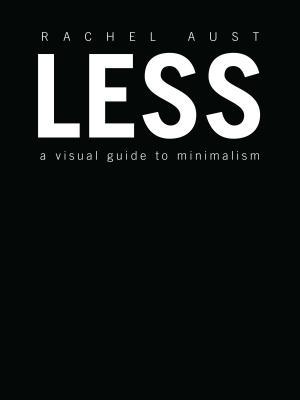
If that’s you, consider there is an easier way to be a minimalist. Start by having less. When you finish reading this, go and get rid of things in your house. For every new thing you bring in, throw out at least two things. You don’t need more different stuff. You need less of what you have. If you pursue Less, you may get to Minimal. Or better still, you will achieve Optimal.

For more on Less, get this book: “Less: a visual guide to minimalism”, by Rachel Aust.


On political consequentialists vs political deontologists (with a reference to Churchill and Andor)

In politics I believe it is common to talk of political pragmatists vs political ideologues.  What is less common is to talk about political consequentialists vs political deontologists. The two “vs” seem to overlap, but there are differences. The key difference is that political consequentialists and political deontologists make their decisions from an ethical viewpoint.

I was thinking of political ethics this week when there was a discussion around whether or not the Democratic Party in the U.S. should accept money from Elon Musk. As someone who is more of a political consequentialist, I thought: of course they should take his money, especially because it could help them win control of the U.S. government and for starters they could reverse the changes he has done. Then I read others who argued they would not take money “from a guy who does a Hitler salute” (i.e. is evil). I get that argument: they think they have a duty to never ally with someone as bad as Musk, and they must believe they can get money from elsewhere that does not conflict with their political duties.

There are pros and cons with either ethical approaches to politics. I tend to take a deontological approach when the consequences are difficult to measure, but when the possible outcomes are measurable, I tend to take a consequentialist approach.  For example, thinking like a political consequentialist, I might not vote for a corrupt politician or an anti-democratic politician, even if I think this will lead to good short term outcomes, because I believe there are potentially larger bad outcomes that come in the long term from having corrupt and anti-democratic politicians in power. But that’s a complicated calculus. Thinking as a political deontologist, I would simply not vote for a corrupt or anti-democratic politician because I have a moral obligation to support only those people who are not corrupt and are for democracy.

People can be on the same side of the political aisle and still argue. Sometimes they argue over the practicality of something. But sometimes they will be arguing for ethical reasons. Something to watch for.

P.S. More on the difference between consequentialism and deontology terms, here. Also this piece, which also adds virtue ethics to the mix.

P.S.S. The photo is of Churchill walking through Coventry. The moral question there was: if you have access to the secret communications of your enemies and you know they are going to bomb a certain city on a certain day, do you warn the people of that city, knowing that by doing so, you risk losing your access and potentially lengthening the war? It’s a question that also comes up in the TV series, Andor, where one character (Luthen Rael) sacrifices 31 men in order to continue hiding the fact that he has an informant in the Empire he is fighting against.

A good guide of how to create a web page with some css

If you want to create a basic web page with some css, I recommend you check out this. In no time you will have a web page structured like this:

If you want to have something even simpler, I have it here.

Of course you can use something bootstrap to make a nice webpage too. Indeed a page built with bootstrap is more flexible than the page above. For more on that, check this page out.

On the Open Benches project

Open Benches is a map of thousands of “memorial benches – added by people like you”.  Just type in a search request and see if anyone has dedicated a bench to someone or something, like people and their dogs. For example, this bench was dedicate to Veronica Calver.

You can find examples all over the world, including my town, Toronto. Thanks to the folks who put together this wonderful crowd sourced project.

P.S. If you want to first get a commemorative bench or tree in Toronto, you can get more information on that, here.


On Tyranny: the book (now with resources you can use)

Over on Timothy Snyder’s web site is a resources page where you can find free resources (posters, postcards, etc.) for you to use. Highly recommended. Also highly recommended is the book it came from: On Tyranny. That page also has links to web sites selling his book. It’s a very smart, very readable, and very useful book to own in these trying times. Get yourself a copy.

P.S. I think a resources page is a great idea. More sites should have one.

Restaurants loved and living: L’Express

L’Express restaurant: just the thought of being there again makes me happy. I’ve gone countless times in the last few decades. Whenever I am in Montreal, even if just for a day, I dine there. Everything about it is great: the bistro food, the great value French wine, the superb waiters, the classic decor, and especially the big jars of cornichons. I love the ravioli and the hanger steak, followed by one scoop of ice cream (preferably maple),  but I have never been disappointed with whatever is served.

I was worried about it during the pandemic, but they seem to have muscled through those lean times. No doubt because of its many fans who have been there since 1980, and who no doubt will still be going in 2080.

I suspect they will have even more fans now that Michelin has arrived in Quebec and awarded it a Bib Gourmand. While I am agree with Leslie Chesterman that Michelin got things wrong on their first swing at Quebec, the tire people did right awarding a Bib to L’Express. It truly is “good quality, good value cooking”.

So the next time you are in Montreal strolling the great street of St. Denis, pop in to L’Express, either to have some wine (it’s also a great wine bar) or better yet find a table, scan the wonderfully printed menu, and settle into a plate of savoury bistro food. You won’t be sorry.

For more on L’Express and it’s history, check out this piece in the New York Times.

(Photos here from the Times piece. For more restaurants loved and living, see here.)