
What you should think about when you think about The Feelings Wheel

If you have done any work on dealing with difficult feelings, you may have come across The Feelings Wheel. You can see a typical one here at the Calm Blog. It can be a useful tool in helping you precisely describe what you are feeling. For example, you might think you are often fearful, but if you think about it more, it could be a range of feelings you are experiencing, from insecure to nervous to scared (all similar but different in degree).  Being able to be precise about your feelings, especially your negative feelings, can help you deal with them.

The problem I have with some versions of the Feelings Wheel is that the feelings listed are predominantly negative. That’s ok for self help or therapy: you are trying to deal with negative feelings and having more ways to describe them is helpful.

I think it is good to have a range of ways to describe positive feelings, too. Even if you aren’t feeling them, it’s good to have a way to determine feelings that you would like to have. That’s why I was happy to find the Wheel below at the site YouthSMART, because it portrays more positive feelings. If you said you wanted to be more loving or joyful, it may mean feeling more Passionate or it may mean feeling more Excited. Having that vocabulary of feelings can help you move in a better direction, I believe.
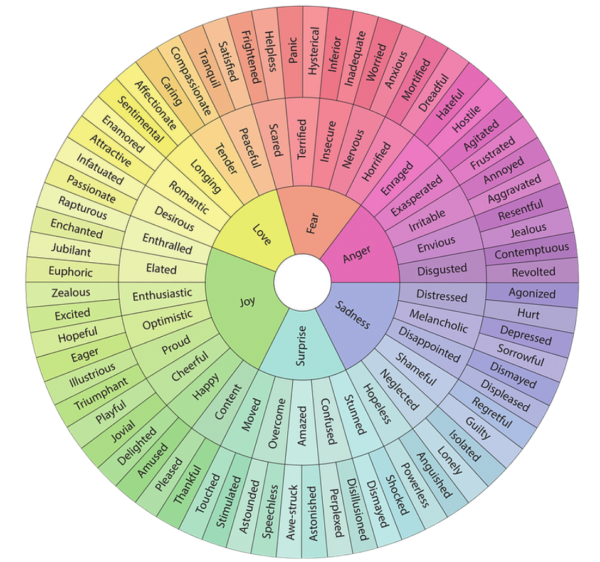
You can argue that there is only so much room on such a Wheel and I agree. What’s important is having a tool to help you understand what you are feeling and how you would like to feel. I find the wheel above is good for that.

(Image: link to image at YouthSMART.)

The feeling wheel: a great tool to help you assess how you feel

If you are in therapy or using some sort of mood log to assess how you feel, I highly recommend this tool: the emotional word wheel. It’s more than a fancy thesaurus. As the creator explains:

I work with people who have limited emotional vocabulary and as a result the intensity of their negative emotions and experiences is heightened because they can’t describe their feelings (especially their negative feelings). That’s why this list is heavily focused on negative emotions/ experiences. Being able to clearly identify how we are feeling has been shown to reduce this intensity of experience because it re-engages our rational mind.

I think it’s great, especially for men of a certain generation who have difficulty assessing how they feel and therefore have difficulty in dealing with it.

Speaking of mood logs, if you are interested in why you want to keep one, see this. Mood logs don’t have to be fancy: you can write your daily moods on post it notes for all it matters. And you don’t have to only write down bad moods: if you note the good moods, you can better understand what makes you feel good and look for ways to replicate that. That’s the goal for people like me.

You can find more on the emotional word wheel all over the Internet. The version I am referencing is here.

It’s Monday. Here’s a guide for teens to cope with anxiety that you too should read

Sign with the word Emotions on it.
Wait a second, you say. I am not a teen with anxiety, and I don’t know any. Fine, read this anyway: How to cope with teen anxiety | Psyche Guides

We all have a mix of bad feelings at all stages of our lives. You are likely reading this on a Monday: don’t tell me you don’t have some bad feelings right now. 🙂 The good news is that techniques used in CBT can help you deal with those feelings, whether you are somewhat anxious or depressed.

Not only that, but I think CBT can help people with feelings like being bored, disappointed or frustrated. Feelings you may feel weighing on you that don’t make you feel good. You can use it to shake yourself our of your current mindset which may not be helpful to you and move you into a better mindset.

Take those emotions that don’t make you feel your good self and move towards some better ones. Hey, it’s Monday: a good day to take a crack at it.

All the best.

(Photo by Alexas_Fotos on Unsplash)