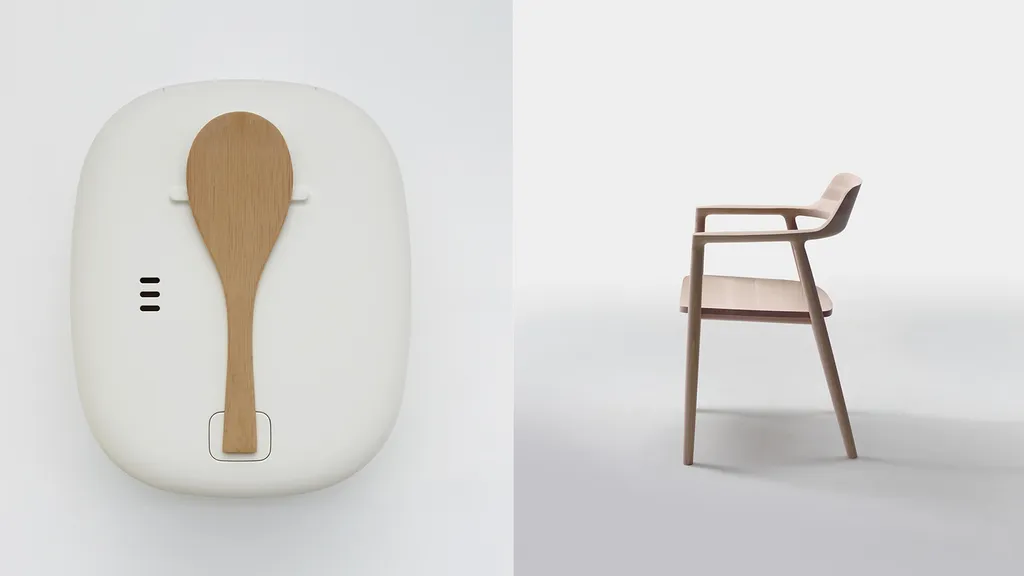
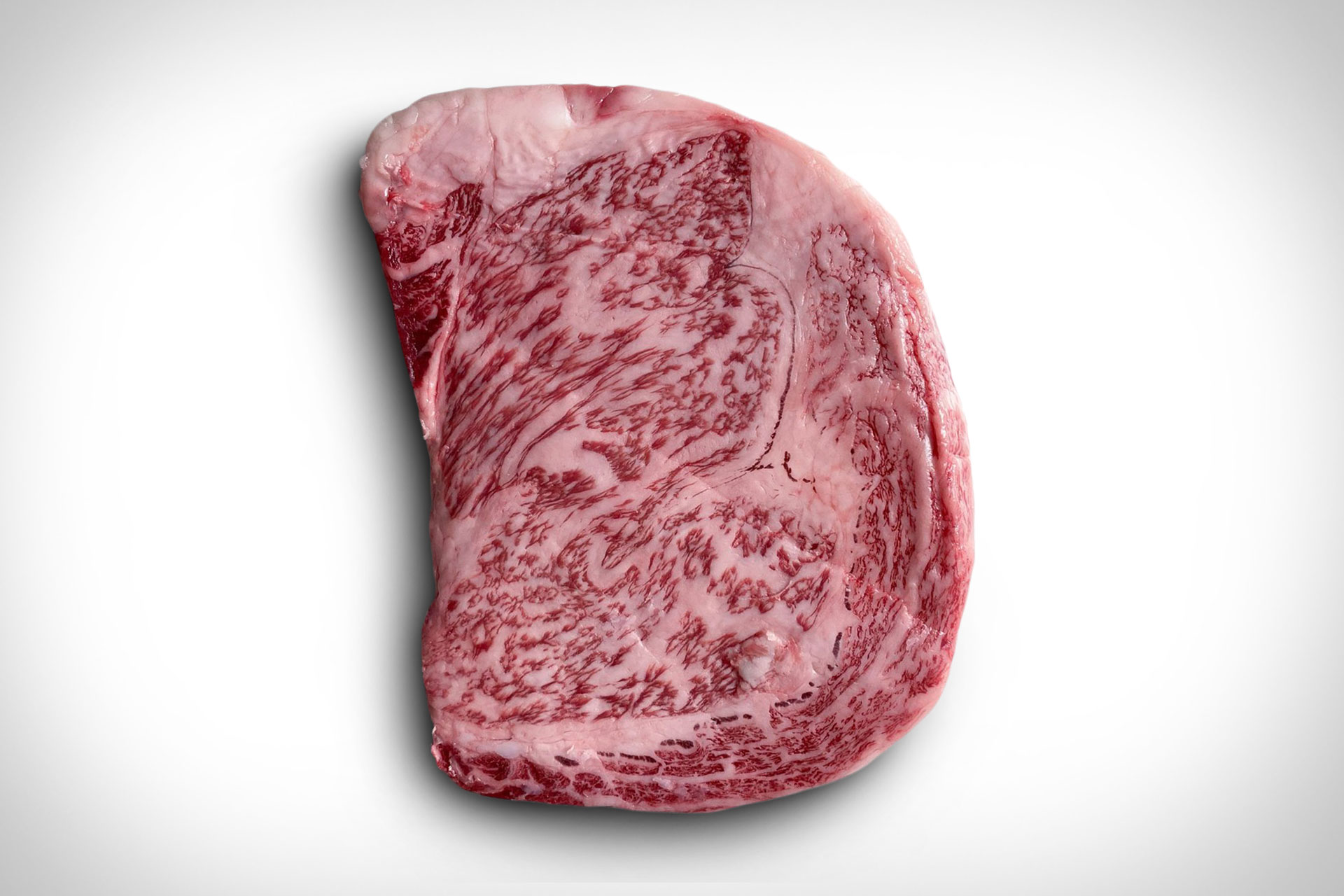
Recently I was doing some research on ikigai and kaizen and that research led me to collect these lists of ideas and concepts originating from Japan. I found they helped me reflect on life in a new and better way. I also found they could help anyone not already familiar with these Japanese ideas, so I give you:
It seems only yesterday that Kenneth Branagh was wowing us with his version of Henry V. Now instead of playing one of the younger Shakespearean lead roles, he is playing one of the oldest, as he gets ready to direct and star in a new production of King Lear on London’s west end. I am sure it will be a huge success. Shakespeare has been good to him, and vice versa.
Reading that, I started to think about some of the pieces I’ve collected on aging. For example, if you or someone you love is wondering how to manage living in your home as you get older, then read this.
As we age, we hope we can retire. And by retire, we hope to work less if at all. Sadly, in some Asian societies “Retirement” just means more work. That may not be a fate limited to Asian countries, I fear.
What do you need when you get older? An old person project! Let John Demont explain. Or if the thought of getting older and wrinkled bothers you, read about preventative botox . To each their own.
P.S. I could not close out without including one of my favorite movie scenes, with a very bright and brash Branagh rallying the troops with his truncated version of the Saint Crispin’s Day speech:
I love that speech, that scene, and his portrayal of it.
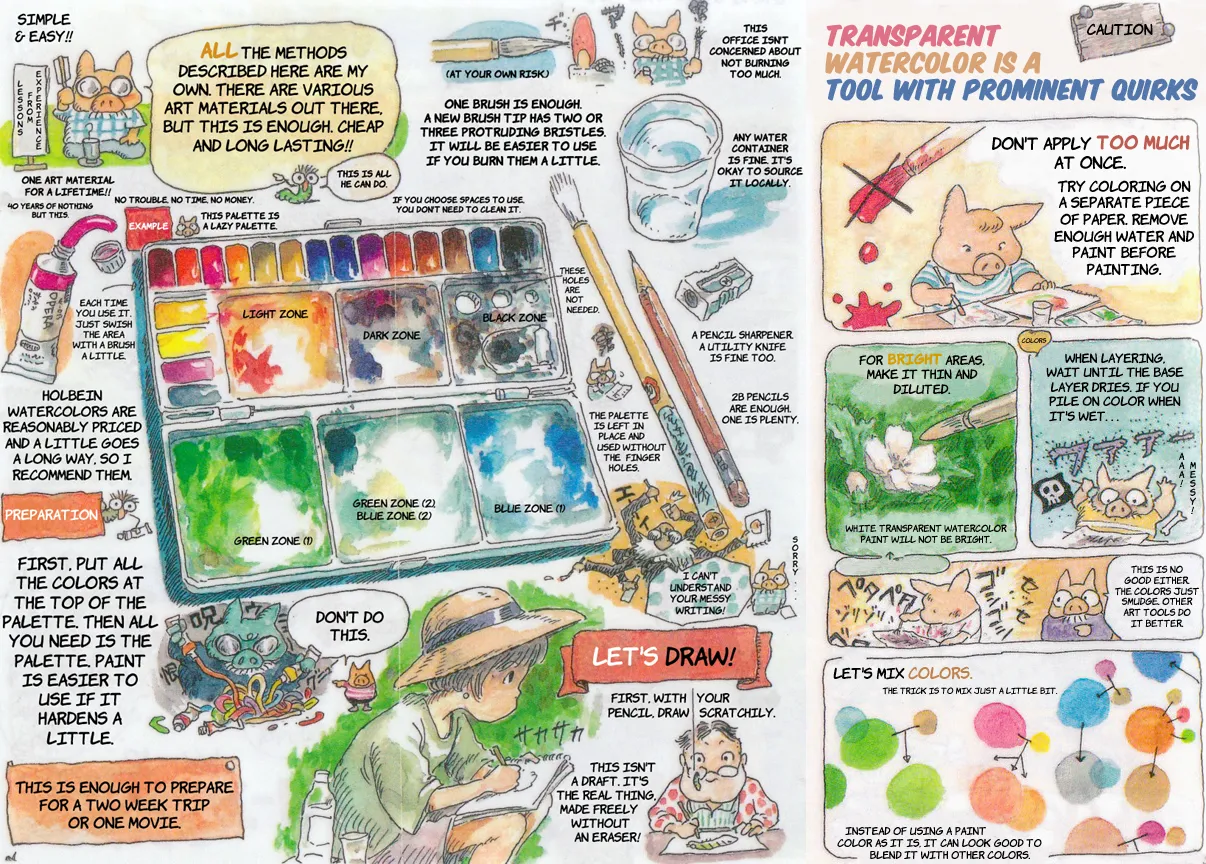
Ok, maybe this lesson on “How to Paint Like Hayao Miyazaki” will not result in work of his stature, but it was interesting to see how basic his technique is. Great work, simple approach.
This article on Netherlands-based designer Teun Zwets who makes storage from residual or waste materials is inspirational, I thought. Look at how beautiful they are.
Maybe making art from discarded things is a good inspiration for you, too.
Need more inspiration? Read this, which has famous artists talking about how to be an artist.
For some time I have been practicing a simple form of mindfulness to deal with stressful thinking. It’s a good skill to practice, and while I am not an expert, it has helped me deal with anxiety.
However as this article reminded me, mindfulness as it is practiced in Japan is much more than that. Mindfulness is a way of being present. Of being aware. Of appreciating the transient nature of our lives and thereby enriching them. Japanese people have mindful practices woven through their lives. I think we could all gain from adopting these practices. Read the piece: I am sure you will agree.
P.S. I have adopted the practice of shisa kanko (literally ‘checking and calling’) and have found it helpful in making sure I do things properly. It’s a very different form of mindfulness than focusing on breathing, but it comes from the same source.
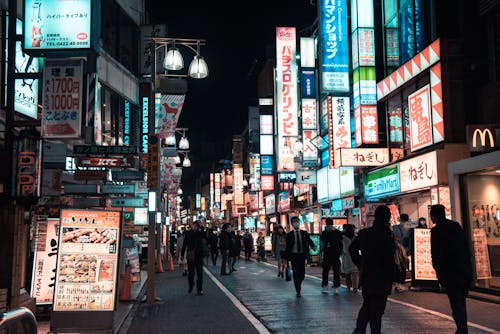
When I think of Japan, I think of cherry blossoms, Mt. Fuji, busy Tokyo streets, temples, sushi, and a homogenous society with very few outsiders. It turns out the last one is not really true. To see what I mean, read this: How homogeneous is Japan? – Noahpinion.
The author, Noah Smith, has depth when it comes to things Japanese and it shows in that piece. I highly recommend him in general, not just for things about Japan. But if your ideas of Japan haven’t changed in some time, that piece will give your brain a much needed upgrade.
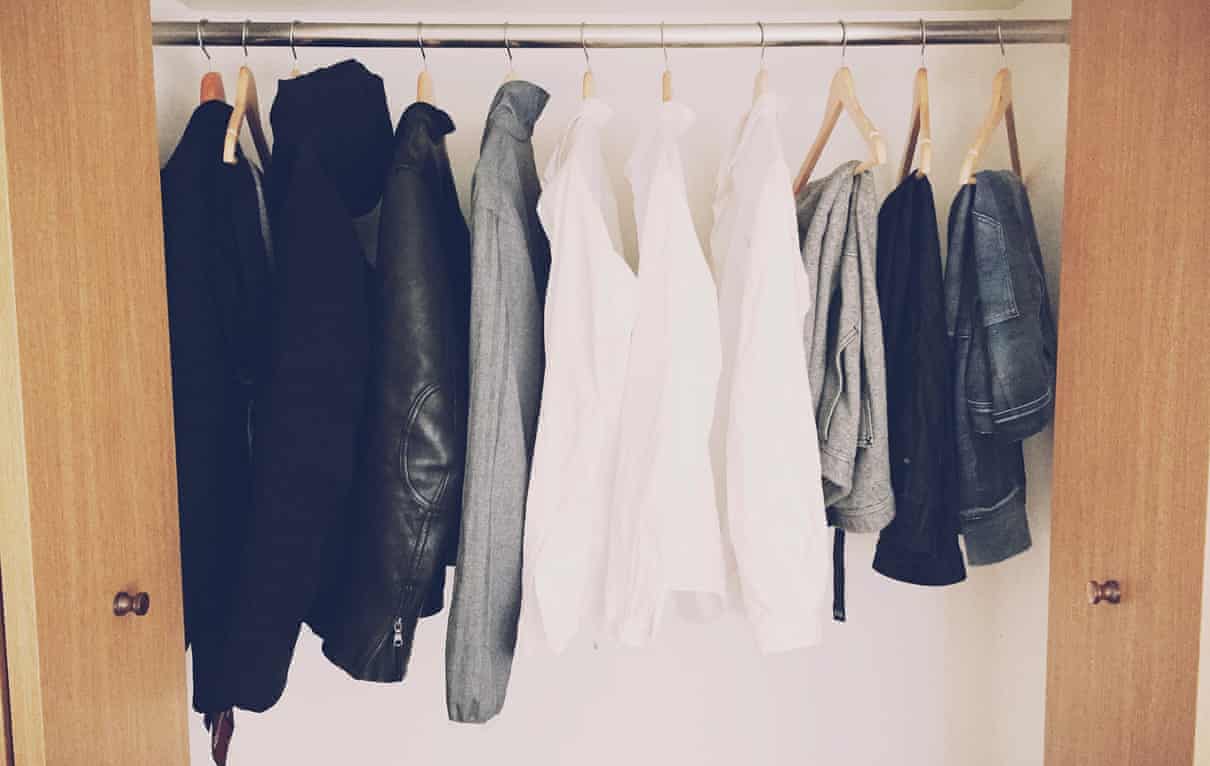
I suspect the simplicity of it appeals to me too. So much less to manage. But then I would get bored of wearing the same clothes, like this:
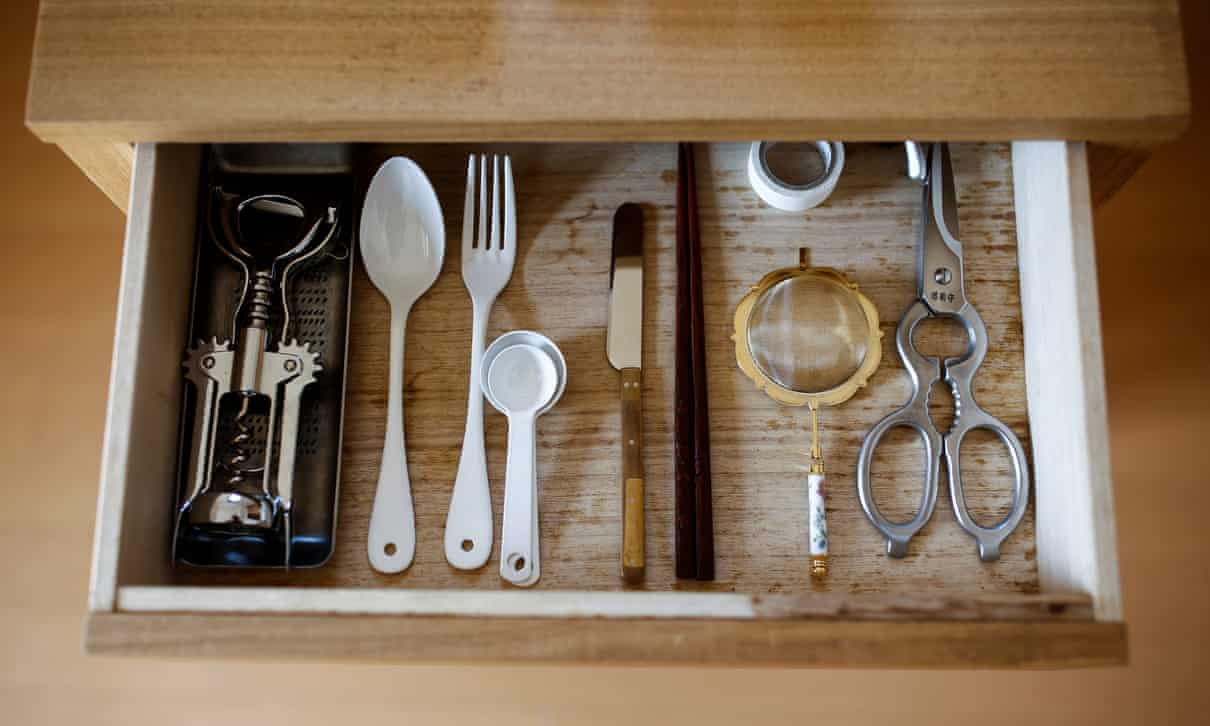
Likewise, a kitchen with this many things in a drawer seems great. No clutter, no struggling to find things, or manage things
But then I think that a kitchen is a workshop and like any good workshop, you need supplies and tools to be effective.
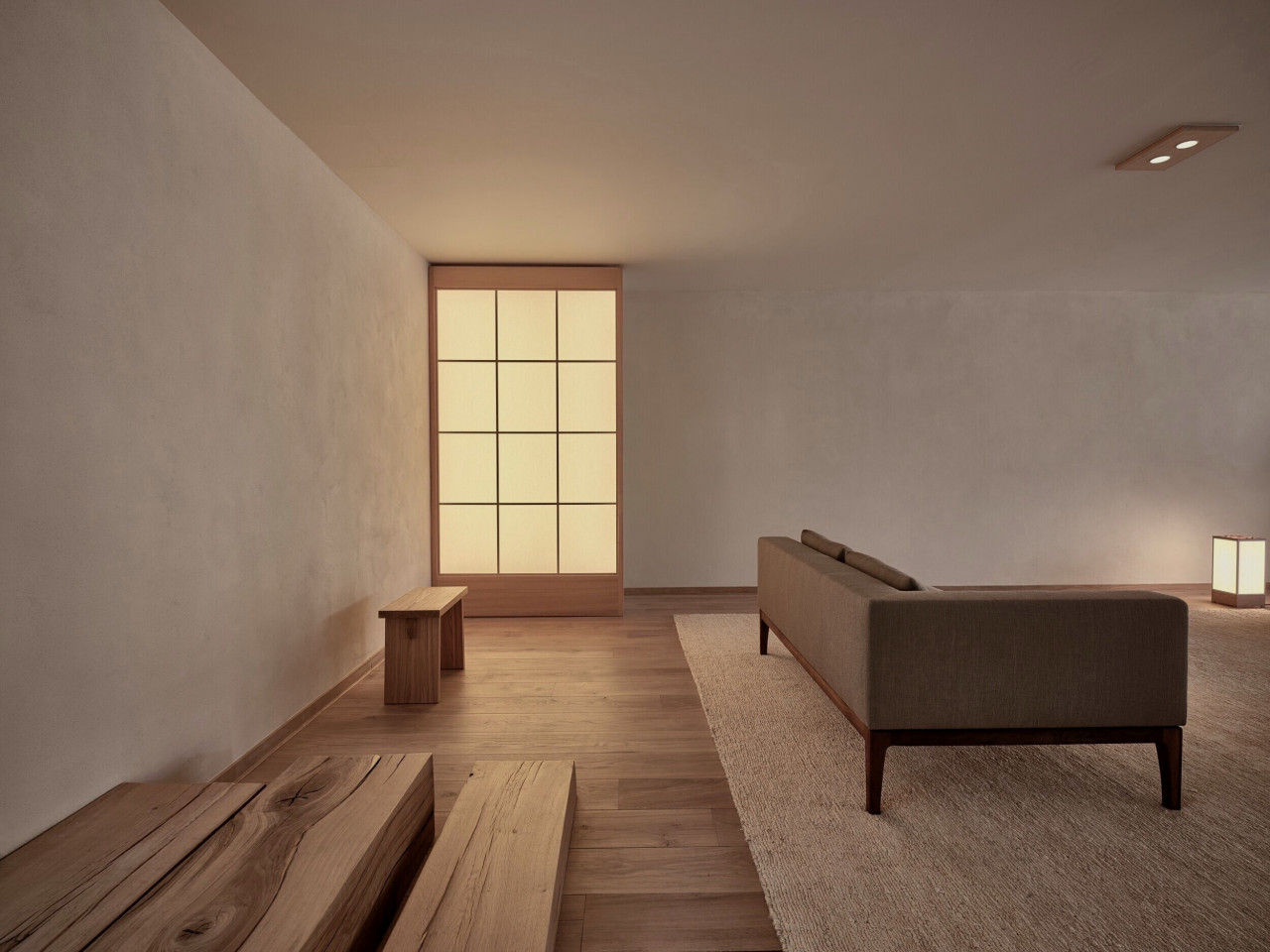
So when I read pieces like this, about Japanese hardcore minimalist, it lures me in to thinking about it for awhile. Then that dream fades.
I am not as anti-minimalist as the author of this piece. But I think they raise some excellent points. Then again I have read the book Goodbye Things and thought it worthwhile.
I suspect that my odd fascinating with minimalism will live on for some time.
My feeling is they have expanded past the point it is sustainable, and now they are going to have to adjust. Hopefully they can adjust: they are a good company and they could be as big as IKEA or H&M. Or they could go bankrupt. The next few years will show which direction they go.
Reading this, Japan’s Prisons Are a Haven for Elderly Women – Bloomberg, you realize just how terrible prison is as a means of solving any social ills. All of the women in this piece could have better ways to deal with their problems. They lack money or social connections, and prison is the worst way of providing those. Yet that is where they go to solve their problems.
It’s a good piece. And a good reminder of why with a few exceptions, prisons are a poor way to deal with problems.
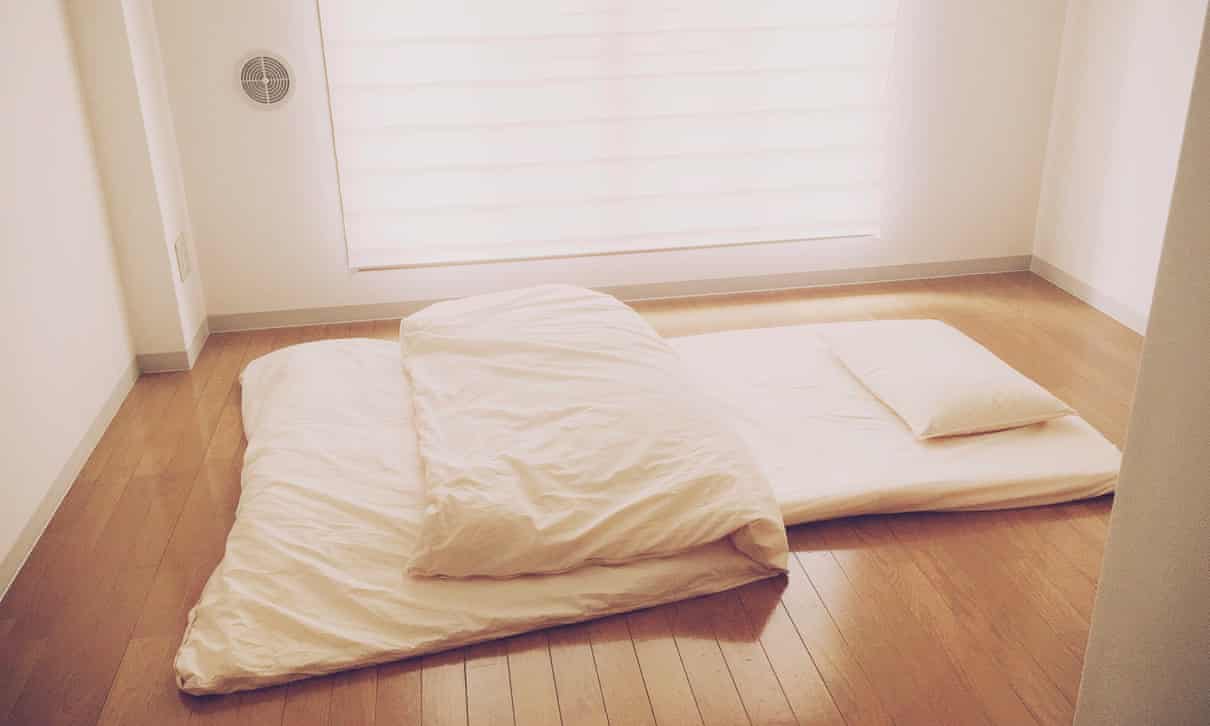
Minimalism is a foreign concept to some Westerners, especially as it is practiced in parts of Japan. Indeed, this line:
Fumio Sasaki’s one-room Tokyo apartment is so stark friends liken it to an interrogation room. He owns three shirts, four pairs of trousers, four pairs of socks and a meagre scattering of various other items.
You see “interrogation room” and “meagre”, which gives you some insight into how this writer sees it. The article which this comes from (and which is linked to below) does get more insightful and you gain a better insight into Japanese minimalism, from its cultural roots to its practicality (such as the real problem of how earthquakes make home objects dangerous).
Minimalism seems to be growing as a cultural concept throughout the world, and it’s good to know more about it, how the Japanese see it, and to think about how it should differ in Western cultures. To do that, see: