Venus if you will (What I find interesting in math and science, May 2025)


Venus

Here’s a number of pieces I’ve gathered in the last few months related to science and math that I found worth sharing. A few of them require deeper knowledge on the topic, but many of them are suitable for anyone to read.

in the area of space and astronomy:

Moving on to biology:

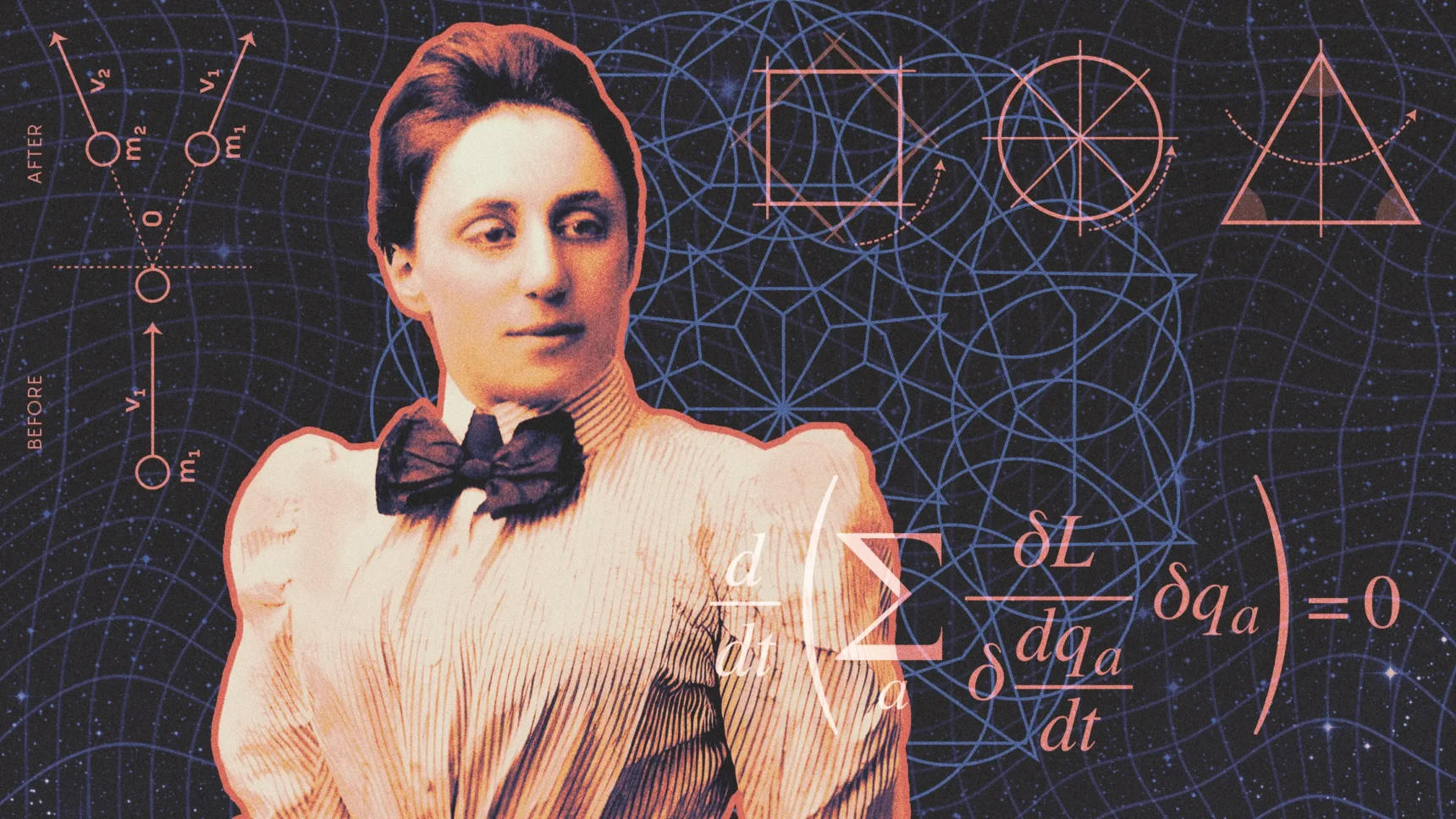
Emmy Noether

Regarding mathematics, physics and more:

(Photos – Venus, seen by NASA’s Mariner 10 spacecraft in 1974.Credit: NASA and Emmy Noether Credit: Kristina Armitage/Quanta Magazine)

Race to the moon! (What I find interesting in math and science, November 2023)

Space: Well there has been plenty of space missions in the last while.

India has made great progress with their space missions, including successfully landing on the moon. The New Times has a piece on their moon launch here. It’s an exciting development! You can read more on it here and here. And India is not just going to the moon: they have mission going to the center of the solar system. Great to see all this activity.

Unlike India, Russia has been less successful, with their spaceship crashing on the moon. More on that, here. Space is hard.

Meanwhile,  Japan is aspiring to be doing work on the moon, too. More on the all the participants in the moon race here.

As for private space exploration, the Times has a piece on an alternative group to SpaceX that are making progress here. Good: we need an alternative to Musk’s company. Speaking of alternatives, here’s more on  Virgin Galatic’s recent progress. And this asks the question: How long will Jeff Bezos continue to subsidize his New Shepard rocket? Maybe if NASA goes with this new way of doing  moon missions with his Blue Origin organization. 

In other space news, here’s something on the new crew for the space station. This is a new theory on galaxy mergers that could shed light on how galaxies evolve.

Other things on space that I loved was this piece:  Our Galaxy Is Home to Trillions of Worlds Gone Rogue. Also this dazzling view of the Milky Way from southern Africa. I love this too:  Microsoft has an introduction to Python programming by taking on assignments inspired by NASA scientists to prepare you for a career in space exploration. A great collaboration.

Here’s some less than loveable space story I read. For instance, this is bad:  Space junk is on the rise, and no one is in charge of cleaning it up. More on that, here. Also not good: what a long term mission in space does to the human body.

Physics: this is a good explainer on quantum entanglement. Relatedly, if you thought quantum mechanics was weird , check out entangled time.

Here’s something on a study combining continuum mechanics with Einstein’s field equations. Worthwhile.

last but not least, if you want to learn or relearn physics, then head over to Susan Rigetti (nee Fowler)’s great site, here.

Math: three good math pieces: 1) a good introduction on lagrangian-mechanics 2) something I liked on Multivariate calculus 3) Also this on mutlivarable calculus.

Biology: I thought this, on our golden age of medicine was good. As was this piece on newly detailed nerve links between brain and other organs  and how it shapes thoughts and memories.

Three cool watches: present, past and future

I’m not a watch guy, but Timex’s Reclaimed Ocean Plastic watch (above) got my attention. According to uncrate.com:

Its lightweight 40 mm case is made from upcycled, ocean-bound plastic collected from the coastlines by fishermen. The waste is then washed, shredded, and shipped to Switzerland on carbon-neutral transportation, where it’s repurposed. The material gives the piece a speckled texture and is complemented by a matte black dial with contrasting white handers and numerals.

Given that “at least 14 million tons of plastic end up in the ocean every year”, this sounds like a smart use of materials by  Timex.


If you want something more classic, here’s a story on the Hamilton eatch featured in the latest Indiana Jones film. I had one like it: it’s a fine timepiece.

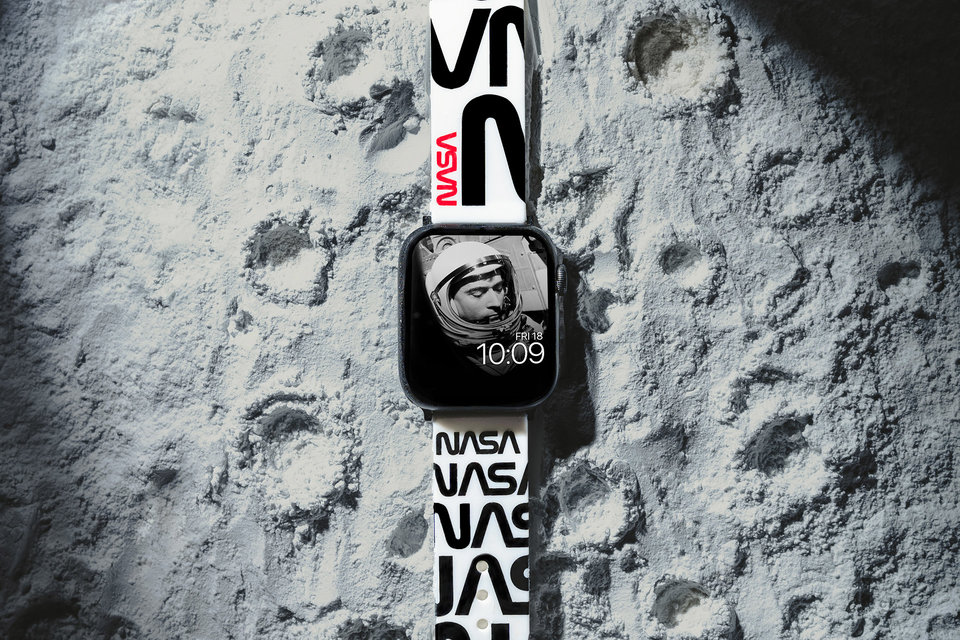
Finally, if you are an Apple Watch owner like myself and want to go with an aeronautic theme, consider the MobyFox NASA Apple watch bands, seen below:


Trips to Uranus! Roundworms with the munchies! And much more! :) (What I find interesting in math and science, May 2023)

I continue to find interesting things in the area of astronomy, math, physics and more. Here are some of the best of them. I hope you like them! (Yes, there will be stoned earthworms, and something about Uranus. :))

Space missions and exploration: I am excited to see so many different countries sending space missions to a wide range of areas and planning more. Europe has sent the mission  Juice to go explore Jupiter.  And yes, NASA wants to explore Uranus. (Although here’s why that won’t happen until the 2040s. Hey, it’s far.)  Japan is trying to get in the game, though their rocket had some recent failure.

Venus is a tough place to explore, though not impossible. Here’s a good piece on how it could be explored using  balloons. In the meantime, NASA is using data from  Magellan to reveal volcanic activity on that hot planet. The more knowledge, the more likely a future visit will be successful.

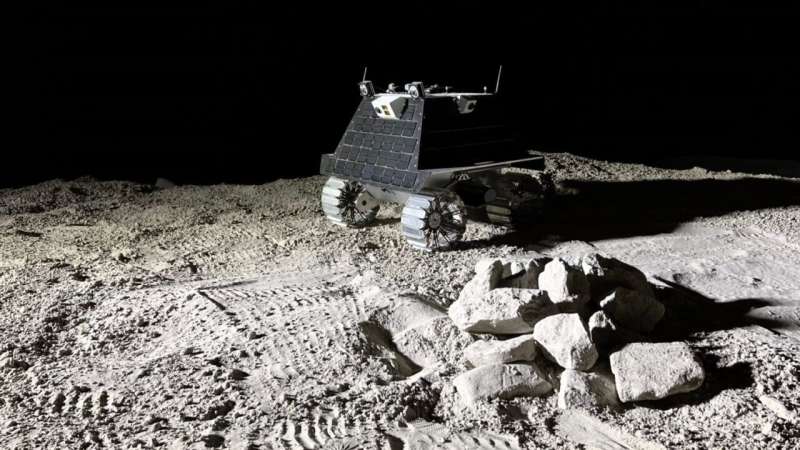
As for other countries, I am glad that Russia will continue to use the international space station for some time. Let’s hope that doesn’t stop. As for my home country, Canada is working on it’s first ever canadian lunar rover! (see below)

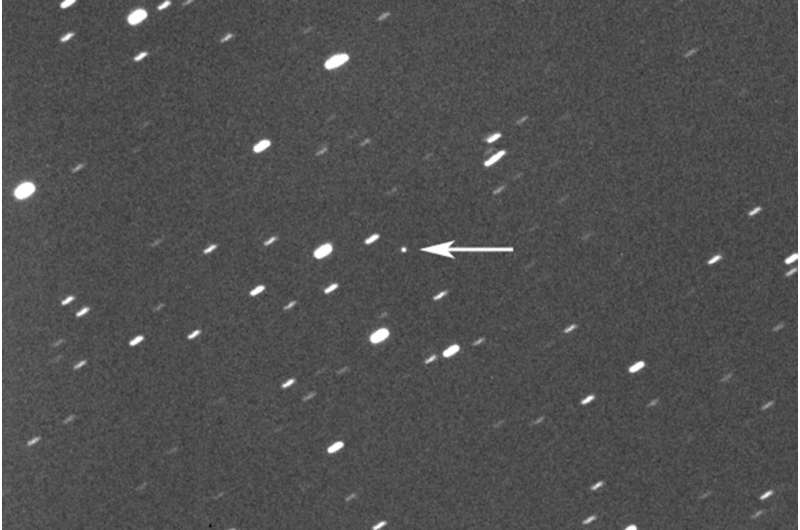
Elsewhere in space: while we humans go out into space, space also comes to us. For example:  Asteroid 2023 BU is a space rock that passes closer to us than some satellites. Yikes.

And it’s not the only rock. Above is a photo of another large asteroid passing by.

As for other space objects, here’s two good pieces on black holes:  scientists discover ultramassive black hole 30bn times the mass of the sun plus this typing black holes and dark matter.

This is cool: you can be an amateur astronomer and help the pros. Check it out. Also cool is this piece on how John Glenns basic camera forced NASA to rethink space missions. Plus, here’s a good piece on using  AI in astronomy.

Mind blowing physics: If you are interested in quantum physics, read this: four common misconceptions about quantum physics. This is a good reminder that everything in physics is made up, and that’s ok. Oh, and physicists are starting to think space and time are illusions.

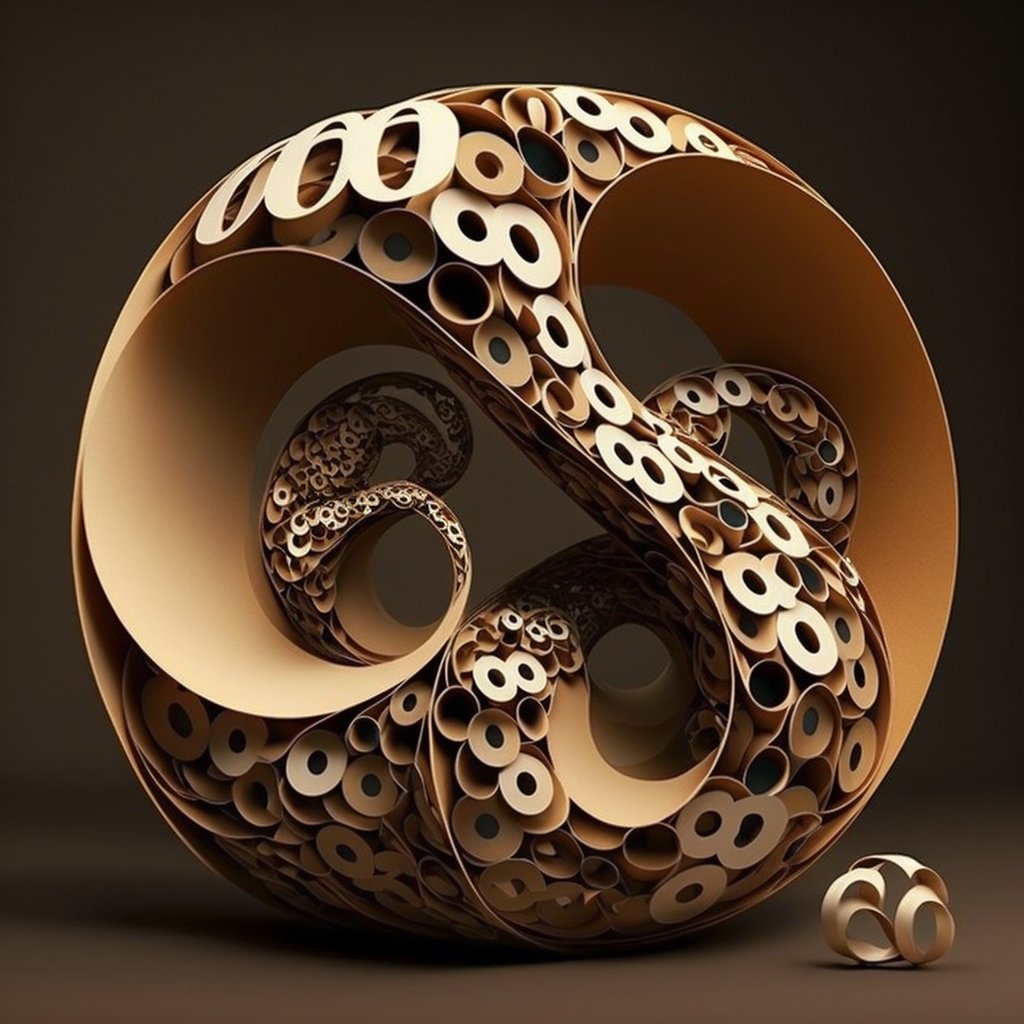
Math: What do you get when you cross math with the AI? Some excellent illustrations, like the one at the top of this post! More here! This is also excellent: Ideas of Calculus in Islam and India. I enjoyed finding out that you can use the lagrangian function in managerial economics. Neat! If you want to learn more math, I highly recommend these No bullshit guides.

Can non-mathematicians learn and appreciate math? This piece looks at some books on  math education that try to do that. The jury is out, though I think it’s possible.

Finally: this is a good reminder that I don’t think we  really understand the nervous system, if you can have memories without brains. Speaking of lower lifeforms:  Roundworms on weed get the muchines.

I hope more people read this on Chien-Shiung Wu and the little known origin story behind the 2022 nobel prize in physics. 

And what’s this?

Just an introduction to the TV show, The National. Back then letters like that indicated The Future. I had to find a place to show them on my blog! 🙂

All the exciting things happening in space in 2023. Read this and mark your calendar!

If you interested in space as I am, then get out your calendar and mark down 2023’s top astronomical events so you don’t miss any of them. As WaPo says, “With opportunities to wish upon shooting stars, and to see a Super Blue Moon and the Ring of Fire eclipse, 2023 is bursting” with things to keep an eye out for.

One thing in particular is lunar exploration. First up is, NASA’s Artemis mission. As the Verge explains, an Orion spacecraft that is part of that mission has recently returned and safely splashed down into the Pacific Ocean after a recent trip. A good start! And Artemis promises great things in the future. Not only is it part of NASA’s plan to return visits to the Moon, it’s part of NASA’s plan to never leave. The dream of space colonization could become a reality.

And it’s not just the Americans that are interested in going and staying on the moon. The Chinese are too. Who knows what will take place in the next 10-20 years? It’s all very promising.

With all this space travel, this should keep not just government agencies busy, but private companies too. Case in point: After doubling launch record in 2022, can SpaceX take another step up in 2023?

Heck, even you can get involved. Don’t believe me? Then read this: NASA Wants You to Help Study Planets Around Other Stars.

Meanwhile back on Earth, there’s a lot of interest in tracking asteroids coming close to us. NASA and others are getting a handle on tracking the big ones. The smaller ones are much harder. Here’s a piece on one such asteroid 2023bu that recently blew by us. (See the arrow in the photo above pointing to it.)

For my last space piece I want to highlight, this is a worthwhile read on why some people have an issue with the latest space telescope being named after James Webb. You can find many such pieces arguing back and forth on the matter. I think both sides have worthwhile points. I’ll let you make up your own mind.

Not space related, but fun is this piece on how bees actually play — yes play! — with little wooden balls!

Finally, for people interested in physics, this is a good piece discussing where it is headed. One such. direction is the study of dark matter and dark energy.  Here’s a good piece on a dark energy experiment that recently won a big prize. We need more such experiments if we are ever to solve the mystery of dark energy and matter.

Love and rockets (things I find interesting in math and science, Dec. 2022)

In the last few months my math and science reading has mostly been about space, with some smattering of other things. NASA in particular has been the focus. First up is a piece on the DART Mission which smashed into an asteroid and altered it’s path. No small feat, that. In other big feats, they are still in the planning stages of a a balloon mission to Venus . Given that landing on Venus results in a spacecraft being destroyed, a visit that stays in that planet’s atmosphere may be the only way for it to succeed.

One such mission that should definitely succeed is Artemis, NASA’s project to visit (revisit?) the moon, Here is the NYTimes on it. Relatedly, here’s the Atlantic with a piece on the the 50th anniversary of Apollo. We are clearly due for a return trip. I wonder if it will affect the new astronauts as much as it did William Shatner after his quick trip into space with Jeff Bezos? I suspect they will be more prepared than the TV astronaut was.

Speaking of space, here’s cosmologist Katie Mack talking about scenarios for the end of the universe. I got her book last Christmas and loved it. Another book on physics I want to read is by Sabine Hossenfelder . She’s a no nonsense type of scientist, which I think is good. For while I agree that when it comes to science and especially physics, there is no escaping metaphysics, I also agree with those who say that physicists sometimes get carried away with some of their loftier or wild ideas.

Then again, some of those ideas resulted in this year’s The Nobel Prize . And it had led to physicists creating “the Smallest Crummiest Wormhole You Can Imagine”. These wild ideas really makes you think. If you think too hard, though, you will likely get tired. The Guardian has a good explanation on why thinking tires your brain .

Finally, if you are interested in learning more about physics, I recommend you check out the web site DrPhysicsA. It’s good stuff. And you want to learn more about math, you can visit the blog of one of the best mathematicians in the world. Here is is writing on odds. Also good!

Forget going to Mars. Go to Iceland

I think going to Mars is a terrible idea, but if you are the opposite of me and would love to experience that, I have a suggestion for you. You can get the experience of going there today by going to…Iceland. NPR explains:

Iceland is like Mars — if the Red Planet had hot tubs. That’s the cheeky idea behind a new pitch from Iceland’s tourism board, which says people don’t need a spaceship to see otherworldly sights like red rocks, black sand and subglacial volcanoes. Plus, they note, oxygen is abundant in Iceland. To drive home the message, they launched a promo video and a space billboard with the tagline, “Iceland. Better than space.”

See? All you need is a plane ticket and a place to stay and you can go to Mars next week. If you think the tourism people are just making stuff up, listen to NASA. NPR again:

NASA agrees: the agency has repeatedly used Iceland as a stand-in for the Moon, and it’s doing so again as it prepares astronauts for new missions off-world. “Iceland is an amazing analog for both the Moon and Mars,” says NASA’s Kelsey Young, who researches the exploration of planetary surfaces and who has done geologic fieldwork in Iceland.

For more on this, see the NPR article, here: Iceland says it’s better than space. We asked NASA about that.

What’s new in space? Lots!

While space is very old, some things happening in space are very new. For example, the James Webb Telescope. After much planning, it was recently made operational and started to send back amazing photos (like the one above). You can see more of them at Colossal and the official site of the James Webb telescope. To give you a sense of how great the new telescope is, here’s a piece showing side by side images of the Hubble telescope with those from the James Webb . A dramatic improvement (and the Hubble images were still great).

In other good news, NASA is going back to the moon. I am very excited about this. In not so good news, Russia says it will quit the International Space Station after 2024. Let’s hope the Space Station can survive this form of fracture.

P.S. Not news at all, but here’s a “fun” study of asteroids hitting earth. Hey, it’s space related! 🙂

(Image: link to image in Collossal)


Great photos from NASA/ESA’s Hubble telescope and the ESA mission to the sun

While people are getting excited about the James Webb Space Telescope now it is in position to take photos, there is still some great work being done with other missions that NASA and ESA have on the go. Case in point, the Hubble telescope. If you click on that link, you can see photos that it recently took of the star Earendel. As they explain:

With this observation, the NASA/ESA Hubble Space Telescope has established an extraordinary new benchmark: detecting the light of a star that existed within the first billion years after the Universe’s birth in the Big Bang (at a redshift of 6.2) — the most distant individual star ever seen. This sets up a major target for the NASA/ESA/CSA James Webb Space Telescope in its first year.

Fantastic!

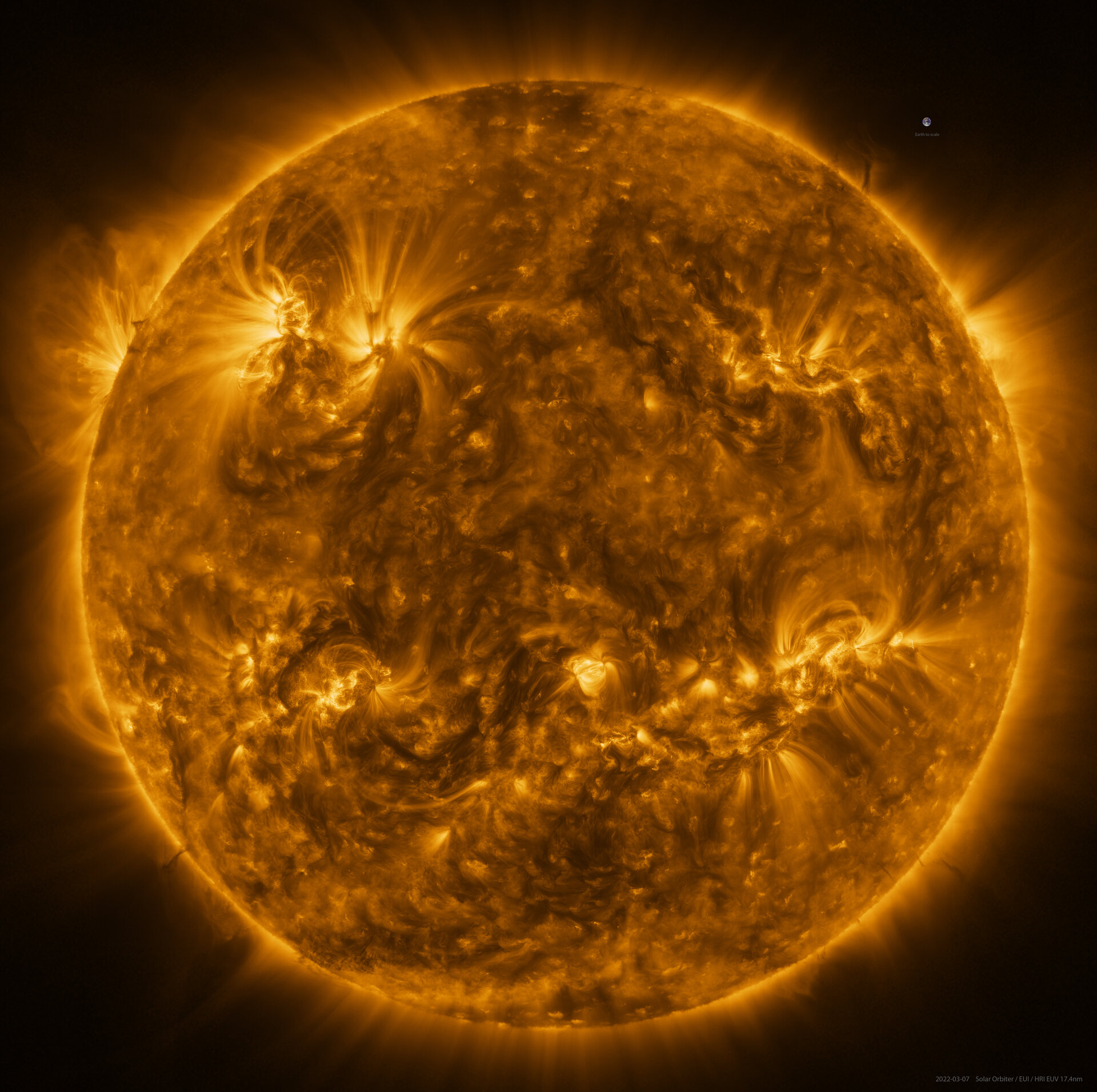
Meanwhile, closer to home, we have the ESA mission zooming into the Sun with Solar Orbiter and sending back wonderful photos and data along the way. Click the link to get some amazing images of the sun.

It’s all thrilling!

The New Space Race!

I was a young boy for the first space race in the 1960s and 1970s. After that the pace of space exploration seem to decrease. Recently, though, that pace has picked up, as the Times shows, here: Big Rockets, Massive Asteroids and More Space Highlights for 2022 – The New York Times.

So much happened in 2021, and 2022 seems to be just as busy. We have the James Webb Space Telescope,  China building the Tiangong Space Station, NASA’s attempt to deflect an asteroid and much more. If you go to that article, you can subscribe to The Times Space and Astronomy Calendar and keep up to date of everything going on.

Sure billionaires jaunting into space grabs our attention, but there is so much more going on than that, and unlike much in the news, space exploration is fun and exciting to follow. Join the new Space Race!

On exploring Jupiter’s Red Spot

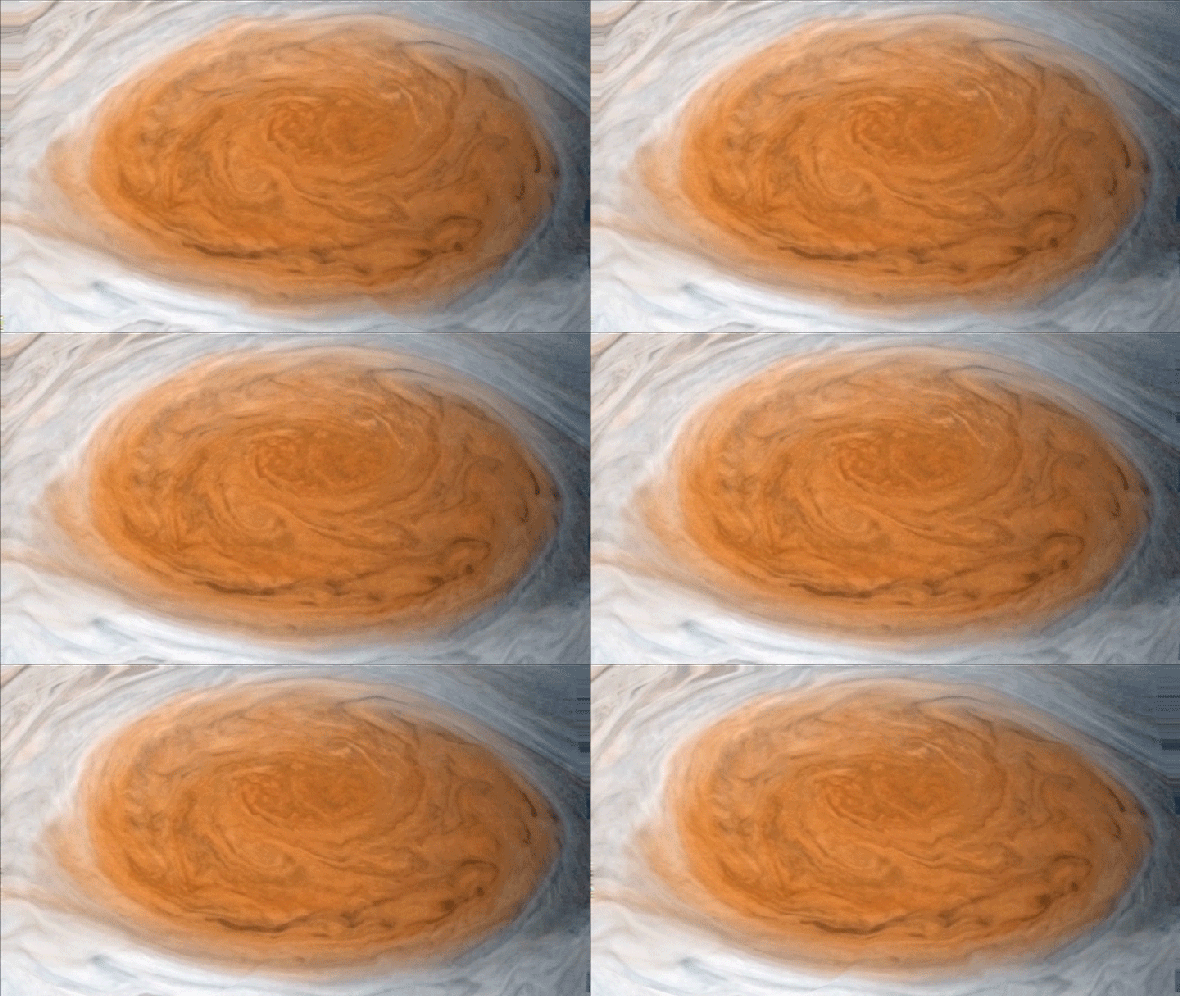
Despite having telescopes being able to observe it, there’s still much to learn about the Great Red Spot of Jupiter. To do that, NASA sent a space craft to the giant planet to learn more about it. The story of that can be found here: Jupiter’s Great Red Spot Is Surprisingly Deep in Scientific American. It’s one of the many awesome things NASA has on the go in our solar system and beyond.


On the big anniversary of the Lunar Rover

Lunar rover

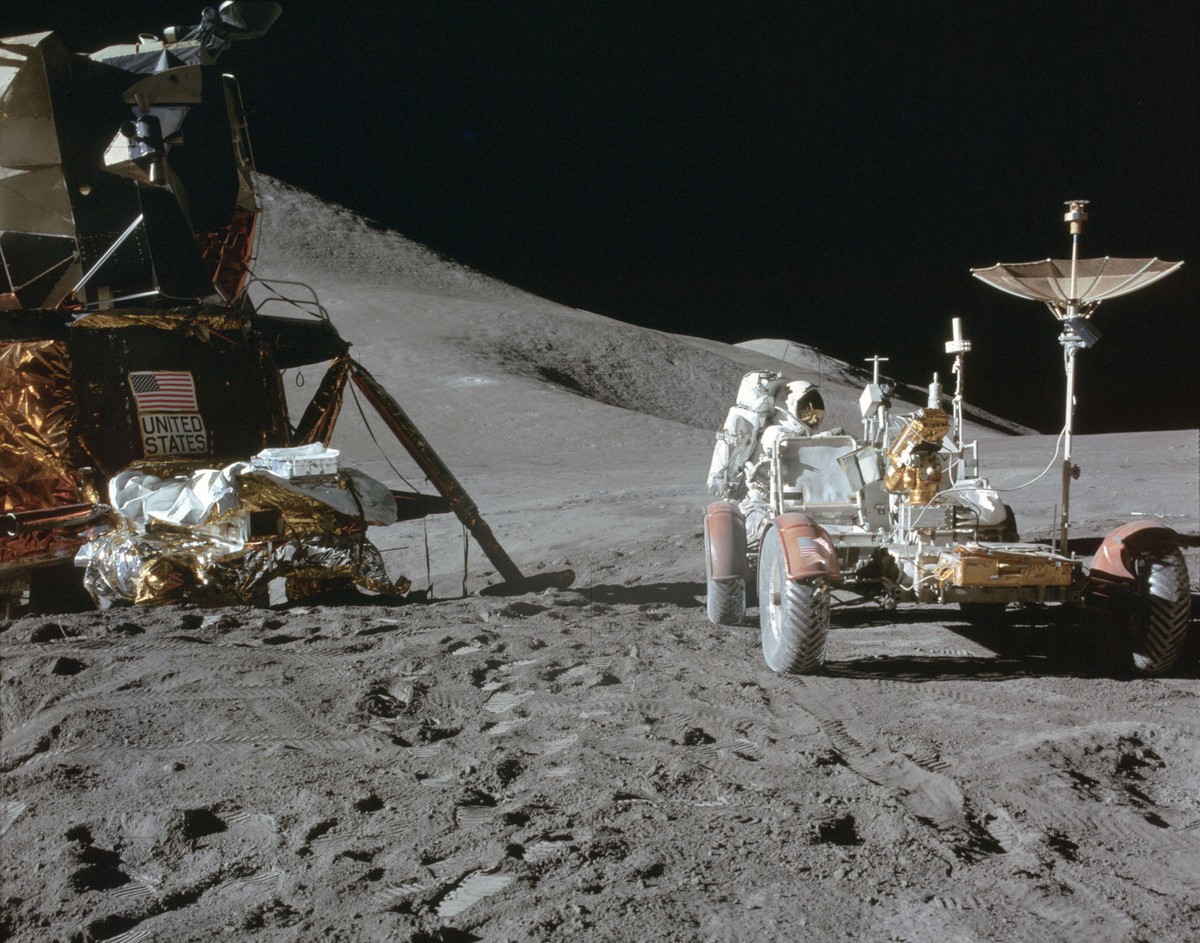
While there has been a lot of talk lately about space travel due to the billionaire space race, I want to highlight something people rarely mention but should. It’s that it is the anniversary of  Apollo’s First Lunar Rover, Driven 50 Years Ago. The Atlantic has a great story on it, including amazing photos.

It’s crazy to think that not only did we land on the moon, but we brought a car with us to drive on the moon! That’s amazing, to me.

In the film Ad Astra with Brad Pitt, there’s a great chase scene with Lunar Rovers. Nothing quite so exciting like that happened during the Apollo missions, but the fact that we brought a car to the moon is exciting as it is. Plus it is still parked up there! I hope the parking rates aren’t too expensive 🙂


5 or 10 thoughts on the billionaire space race

Image of Jeff Bezos blasting into space

Jeff Bezos blasted into space today with three other people. Everyone, and I mean everyone, has an opinion about it. Even Variety magazine did. (That’s worth a read BTW).  So fwiw, here’s 1o things I thought about it:

  1. It’s good to see more interest in space in general. NASA and other space agencies do plenty in terms of space exploration, but often it is overlooked by people. Suddenly — for better or worse — people are talking about space again.
  2. It’s good to see money being spent on space travel. NASA has suffered for years with cutbacks. Decades. Here’s to more money being effectively used in space.
  3. These flights of Branson and Bezos are small steps in terms of space travel.  They are miles behind SpaceX even, never mind NASA or other space agencies. As we like to say in business: it’s a good start (implying there is a long way to go).
  4. Small steps can lead to big steps if they continue to pursue this and pour money into it. That’s a big if. Like any space exploration, it is hard to continue to make people interested in it after it starts to seem repetitive. They might find it much harder to get space tourists to pay a small fortune their 10th or 15th flight. Never mind after the first person dies (and someone will).
  5. Even if everything goes well, it could still fail  in the longer run. The Concorde failed and it was much simpler technology than this stuff. Not everything that is the best and fastest gets to succeed.
  6. I can’t see the ROI on space travel. Musk and SpaceX can get away with it because they have a client with the money to spend on it (i.e. NASA). Not sure if Bezos can wrestle some of that business away. Then again, perhaps there’s a global market for these services.
  7. I think there would have been a much more positive reaction if it wasn’t Bezos or Branson leading these endeavours. Give Musk credit: he lets the real astronauts do the work. Plus none of these men are inspiring to most people. They aren’t John Glenn or Neil Armstrong: they are billionaires. Bezos was at least smart enough to Wally Funk with him: that was a good distraction from the other members on his team.
  8. It will remain to be seen if they can catch up to Musk, or if they are even interested. Musk can act the fool, but he seems driven to push private space exploration to the limits. I can see Branson dropping out soon once some other thing comes along. Bezos is a bit of a mystery to me.
  9. People are criticizing them for spending money on space rather than here on earth, but Bill Gates spends his fortune on such things and he is criticized mightly for it. It’s a no win in terms of spending your money. They all should pay more taxes. (Although a lot of tax money in the US goes into the military budget. That’s a different but related issue.)
  10. Here’s to more inspiring people going to space soon, and to more inspiring space travel. Let’s hope this leads to that.

(Image: link from the Variety article)

Three great pieces on Venus, the Milky Way, and black hole visualization

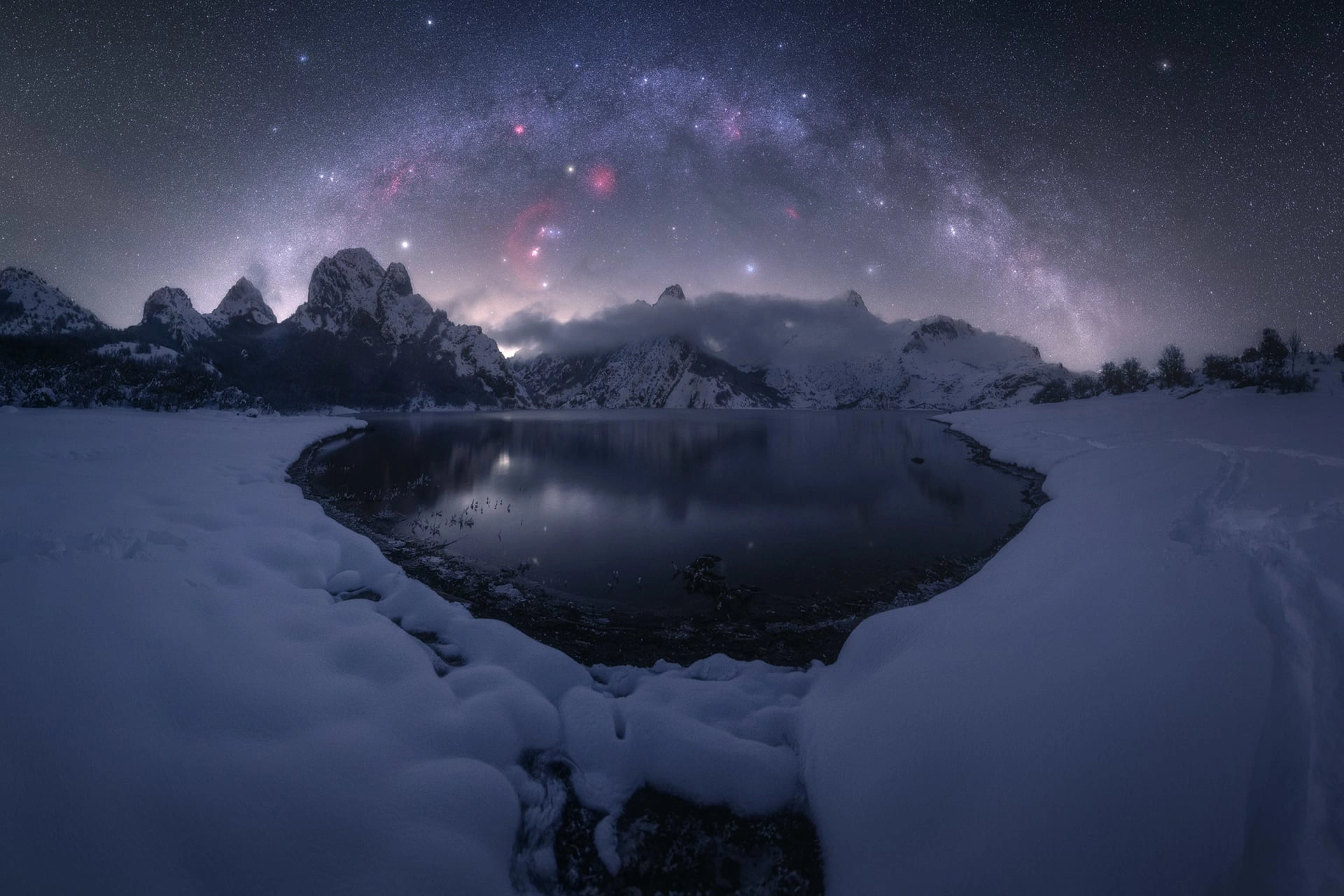
This piece on the Milky Way photographer of the year is filled with amazing photos of…well, you can guess. (One of the photos is above).
This is a good piece on the efforts to study Venus. It won’t be easy to do, but it will be rewarding.
Finally, this piece on how black holes are visualized is excellent.

SpaceX tries to disrupt and partner with NASA at the same time

It’s not explicitly stated, but if you read this: If you think NASA is frustrated with SpaceX, you’re probably right in Ars Technica, then you may draw the same conclusion. It seems SpaceX is taking advantage of its partnership with NASA to position itself to get the point where it can get by without it and eventually compete with the space agency.

If that was not the case, then I would expect SpaceX to stick to missions that were separate from NASA and supportive of NASA. Instead they seem to be trying to compete with NASA for the same missions.

It’s a tricky call for SpaceX: if they are not careful, they could ruin their partnership and find themselves without a steady source of income to fund their ambitions. I’m all for both NASA and SpaceX both being viable for the long term. Let’s hope that happens.

You too can be like Elon Musk (@elonmusk) and fund a lunar mission

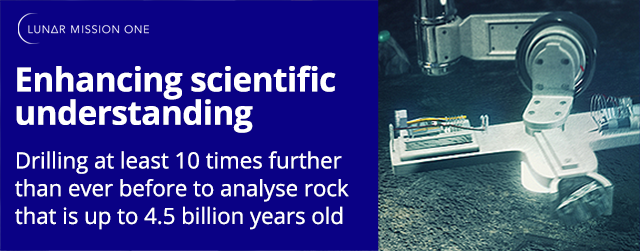
Really. There is a kickstarter going on right now you can contribute to: LUNAR MISSION ONE: A new lunar mission for everyone. by Lunar Missions Ltd 

The team there says….

We plan to send an unmanned robotic landing module to the South Pole of the Moon – an area unexplored by previous missions.

We’re going to use pioneering technology to drill down to a depth of at least 20m – 10 times deeper than has ever been drilled before – and potentially as deep as 100m. By doing this, we will access lunar rock dating back up to 4.5 billion years to discover the geological composition of the Moon, the ancient relationship it shares with our planet and the effects of asteroid bombardment. Ultimately, the project will improve scientific understanding of the early solar system, the formation of our planet and the Moon, and the conditions that initiated life on Earth.

I think this is the most fantastic Internet project I have seen yet. I highly recommend you check it out.

Thanks to Kottke for pointing it out.