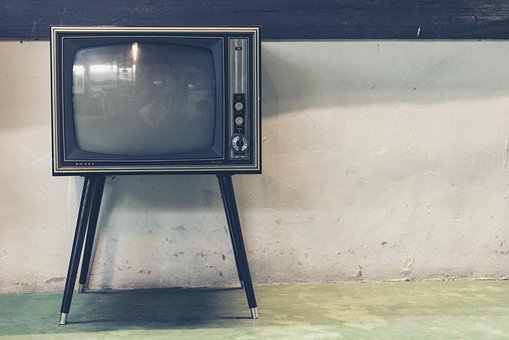
SNL turns 50

It’s been a year of celebration for the television show, Saturday Night Live. And why not? Any show that can last for 50 years deserves to be celebrated. And celebrate they did with a three hour prime time special.

I’ve started watching the show on TV at the very first season, when it was a new way to fill the dead hours of Saturday night. Now 50 years later I watch it mostly on Instagram. The Media has changed dramatically, but the Message has been consistent: 90 minutes of music and comedy every Saturday night in a strict format of cold open, monologue, sketches, music, Weekend Update, more sketches and music, closing. That it could continue to do that for half a century is a tremendous credit to the talented writers and comedians and musicians who create the show. And especially it is a credit to the producer, Lorne Michaels.

The influence of Michaels was apparent in how the show started with Paul Simon and Steve Martin and ended with Paul McCartney and Martin Short. But while it had a lot of his favourite old timers laced throughout on the show, it was not just a nostalgia trip. Which is why you had Paul Simon perform with Sabrina Carpenter and the new cast mixed in with the old. This show, like all shows, aimed to be current and successful. It was a bullseye.

For those who missed it, the New York Times has a good run down of the special: ‘S.N.L.’ Celebrates 50 Years With Star-Studded Prime-Time Special, while CNN has what they considered the best moments from ‘SNL’s’ 50th anniversary special, here. CBC also had a piece on it: Saturday Night Live celebrates 50 years with comedy, music and many, many famous friends. Of course being CBC they also had something on some of its best moments that have featured Canadians.

Theres been many a story written on the show this season. Here’s one on performers  breaking on SNL. This is a good set of interviews of the original  snl 1975 cast and crew.

Even with it being double a normal show’s time slot, it could not be all things to all people. This is a lament for what was not on the 50th special, here. And while it seemed like everyone who was ever on the show was there, a few big stars like Dan Ackroyd and Bill Hader could not make it.

P.S. I’d be remiss without mentioning this year’s film of the first episode of SNL. Sadly it got mixed ratings, such as this: Saturday Night mild? Jason Reitman’s SNL recreation doesn’t quite match the original’s rebellious spirit.

The odd third season of Ted Lasso, and other thoughts on TV, June 2023


I loved the series, Ted Lasso, and I was sad to see it end. The last season, it’s third, was a bit of a head scratcher though.

The first season was the one people really loved. But I felt that Jason Sudeikis wanted to make the Ted character more than the 3D Ned Flanders we saw in that season. That explained what happened with Ted in season 2 and to some degree in season 3. However I think people became frustrated with that: they wanted the Ted of season 1, even though the character became less of that as time went on.

Indeed in season 3 I just saw Ted fade away. He was barely in the last of the show. All the other character become the focal point and many of them had their own series within the series.

Of course this made sense in the end. Ted Lasso the series became like Ted Lasso the character. Just like the character, who believed the coach took a backseat to the players and the fans, the show became more about the other actors and less about Ted.

Will there be a season 4? I’m not sure. Like the character, Sudeikis doesn’t seem to have his heart in it. Maybe there could be a new season about the football club AFC Richmond. They certainly set it up that way. Let’s see.

For more on Ted Lasso, here’s a good write up in the Atlantic.
Here’s an absolutely cranky write up in The Guardian about how Ted Lasso, the nice comedy, became utterly dreadful television. As Ted might say, “Ouch”.

“Succession” also ended its series. So many people loved it and I can see why: it sounds really well done. As for me, I can’t watch shows featuring despicable characters. Succession was filled with them. Here two pieces, one in the Washington Post and one in the New York Times that align with my view of the show. But hey, to each their own.

Besides Ted Lasso, the other show the ended this month was “Somebody, Somewhere”. Unlike Ted, it has been renewed for a third season. Yay! Here is a piece on how it is the warmest comedy on TV. More praise for the show from the New Yorker. I can’t wait to see what the show does next.


An odd piece on SNL from GQ


This is an odd piece in GQ: The New Cast Reshaping SNL’s Next Decade . It states: “After a slew of exits, Saturday Night Live is reloading—with a squad of young comics that could form the nucleus of the show for years to come.”

It’s odd because yes, there have been a slew of exits, and yes there are new comics, but if you have been watching it recently, the comics dominating it now seem to be people like Heidi Gardner and Bowen Yang, and of course, the great Keenan Thompson. To see what I mean, check out this recap of a recent episode with Travis Kelce starring. Or watch tonight. They aren’t the new people, and they aren’t the older comics leaving.

The new comics are no doubt good, and they likely appealed more to the GQ readership than the people I named. Plus everyone wants to talk about what’s new. But I can see the current veterans being around and in the forefront when it comes to SNL celebrating half a century in 2 years from now.

A little perspective, please, GQ. 🙂

P.S. As an aside, I’ve been a fan of both GQ and SNL since the 70s. Good to see them both still around and being current.

On Shrinking, and some thoughts on my limited return to TV

For the last 30 years or so I have not watched TV shows. I’ve watched movies at home and other things like news and sports, but nothing like the Sopranos or Breaking Bad or Family Guy or…well, you name it. (I wrote about it here.)

Lately I have been watching television again. A lot of that has to do with having someone great to watch it with, as well as someone who knows what I might like. Having more time at home during the pandemic also helped.

I started off by watching Ted Lasso, which I thought was superb. Then The Crown (loved the first two seasons mainly). Followed up by Slow Horses (also great). I began to think: hey, I might love TV again.

But then I watched Loot, and while I think Maya Rudolph is a genius, I could not watch much of that. Same with Hacks, even though, again, Jean Smith is amazing. Which brings me to Shrinking.

Like Loot and Hacks, I first started to really like it. But then I just started to feel fatigue from the strained writing. (Hey writers, writing nonstop about sex makes me think you’re a bunch of frat boys.) I also remembered the problem with situation comedy (situational dramedy?) and the need to create situations just to keep the story going. I see that often in Shrinking. (Frat boys: I know, let’s get the main character to sleep with his coworker! Hijinx will ensue!)

Like Loot and Hacks, having someone great (in this case, Harrison Ford) is a good draw and he makes me want to watch it. But like those two, there’s not much more that makes me want to watch it. (I mainly don’t care what happens to the other characters, which is different than Ted Lasso or Slow Horses, where I am invested in many of the characters). It’s pleasant enough, and occasionally funny enough. And kudos to them for getting a season two: clearly people like it.

It’s been fun watching TV, mainly because I have someone great to watch it with. (Thanks, Lisa!) But if I didn’t have that, I’d go back to my old ways. TV is different in some ways (e.g. no Apple TV in the 90s) but in a lot of ways, it’s hardly changed at all.

On the 50th Anniversary of M*A*S*H and rewatching some of it


The famed TV show recently had a milestone: it first broadcast 50 years ago, September 1972. If you had watched M*A*S*H, and even if you haven’t, I recommend this piece by James Poniewozik, in which he presents a chronology of the show and how it evolved over the years. It brought back good memories.

Among other things, he recalls one of my favorite episodes, Point of View, particularly for this one scene. He writes:

“Point of View” is shot from the vantage of a wounded soldier whose throat injury renders him mute. In a repeated format, a reporter visits the 4077th for the new medium of television. The unit’s chaplain, Father Francis Mulcahy (William Christopher), described seeing surgeons cut into patients in the winter cold. “Steam rises from the body,” he says. “And the doctor will warm himself over the open wound. Could anyone look on that and not feel changed?”

The episode was filmed in black and white, and there is a scene showing steam rising from the patient. It was stunning.

Recently I watched another one of my favorite episodes of M*A*S*H on one of the streaming services. The writing was still good, but the format of the show displayed its age.  This could just be me though: I think you really have to dive into old TV shows to adjust to the format to enjoy it. Certainly the quality is there.

One thing I would add: it is a show made in 1970s. There may be things about that era that makes you uncomfortable, like the sexism, or whole idea of Klinger dressing up as a woman to get out of the Army. These are products of that time. In its defense, the show became less sexist over time, and Klinger shelves the whole “I am a crossdresser therefore I am unfit” bit. But it was still a show reflecting that era.

The other thing to dwell on is that it existed in a golden age of TV. Just like movies and print, it was able to achieve numbers that no TV show can achieve now in the era of the Internet and streaming. We didn’t know that then: it was simply one of the best shows of its time and we all naturally watched it. (It’s funny to think of how back then we made the time to watch a show because if you didn’t, that was it, you missed it. You might, if you were lucky, see it in the summer when network TV would show the “repeats”.)

While M*A*S*H had so much going for it, what made the series one of the greats was its actors. It achieved a rare thing in that it lost three of the leads over time but never suffered as a result of this. The people that left were great, and the people that replaced them were also great. One person that was there from start to finish was Alan Alda. Here’s a 50th anniversary interview of him in the Times.

P.S. 1972 was a good year for film too. The 70s was filled with excess and schmaltz, but it was at its best on period pieces, like The Godfather, Cabaret, and M*A*S*H.

On the Emmys and the end of TV as we knew it

Shows such as the Grammys, the Oscars, and the Emmys give us the chance to consider the media they are based on. One thing to think about is how that old media is under attack by newer media. Music was the first to struggle with this problem. Now with everything from Netflix to Disney+, network television is also struggling but with new forms of TV. As the New York Times writes about this year’s Emmys:

The show remained fixated on a milder existential threat, however: streaming services. The theme remained dominant even though the ceremony ran on Peacock as well as NBC, with the host, Kenan Thompson, working multiple Netflix digs into his monologue. “For one more year,” The Times’s Mike Hale wrote in his review of the telecast, “we got the weird spectacle of broadcast TV nervously proclaiming its relevance as if it wouldn’t have the chance to do so much longer.”

I suspect network TV — ABC, NBC and CBS mainly — will come up with ways to survive. Perhaps they will do this by adopting a strategy of “if you can’t beat them, join them” and go with a stronger streaming presence. One thing for certain: the status quo has permanently shifted and they need to change to stay relevant.

As for the 2022 Emmys, you can read more about them, here.

Changes on SNL, new and old

I’ve been wondering when this would happen, but finally some of the bigger names from SNL are departing next year, including Kate McKinnon, Aidy Bryant and Kyle Pete Davidson, according to Deadline. I’ve been surprised both by how stable SNL has been over the last decade and how big the cast has grown. It started off with less than 10, now it’s over 20.

Having a big cast makes sense in some ways. It means there is a deep bench of talent ready and eager to step up. It also helps SNL deal with the lack of diversity problem they had all too recently.

I’ve been watching more SNL recently, ironically because of Twitter. I say ironically because social media used to freak Lorne and company out. Now they feed the whole show via twitter on the weekend. I get to skip the ads, and I get to watch the best bits. It’s ideal for me. My rule of thumb is if Kenan Thompson is in a sketch, it’s probably funny. That’s likely why he is sticking around.

That piece above got me to this piece: ‘Saturday Night Live’: Actors Who’ve Hosted The Show The Most – Photos – Deadline. Several things to note there. In the early years, it was often people associated with the show, like Chevy Chase (although that is also true with Tina Fey in the later years). Later it was big actors who were just really good at being funny. For awhile Steve Martin and Alec Baldwin were tied in appearances (there was even a bit where to win, Martin knocks out Baldwin, wraps him in a rug and throws him out the window!) Baldwin eventually ran away with it, not just for hosting, but by being a regular with his Trump appearances. (It probably helps too he lives in Manhattan.)

I have a sentimental weakness for SNL. It’s been on 47 seasons and I’ve been watching off and on since S1. I’m looking forward to it reaching S50 and beyond. Who knows will show up for that season. Tune in.

Your next TV should be dumb. Here’s how to go about getting a dumbTV and why


I’ve complained here before about Smart TVs and the problem they bring Thinking of getting a SmartTV? | Smart People I Know. After reading this, Samsung details how its TVs will become NFT gateways – The Verge, I am more determined than ever to try and make my next TV as dumb as heck.

If you are leaning the same same way, I recommend you read this: Why You Should Buy the Dumbest TV You Can Find. I’m certain after you do, you’ll want a dumb TV too.

The next trick is how to find one. They offer some advice, but you may not be sure how to apply it. I recommend you do this.

First, take the TV they recommend. Here it is on Amazon:

Samsung Business QB75R 75 inch 4K UHD 3840×2160 LED Commercial Signage Display for Business with HDMI, Wi-Fi, 350 nit (LH75QBREBGCXZA), Black : Amazon.ca: Electronics

You might look at that and shout: whoa, that’s too big and expensive. The way to find a smaller one is like this. See the model ID in the URL? It’s QB75R. The 75 is the size of the TV. What happens if I search for QB55R on Amazon? Well, I find this:

Amazon.com: Samsung Business QB55R 55 inch 4K UHD LED Commercial Signage Display for Business with HDMI, Wi-Fi, 350 nit (LH55QBREBGCXZA) : Everything Else.

Much smaller, much cheaper. Good! But I also get something else, this string: 4K UHD LED Commercial Signage Display.

If I search for that on Amazon, I get a long list of Commercial TVs from Samsung. Awesome! Now if I search for just: Commercial Signage Display, I get other models, like displays from Viewsonic.

Thanks to Amazon, I have a list of options to choose from. If you want to buy them from Amazon, you’re all set. But you can also list the models and prices and shop around.

Good luck. Stay dumb! 🙂

On TV, the 90s and me


I stopped watching TV in the 90s.  The last three TV series I watched were Northern Exposure (1990-1995), Seinfeld (1989-1998) and Friends (1994-2004).

I thought of that when I recently started rewatching Friends clips weirdly via Instagram. It is full of them. This Vanity Fair piece hits on something that Seinfeld and Friends and to some degree Northern Exposure had in common:

It was the ’90s; oh, was it ever the ’90s. The show’s anxieties are inextricably tied to the that decade—answering machines, VCRs, the discomfort its straight characters feel upon encountering queer people.

Yep, all that. The discomfort (or whatever you want to call it) in Friends is particularly painful to watch.

You notice other things too. No smart phones (obviously). No internet. Also suits and ties. Chandler and Ross in the early episodes are often in business attire of the time and it seems as dated as tuxedos and top hats now.

In the end, I gave up on each of those shows for different reasons. Northern Exposure lost its bearing and became some sort of Alaskan fantasy land. Friends seemed to become a landing place for cameos of famous actors. As for Seinfeld, I have to agree with the Vanity Fair piece, who said:

… for more than a few episodes at a time, these people and their concerns—so self-absorbed, so entitled, so stupid—are a little deadening to watch.

Seinfeld’s leads are a tiresome quartet; in the show, everyone who meets them ends up deeply regretting it.

I skipped the golden age of TV with the Wire and the Sopranos and all that. None of it appealed to me. I’m trying to get back into watching things via streaming, but even that is a struggle. I don’t think I am superior for not watching it. I just find it is something I can’t watch on my own.

For now I’ll watch clips via Instagram and maybe that is enough TV for me. 🙂

Looking to buy a technical gift for someone (or yourself) ?

Then you need to check out the Wirecutter. It has experts in every area of technology — from headphones to TVs to much more — stating what they think is thebest thing to buy right now. They explain their reasoning, offer alternatives, and best of all, the site is kept up to date. Also, they have links to sites like Amazon and others to let you take the next step and purchase the tech you want.

Do you have Chromecast? Then you want 5by

Chromecast is great for putting YouTube videos on your big screen TV. The problem for me, though, is finding good videos to watch: I want to spend less time searching and more time relaxing. 5by.com answers that problem by providing you videos picked by them around themes. I have just started with it, but it looks good (in more ways than one).

For more information, see Video Concierge.