On The Course of Empire (paintings and otherwise)

Cole Thomas The Course of Empire Destruction 1836.jpg

In reading Clive Thompson’s latest linkfest, I came across the above painting by Thomas Cole. It illustrates a section of his newsletter talking about how the collapse of empires can lead to benefits for those other than the 1%. I highly recommend not just that section, “3) 🌋 The upside of societal collapse”, but the entire newsletter.

I’d also recommend you check out all five paintings from this series:

  1. The Savage State, or The Commencement of Empire
  2. The Arcadian or Pastoral State
  3. The Consummation of Empire
  4. Destruction
  5. Desolation

Cole’s paintings imply an arc that goes from Commencement to Desolation, with Consumption being a peak. However based on the newsletter and the book it references to, “Goliath’s Curse: The History and Future of Societal Collapse” by Luke Kemp, it seems more likely that with Desolation comes an overlapping Pastoral State and that Consumption is bad for all but a privileged minority.

Check out the newsletter and the five paintings to see what I mean.

P.S. The Pastoral State, below, looks good to me. 🙂

Cole Thomas The Course of Empire The Arcadian or Pastoral State 1836.jpg


How to avoid doom scrolling

One way to avoid doom scrolling is to put down your phone. If you can do that, great.

If you’re not likely to do that, then you need better things to scroll through. That’s likely my route.

To go that route, I am building a list of good sites to visit when I am bored and tempted to endlessly scroll. So far this is the list. I plan to build it up:

Another approach is to play a game. Like Dodge This!

Finally, you can check out Clive Thompson’s mailing list! It’s jam packed with good stuff.

The rise of Nazi thoughts and deeds in American politics – a marker

Around a decade ago, I put a marker on my blog regarding Peter Thiel, because I thought it worthwhile to track his decline. Last week the pattern of Nazi related activities in the American right got to the point where I thought: I need to start noting these.

First off, Peter Thiel is giving a lecture on “The Antichrist: A Four-Part Lecture Series” of all things. One thing that stood out for me was the reference to Carl Schmitt. In case you don’t know much about Schmitt and his relationship with the Nazis, you can read this.

Next up, JD Vance (who is also aware of Schmitt), said, “I don’t know why we accepted that it was reasonable to have crazy people yelling at our kids. You should not have to cross the street in downtown Atlanta to avoid a crazy person yelling at your family. Those are your streets.” Read that, I thought, I wonder if we should be prepared for someone in the Trump administration to propose Aktion T4. This is a marker to see if they are going to go down that road.

None of this Nazi infused thinking is new. Mike Godwin in 2023 said comparing Trump to Hitler was not wrong, in light of Trump “calling people vermin” and “talking about blood poisoning”.

Godwin’s Law — “As an online discussion continues, the probability of a reference or comparison to Hitler or to Nazis approaches 1.”  — is good to keep in mind. It’s easy to reach for comparison of the American right wing to the Nazis, and that comparison should be resisted. Many authoritarian actions that the Trump administration has been doing are terrible but such actions are not strictly limited to Hitler and company. But as these actions pile up, and as right wing thought and action echo behaviors of Germany after 1933, it’s worthwhile keeping track. Actions like the formation of a secret police, the use of concentration camps, the attacks on the museums and the arts, or the takeover of cities by the military.

(Photo of Miller, Hegseth and Vance with the National Guard in Washington D.C.)

P.S. For people who say, Americans would never do anything terrible, I would simply start by by pointing out CIA Black Sites, where Americans would “detain, interrogate, and often torture suspected enemy combatants” in extrajudical locations outside the U.S.

New York is great, near or far

It’s been a year since I’ve visited or wrote about New York City. I miss it. Alas I don’t think I’ll be going to the States / NYC any time soon for a number of reasons. There are many in the same situation, so much that it seems to be having an impact. (Although it didn’t seem to limit Paul McCartney, who played a few surprise concerts in NYC in the last year. The man is everywhere.)

In the meantime, I’ve been following along with what’s been happening in the city, especially on the dining scene. After four years of a vegan menu, meat is back on at Eleven Madison Park restaurant. A place once impossible to get into seems less so: hence the addition of meat.

In other restaurant news, it seems there’s been a resurgence of new restaurants since the pandemic. That’s good to see. Also, it turns out young chefs are saving old school diners. Good for them.

One thing that came about during the pandemic was outdoor dining, but now that the pandemic is long gone, people are wondering: is outdoor dining dying off? I suspect it won’t. New Yorkers remain resilient and resourceful despite difficulties. I mean, you have restaurants thriving without kitchens there. I suspect restaurants will hold on to outdoor dining for some time, too.

Dining experiences in New York are about the Old as much as they are about the New. To show you what I mean, check out Resy’s great guide to New York’s New Old-School Restaurants. You’ll want to hit up some of them on your next visit. Maybe you’ll go to one of the greatest of old school establishments, Keens steakhouse, beloved by old and young diners alike.

Thinking of old school dining got me going down a rabbit hole of Manhattan nostalgia recently. Perhaps it was all the pieces I read about Lutèce after the great chef André Soltner died. Pieces like this and this and this. Those pieces lead me to read this: Reliving The 1980s: 10 Iconic New York Dining Moments That Defined Decadence. And then this: the 50 year club (i.e. the oldest upper west side shops and restaurants still in business). Which finally led me to this article on the battle for Bryant Park Grill, a famous restaurant which also happens to be a great piece of real estate.

Speaking of real estate, here’s a good story about my favorite building: cooper union is taking back the Chrysler building.

While ostensibly about the artists, this piece on the NYC apartment of Jean and Jean Claude Christo’s apartment got me thinking about living in downtown Manhattan when it was grittier. Perhaps that’s why I watched this not too long ago: ‘On the Bowery’. Very gritty indeed.

The Lower East Side is my favourite part of the city, which is why I was happy to read about the efforts to save the dive bar Lucy’s in the East Village. Meanwhile for Brooklyn fans, check out this hot pink building there. Or this Maximalist Brooklyn apartment. It’s not all light in that borough though. Check out as this grim piece on Brooklyn deaths possibly due to a serial killer. NYC is not without its dangers.

Like many people, I sometimes want New York to never change, though change it will. This year congestion pricing went in, and it turns out it’s a hit. That was fast. Not so fast is the adoption of trash bins. It boggles my mind, especially since a) no one likes all the rats b) bins wipe out rat populations. Go figure. Another antique thing that should change is the New York’s subway system. Good luck with that Herculean task. That said, they recently retired some of their  old subway cars. So even the subway system can adopt.

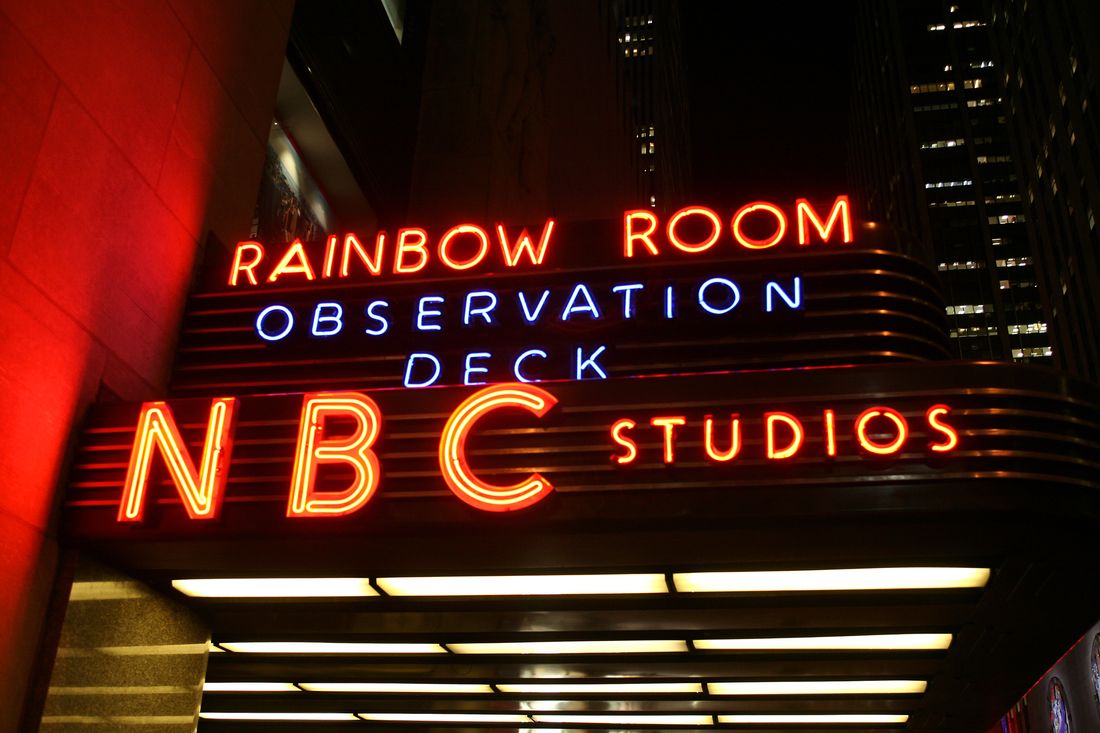
As for other changes, this piece on  the slow death of neon signage in New York made me wonder what the town would look like without bright neon. I can’t imagine it.

To close out, here’s a fun piece on the hardest working font in NYC. It looks like the NYPD is having a hard time recruiting cops. And the city is having a hard time figuring out how to bring people back to NYC. New York is never without challenges, no mater how much it changes.This piece by Naomi Fry writing about the famous piece by Jay McInerney on Chloe Sevigny in the New Yorker was very meta. Did I love this piece Jeannette Montgomery Barron’s black and white portraits of artists in Downtown New York in the 1980s? You know I did. Included in it is this photo of John Lurie, taken in 1982. Cool, like the city he was in.

Thanks for taking the time to read this. See you in a year when I post my annual appreciation of the greatest city in the world.

Tiny homes, 2025 edition

While I am a big fan of tiny homes on this blog, I haven’t done a post on them in some time.

I used to do them on the regular because a) I like the idea of tiny homes b) a blog I follow called Yanko Design often posted stories on tiny homes, giving me lots of material to comment on.

As it is, I still love tiny homes, and I still follow Yanko, so here’s four recent posts from them worth checking out:

  1. First up is this cool place in Tokyo. Most tiny homes in North America are horizontal: that one is very vertical (as you can see in the photo).
  2. Next is this small but might home built from a shipping container (a popular framework for tiny homes).
  3. While many tiny homes come assembled, this incredible foldable tiny home that a single person can install within an hour with no tools .
  4. Finally, if you want even more tiny homes, Yanko has 10 more homes designed to be sustainable retreats for off the grid living.

I think tiny homes are excellent, and I wish more people embraced them. If you are a fan as well, check out those links.

Seven questions to ask yourself this week

Over at Austin Kleon’s blog he had a post called 7 questions I ask myself. The questions are:

1. What was the best thing that happened yesterday?

2. Will this enlarge or diminish me?

3. What would it look like to be done for the day?

4. What did you really want to say?

5. What’s the matter?

6. Would I do it tomorrow?

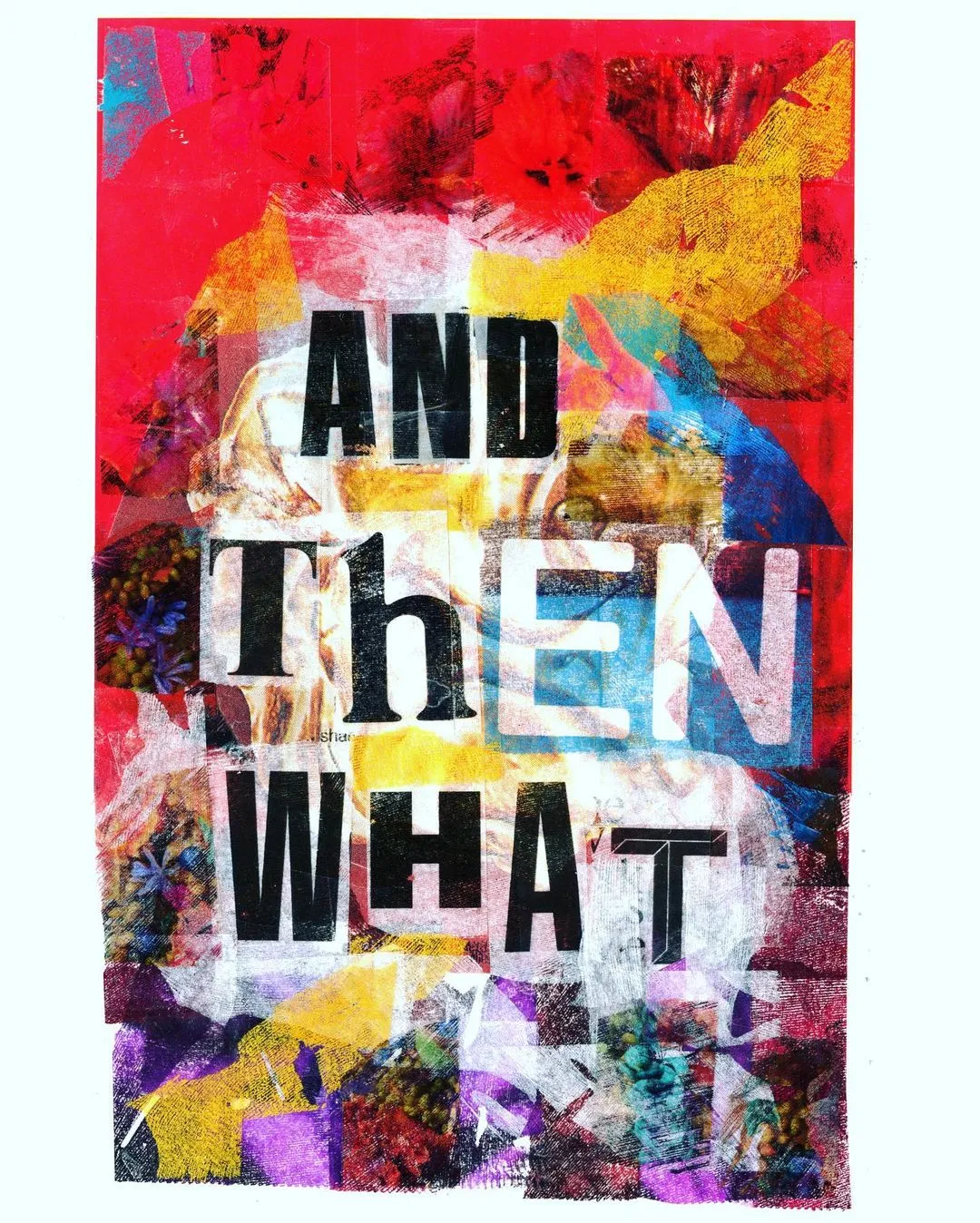
7. And then what?

I don’t think you have to ask yourself these questions every day or in every situation. Instead, use them in the right context. For example, whenever I am faced with doing something difficult, I ask myself #2. Whenever I am blogging, I keep question #4 in mind. If you are aiming for a goal, it’s good to keep #7 in mind before you achieve it.

If those questions appeal to you, go check out his post. He provides more insight into each of the questions that you’ll benefit from if you ask them of yourself this week.

(Image via a link to his post)


Math and physics books from Dover via Google Books (what I find interesting in math and physics, Aug. 2025)

I’ve recently discovered a bunch of math / physics Dover books via Google Books of all things. You can access previews of them based on the link below and also buy them. I like this because I have a tendency to splurge for Dover books only to find my math skills are too weak to make progress. I don’t mind, since I like giving money to Dover, but my bookshelves are too full and this seems like a good compromise. Here’s just some I found good:

  1. Mathematics of Classical and Quantum Physics
  2. Mathematics for Physicists
  3. Mathematical physics
  4. Classical mechanics
  5. Foundations and Fundamental Concepts of Mathematics

Also I found these good links, not Dover or Google Books necessarily, but worth checking out:

  1. Calculus and beginner calculus
  2. History of physics
  3. Principle of least action
  4. Lagrangian physics and why it is useful.

On the death of Perks Culture and other thoughts on Work in 2025

Untitled

If you are interested in perk culture and reading about work generally, I thought these pieces were all worth reading:

First up, this piece: For Younger Workers, Job Hopping Has Lost Its Stigma. Should It? I think criticizing job hopping is a classic case of employers not liking an advantage workers have. Relatedly, What Is (or Was) ‘Perks Culture’? touches on the clawback of worker privileges that tech firms no longer figure they need to provide them. That said, Meta is going on a hiring spree, so maybe things will swing back. For companies that are on a hiring frenzy, they would do well to study this piece on how Aaron Schwartz hired programmers.

Another perk more employees used to have was sabbaticals. I know some jobs still have them, but at one time even tech firms like Apple offered them. Based on this piece, it looks like young people are trying to reinvent them in a way: To Escape the Grind, Young People Turn to ‘Mini-Retirements’.

Work culture is different outside North America. For example, over in Asia we have this: Declaring ‘Crisis,’ South Korean Firms Tell Managers to Work 6 Days a Week. China too has the 996 system: 6 days of working 9 am to 9 pm. Not sure that will be sustainable.

Forming Storming Norming Performing: those four words you may have seen or experienced at work. The idea comes from here:Tuckman’s_stages_of_group_development. Some teams never go from Forming to Performing, but many do.

Roxane Gay is a great writer who also writes well about work. Here’s her last piece: Goodbye, Work Friends. You’d do well to read the rest.

(P.S. Photo of many of my work neckties and bowties I finally threw out. Many trends come and go and return when it comes to work, but wearing ties is over, I think.)


On the mad, bad egg and wine diet

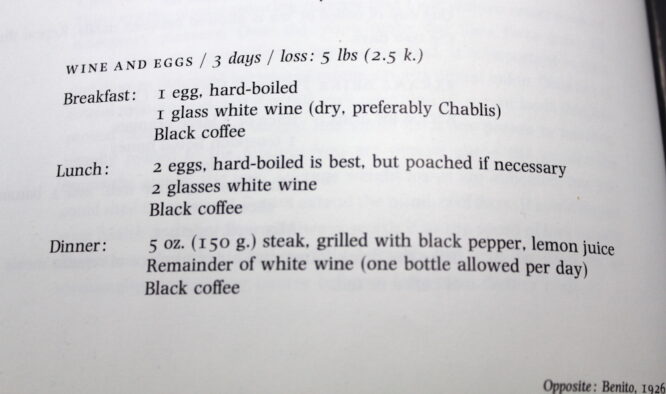
As diets go, the egg and wine diet — which has an entry in wikipedia, no less — is one of the crazier ones out there. I have always been fascinated by it, but I was curious if it actually worked. Well according to this and also this but not this, it does, kinda. One person lost 7.5 pounds, one lost 5, and one lost only one. No one felt good about it. No one recommends it. I can’t recommend it either, and I love eggs, steak, coffee and Chablis! But if you were ever inclined to do it, read those articles first.

P.S. If you feel you have to lose weight, talk to a medical professional about how to do it in a healthy manner.


Whenever you read a historical book, you owe it to yourself to find good critics of the book

Whenever you read a historical book, you owe it to yourself to find good critics of the book. Those critics could be other historians writing other books on the topic. Or they could be book reviewers.

Case in point, the book Plantation Goods: A Material History of American Slavery by Seth Rockman. Rockman writes about “the rise of wage work and factory labor, the relationship between slavery and capitalism, the emergence of a market society, the varieties of coercion under capitalism”. Reading it, you might be inclined to come to the same sweeping conclusion that the author does. I did when I read about the book. Which is why I was glad to read this review of the book, The Hazards of Slavery by Scott Spillman, in the LA Review of Books. In his review, Spillman notes the following:

Following plantation goods allows Rockman to provide an effective tour of how both capitalism and slavery operated in the early United States. He also shows that the Northern and Southern economies were knit together more tightly than our typical caricature of the free North versus the slave South might suggest. All this is welcome and generally well done…

Yet Rockman falls short in his larger ambition to prompt “a rethinking of the sectional geography of a United States where the division between slavery and freedom would eventually start a Civil War.” Like many scholars of slavery and capitalism, he focuses so intently on establishing ties between North and South that he excludes the internal development of the Northern economy from his story. His book is notably light on numbers, but one gets the impression that plantation provisioning predominated only in fringe areas of the industrializing Northeast, while larger manufacturing centers saw the South as just one of many markets. As Rockman himself admits, the production of plantation goods did not power the Northern economy as a whole.

Critics of capitalism might be inclined the come to the strong conclusion that Rockman does. I was inclined to at first. However after reading Spillman, I backed off and considered the situation might be more complicated than that.

The next time you are swept up in the conclusions of a historian, do yourself a favour and seek out other historians on the topic. If nothing else, you’ll have a wider and better view of the history you are studying.

On laser eye surgery

In May I started having problems with my vision. I went to Sunnybrook and after a long series of exams I was told to come back and have a retina specialist take a look at it.

At the end of August I finally got to see that specialist. Given I hadn’t been having any vision problems for weeks, I assumed the visit would be relatively routine.

I say relatively because having your retina examined is never that routine. The way the doctor’s handle your eyeball feels tough, and the amount of light they blast in your eye is intense. You feel somewhat disoriented afterwards.

This visit was even less routine because he said there was still some damage and he wanted to repair it with laser eye surgery. While it seemed like no big deal to the doctor, it was a big deal to me. If the previous tests were intense, this was even more so. It’s not that there is pain: it’s that the intensity of light that hits your eye makes you want to flinch and move. Of course you can’t do that, which means you have to steel yourself to remain steady. Fortunately the doctor knew that so he was good about signalling how long the duration was. Despite that, it was still hard to endure.

I’m glad I got the work done. It’s worth the small amount of intense suffering to prevent going blind. But anyone undergoing such a procedure should be ready with whatever means they have to get through it.

How generative AI works (it’s not designed, at least the way you think)

How generative AI works is likely not how you think it works.

What led me to state this was two discussions I’ve had this week about the “design” of gen AI. I think the “design” conclusion that people come up with is based on emergent behaviours of the system. You can shape this behaviour in a number of ways, based on the data you feed the system or some ways you configure the software being trained. However at best you are influencing the behaviour of the system, vs designing the behaviour of the system.

In some ways it’s like taking a bucket of seeds and tossing them around a large area of a field. If you took only seeds of one or two flowers and distributed the seeds so that only these one or two flowers and grew there, you could say you designed the garden to grow these flowers. Likewise, if you divided up the land into rows and planted one type of seed in each row, you can say you designed the garden. However if you have a wide range of seeds included in your bucket and you don’t target the planting of the seeds but just toss them into the ground, it will no longer be considered designed.

That’s why I think gen AI is not really designed. It’s a alot like a big bucket of random seeds not planted in any order. What design you see there is likely how you look at it.

P.S. If you want to explore more on how gen AI works, see this. For a great example of how a gen AI system is built from the ground up, see this.


SNL makes you famous. It may not make you rich.

If you are fan of Saturday Night Live as I am, you may have guessed that cast members get paid well to be on the show. If that was also your guess, then guess again. As this piece shows, the pay is not exactly stellar. Mind you, for some cast members, things have worked very well in the longer term. But in the short term, it’s not all that much. Enough to pay the bills of living in NYC and a bit more.

Still, if fame now and fortune maybe later is your goal, SNL is the way to go.