On the quote: never give in, never, never, never

You may be familiar with parts of this quote:

never give in, never give in, never, never, never, never-in nothing, great or small, large or petty — never give in except to convictions of honour and good sense. Never yield to force; never yield to the apparently overwhelming might of the enemy.

The source of the quote is here and was given by Winston Churchill on October 29, 1941 to an audience at Harrow School.

It is often abused and misused. For example:

WRONG. 🙂

Never give IN.

In these difficult days, in this difficult time in the world, it is a good quote to remember.

So too is the reframing of events at the end of his speech: “These are not dark days; these are great days”. How we rise to the occasion on dark days can transform them into great days.

On vibe coding with Roo Code

I’ve been using AI tools to write code lately. Vibe coding I guess, though I am not a fan of the term. A few months ago I was using Copilot and Claude to do it. In the last few weeks I’ve been leaning heavily on IBM BOB (which I’ll write about soon).  I’ve also been experimenting with similar tools like Roo Code to vibe code.

Roo Code can do several things according to the docs,  but the main things I’ve been getting it to do are:

  • Generate Code from natural language descriptions and specs
  • Refactor & debug existing code
  • Write & update documentation

There are a number of ways you can put it to use. Because I am a fan of VSCode, I am currently using the Roo Code VSCode extension. Installing it is straightforward, though I should mention I am currently using version 3.30.3 because I was informed by colleagues that it was a stable version, and the latest version 3.42 had issues.

Once installed, you will need to connect to an AI provider. Roo recommends Claude Sonnet 4.5 and so I went with that, albeit an internal work version. I expect the external version of Claude Sonnet is fine.

Roo Code has a number of modes it can operate in: Architect, Code, Ask, Debug and Orchestrator. Today I wanted to get it to help me write some software so I opted to work in Code mode.

I gave it the following task: Can you write software that will look at my Google Chrome browser’s history for the last week and turn it into an HTML file that is a summary of what I looked at on the web this week?

Roo first set up a list of things it is going to perform. In my case, the Todo List was:

  • Analyze Chrome history database location and structure
  • Create Python script to read Chrome history
  • Extract last week’s browsing data
  • Generate HTML summary report
  • Test the solution

Roo then went off and did these things and tested it by running the following command: open chrome_history_summary.html

Pretty good! Alas, I clearly used too much social media this week, so I gave Roo a follow up task:  Can you have an option where I can have a list of web sites to exclude from the report? For example, I don’t want to see all the times I went to instagram or bluesky.

Again Roo proceeded to create and execute a new Todo List which included modifying the python program it first created, adding a separate chrome_history_config.json file which can be used to filter out web sites from the report, and finally a README.md file that explains the programs features, requirements to run, how to use the program, and much more.

What’s nice is it doesn’t just create a program to do that, but it provides different ways to run the program:

# Basic usage (uses config file if present)
python3 chrome_history_summarizer.py

# Create config file
python3 chrome_history_summarizer.py –create-config

# Exclude specific sites via command-line
python3 chrome_history_summarizer.py –exclude instagram.com bsky.app

# Custom output file
python3 chrome_history_summarizer.py –output my_report.html

I could have asked it to change aspects of the page like the fonts or the background or more, but I was fine with what it produced.

In terms of cost, Roo can you give you a breakdown of how much tokens it uses and how much it costs. In my case it estimated the cost at 27 cents. Of course I could have written a similar program for free, but instead of taking me minutes I would likely have spent hours. My experience to do with AI coding tools like IBM BOB and Roo Code is I get about a 5-10X productivity gain. YMMV.

What’s nice about using Roo in VS Code is that you can have the code execute in VS Code. While I had no issues with the code, if I did I could have put some breakpoints in the code and debugged it on the spot. And unlike when I was using Claude and Copilot, I don’t have to keep copying and pasting the code into an editor before I get it to run.

Speaking of that, here’s a tip: start in the directory you want the code to appear in before asking Roo anything. I changed to my directory using Terminal in VSCode and then I started asking Roo questions. Otherwise it may write into a directory you don’t want it to.

All in all, Roo is easy to install and use. They have good documentation too. Interested? You can get Roo here: https://roocode.com/

P.S. As for everything on this blog, the opinions expressed above in this post mine only and not necessarily those of my employer.

 

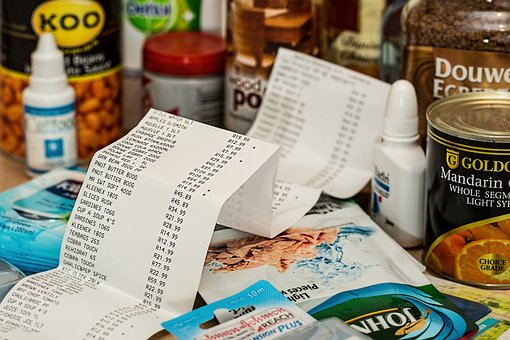
In 2026 I am still not shopping at Loblaws or Metro. Why are you? Here’s why you should switch to another grocer

It’s 2026: why are you still shopping at Loblaws or Metro (or Farm Boy or other expensive grocery stores)?

In 2022 I switched from shopping at my local Metro to shopping at Walmart via Instacart (since I don’t own a car and the Walmarts are far away). In 2023, as prices at Walmart shifted upward on Instacart, I started shopping more and more at Food Basics (essentially much of the same food as Metro).  In 2025 I still mostly shopped at Food Basics because it has the best selection and prices, but I still shop at Walmart for some things, but I also shop at other low cost places like Giant Tiger, Fresh Co and occasionally No Frills.

So how do things stand in 2026? I decided to do a price comparison again on January 17, 2026 of these Canadian staples (selected from this list) to see how cheaply I could get them at the various grocery stores using Instacart. Here’s my results:

Food Food Basics Walmart Metro Loblaws
Chicken breast (1 kg) $15.41 $14.34 $22.00 $23.00
Eggs, dozen, Lg $3.99 $4.13 $3.99 $4.35
Butter, 1 pound $5.89 $6.13 $5.99 $6.55
White Bread $1.99 $2.60 $2.48 $2.75
White Rice, 1 kg $1.62 $1.77 $2.06 $2.33
Bananas, 1kg $1.30 $1.30 $1.74 $1.90
Carrots, 1kg $2.76 $2.27 $3.30 $3.24
Vegetable oil, 1 L $3.00 $4.18 $3.33 $4.03

Things to note: Food Basics and Metro have in store prices on Instacart: Walmart and Loblaws do not, so things may be cheaper if you go to Walmart or Loblaws directly. In each case I tried to find the lowest cost item shown, which meant the cheapest items in Loblaws were no name items. Also to get the best bargain, I went with rice sold in 8Kg bags and oil sold in 3L bottles. For some foods like carrots or chicken, they aren’t sold in 1 kg units, so I converted the unit price for a 2 lb bag of carrots into a 1 kg price.

For at least these staples, Food Basics and Walmart are cheaper than Metro which is cheaper than Loblaws, taking into account the things I noted.

Now this is just 10 staple items. Over a week you buy more than these things. And you buy them over and over again in the course of a year. That’s likely thousands of items, with markups at the higher priced stores being anywhere from pennies to dollars more on each good. I figured I was saving over $1500 a year in 2022 which made up for the Instacart fees for me. You might find something similar in 2026.

Of course you may have many good reasons for shopping at Loblaws or Metro. They both may have items you can’t get anywhere else. You might think their produce or meats better. You might find them more convenient, especially if you don’t have or want to use Instacart. All valid.

But if you do have options to shop at lower cost grocery chains like Food Basics, Walmart, Giant Tiger or Fresh Co, then I recommend you do so. Save your money and/or make your life easier.

P.S. I will also note that it’s good to keep a close eye on the fees of Instacart. For example in 2022 the service charge was 5%. Now it’s 8% with a minimum, making it worthwhile to get bigger orders of at least $50/store. Also the heavy bag fee seems to have gone. Instacart still makes my life easier and saves me money, but YMMV.

It’s winter. Here’s some hot IT links to warm you up (What I find interesting in tech, January, 2026 edition)

I haven’t posted on tech in awhile, which I think is a shame, because I like to see these posts myself, if no one else does. Especially I like to come across them years later and think: oh yeah, I was working on that then. Or think: I forgot about that…I need to take that up again.

So here are dozens of good links on IT that I have found interesting over the last year while I’ve been developing software that uses much of the technology you see highlighted below.

As always, almost all of these links are self explanatory. The ones that aren’t…well…few if anyone but me reads these posts anyway. Just treat it like a collection of potentially good resources that I found worthy of sharing.

AWS: I was doing some work on pushing containers into AWS (which I wrote about, here) so I found these useful
Okta/Authentication: before I pushed the containers into AWS, I had to integrate them into Okta. So I did a ton of research on Okta. Here’s some of the links I found useful:
API Dev: my code has a FastAPI interface, so I also had a few issues on that front I had to figure out first:
Milvus: likewise my code interacts with Milvus, which took a moment to master. Ha! Master! I have barely scratched the surface: 
Langchain: Langchain is at the core of my application, so I have been doing lots of studying on this software:
Other good stuff: I’d be remiss if I didn’t keep these links and share them….some of them are especially good.

Finally here’s the obituary for Lou Gerstner. IBM and my place in it was greatly and positively affected by him. I wonder if there would have even been an IBM anymore if Lou did not come along. May he rest in peace. More on his impact on IBM, here.

On my pieces of advice written for the 99u

Around 2011 I wrote a number of articles for an online publication, the 99u (since folded into http://www.behance.net). The audience for the pieces were creative workers, but really they are for workers and people in general. You can find them here:

I am proud of these pieces, and I think the advice is good advice, still. Take a look when you can.

P.S. For some reason the last one is not on Behance but it is on jane.dallaway.com, hence the last link.

P.S.S. Speaking of taking a look, take a look at the art work of Oscar Ramos Orozco. He illustrated all the articles I did for the 99u, plus many more. In the background of the pieces above you can somewhat see them, but they are also distorted. To see some of the work he did for the 99u, go here. You can see his profile on Behance, here. The image above is also his.

Congestion pricing in 2026, from New York to London to Paris

Congestion pricing isn’t new: London has had it since the beginning of the 21st century, and Singapore had it before that.

What is new is that New York City recently embarked on an exercise in Congestion pricing, and after a year, the results are in. How good are the results? Well, traffic is faster, transit use is up, and quality of life has improved. All in all, it’s looking pretty successful.

It didn’t get much notice in the piece on NYC, but I suspect air pollution also was decreased. After all, Paris has reduced its air pollution by 50%, and part of that was reduction in cars in the city.

If anyone says congestion pricing doesn’t work, show them some of those pieces. For more on congestion pricing in NYC, read this.

How to get fit in 2026: start with your workout


Welcome to the new year. One of the biggest problems with getting fit is knowing what to do. These links can help.

If none of these work for you, I have quite a number of other fitness write-ups, here. Take a look: you might find something you need there!

P.S. Not workout related, but related, here are some sources of information on new gear that caught my attention over the last year:


On the Left and Datacenters


People on the right are often criticized about their paranoia about things like vaccines and wifi signals. Left wing critics will say to them: trust the facts, trust the science, ignore the conspiracy theories springing up everywhere. I think that’s good advice.

I think the same advice should apply to the left when it comes to data centers. Two cases I came across this week makes me think something else is happening.

First off, I read this piece about a research group is on the hunt for hidden data centers. This group, epoch.ai, is using satellite imagery and other sources of information to do this. I found this surprising, since there are other organizations (e.g. CBRE) that track data centers throughout the world. It’s pretty common to do. And unlike CIA black sites or nuclear facilities, it’s in the interest of companies building data centers to let the world know they are doing so. Keeping it a secret is not very good for them.

You could argue that tracking data centers makes sense in terms of their power and water usage. That’s a valid claim, though I think there are better ways to do it. I’m also not convinced this is the best way to push back on resource hungry hyperscalar datacenters. I think communities, cities, provinces and states need to understand the impact of such facilities and push back when these facilities harm them, but to act like its a mystery that can only be dealt with using spycraft does a disservice to readers who are concerned about such things.

The second piece I read about was this one which criticized the building of data centers in places where it was too hot. While reading it I was looking to see if the writers would draw the connection between the placement of data centers, undersea internet cables and Internet Exchange Points (IXPs or IXs or NAPs) Alas I did not find any such references.

There are many reasons why data centers are placed where they are, but one of the key ones is proximity to IXs! Even with the blazing high speeds of current Internet connectivity, the closer your data center is to an IX, the better it will be. A data center built miles and miles from IXs (which will be close to Internet cables) makes no sense. The fact that I could read that second piece and not see this pointed out makes me wonder how much the authors understand the technology, and if they don’t understand the tech, what benefit such a piece is, other than as a hit piece on data centers. It’s not a piece people can come to and gather facts and a better understanding of data center placement.

There are lots of ways for the left to criticize data centers, but if they don’t do it with facts and reason but come at it conspiratorially, they’re no better than the right and their paranoia about vaccines and wifi.

On the great Frank Gehry and 10 of his best buildings

The great Canadian-American architect Frank Gehry passed away last month. To mark his passing, the website Yanko Design did a feature highlighting 10 of his iconic buildings, including the Dancing House in Prague (seen above). Well worth checking out.

No doubt you will say: it doesn’t have building X or Y? It’s a testimony to Gehry that he designed so many great buildings that 10 items is too short a list.

Here in Toronto, we are lucky to have his work incorporated into the Art Gallery of Ontario. It’s interesting to see other buildings featured in the list like the Vitra Design Museum and recognize design elements that it shares with the AGO (e.g. the twisting stairs).

The frugality of Bernie Sanders (some brief thoughts on politics and fashion)

Is Bernie Sanders a frugal guy? Does his fashion sense indicate he is a left wing guy? Let’s consider this winter jacket he’s wearing. For Mayor Mamdani’s NYC inauguration, he wore this to give a speech and swear in the mayor. This particular jacket he’s had for 8 years now, which seems pretty economical. Frugal even.

How did I know he has had this coat for 8 years? Because the picture above was taken in 2018 at Bill de Blasio’s swearing-in ceremony. And what happened then? There was an entire controversy about him wearing a supposed $700 jacket. (More on it, here.)

Was there anyone writing about Bernie’s frugality this time? Not that I could find. What I did find was lots of people writing about the wife of the mayor wearing expensive boots to the ceremony!

Some thoughts:

  • These aren’t really valid criticisms of political figures on the left. They’re more fake gotcha moments to try and sour readers on an individual by highlighting some supposed hypocrisy. They don’t hold any more weight than criticizing former Mayor Bloomberg of bein a hypocrite because he would occasionally choose to ride the subway even though  he can easily use a chauffeured limo.
  • Unless a candidate asks people to vote for them because they are poor, there’s no hypocrisy anyway. Most left wing candidates ask people to vote for them because of the actions they are going to do, not for the things they wear. If anything left wing politicians put less stock in fashion choices than they should. Fashion doesn’t matter much, but it does matter a bit.
  • Left wing candidates are policed for their fashion much more than the right. Obama was criticized for not wearing a flag pin and once — once! — wearing a tan suit. Michelle Obama was constantly scrutinized for what clothes she chose to wear to events. In the end it doesn’t matter much to most people and the people who disliked President Obama moved on to other things to criticize him for once he donned the pin and got back in the dark suit lane.
  • Fashion does signal something about an individual. But it’s a very unclear signal for the most part. Bernie’s supposedly expensive jacket might have been picked up at a discount mall for a small fraction of it’s list price. The expensive boots Rama Duwaji wore were apparently borrowed, so essentially they ended up costing nothing, indicating nothing other than she has good taste. People who depend too much on fashion to tell you something about a politician should give that a rest and focus on their words and deeds instead.
  • If you want to know something about the new mayor of NYC and his words and deeds, I recommend you read about his inauguration. And if you want to know more about his wife Rama, you can check out her website or her instagram page.