
Just because you don’t want to see poverty, doesn’t mean it has gone away

It is easy to forget the poor. When you have enough of your own problems, or when other world problems loom large, the problem of the homeless and destitute tend to fall out of focus. So it’s understandable that people’a attention goes elsewhere. I’d like to bring your attention back to it for a moment with this post with links to stories on it. Thanks for taking the time to do so.

Homelessness and poverty in Nova Scotia and elsewhere


Nova Scotia: like many places in the world, Nova Scotia is struggling to deal with homelessness and poverty. There were a number of homeless encampments in Halifax, and the government took steps to deal with this, although not always successfully. The stories I have been following were around building new places to live and getting rid of the encampments, like these:


The rest of the world: while I was focused on what was being done in Nova Scotia, I also have been following stories on poverty and homelessness in the rest of the world

Finally: VOX had a good piece on how you can help others suffering  homelessness. And the New York Times has a section called Headway which is Exploring the world’s challenges through the lens of progress and touches on homelessness and other social issues.

P.S. Remember, the problems of poverty are simple and solvable. Also, homelessness is a concurrent disorder.

The problems of poverty are solvable and simple. But instead….

The problems of homelessness and poverty are solvable and simple. They take money, and they take concentrated effort. Doug Saunders explains how London solved its homeless problem doing just that. But eliminating homelessness isn’t enough. Once people are housed, then they need support to eliminate their poverty. Such support is worth it. Studies like this show that public guaranteed child support programs help reduce poverty worldwide. Or these studies like this one in Nature on the positive effects of cash transfers on adult and child mortality in low- and middle-income countries, Or this piece on how CERB training programs during the pandemic helped people find better jobs which also reduces poverty.

It all makes sense to me. That’s why I find it deplorable when I read that the American federal policy on homelessness is becoming a new target of the right. Or that the GOP is striving to cut SNAP benefits and are trying to make it more difficult for people to access social assistance.

After all, the United States is the wealthiest country in the world. If any place could eliminate the problems of poverty, they could. But rather than putting in the effort into helping the homeless, their cities are demolishing  homeless camps and forcing people out of hotels homeless people were using during the pandemic.  (More on that, here).

Canada is not much better. We also are wealthy. We could also eliminate poverty. But we have also demolished our homeless camps and forced people out of hotels that they stayed in during the pandemic.

It’s easy to fall into despair. When I do, I try to read stories like this one on  Nashville’s Father Strobel. Also good is this piece on how  ending chronic homelessness is a mission of love. Or this on  shelter and palliative care for the homeless.

We need to do better. We need to be more like London, less like so many other places. It’s simple. It’s just not easy.


Homelessness is a concurrent disorder in a number of ways

When we talk about the Poor in 2023, we speak of the Homeless. In some but not all ways, this makes sense. Anyone without a home is by default poor (unless you are very rich). And it makes sense that tackling homelessness is the best way to tackle the problems that poor people have. But it’s not enough to stop at homes: we need to treat poverty as a concurrent disorder.

If someone has addiction problems and mental health problems, professionals like those at CAMH in Toronto will treat the addiction first while taking into account the mental health problems. I think the same has to be done with poverty.

Indeed, this piece at newscientist.com says that “decades of research have shown that focusing on housing, without making sobriety or mental health treatment a prerequisite, is the most effective way to reduce homelessness”.  People need shelter first if they are to improve their lives.

But shelter is just a start. As this shows, “110 unhoused people died last year in Toronto homeless shelters”. Poor people need more. Otherwise they will have a bed (if they are lucky), but die if they are not cared for.

Part of the challenge is the homeless poor can be difficult to care for due to many reasons. It takes a special set of skills to do so, as this piece shows: “You Have to Learn to Listen” How a Doctor Cares for Boston’s Homeless. It’s not enough to just provide facilities and insist they should go to there.

Another part of the challenge is that people don’t care, either because they are indifferent or they have a peculiar moral code that stops them from providing for those suffering from being poor. So you have politicians providing ridiculous restrictions on what poor people can get with SNAP in the US: No more sliced cheese under Iowa Republicans SNAP proposal. Or you have a councillor voting No when Toronto’s council declares homelessness an emergency and asks for more aid to deal with the growing problem.

So the Poor need homes. They need better care. They need food. All basic needs. Some of them need more, like help with addiction problems. From there they need to develop skills. Otherwise they run into the problem of what to do with themselves when they no longer need to scramble to find money to buy booze, as this piece showed.

There are others besides those who are Poor who need those things: those of us who are not Poor. Shelter, food, healthcare, occupation…we all have those needs. We need to find a way that all of us can get access to that, not just for the betterment of individuals, but for the betterment of our society as a whole. Right now our society has a concurrent disorder. Dealing with homelessness may be a good way to start to tackle it, but we need to take into account more than that as we move forward. It’s the only way out society can get better.

P.S. For more on the SNAP cutbacks, read this: No SNAP for you – by Pamela Herd and Don Moynihan. Thing you could live on what SNAP provides? Read this: Snap Challenge | Budget Bytes.

Food insecurity is often tied to other problems, like whether to get food or heat and other utilities. This is a striking story that illustrates that cruel fact.

It doesn’t help if we don’t know how many homeless people they are. According to this, there are over half a million homeless people in the US. And they may not be where you think. For example, the state with the second-highest per capita homeless rate in the US is…. Vermont. That surprised me.

This also surprised me: the story on how the mayor of  Bend, Oregon who helped the homeless ended up becoming homeless himself.

Finally, this piece about how in Kitchener-Waterloo, Ont., the problem of chronic homelessness is being addressed by a community of tiny homes called A Better Tent City had me thinking continually about homelessness and poverty since I came across it.


What’s new in Toronto?? Ha! (Feb 2023 edition)

What’s new in Toronto, you ask? Well, where to start?? Let’s start by the Mayor resigning hastily last Friday after getting caught up in a sex scandal! It’s almost enough to distract one from the current scandal brewing around the premier’s pay for play stag and doe party he had for his daughter and developers. Unlike the mayor, he has not resigned…yet. Stay tuned.

For year’s John Tory tried to successfully lead in Toronto politics. He finally got his chance the year he won the Mayor’s job. In his first term he was a welcome change from the craziness of Rob Ford. I thought he worked hard during the pandemic in his second term. But recently things were souring on him, from his strong support for the police, to his seeking strong mayor powers,  to his treatment of the homeless, to his second salary at Rogers. In the end you could say his fate was either tragic or pathetic, depending on how you felt about the man.

(For more on Tory, see this piece by Ed Keenan, one of my favorite Toronto journalists.)

Relatedly, the Globe had a recent piece on Tory’s strong mayor bid. Who knows what will happen with that now. What a mess.

Speaking of messes, Toronto has been having a mess of issues lately. There are issues with the city budget, with a large part of it going to the the police. To add to that, there were additional police expenditures on top of that after a recent wave of violence on the TTC. It was so bad on the TTC lately that someone posted fake ads on the subway shaming the TTC over lack of safety. It doesn’t help that you barely see anyone working at the TTC these days unless you enter the front of a bus or a streetcar. Lack of official presence leads to disturbances and worse, I believe.

As for housing and homes,  City of Toronto provided an update on COVID-19 Shelter Transition and Relocation. It has not gone down too well. The city is also trying to provide more affordable housing, but like many cities, is struggling. You know there is a problem when organized crime figures out an angle on housing sales. Arresting those guys IS a good use of the police. A bad use of the city’s resources is trying to get rid of this park art.

Finally, Hazel McCallion, Mississauga’s “Hurricane” has died. Lots of people had good things to say about her. Reading that piece, I’m not sure sure.

Eglinton/Metrolinx: the confusing debacle that is my neighborhood continues. Metrolinx first says it has no idea when they will be done. Then they hint that the Eglinton Crosstown LRT could finally open this summer. But then there is this. So who knows? It’s drives me crazy.

Metrolinx seem determined to get everyone in the city to hate them. Not wanting to limit their maddening decisions to my area in midtown, they infuriated many by ripping out a beautiful bunch of trees downtown. Amazing.

Food, etc.: not everything about Toronto is bad. At least the food scene is getting better. One of my favorite places in Toronto, The Senator, finally reopened. The daughter looks great. Piquette looks good too. Here’s a piece on a hip new vegan place. I am even seeing new Starbucks popping up everywhere after the pandemic mass closures.

So Toronto is not entirely hopeless. Out of towners, come and stay at one of these beautiful boutique hotels. Eat good food. None of it is near Eglinton so you’ll be fine. 🙂 Sigh.

Finally: in my last Toronto update in December, I wrote about how Toronto was transitioning and I was hoping it was in a positive way. Now I am not so sure. Let’s check in again in a few months.

2022 is done. Thoughts and rambling on the last 365 days (i.e. the December 2022 edition)

Another year over. A semi-pandemic year, in a sense. Covid is still with us, but we did not (so far) get slammed with a bad new variant like we did last year with Omicron. Instead the pandemic is lesser than it was, but greater than the flu in terms of the sickness and death it brings. We still get vaccinated, though less than before. Schools are attended (though  affected),  restaurants are dined in, parties and special events are attended.

You could say things look….normal. But then you can look towards China: they seem to be struggling to deal with COVID lately. Who knows what 2023 will bring? More normal or more like China?

But that’s for 2023. As for last year and what was trending, we can look to  Google which has all its data. One place that was trending alot in 2022: China. China is struggling with both Covid and Xi’s approach to it, as this shows. As for the Chinese leader himself, it was a bad year for Xi, as well as Putin and other global bad guys, sez VOX. And it’s not just the Chinese residents that are having to deal with Xi and his government: Canada has been investigating chinese police stations in Canada. More on that here. I expect China will also trend in 2023. Let’s hope for better reasons.

Other trending events in 2022? Crypto. There was lots of talk about it and people like Sam Bankman-Fried after the collapse of his crypto currency exchange and subsequent arrest. We had stories like this: How I turned $15 000 into $1.2m during the pandemic and then lost it all. Tragic. The overall collapse of the industry has lead to things like bans on crypto mining. That’s good. It has lead to questions around the fundamentals, like: Blockchains What Are They Good For? Last, to keep track of all the shenanigans, I recommend this site: Web3 is Going Just Great. I expect crypto to remain a shambles next year. Time and money will tell.

Elon Musk also managed to trend quite often due to his take over of Twitter and more. He still has fans, but many are disillusioned. After all, his campaign to win back Twitter Advertisers isn’t going well. He was outright booed on stage with Dave Chapelle. (No doubt being a jerk contributed to this.) Tesla stock is tanking. Even his  Starlink is losing money. What a year of failure. I can’t see his 2023 improving either. Hard to believe he was Time’s Man of the Year in 2021!

Because of Musk, people are looking to join other networks, like Mastodon. (BTW, here’s some help on How to Make a Mastodon Account and Join the Fediverse). Some are looking to old networks, like this: the case for returning to tumblr. Some are looking at new ways to socialize online, like this.

Musk was not alone in trending this year due to being a bad guy. Let’s not forget that Kanye West trended as well due to his freakish behavior and antisemitism.

AI was another big trend this year, with things like ChatGPT and stable diffusion (here’s how you can set it up on AWS). We also had stories like this: Madison Square Garden Uses Facial Recognition to Ban Its Owner’s Enemies. Not good. What’s next for AI?  This takes a look. I think we may get an AI winter, but we have 12 months to see if that holds true.

For what it’s worth, Newsletters like Matt Yglesias’s are still going strong, though levelling off I think.

Trends and development aside, here’s some other topics I found interesting and worth being up to close the year:

Assisted death was a grim topic in 2022 in Canada. I remain glued to stories like this: We’re all implicated in Michael Fraser;s decision to die, and  this and this. It all seems like a failure, although this argues that assisted dying is working.

Here’s two good pieces on homelessness Did Billions in Spending Make a Dent in Homelessness? And ‘It’s a sin that we all had to leave’: Moving out of Meagher Park.

Need some advice for the new year? Try this: How Much and Where Are You Really Supposed to Tip? Consider this a good approach to  reading. Here’s a good approach to  slowing down, while here’s a good discussion on  Boundaries. Things to avoid:  the biggest wastes of time we regret when we get older.

Things I found interesting in sports this year:

Things I found interesting in general this year:

Finally, here’s some good advice to close out the year: Don’t Treat Your Life as a Project.

Thanks for reading this and anything else you read on this blog in 2022. I appreciate it. I managed to blog about roughly 3000 things on the internet this year. I hope you found some of them useful.

Happy New Year!

Homelessness and how it is being dealt with in some places

I believe in the future we will no longer have homelessness problems. We are not there yet. Some cities, like Houston are making progress, as this piece explains: How Houston Moved 25 000 People From the Streets Into Homes of Their Own. Other cities, like San Diego, are taking initiative. Much has to do with the city. NYC, for example. This is a piece discussing their failure:  City targeted same homeless New Yorkers over and over in encampment sweeps. But at least some people are looking into new ideas, as this shows: What Would It Take to Move Street Homeless New Yorkers into Housing?

Meanwhile in Canada, there are small scale initiatives being tried, as this piece,   Shower project, and this piece, Man forced to stop building tiny homes for Toronto’s homeless now has a new project, illustrate. The solution is proper housing. Stop gap measures are just that: stop gaps.

If you want to deal with homelessness, you need to know roughly how many  people are homeless. This explains how many there in Toronto.

Finally, here are some pieces that are related to the issue:  Is Our Homelessness Crisis Really a Drug Problem?, and “Maid” author Stephanie Land on what it feels like to be shamed for being poor, and teen transitions to sobriety and higher education.

I think about homelessness all the time. Hence these links and these pieces.


The solution to poverty and crime and homelessness is simple

And what is the solution? GIVE PEOPLE MONEY. Just give it to them.
Here’s what I mean. Case study #1: Liberia’s stunningly effective way to reduce shootings and other crimes.

Case study #2: The expanded child tax credit lifted 3 million children out of poverty.

Read and see. Over and over and over again, it’s always the same. You give people money, much of our social problems go away. Much? Most. All? Not all.

Shouldn’t we give them jobs? Jobs is a way to give people money. Good jobs are a great way to give people money. Crappy jobs, not so much. In fact, many jobs are an indirect way of giving people money, it’s just that people sit in an office for eight hours a day filling out online forms or sitting in meetings because someone has a sense that they are needed so that someone else can have someone give them money.

Where does the money come from? From people who have more money than they know what to do with. From programs we fund now to the hilt because we worry about crime. From taxes on people and organizations that harm our society, that pollute, that run their businesses on the assumption that it doesn’t matter that they treat people badly.

Won’t this cause moral hazards? It’s a good tradeoff to have.

In the future we will be harshly criticized for not doing the thing that is obvious to alleviate all our problems because of our inhumanity towards others. For allowing people to be homeless. To be hungry. To suffer needlessly. The obvious thing is to give people money.

Once they have money, then the next thing is to help them with the things they need to have a better life.


Not every act of kindness is good

It’s tempting when reading these two pieces

  1. Community fridges pop up in Toronto neighbourhoods during COVID-19 pandemic–
  2. Councillor blasts group building shelters after altercation at Dartmouth park

to say, “at least they’re trying”. Or to ask “what’s the alternative”. Or even to think “you don’t support these ideas because you are “heartless, bourgeois, selfish,” etc.

First off, let me say the impulse of these initiatives are good. And the alternatives — lack of food and shelter — are terrible. So in that way these are good ideas. Some food and some shelter is better than none.

But in comparison to any other initiative involving food and shelter these ideas are poor ones. These shelters are good because they are shelters and nothing else. And the idea of having a community fridge is a disaster waiting to happen.

I’m glad that these initiatives provoke the comfortable to make a better effort to help the poor and homeless. But I will never think these are good works for any reason other than the basic ones.

Not every act of kindness is good, and sometimes a small act of kindness allows a bigger problem to fester.

On Toronto housing and homelessness during the pandemic

During the pandemic, I came across many stories about homelessness and after awhile started to collect them. You can see them below. There are other stories that relate to the problem, and I’ve included them as well.

Toronto made some strides in dealing with those among us without homes and with much poverty. Much more can be done. If you are interested in reading more about this, here are fourteen stories:

  1. This Toronto hotel is going to be used as a homeless shelter for the rest of the year
  2. Toronto considering ambitious homeless housing plan in wake of COVID-19 pandemic
  3. Toronto just got its first modular supportive housing building for the homeless
  4. People are saying Toronto’s new homeless shelter looks like a prison
  5. A Maryland teen picked up woodworking during the shutdown. Now he sells his pieces to help the homeless.
  6. How a Tuxedoed Sommelier Wound Up Homeless in California
  7. Toronto landlords are offering free rent to try and convince people to stay in the city
  8. Toronto wants to build 3 000 affordable homes because shelters are now too expensive
  9. This Toronto hotel is going to be used as a homeless shelter for the rest of the year
  10. Toronto considering ambitious homeless housing plan in wake of COVID-19 pandemic
  11. More than two thirds of condo investors in Toronto plan to sell due to new vacant home tax
  12. Toronto just got its first modular supportive housing building for the homeless
  13. City of Toronto provides additional support for individuals and families in shelters
  14. Toronto is getting new affordable housing just for single moms

Falling

We don’t talk much about poverty anymore. We talk about the middle class a lot. We don’t talk about the upper class or the rich anymore: instead we talk about them in terms of percentage points. And we don’t talk about the poor as much as we talk about those who are homeless. But there are still poor people in our society, and one member of that group wrote about it here: Falling.

He has a home, he was middleclass, and now he is poor. The story is sad but not exceptional.

I don’t know why we don’t talk about the poor so much any more. Perhaps we see poverty as shameful, not for the people who are poor, but shameful for people who don’t see themselves as poor. I don’t know. I think we do need to talk about it and the spectrum of financial status, and I think we need to work towards a fairer and more equitable society. First, we need to look and talk about it more clearly.

When the homeless man is your son

I have read this often and think of it frequently, especially given my current status:  First Person: When the homeless man is your son – Orange County Register.

It’s a really good piece, and something you either don’t think about or don’t want to think about as a parent. Sometimes the world chews up the thing you love and try to care for, a tornado that comes through and destroys what you love, despite your best efforts. Tornados and other tragedies know nothing of your virtues and care nothing for the love you show.

What is hostile architecture?

You can find a description of hostile architecture here, but the best way to describe it is to show it, as Vice does here: Photos of the Most Egregious ‘Anti-Homeless’ Architecture – VICE. Once you see these photos, you will find you see examples of it everywhere in the places you frequent.

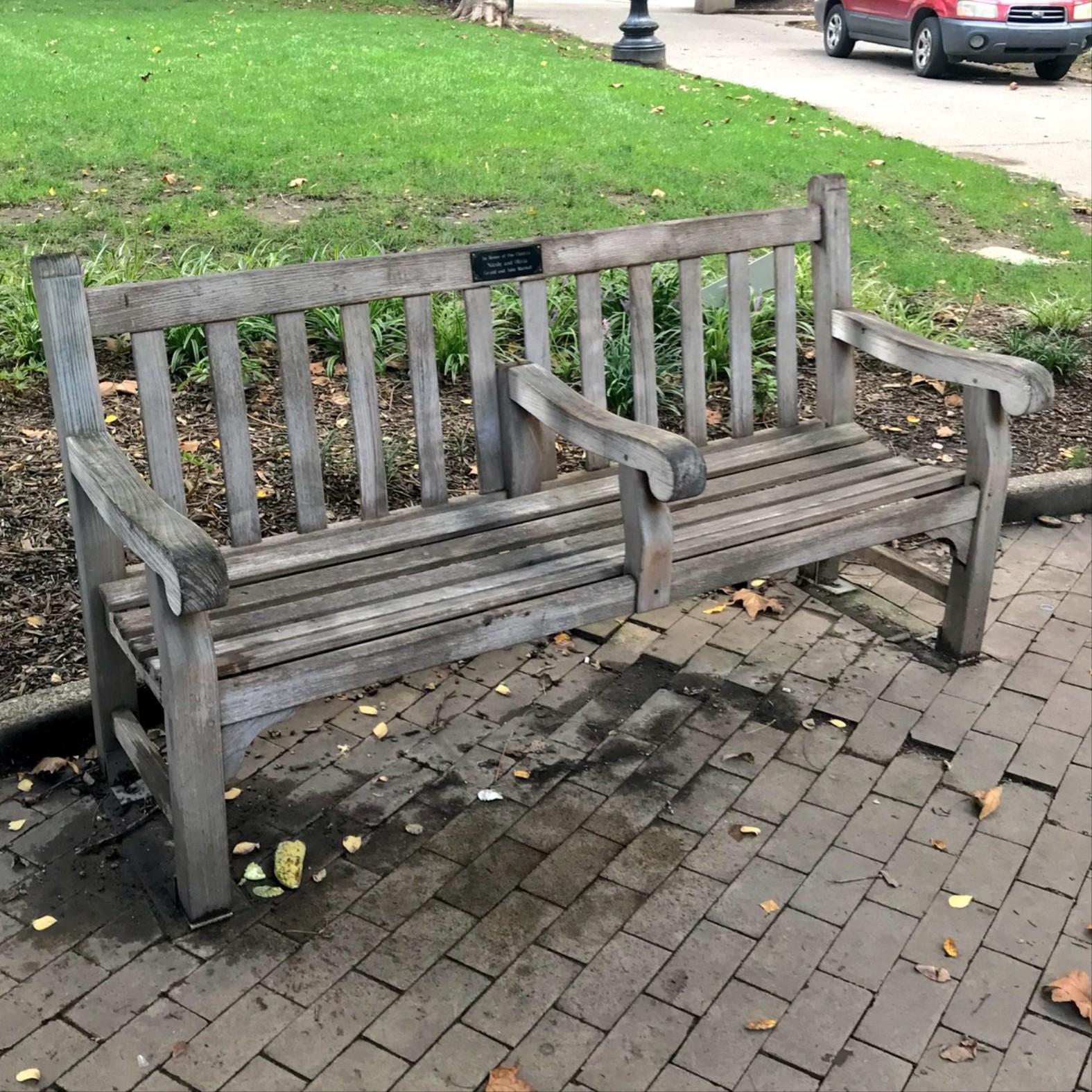
Most hostile architecture is aimed at homeless people. Sometimes it is obvious, like spikes installed on flat surfaces. Other times, it’s more subtle, like arm rests in the middle of benches. (Prevents homeless people from lying down on them.)

One of the problems with hostile architecture is that it allows us to pretend homeless doesn’t exist. If we don’t see homeless people, it’s easier to image they aren’t there. A lesser problem is that cities become more unliveable for all, because hostile architecture for anyone is hostile architecture for everyone.

We need more livable cities. And we need more support for homeless people. Hostile architecture is not the solution.

P.S. Not all hostile architecture is aimed at people. Some of it, like spikes on top of outdoor ledges, is aimed at pigeons. I’ll leave that for another post.

Resources to help the homeless deal with the cold in Toronto

If you see someone in Toronto who appears to need help in dealing with this cold weather, and you aren’t sure what you can do,  this page is worth reviewing: the City of Toronto’s Extreme Cold Weather Alerts page. It has numbers you can call and other information, including links to TTC Token Distribution Locations and information on 24-hour drop-ins available during extreme cold weather alerts.

Beyond resources related to cold weather, the city of Toronto has additional material on how to get involved to with the problem with homelessness in Toronto.

Obviously there are many more ways to help the homeless in Toronto throughout the year. These links are just a starting point if you are looking for information.