AI: from the era of talking to the era of doing

AI a year ago was mostly talking about AI. AI today is about what to do with the technology.

There are still good things being said about AI. This in depth piece by Navneet Alang here in the Walrus was the best writing on AI that I’ve read in a long time. And this New York Times piece on the new trend of AI slop got me thinking too. But for the most part I’ve stopped reading pieces on what does AI mean, or gossip pieces on OpenAI.

Instead I’ve been focused on what I can do with AI. Most of the links that follow reflect that.

Tutorials/Introductions: for people just getting started with gen AI, I found these links useful: how generative AI works, what is generative AI, how LLMs work, best practices for prompt engineering with openai api a beginners guide to tokens, a chatGPT cheat sheet, what are generative adversarial networks gans, demystifying tokens: a beginners guide to understanding AI building block, what are tokens and how to count them, how to build an llm rag pipeline with llama 2 pgvector and llamaindex and finally this: azure search openai demo.

Software/Ollama: Ollama is a great tool for experimenting with LLMs. I recommend it to anyone wanting to do more hands on with AI. Here’s where you can get it. This will help you with how to set up and run a local llm with ollama and llama 2. Also this: how to run llms locally on your laptop using ollama. If you want to run it in Docker, read this. Read this if you want to know where Ollama stores it’s models. Read this if you want to customize a model. If you need to uninstall Ollama manually. you want this.

Software/RAG: I tried to get started with RAG fusion here and was frustrated. Fortunately my manager recommended a much better and easier way to get working with RAG by using this no-code/low-code tool, Flowise. Here’s a guide to getting started with it.

Meanwhile, if you want more pieces on RAG, go here, here, here, here, here, here, here, here, here, here, here, here, here, here, here, here, here, here, here, and here. I know: it’s a lot. But I found those all those useful, and yes, each “here” takes you to a different link.

Software/embedding: if you are interested in the above topics, you may want to learn more about vector databases and embeddings. Here are four good links on that: one  two,  three, four.

Software/models: relatedly, here’s four good links on models (mostly mixtral which I like alot): mixtral, dolphin 25 mixtral 8x7b,  dolphin 2 5 mixtral 8x7b uncensored mistral , Mistral 7B Instruct v0.2 GGUF,plus a comparison of models.

Software/OpenAI: while it is great to use Ollama for your LLM work, you may want to do work with a SaaS like OpenAI. I found that when I was doing that, these links came in handy: how OpenAI’s billing works, info on your OpenAI  api keys, how to get an OpenAI key, what are tokens and how to count them, more on tokens, and learn OpenAI on Azure.

Software/Sagemaker: here’s some useful links on AWS’s Sagemaker, including pieces on what is amazon sagemaker, a tutorial on it, how to get started with this quick Amazon SageMaker Autopilot, some amazon sagemaker examples , a number of pieces on sagemaker notebooks such as creating a sagemaker notebook, a notebooks comparison, something on distributed training notebook examples and finally this could be helpful: how to deploy llama 2 on aws sagemaker.

Software in general: these didn’t fit any specific software category, but I liked them. There’s something on python and GANs, on autogen, on FLAMLon python vector search tutorial gpt4 and finally how to use ai to build your own website!

Prompt Engineering: if you want some guidance on how best to write prompts as you work with gen AI, I recommend this, thisthis, this, this, this, this, and this.

IT Companies: companies everywhere are investing in AI. Here’s some pieces on what Apple, IBM, Microsoft and…IKEA…are doing:

Apple Microsoft copilot app is available for the iphone and ipad.

IBM: Here’s pieces on ibm databand with self learning for anomaly detection;  IBM and AI and the EI; IBM’s Granite LLM; WatsonX on AWS; installing watsonX; watsonx-code-assistant-4z; IBM Announces Availability of Open Source Mistral AI Model on watsonx; IBM’s criteria for adopting gen AI ;probable root cause accelerating incident remediation with causal AI; Watsonx on Azure; Watsonx and litellm; and conversational ai use cases for enterprises 

IKEA:  here’s something on the IKEA ai assistant using chatgpt for home design.

Microsoft from vision to value realization –  a closer look at how customers are embracing ai transformation to unlock innovation and deliver business outcomes, plus an OpenAI reference.

Hardware: I tend to think of AI in terms of software, but I found these fun hardware links too. Links such as: how to run chatgpt on raspberry pi; how this maker uses raspberry pi and ai to block noisy neighbors music by hacking nearby bluetooth speakers; raspberry pi smart fridge uses chat gpt4 to keep track of your food. Here’s something on the rabbit r1 ai assistant. Here’s the poem 1 AI poetry clock which is cool.

AI and the arts: AI continues to impact the arts for ways good and bad. For instance, here’s something on how to generate free ai music with suno. Relatedly here’s a piece on gen ai, suno music, the music industry, musicians and copyright. This is agood piece on artists and AI in the Times. Also good:  art that can be easily copied by AI is meaningless, says Ai Weiwei. Over at the Washington Post is something on AI image generation. In the battle with AI, here’s how artists can use glaze and nightshade to stop ai from stealing your art. Regarding fakes, here’s a piece on Taylor Swift and ai generated fake images. Speaking of fake, here’s something on AI and the porn industry. There’s also this  piece on generative ai and copyright violation.

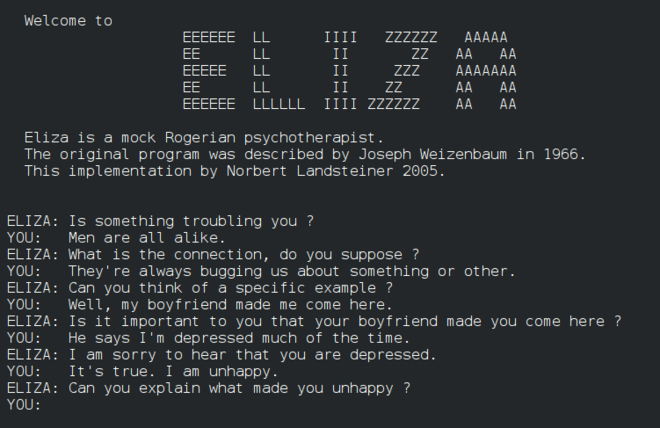
Finally: I was looking into the original Eliza recently and thought these four links on it were good: one, two, three and four. Then there’s these stories: on AI to help seniors with loneliness, the new york times / openai/  microsoft lawsuit, another AI lawsuit involving air canada’s chatbot. stunt AI (bot develop software in 7minutes instead of 4 weeks) and a really good AI hub: chathub.gg.

Whew! That’s a tremendous amount of research I’ve done on AI in the last year. I hope you find some of it useful.

Fake beaches! Fake lawyers! ChatGPT! and more (what I find interesting in AI, Feb 2023)


There is so much being written about AI that I decided to blog about it separately from other tech. Plus AI is so much more than just tech. It touches on education, art, the law, medicine…pretty much anything you can think of. Let me show you.

Education: there’s been lots said about how students can (are?) using ChatGPT to cheat on tests. This piece argues that this is a good time to reassess education as a result. Meanwhile, this Princeton Student built GPTZero to detect AI-written essays, so I suspect some people will also just want to crack down on the use of AI. Will that stop the use of AI? I doubt it. Already companies like Microsoft are looking to add AI technology to software like Word. Expect AI to flood and overwhelm education, just like calculators once did.

Art: artists have been adversely affected by AI for awhile. Some artists decided to rise up against it by creating anti-AI protest work. You can read about that, here. It’s tough for artists to push back on AI abuses: they don’t have enough clout. One org that will not have a problem with clout is Getty Images. They’ve already started to fight back against AI with a lawsuit. Good.

Is AI doing art a bad thing? I’ve read many people saying it will cause illustrators and other professional artists to lose their jobs. Austin Kleon has an interesting take on that. I think he is missing the point for some artists, but it’s worth reading.

Work: beside artists losing their jobs, others could as well. The NYPost did a piece on how ChatGPT could make this list of jobs obsolete . That may be shocking to some, but for people like me who have been in IT for some time, it’s just a fact that technology takes away work. Many of us embrace that, so that when AI tools come along and do coding, we say “Yay!”. In my experience, humans just move on to provide business value in different ways.

The law: one place I wish people would be more cautious with using AI is in the law. For instance, we had this happen: an AI robot lawyer was set to argue in court. Real lawyers shut it down. I get it: lawyers are expensive and AI can help some people, but that’s not the way to do it. Another example is this, where you have AI generating wills. Needless to say, it has a way to go.  An even worse example: Developers Created AI to Generate Police Sketches. Experts Are Horrified. Police are often the worse abusers of AI and other technology, sadly.

Medicine: AI can help with medicine, as this shows. Again, like the law, doctors need to be careful. But that seems more promising.

The future and the present: if you want an idea of where AI is going, I recommend this piece in technologyreview and this piece in WaPo.

Meanwhile in the present Microsoft and Google will be battling it out in this year. Microsoft is in the lead so far, but reading this, I am reminded of the many pitfalls ahead: Microsoft’s new AI Prometheus didn’t want to talk about the Holocaust. Yikes. As for Google, reading this blogpost of theirs on new AI tool Bard had me thinking it would be a contender. Instead it was such a debacle even Googlers were complaining about it! I am sure they will get it right, but holy smokes.

Finally: this what AI thinks about Toronto. Ha! As for that beach I mentioned, you will want to read here:  This beach does not exist.

(Image above: ChatGPT logo from Wikipedia)


On Bill Gates


This piece in The New York Times on Bill and Melinda Gates Divorcing   got me thinking about Bill again. I’ve written about him several times on this blog. I often think of him because for most of my career my field (IT) has been shaped by him. Then he left Microsoft and went off to save the world. In doing so, he transformed from the Bill Gates of old to a newer and gentler Bill Gates. The change has been so remarkable that many people likely don’t know that young Bill Gates and what he was like. If you want a better understanding of that, this old TIME article from 1997 by Walter Isaacson s helpful. (Isaacson was Steve Jobs’ biographer among other things.)

I think old Bill Gates still has some of that personality in him. I am curious to see how the divorce will change him. Whether we will see Bill Gates v3.0, someone who is neither CEO nor philanthropist. Time will tell.

August 7, 2021: It looks like Bill and Melissa have officially divorced. As a result, I suspect we will be hearing less about Bill’s bad judgement when it comes to affairs or hanging out with Epstein. As I said before, I’ll be curious how all this changes him.

(Image is a link to Wikimedia.org)

On Microsoft Frontpage: a history not just of a product, but the early days of the web

Microsoft Front Page

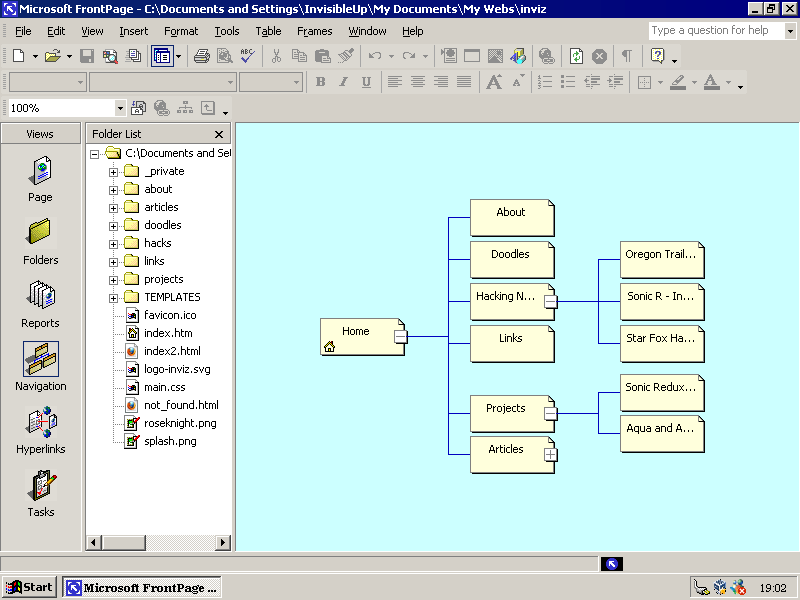
I found this piece on Microsoft FrontPage fascinating.  I remember when it first came out: it was a great tool if you wanted to develop for the web. While serious people went with Adobe products, FrontPage made developing web page easier for the rest of us. If you want to learn about the early days of the Web, or if you want to see what well designed software looks like (even if it seems very clunky with that Windows XP interfact), I recommend you read it.

You can actually still download it, here. Now should you? No. Read the sections of the article subtitled “Bad” and “Ugly” to see why.


Microsoft tries again in the phone business with the Surface Duo

And Verge has the story on this device…


…here: Microsoft’s Surface Duo looks like it’s ready to launch – The Verge.

Who knows if the world is ready for a Microsoft Phone or a Dual Screen Phone. I predict that dual screen phones like this will become more common in the next few years. Unlike some of the foldable screen phones, this one looks more durable, which will help. As well, phone makers need new designs to entice people to upgrade. And people will want the next new thing (though maybe not from Microsoft). All this adds up to more of these in the hands of cell phone users in the next few years.

That said, I am terrible at making predictions!  But I predict this will see some form of success. 🙂

Another example of Microsoft’s CEO Satya Nadella being effective by being different

Is this: Inside Microsoft’s surprise decision to work with Google on its Edge browser – The Verge.

Years ago Microsoft would have not made such a move. They would have kept trying until the bitter end (e.g. Zune, Microsoft phone). Instead Nadella and team made a  decision based more on what works for the users rather that what works for Microsoft.  It’s not a radical notion in itself, but for a company that prides itself on being successful and dominant, it’s a big switch. And it’s not just here with browsers. Microsoft’s cloud service, Azure, has a range of technology supported. It’s one of the reasons it is successful.

Microsoft has always been a successful company. They were successful under Gates and Ballmer with one approach. Nadella has a somewhat different approach, and I believe they will continue to be successful with it.

Who are The Frightful Five?


According to the New York Times, the Frightful Five are Amazon, Apple, Facebook, Microsoft and Alphabet, Google’s parent company. What makes them frightening?

(The Frightful Five) have experienced astounding growth over the last few years, making them the world’s five most valuable public companies. Because they own the technology that will dominate much of life for the foreseeable future, they are also gaining vast social and political power over much of the world beyond tech.

These companies are getting alot more scrutiny lately. Any organization as wealthy and powerful as they are warrant it. Especially so because we aren’t even certain what impact they have on our societies. I hope the Times and other newspapers continue to give them focus and question their power. And I hope more writers like Scott Galloway examine what these companies do in books like the one he has just written. Most importantly, I hope you continue to seek out information on these companies and question how you interact with them, either directly or indirectly as a member of society.

Is Tim Cook the Steve Ballmer of Apple?

This piece makes a strong case that he is: Why Tim Cook is Steve Ballmer and Why He Still Has His Job at Apple. I’d add to it and say that people like Steve Jobs and Bill Gates were great people at a great time and a great place. Steve Jobs wasn’t terribly successful at NeXT: he was still great, but the timing of his ideas wasn’t and the company itself wasn’t either. Tim Cook and Steve Ballmer are very good CEOs, but they are not in the same league as Jobs and Gates, and you could argue that the time has come and gone for both Apple and Microsoft.

Apple has many good months and years ahead. We will have to wait and see if they can regain the golden era of Jobs and his new iMacs, iPods, and iPhones.

In 1996, James Fallows wrote about Microsoft, the Internet, and even something called Java

I remember all this, but for those of you who feel like the Web has always been with us, it’s worthwhile reading his piece, The Java Theory in The Atlantic.

He didn’t know it at the time, but everything was about to change. I enjoyed reading it, first with hindsight, and then reading it while imagining/remembering what it was like then.

Worthwhile.

CP/M and Computer History Museum


If you are an old geek or interested in computing history, especially the early days of the PC, then I highly recommend you check out the section of the Computer History Museum on CP/M. Before Microsoft and Apple there was CP/M. You can even download the source code! Fun! 🙂

See Early Digital Research CP/M Source Code | Computer History Museum.

Why I think Microsoft Office for the iPad is a big deal

Microsoft is providing Office for the iPad, starting today (See this for some of the highlights: Microsoft Office For iPad Launches Today).

This is one of those milestone events in the history of Microsoft and Apple, and the computing industry in general. Back in 1997, after Steve Jobs returned to Apple, there was the big news of Microsoft investing $150 million in Apple (CNET News).  And not just money…

Microsoft chairman Bill Gates said today that the software giant will invest $150 million in Apple and will develop and ship future versions of its Microsoft Office, Internet Explorer, and development tools for the Macintosh

Back in 1997, Microsoft was dominant and Apple was dramatically regrouping. Apple needed Microsoft, especially their software. Now Microsoft is trying to pivot from the PC market (which is rapidly declining) to the future, which is mobile and cloud based. A future where Apple is currently one of the dominant players, and Microsoft is struggling. Microsoft needs Apple’s hardware, just like once Apple needed Microsoft’s software.

It is hard to say if this is going to change things around for Microsoft. I never count them out, ever. In the meantime, this is another sign that their transition is still a work in progress.

If you want to get it, you can get it here: Buy Office 365 Home Premium – Microsoft Store