The rise of Nazi thoughts and deeds in American politics – a marker

Around a decade ago, I put a marker on my blog regarding Peter Thiel, because I thought it worthwhile to track his decline. Last week the pattern of Nazi related activities in the American right got to the point where I thought: I need to start noting these.

First off, Peter Thiel is giving a lecture on “The Antichrist: A Four-Part Lecture Series” of all things. One thing that stood out for me was the reference to Carl Schmitt. In case you don’t know much about Schmitt and his relationship with the Nazis, you can read this.

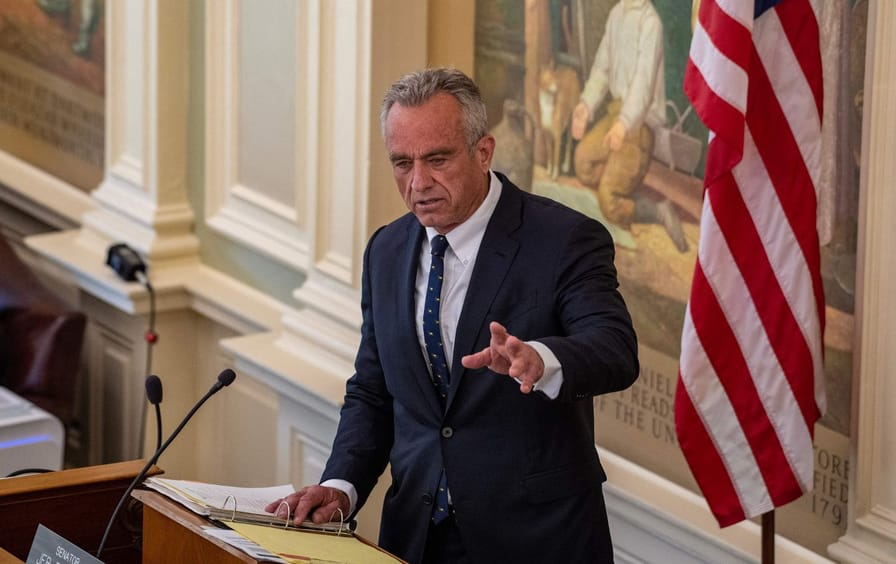
Next up, JD Vance (who is also aware of Schmitt), said, “I don’t know why we accepted that it was reasonable to have crazy people yelling at our kids. You should not have to cross the street in downtown Atlanta to avoid a crazy person yelling at your family. Those are your streets.” Read that, I thought, I wonder if we should be prepared for someone in the Trump administration to propose Aktion T4. This is a marker to see if they are going to go down that road.

None of this Nazi infused thinking is new. Mike Godwin in 2023 said comparing Trump to Hitler was not wrong, in light of Trump “calling people vermin” and “talking about blood poisoning”.

Godwin’s Law — “As an online discussion continues, the probability of a reference or comparison to Hitler or to Nazis approaches 1.”  — is good to keep in mind. It’s easy to reach for comparison of the American right wing to the Nazis, and that comparison should be resisted. Many authoritarian actions that the Trump administration has been doing are terrible but such actions are not strictly limited to Hitler and company. But as these actions pile up, and as right wing thought and action echo behaviors of Germany after 1933, it’s worthwhile keeping track. Actions like the formation of a secret police, the use of concentration camps, the attacks on the museums and the arts, or the takeover of cities by the military.

(Photo of Miller, Hegseth and Vance with the National Guard in Washington D.C.)

P.S. For people who say, Americans would never do anything terrible, I would simply start by by pointing out CIA Black Sites, where Americans would “detain, interrogate, and often torture suspected enemy combatants” in extrajudical locations outside the U.S.

Project Esther, or how to demonize your opponents and for what purpose


When it comes to demonizing your opponents, I was really struck by how strong an example the Heritage Foundation demonstrates here: Project Esther: A National Strategy to Combat Antisemitism. Start with the first paragraph:

“America’s virulently anti-Israel, anti-Zionist, and anti-American “pro-Palestinian movement” is part of a global Hamas Support Network (HSN) that is trying to compel the U.S. government to abandon its long-standing support for Israel. Supported by activists and funders dedicated to the destruction of capitalism and democracy, the HSN benefits from the support and training of America’s overseas enemies and seeks to achieve its goals by taking advantage of our open society, corrupting our education system, leveraging the American media, coopting the federal government, and relying on the American Jewish community’s complacency. The National Task Force to Combat Antisemitism intends to enlist all willing and able partners in a coordinated effort to combat the scourge of antisemitism in the United States.”

Let’s unpack that paragraph. Do you find any room there for someone like me who opposes the actions of the Israeli government, never mind those who may be supportive of the Palestinians who are bearing the brunt of the Israeli army against the Hamas organization? I don’t. As far as Heritage is concerned,  I am “anti-Israel, anti-Zionist, and anti-American”. Furthermore, you cannot consider yourself  “pro-Palestinian”: you are considered instead part of “a global Hamas Support Network (HSN)”. Not only that, but by being part of the HSN, you and I are caught up with those “dedicated to the destruction of capitalism and democracy”.  If that’s not bad enough, Heritage states that we are hurting America by “taking advantage of our open society, corrupting our education system, leveraging the American media, coopting the federal government”.  The only way you could be any worse is if you were Jewish and adding to “the American Jewish community’s complacency”.

To generalize, the formula Heritage seems to be using to demonize their opponents is:

  • Ignore the spectrum of opposition, from those expressing mild disapproval to other engaging in violent action.
  • Instead, collapse that opposition and lump all your opponents together.
  • Make sure you collapse the opposition so that it is associated with the most extreme end of that opposition.
  • Relabel the opposition with a name and an acronym that ensures others associate it with this negative extremity.
  • Invent a list of nefarious actions to apply to the opposition.
  • Claim the leadership of those who would naturally go against such negative extremity.

This particular example revolves around the conflict in the Gaza Strip. But it could easily apply to any situation. For example, during the October Crisis in Canada, all those wishing for more autonomy for Quebec and opposing the Canadian government in various forms could have been lumped into the FLQ Support Network (FSN) and the Canadian establishment could have said anyone in this new FSN bucket was an enemy of Canada and democracy and more. As you can see, it’s an easy formula to apply.

Of course it is not just enough to demonize your opponent. Once you do that, you need to use that demonization to justify your future goals. For Heritage, some of their goals for Project Esther are listed below:

  • DE1: HSO propaganda purged from curricula.
  • DE2: HSO-supporting faculty and/or staff removed or fired.
  • DE3: HSO access to campuses lost and/or denied.
  • DE4: Foreign members of HSOs/HSN access to campuses lost and/or denied.
  • DE5: Money from foreign HSO supporters not accepted by schools.

Basically, any thing they don’t like in schools and universities they can label as coming from HSO (Hamas Support Organizations) and work to have it removed under the guise of attacking antisemitism. Attacks on free speech by right wing organizations is not new, and that is part of the point of Project Esther. First demonize your opponent, then use the demonization to ban them or strike them in some way while claiming it’s for a good cause.

Whenever a person or group use the formula to demonize their opponent, you can assume some follow on extreme action is being lined up by them. Don’t be that person or a part of that group, and don’t participate in that form of thinking.

The American Right is familiar with Carl Schmitt and you should be too (for different reasons)

Nuremberg Laws English.jpg

I would have thought that Carl Schmitt is someone who should have been assigned to the dustbin of history. I would have thought wrong.

According to this piece in the New York Times from the summer of 2024:

J.D. Vance, the Republican senator from Ohio who is vying to be Donald Trump’s running mate, declared: “The thing that I kept thinking about liberalism in 2019 and 2020 is that these guys have all read Carl Schmitt — there’s no law, there’s just power. And the goal here is to get back in power.”

Masterful bit of projection there by Vance of his own ideas on to the American left.

Give the rise of Nazi thought on the American right, it should not be surprising that some of its members are turning to Schmitt. For those who are unfamiliar with him, his Wikipedia entry starts with this:

Schmitt wrote extensively about the effective wielding of political power. An authoritarian conservative theorist, he was noted as a critic of parliamentary democracy, liberalism, and cosmopolitanism.His works covered political theory, legal theory, continental philosophy, and political theology. However, they are controversial, mainly due to his intellectual support for, and active involvement with, Nazism.In 1933, Schmitt joined the Nazi Party and utilized his legal and political theories to provide ideological justification for the regime. Schmitt supported many of Hitler policies including the Night of the Long Knives purge and the Nuremberg Laws.

Based on what we have seen so far, expect to see the Trump administration put more of Schmitt’s ideas in action over the length of Trump’s latest term in office.

To learn more about Schmitt and his ideas, you can read the Times piece and the wikipedia page. You can also check out a review of this book on him. For German readers, you can read his defense of the Night of the Long Knives, here.

(Image credits: By Government of Germany – Flickr: Nuremberg Laws English, Public Domain, Link. It’s important to see just where Schmitt’s ideas lead, hence why I included this terrible diagram. After all, “he praised the Nuremberg Laws for dispensing with the commitment to “treat aliens in species and Germans equally.” – NY Times)

The last 200 days and the next 4 years in America


If anyone wants to know what happened in the last 200 days or what will happen in the next four years, then this is a good place to start: Donald Trump wins presidential election, defeating Harris to retake White House (The Washington Post). Specifically, when it comes to the economy, he promises this.

Trump did everything wrong in the campaign and Biden and Harris did everything right and none of it mattered.  The economy is doing great now but the economy has also been terrible for the last few years because of a pandemic. Beyond that, housing is simply unaffordable for many people, so having a job doesn’t necessarily make you feel good about your place, economically speaking. For those voters, the hope is Trump will fix that.

While Trump will have the Senate to make changes, he may not have the House. In terms of passing laws, that could provide him with difficulties. Difficult or not, it may not make much difference to him personally.  He will likely continue to use the office to get richer. And few if any of the charges against Trump will remain, so he will likely spend his time at the White House rather than a cell.

If anything, Trump will delegate governing to others, like Musk and RFK Jr and the Heritage Foundation. He’s not much interested in the job of the presidency, while others around him are. He’s content to be the Boss of the country and use it to get wealthy.

I suspect this is the end of Ukraine as a free country, though the rest of Europe may decide otherwise. I imagine things will only heat up in the Middle East as Netanyahu feels more impowered, but it is risky to make predictions in that part of the world.

It’s also risky to make any sorts of predictions about what will happen in the US, but unlike 2016, there’s more to base any prediction on. Generally, if you are a fan of Trump, you’re going to predict things will be great again. If you are a foe of the man, your predictions will be full of darkness and difficulty.


On Jimmy Carter, the 39th president and responder in chief of the USA

Last week former US President Jimmy Carter celebrated his 100th birthday. This piece sums up how many think of Carter as president:

In the popular imagination, his presidency was viewed as a fiasco. Besieged by inflation and a hostage crisis in Iran, it ended with a landslide loss to Mr. Reagan after just four years.  … But Mr. Carter’s presidency was more consequential than is commonly remembered, said Stuart E. Eizenstat, his chief domestic policy adviser in the White House. Eizenstat’s 2018 book argued that Mr. Carter notched significant but overlooked wins, including on energy, the environment and foreign policy.

All that’s true, but it leaves out an important detail. Whatever Jimmy Carter was, he was Not Nixon. Indeed he came across as the anti-Nixon. President Ford was Not Nixon either, but he was still attached to his disgraced predecessor. Carter allowed Americans to turn the page on Nixon in a way Ford never could.

The Vietnam War, the Pentagon Papers and then Watergate were a lot for Americans to handle. Carter gave Americans an opportunity to move on from all that and restore the presidency by being everything Nixon was not.

Sometimes presidents come along and act like first responders to a crisis. FDR did that. So did Obama and Biden. In between them was Carter. He restored the country in a way he doesn’t get credit for. Here’s hoping that becomes a bigger part of his legacy.

For more on the aftermath of Watergate, see here and here.

The Fall. A time of change. Here’s some thoughts on what changes have occurred recently (and what stayed the same) in my usual ramblings for a new season  (i.e. the September 2024 edition of my not-a-newsletter newsletter)


It’s the Fall, a season of change. Let take some time and look at what’s changed and what hasn’t since I last posted.

The obvious thing that hasn’t changed is I am still writing newsletter.  Thanks for continuing to read these odd newsletterish posts of mine. I’ve been writing them since the beginning of the pandemic. There’s a certain pleasure in adding another link in the chain.

Olympics: Since the last newsletter, we’ve had the Paris Olympics. That was a nice change for many people. It was a bit unusual, as it used the city for much of the venue. But since it was Paris, the venue was beautiful. Speaking of beauty, here are some of the most beautiful moments of the Olympics. And here are some of the best moments.

While there were plenty of amazing stories coming out of the Olympics, This  one of one Olympic ahtlete who competed at age 61 caught my attention.

Pandemic: you might not think there is anything changing regarding the pandemic, but there was a spike in covid over the summer. (Get those fall vaccines when you can.) More on that wave, here.

The kids who were preschool age during the pandemic are now in classes and struggling. Just one of the many long term impacts of that period.

Inflation: lots of good change on this front. Inflation  is finally below 3% in the US. Grocery prices are finally falling. Dining out is getting cheaper, at least in the fast food industry, as this and this explain. All good to see.

Work: Some companies are trying to get employees to change their routine and stop working from home. Some, like Amazon, are forcing employees to return to office (RTO) fulltime. Are there also layoffs coming down the pike at Amazon? I am guessing yes. After all, weaponizing RTO is an easy way to shed employees. And while they might be able to get away with this in the US, they should expect legal issues in the UK.

As time progresses, who knows how many offices there will even be in the future? The Times has a good piece on how banks are quietly dumping  commercial real estate loans.

USA: it’s an election year in America, which should bring in much change come November.  If you want to understand who is leading in the US polls, read this.

A big part of the presidential election comes down to certain states. This piece on  swing states explains that for you and why it’s important.

Have you heard of sanewashing?  Poynter explains what it means. It will be interesting to see if journalists can allow Trump’s words speak for themselves, or whether they will continue the practice.

When it comes to supporting a presidential candidate, are the Silicon Valley elites right wing or left wing? As this piece explains, it depends. Some, like Peter Thiel, are very conservative to the point of being directly involved in sponsoring  JD Vance, Trump’s VP choice, among others.

As for American conservatives on the whole, they’ve had some big wins with regards to US supreme court term decisions lately. Here”s a good piece the dives deeper and assesses the radically right wing Roberts court.

With all these wins, what might conservatives in the US come after next? Possibly no fault divorce. And if you are wondering how conservatives are so successful getting their way legally, here’s something on how they game the US supreme court.

On last American item. I think the fact that  insurance companies are going to try to stop losing money because of  climate change is going to be a big thing politically and otherwise.

China: things continue to change in China. The government is struggling to improve  the  economy. The government is also concerned with Russia and North Korea getting closer. Perhaps that explains the big shakeup in the military. This has nothing to do with changes, but this piece by a Times bureau chief exploring his father’s time spent in Mao’s army was quite good.

The World: After winning a landslide victory, Labour in the UK is shaking things up there with plans to remove all hereditary peers from the House of Lords.

Like a lot of cities, Barcelona has had it with too many tourists. To change that, it is ending apartment rentals by foreign tourists. On the other hand, Oslo had a viral ad campaign that is meant to attract tourists.

War continues to shape the Middle East. Israel is now ramping up their attacks on Hezbollah to the north of them. For readers not familiar with the group, this is a good piece on what is Hezbollah’s role and influence in Lebanon.

Finally, people have been worried about AI disrupting the world. While all that worrying was happening, the computer company  Crowdstrike caused a massinve outage on computers all over the world after pushing out a change. Talk about disruptive. Not the type of change the world needs.

As always, thanks for taking the time to read these rambles. I appreciate it.

How to predict who will win the US Presidential Election?


Here’s two ways to predict who will win the presidential election:

First: look at the 13 keys of Allan Lichtman, Presidential Predictions Guru. According to Lichtman, there are 13 keys to determine who will win the next election:

  1. Midterm gains
  2. Incumbency
  3. Primary Contest
  4. Third Party
  5. Short-term economy
  6. Long-term economy
  7. Policy Change
  8. Social Unrest
  9. White House Scandal
  10. Incumbent Charisma
  11. Challenger Charisma
  12. Foreign Policy Failure
  13. Foreign Policy Success

Of the first 11, Lichtman says Trump comes out ahead on 1, 2, and 10 (in italics) while Harris comes out ahead on the rest (e.g. there was no primary contest, no third party, the economy is doing well, no policy issues, no major social unrest, and no scandals for her.)  That’s enough to assume she will win the election, regardless of foreign policy (which he skipped over).

Mind you, based on this, Biden was set to win the election, but I am not alone in thinking that was not going to happen.

Still, I think there is alot to agree with in the 13 keys. As people go to vote one or more of these keys will be on their minds as they cast their ballot. Check out the link above to get more insights from the man saying Harris is the next US President.

Second: look at the Electoral College map and the swing states. That’s certainly what the candidates are doing on their campaigns. Two states in particular could make all the difference as to who is the next US President: Georgia and Pennsylvania. The Washington Post takes a closer look at the two states that loom largest in 2024 election.

Forward: the new Shepard Fairey


Just as he did for Obama, you can find his latest imagery for Harris by Fairey,  here.

I’d add it’s smart he did this. I’ve been seeing all sorts of remixes of his old work, applied to Kamala Harris. It’s good to see his version.

(Art by Shepard Fairey. Reference photo by Lawrence Jackson / Biden for President is licensed under CC BY-NC-SA 2.0; For personal, non-commercial use only.)

How can you learn about Project 2025? Three ways

If you are curious about Project 2025 — and if you are an American, you should be — there are at least three ways you can learn more about it.

The first way is to go to a web site set up to describe it, Project 2025: Presidential Transition Project.

Personally, and as a progressive person, I found this the best way to understand the effects it could have, 25and.me: How Does Project 2025 Affect Me?

However, if all that is hard to get a handle on, or if you want something more neutral, you can also check out: Project 2025 in Wikipedia.

Chances are if Donald Trump is reelected president, many of the things proposed in Project 2025 will come to fruition in the four years he is in office. So before you vote, read up on Project 2025 and know what you might be in store for.

Cook Out is coming. Get ready!

If you have not heard of Cook Out, you a) likely have not been to the U.S. South b) have been missing out! Whenever I can get down there I try to make one visit for a burger and chili fries. It’s fantastic. I would eat there all the time if I could.

Well good news: I might be able to. According to Slate, the Cook Out fast-food chain is expanding! Hey if Chick-fil-A can get to Toronto, maybe Cook Out can too. The thought of it is thrilling!

If you do get a chance to go to a Cook Out, I highly recommend it. Until then, read the Slate piece to find out more about this fine fast food place.

P.S. No, the burgers do not come with googly eyes. Slate did that. 🙂

The problems of poverty are solvable and simple. But instead….

The problems of homelessness and poverty are solvable and simple. They take money, and they take concentrated effort. Doug Saunders explains how London solved its homeless problem doing just that. But eliminating homelessness isn’t enough. Once people are housed, then they need support to eliminate their poverty. Such support is worth it. Studies like this show that public guaranteed child support programs help reduce poverty worldwide. Or these studies like this one in Nature on the positive effects of cash transfers on adult and child mortality in low- and middle-income countries, Or this piece on how CERB training programs during the pandemic helped people find better jobs which also reduces poverty.

It all makes sense to me. That’s why I find it deplorable when I read that the American federal policy on homelessness is becoming a new target of the right. Or that the GOP is striving to cut SNAP benefits and are trying to make it more difficult for people to access social assistance.

After all, the United States is the wealthiest country in the world. If any place could eliminate the problems of poverty, they could. But rather than putting in the effort into helping the homeless, their cities are demolishing  homeless camps and forcing people out of hotels homeless people were using during the pandemic.  (More on that, here).

Canada is not much better. We also are wealthy. We could also eliminate poverty. But we have also demolished our homeless camps and forced people out of hotels that they stayed in during the pandemic.

It’s easy to fall into despair. When I do, I try to read stories like this one on  Nashville’s Father Strobel. Also good is this piece on how  ending chronic homelessness is a mission of love. Or this on  shelter and palliative care for the homeless.

We need to do better. We need to be more like London, less like so many other places. It’s simple. It’s just not easy.


The wheels of Justice in America are turning forward

It is interesting to see the wheels of Justice turning in America. For a time they did not seem to turn at all. As Josh Marshall illustrates in this piece on January 6th, for some time there was a perception that right wing militant groups could act out the way they wanted to and no one could stop them. That changed on January 6th, as groups like the Oath Keepers and the Proud Boys are discovering. No doubt these groups may continue to exist in some form, despite their head being cut off. But it is something to see these groups finally being brought to justice after some time of being able to engage in riots and more with impunity.

After crushing some of the right wing militia, the wheel of Justice seems to be bearing down on members of Donald Trump’s inner circle, from Ron Navarro to Rudy Giuliani. Trump himself is under so many investigations that the New York Times had to build a special tracker so people can keep up with them all.

(If you thought this would change his behavior, you would be wrong. He continues to be a fountain of lies: the only difference now is how the news media covers him, as you can see here. He also continues to stiff people, as this story on Rudy Giuliani’s legal finance woes show.)

The wheels of Justice don’t just go right, they go left too, as the protestors of “Cop City” in Atlanta are about to discover via this indictment. Is it a bad use of RICO? Possibly. No doubt Trump and people would say the same thing. Regardless, it will be interesting to see if the Georgian prosecutors can make the cases, left or right.

P.S. Other American things I found noteworthy: Some school in Florida put restrictions on Shakespeare in their classrooms, which lead to this  really good essay on how Shakespeare is ribald and great. This story of disputes between left and right business in a small town of Virginia says more about America than a dozen essays can. Finally, the image below is of “the Byrna Mission 4. This pneumatic rifle shoots non-lethal rounds, incapacitating intruders without causing permanent harm.” Like the story of the business dispute, it too says alot about the America.

Thinking about the SCOTUS and America on July 4th, 2023

Canadians can fool themselves into thinking they understand America and Americans. I certainly can. But America is different and there are many things I don’t really understand, try as I might.

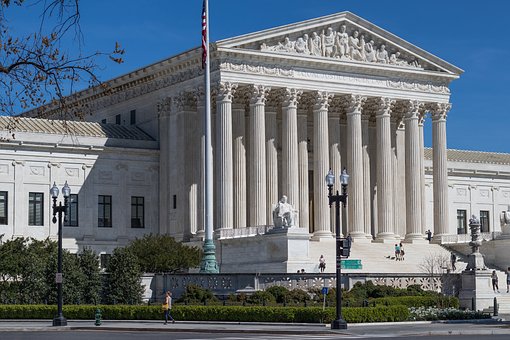
The Supreme Court, SCOTUS, is one of those things. In Canada, the Supreme Court acts like a supreme court should, I believe. It barely gets any notice in Canada, and when it does, it’s usually for a very good reason. No one thinks of it in a politicized way.

That’s very different than SCOTUS, it seems to me. That court comes across as highly political. Which is why people talk all the time about their political leanings. Which is also why I find this feature in the New York Times so fascinating: major supreme court cases for 2023.  For certain cases, the court lines up the way you’d expect. But for a majority of the cases, that isn’t true. Take a look: you’ll see the court is more complex than you think.

That said, SCOTUS has many problems. The corruption of Alito and Thomas, for one. This fact that many of decisions are based on errors which are not hard to find, is another.

Finally, I don’t agree with everything in this, but I think that what Josh Barro wrote on the recent supreme court moves worthwhile. Likewise these pieces by Jamelle Bouie, and Steve Vladeck and Adam Liptak.


On RFK Jr and the people that are supporting him

RFK Jr is in the news a lot recently. One obvious reason is that he is trying to run for President. The other reason is because some of the worst of people are jumping on his bandwagon and amplifying his campaign.

If you are unsure about him, then I recommend this piece on RFK Jr for several reasons. First, it sums up how I think I now think about RFK Jr:

His noxious views on vaccines, the origin of AIDS, the alleged dangers of wi-fi and other forms of junk science deserve no wide hearing. Polls showing he’s favored by 20 percent of likely Democratic voters over President Biden are almost as laughable as Kennedy’s views. It’s early; he’s got iconic American name recognition; and there’s almost always an appetite, among Democrats anyway, for anybody but the incumbent.

Second, it also has a list of articles at the beginning that debunk RFK Jr’s ridiculous claims. And if that’s not enough, here’s more on RFK Jr from the New York Times and People Magazine.

As for the people jumping on his bandwagon and amplifying him, here’s a break down on the horrible harassment of  Dr Peter Hotez by Joe Rogen, Elon Musk and others. As for why you don’t want to debate science on a podcast, here’s a good piece on what it’s like to go on  Joe Rogan and debate anything 

Here’s hoping RFK Jr and the cranks he attracts fade into the background soon.

The crucial fact to remember when it comes to Debt Ceiling discussions in the USA

There’s a great quote in this piece on how the Republicans demand spending cuts to lift the debt limit. They won’t say what to cut. It’s this:

“If you exempted defense, veterans, Social Security and Medicare spending, you’d have to cut everything else by 85%,” said Marc Goldwein, an expert at the Committee for a Responsible Federal Budget, a think tank that advocates for reducing red ink. “It’s possible as a mathematical proposition. But the question is: Is it possible as a policy proposition? And the answer is no.”

The crucial fact is this: the US government is an Insurance Company with an Army. (From Paul Krugman’s blog of over 11 years ago,) That leave any one governing with really two choices: cut the insurance or cut military spending if you want to make significant reductions in the budget. If you cut the insurance, good luck getting reelected. And while I think they could easily still dominate the world with a much smaller military, good luck as well persuading many American voters of that.

Some Republican politicians love to imagine they can reduce government spending significantly during these Debt Ceiling discussions. All the best with that. (Even Mitch McConnell is moving on this time.)

On the Embrace


There’s been plenty of reaction to the above sculpture, “Embrace”. You can get a sample of the it in places like the Washington Post, NBC, and the artistic website hyperallergic.. Not all of it, but a lot of the reaction has been….not good.

If you are unaware, the city of Boston unveiled “Embrace” just this month. The work is based on a photo of Martin Luther King and Coretta Scott King and it represents part of that photo. Conceptually that’s a great idea. In reality, it’s not, at least according to many who’ve seen it.

Having read a number of reactions to it, I think the problem can be seen if I ask myself  the question: is it a monument or a sculpture? It has elements of a monument: it is a large realistic work in bronze of a famous and celebrated couple. It also has elements of a work of art: it is symbolic and abstract in a way. As a result, it falls somewhere in the middle between monuments and  sculptures. And in falling in the middle, people get unsure of how to process it, I believe.

Of course, monuments can be abstract and non-representational: take the Washington monument in D.C.  And sculpture can be bronze and representational: think of anything by Rodin. Even monuments that are abstract and non-representational can be controversial, as the Vietnam Veterans Memorial showed when it was first unveiled. There is no formula for what works that will guarantee that a monument or sculpture will win acceptance.

I do believe, though, that if the Embrace was realistic like the Martin Luther King memorial in Washington, it would be more liked. Likewise, if it were made of something other than bronze and made more abstract, people might be confused but less vitriolic about it. Alas, it is what it is.

I feel in the long run this work will come to be accepted and even loved. Works like this weave into the lives of people, and as they do, they become parts of the best of them. I also hope we see more sculptures and monuments of great African American leaders such as the Kings. That’s an idea we should all embrace.

Are you bad at taking vacations? If you are American, chances are you are


I am on vacation this week for a long overdue time off. In that regard, I am like many of my American counterparts. As this piece shows, Americans don’t get much vacation time. Worse, they are bad at taking it. As for why that is, it says Americans…

  • felt they couldn’t adequately disconnect from work while on vacation
  • thought they wouldn’t feel relaxed or connect with loved ones
  • anticipated negative outcomes, such as feeling stressed or having financial burdens.

As someone who has worked with many Americans, that all rings true.

There’s a joke on the Internet that Europeans will take off the whole summer for vacation, while Americans are available to take a business call during surgery. An exaggeration, but not that far off.

For more on this, see: U.S. vacation time is short and Americans don’t use it wisely.

Get some time off. You and the people you work with will benefit.

The badness of America


America is great in many ways, but when it’s bad, it’s terrible. Much of this has to do with the Republican party and the people who support it. That support means that people in Republican Counties Have Higher Death Rates Than Those in Democratic Counties.  People are stupid, but it doesn’t help when those that lead them are evil or incompetent.  Speaking of evil, here’s a piece on  Tucker Carlson and why it is pointless to interview him. It’s not all evil though, some of it is just incompetent, like the Texas power grid. Also dumb are Republicans thinking they should have the right to spam people. Back to evil, this piece on Citizen Bopp, explains how much toxic legislation gets drafted. Now back to freedumb and how Americans will sooner metaphorically shoot themselves in the foot for freedom than to act reasonably.

Besides the GOP, much of the badness of the US rises out of political Christians, which has lead to the rise of Christian nationalism . Evil. As for dumb? What Happens To Christian Influencers When They Get Married?

All that helps explain why the American right falls over terrible world leaders like the bigot Victor Orban from Hungary. (Not that we Canadians should be smug: our ex PM Harper is apparently a fan.)

America still reserves the right go assassinate people around the world, and because the weapons are getting better and the targets are awful, no one blinks an eye at stories like this:  Little-known modified Hellfire missiles likely killed al Qaeda’s Zawahiri.

Anyway, those are just some of the links I’ve saved over the last while on the badness of America. Never mind their Supreme Court and how evil and incompetent they are.  It’s one thing to be right wing, but they had a chance to limit Roe v Wade in a way that would be less damaging and they refused to take it.

Maybe next week I’ll be in a better mood and I will write about why American is great.  Often times they are great because of their enemies and the challenges they pose. Some of those enemies are foreign, but many of them are domestic.

The worst of the Supreme Court of the US?


With all the news concerning the US Supreme Court, I did some digging to see how the current court measures up against its predecessors. Here some pieces I found on the worst decisions ever made:

And here are two articles on the worst members of that court:

Judge for yourself. 🙂


On July 4th, here’s some links on politics to consider

Like many people, I am riveted to what is happening in the USA lately. It seems to be coming undone as right wingers try and pull the country to a place that will be bad for Americans and in some cases bad for the world. To support that opinion, here’s some links I’ve recently collected. (As well as other links related to politics in general.)

Jan 6th: First up, there is the January 6th committee investigating the insurrection that happened on that day. Mike Pence featured prominently in the beginning, leading to pieces like this, Why Democrats Should Honor Mike Pence, and this and this. Then there were others, like  Rusty Bowers in Arizona.  More on the role of the GOP in the hearings. I respect all those who did their job/duty and pushed back on Trump and those who tried to subvert democracy. I don’t think we need to make them all into heroes, but we should respect their courage and determination. And who knows, but here’s how Merrick Garland might play into this.

Trump: On the other side, here’s a piece on Trump’s legal defence. A key player, Rudy Giuliani used to be looked up to. Hard to believe now. This piece explores his decline. Here’s a piece on the Congresswoman Nancy Mace and limits of Trump’s influence.  Here’s Bob Woodward and Carl Bernstein comparing Nixon and Trump in terms of corruption.

Media: As an aside, this was good:  Bob Woodward explains key scenes in All the President’s Men. This was not so good: The Washington Post’s social media meltdown. Finally, people who are political junkies might like this:  The Rise and Fall of the Star White House Reporter.

The right, SCOTUS, and Roe: To understand what is happening in the US, you need to understand the Religious Right. This helps with that: The Real Origins of the Religious Right. But it helps to know what other players are up to as well, such as Peter Thiel. Or this $%&*, Tucker Carlson.

Which leads to the overturning of Roe vs Wade by the Supreme Court of the US (SCOTUS). Two pieces on that: the Roe opinion and the case against the Supreme Court of the United States and SCOTUS’s argument for overturning Roe v Wade and Casey. Relatedly, this piece was wrong: The leaked draft Roe opinion is a disaster for the Supreme Court. They lived.

Other things worth reading: More on SCOTUS and how they are dishonest in their judgments; this oped, A Requiem for the Supreme Court After Roe’s Demise; and this, Decades Ago Alito Laid Out Methodical Strategy to Eventually Overrule Roe.

To get more of a handle on this, I read these  pieces trying to understand what happens next in the US by these studies of  Oklahoma and Ireland. Here’s a piece on how legislatures play into this. Here’s how right wing extremists will be collecting data potentially to go after women seeking abortion. Finally, this on the doctrine of potential life and what’s wrong with it.

Politics and Tech: here’s four pieces on how tech intersects with politics:  1) On period trackers, 2) Microsoft reportedly censors searches for politically sensitive Chinese data, and 3) Canada and how Russian hackers come after it and 4) The Surreal Case of a C.I.A. Hacker’s Revenge.

Generally: the war is still ongoing in Ukraine. Here’s two pieces on it: here and  here. Elsewhere in Europe: Hungary: where replacement theory reigns supreme. And to wrap up: How Asian Civilizations Will Change The World Order….nope;  The Meaning of Machiavelli.…Yep;  For Tens of Millions of Americans the Good Times Are Right Now….maybe?

If you’ve read this far, thanks. All comments are moderated and any I deem thoughtful I’ll approve. The rest go in the trash.

Late night thoughts on America, China and Africa

Here’s some interesting links I found on America, China, and Africa over the year that I thought worth revisited as we move from 2021 to 2022.


On American justice: There was plenty of turmoil in the American justice system in 2021. For example, the Arbery trial outcome was uncertain:  Nearly All-White Jury in Arbery Killing Draws Scrutiny while the Rittenhouse trial was not: Of Course Kyle Rittenhouse Was Acquitted. The effects of the US Supreme Court becoming more conservative was discussed in pieces like this  Five Justices Did This Because They Could and this It’s time to say it: The conservatives on the Supreme Court lied to us all. Finally a reminder of how terrible capital punishment is in many ways, as this piece shows: They executed people for the state of South Carolina. For some it nearly destroyed them.

On American history: Americans spent much time debating their history, too, in pieces like this, Date of Viking Visit to North America Pinpointed to 1021 AD,
this The Debate Over a Jefferson Statue Is Missing Some Surprising History  this Cancel Columbus Day: Sun storms pinpoint Europeans being in Canada in 1021 A.D., and this: Does America really lose all its wars?.

A special focus was put on the 1619 Project, here The 1619 Project and the Demands of Public History and here The 1619 Project started as history. Now it’s also a political program. Relatedly, this: List of last surviving American enslaved people.

Finally, this bears rereading:  Bertrand Russell’s Ten Commandments for Living in a Healthy Democracy.

China: like the US, China is struggling too. Struggling with it’s young people (‘Lying flat’: The millennials quitting China’s ‘996’ work culture to live ‘free of anxiety’), scandals (Beijing Silenced Peng Shuai in 20 Minutes, Then Spent Weeks on Damage Control), worldwide distrust (As Distrust of China Grows Europe May Inch Closer to Taiwan), and their treatment of  Uyghurs (U.S. Holocaust Museum Says China May Be Committing Genocide Against Uyghurs). And as Xi Jinping gains more control, he is coming under more scrutiny, as seen here China’s Xi Jinping Remakes the Communist Party’s History in His Image and here What if Xi Jinping just isn’t that competent?

Africa: For the first part of the 21st century, China and the US will be the dominant great powers. However as we move towards the 22nd century, the next great power may come from Africa. At the very least, Africa’s rising cities will be dominant.

On not forgetting George W Bush

I was reading this analysis of a recent speech by George W. Bush (‘The Nation I Know,’ by George W. Bush – by James Fallows – Breaking the News) and it got me thinking about him again.

It’s easy to forget about Bush. Most Republicans act like they have. Many Democrats too. While reviled towards the end of his presidency — so much so that he was shunned by his party at their conventions — there are people who still think positively of him (For example, Michelle Obama Explains Her and George W. Bush’s Candy Exchange and Friendship).

But no one should forget about Bush and all  the terrible things done during his presidency, from torture to war. To see what I mean, read this: The Legacy of America’s Post-9/11 Turn to Torture – The New York Times. While some in America would like to forget all that and think better of him, much of the world likely thinks like this: George W Bush should shut up and go away | US & Canada | Al Jazeera. Even there, the idea is to dismiss him and forget about him.

Perhaps Bush is a genial and charming man. But he will also be the man that brought the United States and the World to a worse place. That should not be forgotten.

(Image above: Official White House photo by Pete Souza – https://www.flickr.com/photos/whitehouse/4291602492/ (direct link))

If you contribute to political campaigns, you should read this

If you come across this article, How Trump Steered Supporters Into Unwitting Donations – The New York Times,  you might initially think a) well yeah Trump is a crook so no surprise b) his supporters are dumb so also no surprise. You can think that.

However, consider it from the point of view of people working on campaigns. Some of them on both sides might be thinking: this is a good way to bring in money. It’s hard to raise money, they might think, and this is a way to make it easier. These campaign workers might be working on campaigns for people you support. They might think the ends justifies the means.

So if you do contribute to political campaigns, consider doing it from an account that has a limited amount of funds in it. That way even if they trick you into overdonating, you won’t run into some of the trouble that Trump’s supporters did.

(Image comes from a link to an image in the New York Times piece)

Will interest in the topic of fascism fade in the US?


Looking at this Google Trends line, there were two peak periods when there was a strong interest in fascism in the US: at the beginning of Trump’s term and towards the end. While those were peaks, there was much talk about fascism through his period in office. As he fades away (rots in jail?), I expect that interest to die off now the US has a new president. Let’s hope.

Meanwhile, the more and more I became convinced of the fascist behavior of the Trump administration, the more I started to read about it. Two links I found interesting were these:

  1. What 1930s political ideologies can teach us about the 2020s | Aeon Essays
  2. The Best Books on Fascism | Five Books Expert Recommendations

If you are interesting / worried about the rise of neo-fascism, I recommend those links.

(Image is one of the best books on fascism).

The worst ever president of the United States of America (revised) is…

No longer this guy:

Three years ago I argued Buchanan was the worst president, here:
The worst ever president of the United States of America is… | Smart People I Know

But a lot has happened in three years, and I now agree with Tim Naftali who argues that: Trump Is the Worst President in History – The Atlantic.

He makes a strong case. Not only that, but we haven’t even begin to know all the bad things Trump has done.

There have been many bad presidents, from Harding to Johnson to Nixon. But Trump takes the “prize” for being the worst.

On US Politics, Money, and the recent election

Money
American politics is about many things. One of the main things it is about is money.  For a while it was believed that after the “Citizen United” case, the flood of money  would almost guarantee whoever had the most money would win.  Now it’s not just about what money can do, but what it cannot do.

As some states like Maine and South Carolina showed, vastly outspending the incumbent will not guarantee election: The Democrats Went All Out Against Susan Collins. Rural Maine Grimaced. – The New York Times. That’s not to say money is irrelevant. It’s just that it has limits. It’s no longer enough to bombard people with ads bought with all that money. You need to spend smarter. I am not sure if anyone in the US has that figured out.

Speaking of money, this article by Jamelle Bouie highlights the importance of money especially when it comes to low information voters: Opinion | A Simple Theory of Why Trump Did Well – The New York Times. High information voters might scoff at “Donnie Dollars” (cheques issued by the government with Trump’s name on them). But I agree with Bouie: things like that make a difference with many voters. People might not closely weigh one politician’s promises versus another, but they all remember the jobs and services and other benefits that the incumbents brought their way.

(Photo by Matthew Lancaster on Unsplash)

On Mitch McConnell

Two good pieces on Mitch McConnell, here and here.

The first piece is analyzing if he is good at his job. The second piece has a snarky title but gets to the essence of McConnell.

I’d argue he is good at his job. He’s a strong parliamentarian who knows his caucus . He has a simple agenda and he strives to get it done. If you are a progressive, that stinks. But if you are a conservative,  it’s great.

People struggling to understand McConnell usually do so because they imagine him to be someone else. But he is simple to understand. How you feel about that is different.

Thinking about the Iowa caucus

After last night’s debacle at the Iowa caucus for the Democrats, there are going to be many hot takes published on what should change. I suspect many of them will be bad. The following is pretty good, I think.

Something should change, though. That was an embarrassing disaster.

— Read on http://www.vox.com/policy-and-politics/2020/1/31/21087017/iowa-caucus-democratic-primary-2020

A good profile on Jimmy Carter, who is 95 years young today


This recent piece in the Washington Post is a reminder what a good man and what an under appreciated President that Jimmy Carter was: The un-celebrity president: Jimmy Carter shuns riches, lives modestly in his Georgia hometown – The Washington Post.

He was dealt a bad hand a number of times, but he achieved greatness too. His greatest deed may have been to allow the United States to transition from the debacle that was the Nixon Presidency.  Like Obama with the Great Recession, he saved the country from those that would harm it.

The idea of North American and 11 nations…


…Is a good one, I think. I found after I read this book, American Nations, I had a much better appreciation for decision made by people from different regions of the United States, once I had a better understanding of the culture and background of each “nation” and how that affects their thinking.

If you are curious, this is a good article that summarizes the ideas in the book:Which of the 11 American nations do you live in? – The Washington Post

The book is good, though. Worth a read.

Bon Appétit pays homage to red sauce restaurants

Bon Appétit has a rich list of articles and photos paying homage to red sauce restaurants in America. You likely know this type of joint. It has:

The oversize portions. The red-and-white-checked tablecloths. A carafe of the house red. Old-school Italian-American restaurants, a.k.a. red sauce joints, are the kind of institutions you’ll find, with very few deviations, in just about any city in America. But as we discovered upon reaching out to dozens of writers, chefs, and celebrities, these restaurants are about a lot more than a plate of penne alla vodka. Whether or not you’re Italian, red sauce likely means something to you—about family, or home, or history, or politics, or class, or citizenship, or selfhood, or otherness, or all the above, or a million other things. And that’s what this package is all about. Welcome to Red Sauce America.

For a feast of this type of dining, see here: Welcome to Red Sauce America – Bon Appétit. 


Thinking about Woodrow Wilson (and other American leaders)


Before this piece, I had limited knowledge of Woodrow Wilson. Most of that was centered on the work he did at the beginning of the 20th century, and much of that came from Margaret McMillan’s book, “The Peacemakers” (in the UK) / Paris, 1919 (in North America)”. My impression of him was a giant, transforming the old world with his ideas and his actions, and it was a transformation that was much needed. The world transformed after the first World War, leaving behind much that was bad, and a lot of that was Wilson’s doing.

However, Wilson racism was a terrible thing, and there is no overlooking it. There is no way to say Wilson was simply a great man: his racism and the discriminatory actions he took stain him permanently. He is a complex man, though, and there is no one scale to measure him on.

This complexity is  true for all American presidents. There is a part of Americans that want to revere their leaders. They build them monuments, they sanctify them, they constantly assess and reassess them, be they Wilson, or Grant, or even Reagan. No doubt this will happen to Obama, too. This desire to sanctify leads to trouble, just as it is leading to trouble in Wilson’s case.

Ideally Americans would spend less time idealizing their past leaders and building them monuments and centers like the one for Wilson. Anything like that should include all the history of the person and the time they lived in. Show the complexity of the person, their strengths and their weaknesses, and highlight both what they achieved and what they failed to achieve. Give a full accounting of the person.

(Image is a link to a photo by Mark Makela for the New York Times)

Democracy in action – An Introduction to Field Organizing

If you want to do more than vote in an election, especially if you are an American, then read this: THIS ELECTION IS FREAKING ME OUT, WHAT CAN I DO!? (An Introduction to Field Organizing). Obviously this is geared towards Hillary Clinton supporters for president, but read it regardless of you who you plan to vote for and at what level.  It should help you get to the point of at least knowing the right questions to ask and where you might go next to get more involved.

Voting is important, but there is much more to democracy than that. If you step up, your involvement will make a difference, regardless of your role. Good for you for taking that next step.

A better way to follow the US presidential race…

..is to follow this, from Bloomberg:  Who’s Winning the Presidential Delegate Count?

You can still read the news and follow along, state by state, but what really matters more and more is the delegate count.

One thing that surprised me: right now, Ted Cruz is alot closer to Donald Trump than I imagined. Obviously there is a way to go still, but he is doing well. Will Cruz win? I think the odds are against him, but right now they are not insurmountable.

As for the other side, I believe Hillary Clinton is going to win, regardless of the Michigan surprise showing of Bernie Sanders. Sanders is performing better than many imagined, but she has a big lead in delegates and that will only get larger as we go along.

How to tell who the next president of the US will be (ahem, Hillary Clinton)

There’s two ways to tell who will be the next president of the United States.

  1. Listen to the pundits: The Most Likely Next President Is Hillary Clinton – Bloomberg Politics
  2. Follow the betters: 2016 Presidential Election – Next President bet | betfair.com

In this case, at this moment, they are both in agreement: Hillary Clinton will be the next president of the United States. Now, the election is so very far away, anything can happen, a week is a long time in politics, blah blah blah, but right now it is hers to lose.

If you ask me, ignore the pundits and follow the betters: the latter are rarely wrong. Read the pundits if you want to know why she is winning.