Every thing — everything — is a gift


It’s not true, of course: everything is not a gift.

But if you take a moment and think: what if this were a gift? How would I think of it differently? How can I benefit from this?

Some people believe every day you are living is a gift. You can expand upon that. Think: every day is a gift, and every thing in that day is a gift, too.

Try taking that perspective when difficult things come your way today. Take out a pencil and a pad and for a few minutes write down the things you gain from whatever you’re dealing with. If nothing else, adversity gives you the chance to get stronger and wiser. Strength and wisdom are certainly gifts. No doubt you can glean out more.

On natives and migrants

It’s difficult to not think about migrants and natives. So many problems in the world have their roots in who belongs to a place and when. So I was interested to hear about this book: Home Rule – National Sovereignty and the Separation of Natives and Migrants from Duke University Press. The Duke University Press says:

In Home Rule Nandita Sharma traces the historical formation and political separation of Natives and Migrants from the nineteenth century to the present to theorize the portrayal of Migrants as “colonial invaders.” The imperial-state category of Native, initially a mark of colonized status, has been revitalized in what Sharma terms the Postcolonial New World Order of nation-states. Under postcolonial rule, claims to autochthony—being the Native “people of a place”—are mobilized to define true national belonging. Consequently, Migrants—the quintessential “people out of place”—increasingly face exclusion, expulsion, or even extermination. This turn to autochthony has led to a hardening of nationalism(s). Criteria for political membership have shrunk, immigration controls have intensified, all while practices of expropriation and exploitation have expanded. Such politics exemplify the postcolonial politics of national sovereignty, a politics that Sharma sees as containing our dreams of decolonization. Home Rule rejects nationalisms and calls for the dissolution of the ruling categories of Native and Migrant so we can build a common, worldly place where our fundamental liberty to stay and move is realized.

A lot to consider there. Some questions I considered were: Why start at the 19th century? Why not go back to the age of European exploration? What about before that age? Should it be restricted to the Western nations? What are the differences between the Roma in Europe and Europeans in the Americas? What about other persecuted groups that are native but are never considered as a group that belongs to the native group?

No doubt you have your own questions. To learn more about the book, go here.

On life and death and the substack writings of Helen de Cruz

If you want to read some thoughtful posts today, I highly recommend the Substack of Helen de Cruz.

I used to follow her on Twitter while I was still a user of it. He posts there were always thoughtful and wise. To find out she was writing on Substack was a blessing. To discover (via Bluesky) that she passed away in 2025 was terribly sad.

While she was a philosopher by profession, her writing on Substack is very accessible. And thoughtful. And wise. Give what she wrote a read when you can.

(Image = link to one of her colored pencil drawings on her substack)

The best way to become a minimalist is not to buy different stuff, but to downsize and have less

There was a Japanese influencer I used to follow on Instagram mainly because I was fascinated by his minimalist life. As someone who has too much stuff, I could watch his daily routine and live a minimal life vicariously this way. No doubt many others do too.

So I was surprised to see he had an page on Amazon that allows (allowed?) you to buy all the things he has in his home. Surprised because I thought a minimalist would not encourage people to buy more stuff. But then I thought about it again and realized he is an influencer first, and like many influencers, he benefits by you buying more stuff. Stuff that makes you think you can be a minimalist, too, if you only had these things.

If that’s you, consider there is an easier way to be a minimalist. Start by having less. When you finish reading this, go and get rid of things in your house. For every new thing you bring in, throw out at least two things. You don’t need more different stuff. You need less of what you have. If you pursue Less, you may get to Minimal. Or better still, you will achieve Optimal.

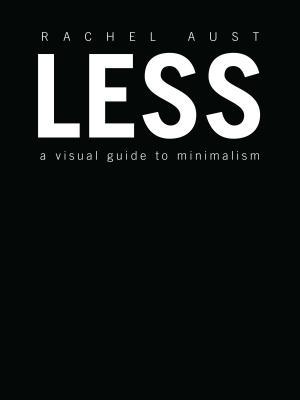
For more on Less, get this book: “Less: a visual guide to minimalism”, by Rachel Aust.


On political consequentialists vs political deontologists (with a reference to Churchill and Andor)

In politics I believe it is common to talk of political pragmatists vs political ideologues.  What is less common is to talk about political consequentialists vs political deontologists. The two “vs” seem to overlap, but there are differences. The key difference is that political consequentialists and political deontologists make their decisions from an ethical viewpoint.

I was thinking of political ethics this week when there was a discussion around whether or not the Democratic Party in the U.S. should accept money from Elon Musk. As someone who is more of a political consequentialist, I thought: of course they should take his money, especially because it could help them win control of the U.S. government and for starters they could reverse the changes he has done. Then I read others who argued they would not take money “from a guy who does a Hitler salute” (i.e. is evil). I get that argument: they think they have a duty to never ally with someone as bad as Musk, and they must believe they can get money from elsewhere that does not conflict with their political duties.

There are pros and cons with either ethical approaches to politics. I tend to take a deontological approach when the consequences are difficult to measure, but when the possible outcomes are measurable, I tend to take a consequentialist approach.  For example, thinking like a political consequentialist, I might not vote for a corrupt politician or an anti-democratic politician, even if I think this will lead to good short term outcomes, because I believe there are potentially larger bad outcomes that come in the long term from having corrupt and anti-democratic politicians in power. But that’s a complicated calculus. Thinking as a political deontologist, I would simply not vote for a corrupt or anti-democratic politician because I have a moral obligation to support only those people who are not corrupt and are for democracy.

People can be on the same side of the political aisle and still argue. Sometimes they argue over the practicality of something. But sometimes they will be arguing for ethical reasons. Something to watch for.

P.S. More on the difference between consequentialism and deontology terms, here. Also this piece, which also adds virtue ethics to the mix.

P.S.S. The photo is of Churchill walking through Coventry. The moral question there was: if you have access to the secret communications of your enemies and you know they are going to bomb a certain city on a certain day, do you warn the people of that city, knowing that by doing so, you risk losing your access and potentially lengthening the war? It’s a question that also comes up in the TV series, Andor, where one character (Luthen Rael) sacrifices 31 men in order to continue hiding the fact that he has an informant in the Empire he is fighting against.

On Tyranny: the book (now with resources you can use)

Over on Timothy Snyder’s web site is a resources page where you can find free resources (posters, postcards, etc.) for you to use. Highly recommended. Also highly recommended is the book it came from: On Tyranny. That page also has links to web sites selling his book. It’s a very smart, very readable, and very useful book to own in these trying times. Get yourself a copy.

P.S. I think a resources page is a great idea. More sites should have one.

Project Esther, or how to demonize your opponents and for what purpose


When it comes to demonizing your opponents, I was really struck by how strong an example the Heritage Foundation demonstrates here: Project Esther: A National Strategy to Combat Antisemitism. Start with the first paragraph:

“America’s virulently anti-Israel, anti-Zionist, and anti-American “pro-Palestinian movement” is part of a global Hamas Support Network (HSN) that is trying to compel the U.S. government to abandon its long-standing support for Israel. Supported by activists and funders dedicated to the destruction of capitalism and democracy, the HSN benefits from the support and training of America’s overseas enemies and seeks to achieve its goals by taking advantage of our open society, corrupting our education system, leveraging the American media, coopting the federal government, and relying on the American Jewish community’s complacency. The National Task Force to Combat Antisemitism intends to enlist all willing and able partners in a coordinated effort to combat the scourge of antisemitism in the United States.”

Let’s unpack that paragraph. Do you find any room there for someone like me who opposes the actions of the Israeli government, never mind those who may be supportive of the Palestinians who are bearing the brunt of the Israeli army against the Hamas organization? I don’t. As far as Heritage is concerned,  I am “anti-Israel, anti-Zionist, and anti-American”. Furthermore, you cannot consider yourself  “pro-Palestinian”: you are considered instead part of “a global Hamas Support Network (HSN)”. Not only that, but by being part of the HSN, you and I are caught up with those “dedicated to the destruction of capitalism and democracy”.  If that’s not bad enough, Heritage states that we are hurting America by “taking advantage of our open society, corrupting our education system, leveraging the American media, coopting the federal government”.  The only way you could be any worse is if you were Jewish and adding to “the American Jewish community’s complacency”.

To generalize, the formula Heritage seems to be using to demonize their opponents is:

  • Ignore the spectrum of opposition, from those expressing mild disapproval to other engaging in violent action.
  • Instead, collapse that opposition and lump all your opponents together.
  • Make sure you collapse the opposition so that it is associated with the most extreme end of that opposition.
  • Relabel the opposition with a name and an acronym that ensures others associate it with this negative extremity.
  • Invent a list of nefarious actions to apply to the opposition.
  • Claim the leadership of those who would naturally go against such negative extremity.

This particular example revolves around the conflict in the Gaza Strip. But it could easily apply to any situation. For example, during the October Crisis in Canada, all those wishing for more autonomy for Quebec and opposing the Canadian government in various forms could have been lumped into the FLQ Support Network (FSN) and the Canadian establishment could have said anyone in this new FSN bucket was an enemy of Canada and democracy and more. As you can see, it’s an easy formula to apply.

Of course it is not just enough to demonize your opponent. Once you do that, you need to use that demonization to justify your future goals. For Heritage, some of their goals for Project Esther are listed below:

  • DE1: HSO propaganda purged from curricula.
  • DE2: HSO-supporting faculty and/or staff removed or fired.
  • DE3: HSO access to campuses lost and/or denied.
  • DE4: Foreign members of HSOs/HSN access to campuses lost and/or denied.
  • DE5: Money from foreign HSO supporters not accepted by schools.

Basically, any thing they don’t like in schools and universities they can label as coming from HSO (Hamas Support Organizations) and work to have it removed under the guise of attacking antisemitism. Attacks on free speech by right wing organizations is not new, and that is part of the point of Project Esther. First demonize your opponent, then use the demonization to ban them or strike them in some way while claiming it’s for a good cause.

Whenever a person or group use the formula to demonize their opponent, you can assume some follow on extreme action is being lined up by them. Don’t be that person or a part of that group, and don’t participate in that form of thinking.

Transportation is about class – some thoughts

You may only think of transportation in a practical sense of how you travel from A to B. However, there are many hidden assumptions in your travels, including ideas about Comfort, Cost and Convenience. And those three C words got me thinking about another C word, Class.

I started thinking about our underlying assumptions on transportation when I read this piece:  transportation is about bodies, by Navneet Alang. A key quote for me:

“I’m just saying that as a person who spends a lot of time in the suburbs: to “most people” — and I here I don’t mean most people in a generic, metaphorical sense, but in a literal and political sense — bike lanes and transit and so on don’t sound so much like options as much as the ravings of a crazy person. And it all sounds insane because the vast majority of them are concerned about their bodily comfort, and we are asking them to be less comfortable. We are saying what at least sounds to them like “you are going to have face your own body and feel more uncomfortable.” Any approach to changing transportation habits or making the case for why we should has to, in some way or another, deal with that simple fact.”

A light bulb went off when I read that. Transportation is about the best way to get from A to B. The best way can be defined in terms of speed, effort, convenience, comfort and cost. For biking advocates, bikes are the best way in terms of cost and convenience (e.g., easy to park, flexible routes). Automobile advocates think cars are the best way in terms of speed, effort (none), and comfort. For patrons of the public transit like the TTC, it is somewhere in between. In every case, travellers are thinking about their bodies, their physical selves, when they think about travelling. Some subway riders don’t want to be all sweaty when they get to work, and some car owners do not want to be crammed in a bus in winter with sick passengers. Meanwhile bike riders love the idea that their commute makes them physically fit, unlike the feeling they get stuck in a car or a bus. Each sees their means of transportation as the best way, depending on what they value.

Class is an additional way people think about themselves as they commute. This is especially so when they are travelling commercially. On trains and planes and ships there are different classes of  passengers, and while they may all get there with the same speed and effort, the comforts and costs and even conveniences differ depending on the classification of your seat.

As for automobiles, in cities where public transportation is lacking, class is assumed based on the type of vehicle you ride. People with expensive cars being of a supposedly higher class, people with beat up cars being a lower class, and riders of bicycles being the lowest class. Which is why you will see people driving cars they cannot really afford: they don’t want their vehicle to indicate in any way a lower class status.

Class is more difficult to discern in cities where public transportation is good. Wealthy people in cities like New York might ditch their expensive car and use the subway because it is faster and more convenient. That is also true with cabs: rich and poor hop in and out of the same yellow cars to go from updown to downtown (and vice versa). In New York and beyond, new transportation options like Uber and Lyft also tend to water down class indicators in terms of transportation. While services like Uber offer levels of class in terms of vehicle selection, you can also randomly get an expensive car with the basic Uber X option. Subways, cabs and Ubers all blur the ability to use someone’s commute as a class indicator.

Class and commuting tend to travel as a pair. I would extend this statement to say by daring to state that bike lane advocates and public transportation advocates are likely to fall in the left wing/progressive side of politics and their views on class tend to mix in with this, even as car advocates are likely to fall in the right wing/conservative side of politics. So when people are advocating for adding or removing bike lanes, they are promoting their ideas on class as much as they are promoting their ideas on the best way to travel. It’s hard to rationally argue for better cities with more bike lanes and congestion pricing with someone who for many years has worked hard and aspired to drive a very expensive car freely all around the city.

If you are going to advocate for certain transportation options, you need to account for speed, effort, convenience, comfort and cost. But you’d be wrong to leave out class: it is an essential element of any decision made when it comes to travel.

(Image of “Planes, Trains, and Autombiles” from Wikipedia, a movie as much about class as it is about transportation, with class being a theme that comes up often in John Hughes’s films.)


The American Right is familiar with Carl Schmitt and you should be too (for different reasons)

Nuremberg Laws English.jpg

I would have thought that Carl Schmitt is someone who should have been assigned to the dustbin of history. I would have thought wrong.

According to this piece in the New York Times from the summer of 2024:

J.D. Vance, the Republican senator from Ohio who is vying to be Donald Trump’s running mate, declared: “The thing that I kept thinking about liberalism in 2019 and 2020 is that these guys have all read Carl Schmitt — there’s no law, there’s just power. And the goal here is to get back in power.”

Masterful bit of projection there by Vance of his own ideas on to the American left.

Give the rise of Nazi thought on the American right, it should not be surprising that some of its members are turning to Schmitt. For those who are unfamiliar with him, his Wikipedia entry starts with this:

Schmitt wrote extensively about the effective wielding of political power. An authoritarian conservative theorist, he was noted as a critic of parliamentary democracy, liberalism, and cosmopolitanism.His works covered political theory, legal theory, continental philosophy, and political theology. However, they are controversial, mainly due to his intellectual support for, and active involvement with, Nazism.In 1933, Schmitt joined the Nazi Party and utilized his legal and political theories to provide ideological justification for the regime. Schmitt supported many of Hitler policies including the Night of the Long Knives purge and the Nuremberg Laws.

Based on what we have seen so far, expect to see the Trump administration put more of Schmitt’s ideas in action over the length of Trump’s latest term in office.

To learn more about Schmitt and his ideas, you can read the Times piece and the wikipedia page. You can also check out a review of this book on him. For German readers, you can read his defense of the Night of the Long Knives, here.

(Image credits: By Government of Germany – Flickr: Nuremberg Laws English, Public Domain, Link. It’s important to see just where Schmitt’s ideas lead, hence why I included this terrible diagram. After all, “he praised the Nuremberg Laws for dispensing with the commitment to “treat aliens in species and Germans equally.” – NY Times)

On bike-shedding / the bike-shed effect

Anyone who works with a group of people needs to understand the idea of bike-shedding (as known as the law of triviality). Let me jump right to the Wikipedia entry to explain it:

The law of triviality is C. Northcote Parkinson’s 1957 argument that people within an organization commonly give disproportionate weight to trivial issues. Parkinson provides the example of a fictional committee whose job was to approve the plans for a nuclear power plant spending the majority of its time on discussions about relatively minor but easy-to-grasp issues, such as what materials to use for the staff bicycle shed, while neglecting the proposed design of the plant itself, which is far more important and a far more difficult and complex task.

The law has been applied to software development and other activities.The terms bicycle-shed effect, bike-shed effect, and bike-shedding were coined based on Parkinson’s example; it was popularized in the Berkeley Software Distribution community by the Danish software developer Poul-Henning Kamp in 1999 and, due to that, has since become popular within the field of software development generally.

Coming from the software development community, I’ve known about and seen countless examples of bike-shedding in meetings I’ve attended. I just assumed everyone knew the term. It was only when talking to people outside of software did I realize the term was not as well known.

Now you know it. And now that you do know it, you will see examples of it in many of the meetings you attend this week. 🙂


Japan has 72 microseasons and why having more than 4 seasons is a good thing

lilacs
Right now lilac season is starting in Toronto. Shouldn’t that be a true season in it’s own right?

When you think of it, it makes sense that we have more than four seasons. Heck according to this piece, Japan has 72 microseasons. Meanwhile in Canada, we often joke about having many microseasons, too, and they go like this:

  1. WINTER (brutal cold)
  2. fool’s spring (don’t get used to it)
  3. second winter / bleak midwinter (oh well)
  4. spring of deceptions (is spring here? As if!)
  5. third winter (snowdrop flower season, snow melts fast, weird snowfalls in April)
  6. pollen season (lilac season, tulip season)
  7. SPRING (cool but green)
  8. Nice summer (perfect weather)
  9. SUMMER (brutal heat)
  10. false fall (where’s the sweaters?)
  11. second summer (that’s better)
  12. AUTUMN (leaves turn color and fall)
  13. Lovely holiday winter (not too cold)

I think we could easily get new names for all those seasons not capitalized.

Kurt Vonnegut took a stab at this and came up with six seasons: the original four plus two more, Locking and Unlocking. I think that is an improvement on the original four, but that’s just a start.

One good reason to have more seasons is that they remind you to appreciate the changes in the world around you. Another good reason is that it breaks down the seasons that can be difficult (winter for many, summer for me) and helps you get through them. Whatever the reason, having seasons based on the climate and less on solistices and equinoxes makes more sense.

I hope we get more seasons in Canada. For now we will have to stick with the four official ones and the many unofficial ones. Now go and enjoy the lilacs.


On police forces, gangs and prisons

I’ve been collecting articles on police forces, gangs and prisons over the last while.

I don’t have any great insights, and as someone who has not studied sociology at any length, I don’t have much confidence in any conclusions I might make from reading such a list.

I still believe that you cannot have a society without an effective armed authority (e.g., a police force) and some form of exile (e.g., a prison). The challenge I see is most societies do not do a good enough job with their armed authorities or their forms of exile, perhaps because most citizens in a society don’t care what happens to people who run a ground with the police or prison. Only recently in America, with Trump and his desire to use authorities like ICE to capture and ship people to prison in El Salvador, have citizens (mostly white, I suspect) turned to paying attention to this again.

You can read the articles I collected here and form your own conclusions:

On how generative AI is an accelerant and how it compares to PCs and the Web


People have many perspectives on generative AI.  On Bluesky in particular, it’s perceived negatively. They see it as a huge drain on environment. They see the people who develop it as IP thieves. They see it as taking away jobs.

For people who think this is the only way generative AI can be, I’d like to point them to the work my employer is doing with AI and the AI ethical guidelines they’ve published here.

Generative AI can be seen in a positive way. My opinion (not speaking for my employer) is that as the tools that sit in front of gen AI get better and the models that underline gen AI improve, we all will use it every day, in the same way we use search engines and spreadsheets every day.

I’d add that gen AI technology can be considered an accelerant. In any given social order, some participants will choose to adopt an accelerant and disrupt that order by speeding past others. It could be high skilled or low skilled participants. Those who value the current order and their place in it will try to prevent that from happening but likely will fail. This happened with previous accelerants like personal computers and the Web. People who were invested in the order before PCs and the Web were disrupted by those who adopted and exploited the capabilities of the accelerants. (Not all accelerants are technological: literacy, voting rights and access to financial services are also accelerants. I just feel more confident talking about comp sci vs poli sci.) I think this will be true for generative AI. Back in the 80s I thought that individuals and companies that invested in personal computers would leapfrog individuals and companies that ignored PCs. That turned out to be true, just as it was true for individuals and companies that embraced the Web. I think the same will hold for generative AI.

So don’t be like Linda: learn more about gen AI and do not confuse it with A1 sauce. 🙂 If it can help, I wrote a guide on it recently that could be worth your while to check out.

P.S. For anyone wondering, this post is my own and doesn’t necessarily represent IBM’s positions, strategies or opinions. For more on that, see IBM’s social media policy, which as an employee I follow.

P.S.S. I think if you are going to be speaking on AI as the Secretary for Education, you should at least know how to say it.

The Matrix is an Easter Movie (as are the Alien films)

People often joke about which non-traditional films are Christmas Movies, with “Die Hard” being at the top of the list. Unlike Christmas, not many non-traditional films are associated with Easter.

I’d like to nominate the Matrix to non-traditional Easter movies. The movie is soaked in Christianity. As this really good piece on The Matrix explains:

Neo’s buyer also jokes that Neo is his “own personal Jesus Christ,” a moment that sets up the many biblical allusions in the film — the city of Zion (a biblical name for Jerusalem as well as the idea of the city of God), Cypher’s Judas-like betrayal, a very important character named Trinity. At the time, this was catnip to youth group leaders looking for a way to make religion cool.

And “The Matrix” as religious allegory has stuck. The last 25 years have seen books published with titles like “Escaping the Matrix: Setting Your Mind Free to Experience Real Life in Christ,” “The Gospel Reloaded” and “Christ—The Original Matrix.” If you’re looking for it, it’s definitely there.

Neo escapes the Matrix when he is released from his pod (an egglike device). He is considered The One, before he is betrayed by Cypher. He is killed by the Agents who could be stand-ins for the Romas, but then is resurrected. If you look, you can see all sorts of similar themes.

Of course that films has many other good themes in it. To see what I mean, check out that piece in the link above. The Matrix really is a good way to think about much of our current world.

P.S. I got the idea for this from this post on BlueSky, which pointed to the Alien films as great Easter films. This post got me thinking that The Matrix also has all this too.

Eggs, sacrifice, resurrection … the perfect Easter films?

— Daniel Benneworth-Gray (@danielgray.com) April 18, 2025 at 10:12 AM

Talent vs Luck: or how science shows success is due to something other than intelligence, skill, hard work and risk taking.

I came across this good paper, Talent vs Luck: the role of randomness in success and failure, that I think everyone should read. To see why I recommend it,  I want to chop up the abstract for the paper because it is jammed packed with good insights.

According to the abstract, in our culture:

The largely dominant meritocratic paradigm of highly competitive Western cultures is rooted on the belief that success is due mainly, if not exclusively, to personal qualities such as talent, intelligence, skills, efforts or risk taking. Sometimes, we are willing to admit that a certain degree of luck could also play a role in achieving significant material success.

True that. Most successful people would say that luck had some effect, but it was hard work and talent that got them where they are. Despite that…

.. it is rather common to underestimate the importance of external forces in individual successful stories. It is very well known that intelligence or talent exhibit a Gaussian distribution among the population, whereas the distribution of wealth – considered a proxy of success – follows typically a power law (Pareto law).

Hmmm. Why doesn’t success align with intelligence and talent? Could it be a hidden ingredient?

Such a discrepancy between a Normal distribution of inputs, with a typical scale, and the scale invariant distribution of outputs, suggests that some hidden ingredient is at work behind the scenes.

What could that hidden ingredient be?

In this paper, with the help of a very simple agent-based model, we suggest that such an ingredient is just randomness.

Randomness…i.e., luck.

Money quote:

In particular, we show that, if it is true that some degree of talent is necessary to be successful in life, almost never the most talented people reach the highest peaks of success, being overtaken by mediocre but sensibly luckier individuals.

You may have heard it countless times, but….

As to our knowledge, this counterintuitive result – although implicitly suggested between the lines in a vast literature – is quantified here for the first time.

And because of that, their paper….

…sheds new light on the effectiveness of assessing merit on the basis of the reached level of success and underlines the risks of distributing excessive honors or resources to people who, at the end of the day, could have been simply luckier than others.With the help of this model, several policy hypotheses are also addressed and compared to show the most efficient strategies for public funding of research in order to improve meritocracy, diversity and innovation.

I highly recommend you read the abstract here and the full study here.


The mongolian horde approach, or why you don’t have to be a fool to think that Elon Musk is incompetent

Is Elon Musk incompetent? Is he a genius? Or is he something else?

While some think his recent actions at Twitter and in DOGE indicate he is  incompetent, Noah Smith came out and defended Musk in this Substack post: Only fools think Elon is incompetent – by Noah Smith.

Smith starts off by saying that Musk …

is a man of well above average intellect.

Let’s just pass on that, since we don’t know the IQ or any other such measure of the intellect of Musk. Plus, competent people don’t need to have a high IQ.

Indeed Smith gives up on IQ and goes for another measure:

And yet whatever his IQ is, Elon has unquestionably accomplished incredible feats of organization-building in his career. This is from a post I wrote about Musk back in October, in which I described entrepreneurialism as a kind of superpower

So it’s not high IQ that makes Elon Musk more competent than most, it’s his entrepreneurialism. In case you think anyone could have the same ability, Smith goes on the say why Musk is more capable than most of us:

Why would we fail? Even with zero institutional constraints in our way, we would fail to identify the best managers and the best engineers. Even when we did find them, we’d often fail to convince them to come work for us — and even if they did, we might not be able to inspire them to work incredibly hard, week in and week out. We’d also often fail to elevate and promote the best workers and give them more authority and responsibilities, or ruthlessly fire the low performers. We’d fail to raise tens of billions of dollars at favorable rates to fund our companies. We’d fail to negotiate government contracts and create buzz for consumer products. And so on.

Smith then drives home this point by saying:

California is famously one of the hardest states to build in, and yet SpaceX makes most of its rockets — so much better than anything the Chinese can build — in California, almost singlehandedly reviving the Los Angeles region’s aerospace industry. And when Elon wanted to set up a data center for his new AI company xAI — a process that usually takes several years — he reportedly did it in 19 days

And because of all that, Smith concludes:

Elon Musk is, in many important ways, the single most capable man in America, and we deny that fact at our peril.

Reading all that, you might be willing to concede that whatever Musk’s IQ is, not only is he more than competent, but he must be some sort of genius to make his companies do what they do, and that you would be a fool to think otherwise.

But is he some kind of entrepreneurial genius? Let’s turn to Dave Karpf for a different perspective. Karpf, in his Substack post, Elon Musk and the Infinite Rebuy, examines Musk’s approach to being successful by way of example:

There’s a scene in Walter Isaacson’s new biography of Elon Musk that unintentionally captures the essence of the book: [Max] Levchin was at a friend’s bachelor pad hanging out with Musk. Some people were playing a high-stakes game of Texas Hold ‘Em. Although Musk was not a card player, he pulled up to the table. “There were all these nerds and sharpsters who were good at memorizing cards and calculating odds,” Levchin says. “Elon just proceeded to go all in on every hand and lose. Then he would buy more chips and double down. Eventually, after losing many hands, he went all in and won. Then he said “Right, fine, I’m done.” It would be a theme in his life: avoid taking chips off the table; keep risking them. That would turn out to be a good strategy. (page 86) There are a couple ways you can read this scene. One is that Musk is an aggressive risk-taker who defies convention, blazes his own path, and routinely proves his doubters wrong. The other is that Elon Musk sucks at poker. But he has access to so much capital that he can keep rebuying until he scores a win.

So Musk wins at poker not by being the most competent poker player: he wins by overwhelming the other players with his boundless resources. And it’s not just poker where he uses this approach to succeed. Karpf adds:

Musk flipped his first company (Zip2) for a profit back in the early internet boom years, when it was easy to flip your company for a profit. He was ousted as CEO of his second company (PayPal). It succeeded in spite of him. He was still the largest shareholder when it was sold to eBay, which netted him $175 million for a company whose key move was removing him from leadership. He invested the PayPal windfall into SpaceX, and burned through all of SpaceX’s capital without successfully launching a single rocket. The first three rockets all blew up, at least partially because Musk-the-manager insisted on cutting the wrong corners. He only had the budget to try three times. In 2008 SpaceX was spiraling toward bankruptcy. The company was rescued by Peter Thiel’s Founders Fund (which was populated by basically the whole rest of the “PayPal mafia”). These were the same people who had firsthand knowledge of Musk-the-impetuous-and-destructive-CEO. There’s a fascinating scene in the book, where Thiel asks Musk if he can speak with the company’s chief rocket engineer. Elon replies “you’re speaking to him right now.” That’s, uh, not reassuring to Thiel and his crew. They had worked with Musk. They know he isn’t an ACTUAL rocket scientist. They also know he’s a control freak with at-times-awful instincts. SpaceX employs plenty of rocket scientists with Ph.D.’s. But Elon is always gonna Elon. The “real world Tony Stark” vibe is an illusion, but one that he desperately seeks to maintain, even when his company is on the line and his audience knows better. Founders Fund invests $20 million anyway, effectively saving the company. The investment wasn’t because they believed human civilization has to become multiplanetary, or even because they were confident the fourth rocket launch would go better than the first three. It was because they felt guilty about firing Elon back in the PayPal days, and they figured there would be a lot of money in it if the longshot bet paid off. They spotted Elon another buy-in. He went all-in again. And this time the rocket launch was a success. If you want to be hailed as a genius innovator, you don’t actually need next-level brilliance. You just need access to enough money to keep rebuying until you succeed.

It seems that the path to success for Musk is not to be good at something, but to be tenacious and throw massive amounts of resources at a problem until you defeat it.

In IT, there is an approach to solving problems like this called the Mongolian horde approach. In the Mongolian horde approach, you solve a problem by throwing all the resources you can at it. It’s not the smartest or most cost effective approach to problem solving, but if a problem is difficult and important, it can be an effective way to deal with it.

It’s interesting that Smith touches on this approach in his post. He brings up Genghis Khan, the leader of the Mongols:

Note the key example of Genghis (Chinggis) Khan. It wasn’t just his decisions that influenced the course of history, of course; lots of other steppe warlords tried to conquer the world and simply failed. Genghis might have benefited from being in just the right place at just the right time, but he probably had organizational and motivational talents that made him uniquely capable of conquering more territory than any other person in history. The comparison, of course, is not lost on Elon himself

It appears that Musk is familiar with the Mongolian Horde approach as well. Indeed, Karpf illustrates the number of times Musk used this approach in order to be successful, whether it’s playing poker or building rockets.

If you can take this approach, with persistence and some luck, you can be successful. Success might come at a great cost, but it likely will come. And in America, if you are successful, people assume you are intelligent and highly competent regardless of your approach. That’s what Smith seems to assume in his post on Musk.

Even with this approach, you do have to have some degree of competency. If you are using this approach to play poker, you have to know enough about the game to win when the opportunity presents itself. But you don’t have to be the world’s best poker player or even a good poker player.

The same holds true for Musk and his other companies. He’s not incompetent, but he’s not necessarily great or even good at what he does. He just hangs in there and keeps applying overwhelming resources until he eventually wins. His access to resources and his tenacity are impressive: his competency, not so much.

P.S. Like many others, I used to think Musk was highly competent. I stopped thinking that when he took over Twitter and turned it into X. This “Batshit Crazy Story Of The Day Elon Musk Decided To Personally Rip Servers Out Of A Sacramento Data Center” in Techdirt convinced me his IT competency is not much better than his poker competency. Indeed, if success was a metric, then he is incompetent at running tech companies, based on this piece in the Verge: Elon Musk email to X staff: ‘we’re barely breaking even’. I won’t count him out until he abandons X, but if the time comes when X is successful, it will be because of him applying massive amount of resources (time, money, etc) to it, not because he is an IT genius.

 

Improve your life with ikigai, kaizen, and other concepts from Japan

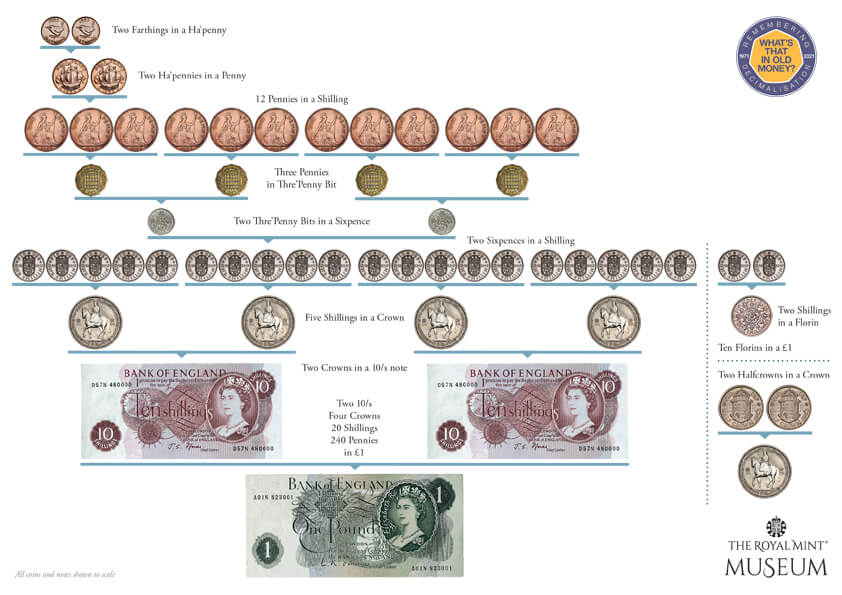
Recently I was doing some research on ikigai and kaizen and that research led me to collect these lists of ideas and concepts originating from Japan. I found they helped me reflect on life in a new and better way. I also found they could help anyone not already familiar with these Japanese ideas, so I give you:

Finally, I thought the ideas behind the design of  Naoto Fukasawa furniture was worthwhile, too. (Images above are his designs.)

On how I am understanding Trump 2.0

Photo by charlesdeluvio on Unsplash.com

Since the inauguration it’s been difficult to avoid thinking about Donald Trump. Even if you avoid social media or the news, if you care about the world at all you are forced to consider what he and the people in his administration are up to.

With the flurry of actions his team has taken, many people I follow have been trying to make sense of it all. I’m no exception. So I wrote out this list of what I think are the things that motivate him or are in his comfort zone:

  1. making money
  2. being the center of attention / good publicity
  3. power / being the boss
  4. rewarding those who treat him well
  5. punishing those that treat him poorly
  6. not having to work hard
  7. not thinking (i.e. doing whatever someone recommends)
  8. real estate
  9. the 80s
  10. Mar-a-Lago

That list hasn’t changed much since Trump 1.0 and his first term in office. What is different is the intensity.

Unlike other presidents, he is not motivated to work hard, to give back to others, to be virtuous in any way, or to stay current with the culture. He may appear to concede some of these (e.g., letting Elon be the center of attention) if he thinks it will help him with something else (making money, not having to work hard).

The next time you see him doing something, you can look to this list and at least one if not more of these items for an explanation. Getting into crypto? #1. Taking over the Kennedy Center? #2.  Running for president? #3. Appointing people like Kristi Noem for anything? #4. You get the idea.

I’m sure there will be things you might add to that list. But if you see Trump doing something and ask yourself “what possessed him to do that”, it’s likely one of the items on this list.

If you are stuck on what action to take next, remove one thing

person frustrated at desk

If you need to work on something and you can’t get started or you are stuck, then remove one thing. It can be anything. If you need to cook a meal and you don’t know what to do, remove things from your cooking area or decide to cook one less thing. If you are going to construct something and you are blocked, then cut back on the time you are going to spend or the steps you are going to take.

If you are still stuck, keep removing things. Too often we overwhelm ourselves. Removing things helps either that. It’s a form of editing, in a sense.

Plus removing things is an activity. You are no longer stuck. You are now making some form of progress.


Generative AI = relational databases

tables of information


Imagine you have a database with two tables of information: customer information and account information. The one piece of data that both tables share is account ID. With relational database software, you can use it to tie the two tables together. So if a customer comes to you and asks for their current balance, you can ask them for their account ID and some other personal info. Then you can query that database with the account ID and verify who they are because you can see their customer information and then once you validate them you can also see their account information and you can get the computer to print out their balance. The database, in this case a relational database, relates the two source of information (customer info and account info) and lets you retrieve that information.

Now the nice thing about relational databases is you can further relate that information to other sources of information. If you have a table of products you want to promote to customers depending on their net worth, you can query the database for the accounts that meet the product criteria and then pull up the customer information and mail them the information about their product. You’ve related three different tables of information to do this and pulled it together using a query.

When it comes to generative AI, the prompt you enter is also a query. The gen AI system doesn’t search tables though. Instead it searches a model it has that was build with sources of information it was trained on. If it was trained on Wikipedia, then all those pages of Wikipedia are not unlike tables being queried. The difference is the gen AI system uses its algorithm to determine how all that Wikipedia knowledge relates to your query before it gives you a result. But in many ways you are querying the gen AI systems just like you might query a relational database.

Of course generative AI has much more power than a simple relational database. But in many ways the two things are the same. We need to start looking at it then the same way. we can do many clever things with relational databases but don’t think of them as intelligent. The same should hold for generative AI.


When you are stuck, you think it will last forever

Post Xmas shopping at Aroma

When you are stuck, you think it will last forever.

It’s natural to think that way, since being stuck is often a negative situation, and such situations make one pessimistic. Pessimistic thinking can make you think that the bad times are permanent and pervasive.

If that describes you, just know that we all live in a stream constantly flowing strongly downstream. Regardless how stuck we may be, the stream will push against you and eventually you will no longer be stuck.

So yes, it may seem like it will last forever, but the never ending change all around you will eventually free you. If you don’t free yourself in the meantime.

A good mediation on fire…

 A good mediation on fire can be found here:  Fire and focus – Austin Kleon.

It can be hard to think about fire as a positive thing if you have been focused on the wild fires in Los Angeles. But it can be, and that comes across in what Kleon writes about it. It reminded me of growing up and the times my father would have a fire pit in the backyard, and we would spend hours around it, tending it, talking, watching it. It also made me think of times later on when I had a house with a fireplace and I’d love the meditative and contemplative aspect of it.

Fire can be a great thing. Read Kleon and see.

(Photo by Hayden Scott on Unsplash)


Two rules for dealing with political opposition

Rule #1: accurately assess the strength of your opponent. When you are in control, your opponent is going to try and stop you from doing things, and when then are in control, it is your job to stop them. If you underestimate the strength of your opponent, you will get overrun by them. If you overestimate their strength, you will retreat or surrender too easily. (Seeing a lot of that right now.)

Rule #2: know the difference between an opponent and an enemy.  You can work with your opponent on things you have in common, despite having other things you disagree with. You cannot work with your enemy: they must be defeated. If you don’t defeat them, they will defeat you.

If you believe in democracy and freedom and the person on the other side is a nazi or a fascist, they are your enemy, not your opponent. It’s foolish to think otherwise.

How will you know it is a day when your whole world is about to change?


How will you know it is a day when your whole world is about to change? I thought about that often since I read this BBC piece, the life changing day World War Two began for the English. Some at the time knew their world was about to change dramatically. For many, the day seemed like any other.

Something similar is related in the first chapter of the book Stalingrad, by Antony Beevor. Germans in Berlin hearing about the start of their war with Russia likely knew their world was going to change for the worse, though the day of the announcement was a pleasant one.

Did the Viennese at the Funeral of Franz Joseph above know their world was ending on that day? After all, the Emperor considered himself “the last ruler of the old world”, and with his death, the old world and Vienna’s place in it was to go as well? I don’t know.

Maybe our world is changing dramatically now and we are still living like it hasn’t. We are good at that. The Great Recession occurred and governments took drastic action and then went back about our business like it never happened. The same occurred with great COVID-19 pandemic: we all took great steps to deal with it, like a car swerving around a big pothole before regaining its place on the road. Perhaps that will be the case with climate change.

Aftermath of LA fire, 2025.

Or perhaps the world is different now, the way it was different on that September 3rd day in England, 1939. Pick your climate change disaster day, be it the Los Angeles fires of January, 2025, or some other day recent day. When you are older, you may look back on that day and think: that’s the day the world changed, and we didn’t really feel it.

(Bottom photo of LA during the fires of January 2025 by Mark Abramson for The New York Times)

Does participating on social media contribute in a positive way to your life?


Does participating on social media contribute in a positive way to your life? I came across a form of that question today. I think it sometimes can. And because it sometimes can, I think we are led to continue to participate. But even in that case, is the occasional positive contribution enough to keep reading various feeds every day? Is it enough to keep creating user generated content? I don’t know the answers to those questions these days.

This post, for example: I think the positive thing about it is it allows me to set a marker for myself. Such markers, in a sense, are a way of contributing to my future self in a positive way.

On the whole, though, is my participation in social media a positive thing? It’s something I am going to be thinking about in the new year. Perhaps you will too.

On holding these three thoughts in mind at once: The world is awful. The world is much better. The world can be much better


Over at the site, Our World in Data, they make the case that:

The world is awful. The world is much better. The world can be much better. All three statements are true at the same time.

There are people who only want you to believe only one of those statements is true. Strong minds can hold on to all three at once. Be one of those minds.

On low information voters


High information voters believe that voters should understand many of the issues of an election and the stances of the candidates on those issues before they vote for someone. High information voters also believe that most voters should be like that.

I am a high information voter who believes something different. I believe that most voters are not like that and never will be. I believe most information are low information voters.

Low information voters vote for or against a candidate based on one or two pieces of information. This limited information could be:

  • Party affiliation: they vote for a candidate because they belong to a party they like. Or they vote against one candidate of a party they hate by voting for a  less hateful candidate.
  • One overriding issue: they vote for a candidate because that candidate supports the issue they care about more than any other candidate
  • Character: they vote for a candidate because they consider them the strongest or the least corrupt or the most forthright about matters.
  • Alignment: they vote for the candidate that is most aligned with them, however they see themselves. Or they vote for the candidate they see as most aligned with being a leader, whatever that is.

Once a low information voter has this information, they will make their choice.

As a high information voter, you might have a hard time understanding why someone chooses to be a low information voter. But there are many reasons why someone chooses to be this way, such as:

  • The voter votes on one issue because they feel that nothing is more important than this issue. Once they know how the candidates stand on this issue, they can cast their vote without discovering much more.
  • The voter votes for one party and their candidates consistently. They believe that  members of that party govern best.
  • The voter doesn’t have the ability to find out about all or most of the candidates. This is especially true of candidates for minor offices.
  • The voter doesn’t feel they have the ability to understand the issues at stake in an election. The information is at hand, but they can’t process it.
  • The voter has important or difficult things to deal with in their lives and so they lose their ability to focus on the issues.
  • The voter feels the responsibility of voting but they dislike politics and politicians and would prefer not to think too much about it.
  • The voter feels the system is wrong somehow and wants to limit their involvement in the system.

Of course there are a number of invalid reasons that low information voters vote, too, such as:

  • prejudicial or bigoted reasons (e.g. they only vote for white men)
  • silly reasons (e.g., they don’t vote for bald men or men that are short or wear glasses)
  • corrupt reasons (e.g. they vote for a candidate because the candidate buys their vote)

Regardless of what their reasoning is, this is how many voters vote and they will not be persuaded by a flurry of facts from a high information voter. Either they will not have the ability to weigh the facts provided, or they don’t think those additional facts matter to them.

It should be noted that low information voters are not uneducated or stupid. A single issue voter may be highly educated and decide that only candidates that support better healthcare. An intelligent voter may vote against a candidate because of a major scandal, even if they voted for the candidate repeatedly in the past. A vote is a limited instrument: what the meaning is of the vote is only known to the voter.

In the future, when you read a piece about the election (or rejection) or a candidate who stood for A, B, C, D, E, F and G on the issues, don’t assume that most voters voted for or against him/her because of the sum of A to G. Assume many voters voted for or against the candidates based on just one of those.

P.S. This was inspired by many things I’ve seen on social media that read like this:

‪Michael Hobbes‬ ‪@michaelhobbes.bsky.social‬

This is the whole ballgame for me: You cannot run a functioning democracy in a media environment where voters do not know basic facts about what candidates do and believe.

Voters are living in a post-internet world and legacy institutions have not kept up.

Thinking about the non-endorsements of Harris using basic game theory ideas

No Presidential endorsements were provided by the LA Times or the Washington Post this year. This caught people by surprise, since it was expected these two papers would endorse a candidate and that candidate would be Harris. Soon it was revealed the endorsements were held up by the owners of both papers.

One way to assess the choices of the owners of the Times and the Post is to use a payoff matrix found in game theory and apply it to the moves available to them:

Action vs impact Harris Wins Trump Wins
Endorse Harris No Loss Huge Loss
Endorse No one Small loss Small Loss

My payoff assessment is based on an estimate of how much each paper has to lose by endorsing/not endorsing a candidate. If Harris wins, there is very little downside regardless of what they do. Likewise, if Trump wins and they don’t endorse, I suspect they will also lose subscriptions and staff, but overall they can manage that.

The wrinkle in all this is if Trump wins and they endorse Harris. I think the owners of both papers see a huge loss for them — either personal or financial — if that happens.

Both men have different things at stake. We already know that the team from Bezos’s other project, Blue Horizon, has been talking to Trump. No doubt Bezos would not want Trump to come into power and ban Blue Horizon from any future space exploration with NASA. That would explain why Bezos did not want the Post to endore Harris. As for Soon-Shiong, the owner of the LA Times, he tried to get a post in Trump’s first administration. Perhaps he hopes he will be successful the second time around.

If the above payoff matrix had a bigger payoff or a bigger loss regarding Harris, then they might have chosen differently. As it is, they decided to minimize their risk by endorsing no one. They are guaranteed to suffer losses, but not big ones for them personally. It’s a rational choice, but a disappointing one.

I wouldn’t be surprised if both of them got out of the newspaper business in the next four years. They clearly don’t have the appetite for the risk of running such publications.


In a conflict with significant bad actors on both sides, there are no good options for bystanders

In a conflict with significant bad actors on both sides, there are no good options for bystanders.In such a conflict, you have three options:

  1. you can take a side
  2. you can try to rise above the conflict
  3. you can do nothing

If you take a side, you will be associated with the bad actors on that side. If you try to say “I take this side but I don’t associate with the bad actors on this side”, you will come across as a hypocrite, or naive, or ignorant. And when the bad actors on your side do something wrong, which they will, you will be associated with that wrong too.

You might say, I don’t care. Or the other side is still worse. And that’s fine. But it doesn’t make this option a good one. It’s just an option you are willing to take.

If you try and rise above the conflict, then you will be criticized by both sides for ignoring the bad actors on the other side. In addition, you will be seen as ineffective and weak and irrelevant. Again, it’s an option, it’s just not a good one.

Doing nothing is the flipside of trying to rise above the conflict. You won’t be stuck with having to side with bad actors, but you will be criticized for being indifferent and uncaring, cold and thoughtless.

In life there are often situations where there is no good options to choose from. A conflict with significant bad actors on both sides is one of those situations.

It’s ok to hate August and love February (and vice versa. Or neither)

It’s ok to hate August and love February (and vice versa. Or neither.)

If you live in the northern hemisphere and you say you hate February, many people will get it. It’s a month of darkness and cold, they will say, of course you hate it.

Not all will agree. For many others love the middle of winter. They love doing winter activities. They love snow. They love staying indoors and being cozy and warm.

However, if you say you hate August, many people will not get it. They will ask you what’s not to like about warmth and sunlight? They love doing summer activities. They love BBQs, going to the beach, being outside. How could you not love that?

But like February, August is a month of extreme temperatures. And for those of us who don’t do well in high heat and humidity, it’s a brutal month to get through. Especially if you can’t go to the beach or the pool, or if you don’t like being outside so much. Or if you have to be inside and don’t have AC. For people of that group, August is easy to dislike.

I am no fan of either February or August. I prefer more moderate temperatures of September and June. But to each their own. Not everybody has to like what you like, and that is especially true of the weather.

I am glad for the folks who love July and August. As for me, I am patiently waiting for September and October.

Have you had your joy snack today?

Who doesn’t want to feel more joyful? And who doesn’t like a snack? If you are still with me, then let me introduce you to the combined concept of a joy snack. As Neuroscientist and science journalist Richard Sima explains, these are:

… little moments of delight you experience throughout the day: He calls them “joy snacks.” These include things like your first sip of coffee in the morning, or telling a joke where the punchline hits just right. By savoring even small bites of bliss, you can transform an otherwise mundane moment into something joyful. And cultivating more joy can help you create a more meaningful life.

I like it! Joy and snacks: two great things that go great together!

For more on this, check this out: An easy way to feel happier: Snacking on joy. In The Washington Post.

Now get snacking!

It’s the weekend. Go do something with your hands

Why? Well according to this: Working With Your Hands Is Good for Your Brain (in The New York Times). It doesn’t matter if it is knitting or gardening or writing or painting. As long as it is not….typing.

It’s not clear why this is so, but studies show it to be true. So put the computer down and go do something manual. You’ll be glad you did.


Why social media content is so addictive (at least for me) and what it has to do with raw dogging flights

As I waste time doomscrolling through text based social media or reels, I will often stop and ask myself: why am I doing this? Why am I not reading a book or watching a movie? After many an hour wasted on the couch with my phone, I’ve come to the conclusion that it’s not that social media content that is a problem: it’s the social media format that is a problem.

Social media is essentially a stream of randomness: a collection of words and sentences and images with limited or no connection. You can surf along and not have to hold anything together in your head. That’s it’s format.

Now if you are reading a book or watching a movie, the format is different. Sentences are connected to paragraphs which are connected to stories or chapters. Characters and scenes and dialogue in a movie are connected to other characters, scenes, dialog. Your brain has to work to keep all those connections in mind when reading or viewing. The format of books or movies demands it.

With  social media content, you don’t have to maintain any of those connections in mind. You read and scroll and read and scroll, or you swipe through reels or Tiktoks, and in the end perhaps you retain one or two things.

Not having to maintain these connections in mind makes it easier for your brain to process social media content. That ease can make it more preferable, especially when you are tired or in a low energy state. Which, if you are like me, is fairly often.

Now it seems like some people are taking it to a new level by raw-dogging flights. (What Does ‘Raw-Dogging’ a Flight Mean? All About the Viral Travel Trend). Perhaps because they are in a low energy state and they don’t have access to social media, they just stare ahead the whole trip. It’s almost meditative. Again, the brain has very little to do here. People on a flight watching the flight path have zero connections to maintain.

So the next time you are beating yourself for wasting time on social media, perhaps acknowledge your brain is tired and this is all you can do. If you can, try meditating or napping or just going outside. Just understand that social media knows you are the way you are and it will suck you in if you are not careful.

Why OneMillionCheckBoxes.com shows we can never have nice big things again on the Internet

500

The site onemillioncheckboxes.com is just that: a site that has one million checkboxes to check (and uncheck). But it has become something more.
As The New York Times describes it (the bold emphasis is mine):

By providing a blank slate to users, One Million Checkboxes has also cycled rapidly through the stages of internet maturity, serving as something of a microcosm of the joys and horrors of digital life. First there was a period of exploration, in which users worked together to check as many boxes as they could. Next came creativity, as some began filling in boxes to illustrate hearts or, in more cases, crude drawings of male genitalia. Then things devolved, as they often do online, into all-out war. Steven Piziks, 57, a science fiction author in Ann Arbor, Mich., began checking boxes on Tuesday because he thought it might be soothing. He soon noticed someone else working behind him and unchecking every single one. He started checking even faster, and about half an hour later, the site’s built-in tally said he had checked more than 1,000 boxes. It was not soothing at all. It felt “like a metaphor for all of social media,” Mr. Piziks said. “We go into it thinking it’s going to be wonderful and collaborative and interesting, and it kind of turns into a fight.” Some bad actors on the site are human mischief-makers who take a perverse joy in undoing other people’s work. Others are simply bots that have been programmed to uncheck boxes en masse, Mr. Royalty said. (He has been working to contain them, with mixed success.) Those bots have been particularly infuriating to Frank Elavsky, 34, a Ph.D. student at Carnegie Mellon University who has checked more than 20,000 boxes in his “fight for the cause.” He got in a spat on X with someone he suspected of tinkering with the site’s code in the name of unchecking. “It became kind of personal,” he said. “I’m like, ‘You foul, foul demon. How could you?’” The website’s creator has been watching this all play out at a kind of omnipotent remove.

The freedom that the site gives users also comes with risks. In addition to lewd drawings, users have checked boxes in order to spell out profanities and at least one racial slur.

And that’s why I think OneMillionCheckBoxes.com shows we can never have nice big things again on the Internet. We can have big things, like OneMillionCheckBoxes.com, but you eventually get bad actors, bots, and racists. And we can have nice things with a significant investment in content moderation, but that doesn’t scale. Right now Threads.net is trying to prove me wrong, but in the end they will go for scale over nice, and when that happens, it’s only a matter of time before it all declines. Just like Facebook, and Twitter/X and others.

It will be interesting to check out (and maybe even check) OneMillionCheckBoxes.com in July 2025 and see if it is still active, or whether it succumbed to a combination of bad actors and ennui. I’m not optimistic.

For more on this, see: One Million Checkboxes, ‘Useless’ Internet Game, Lives Up to Its Name – The New York Times

Also the Washington Post has an interview with the creator, here.

Waste is a failure of imagination, and other thoughts on waste

Waste is a failure of imagination. Woodworkers know that especially. Good wood workers will try and minimize waste by designing their cuts to use as much of their raw material as possible, and then they will try and use up the remains in one way or another.

We should be like good woodworkers, using our imaginations, our minds, to come up with new uses for things we consider waste. During the pandemic we even depended on our wastewater to tell us how we were doing. Even that kind of waste can be useful.

Not all waste is material. Waste can also be temporal: we talk about wasting our time and wasting our life. Here too, we should consider ways to minimize such waste. And not just by being busy all the time. Being idle is not always a waste of time: idleness can be often be necessary. Just as being busy without a purpose can be a great waste of time.

What is important is the context. How we spend our time — idle, busy, something else — and whether or not it is a waste depends on the context we have of it. So, doing nothing with someone you love is a good use of your time, just like working hard on a project no one wants could be a waste of time.

These are some of the recent thoughts I had on waste when I read this post: No such thing as waste, by Austin Kleon. I recommend it.

I’ve written often about waste here on smart people I know. Recently I talked about it, here, when I was futzing around with code. Then there is this piece, on how Waste = failure to innovate. More on time and waste: Focus on maximizing your time instead of worrying about the time you waste. I even wrote on love and waste: On the love we waste.

If that isn’t enough, here’s all the time I touched on waste on this blog. Quite a lot. None of it was a waste, though.

On bank architecture, now and then

Bank architecture is not random. As this critical look at bank architecture explains:

“Bank architecture has conveyed a grandeur and stability essential to an industry that relies as much on public trust and confidence as hard-earned dollars,” says Barry Bergdoll, who has coordinated and installed the exhibition at Columbia. While architecture has played a fundamental role in establishing banks as “august and trusted guardians of wealth,” said Professor Bergdoll, the exhibition also reveals “the complex range of attitudes we hold as individuals and as a society to money.”

Banks used to look like this:

Very grand. Very stable looking.

The TD bank above does the same thing, but it reflects how we expect to see that now: modern, innovative, friendly, but still grand and stable looking.  Their architecture needs to convey qualities you expect in a bank before you invest in their products or take out a loan. Then they did that with concrete pillars and fortress like doors: now it’s with neon and glass. 


On futzing around with code

An example of a Prolog program

I was futzing around with code the other day. I wrote some html/css/javascript and then I wrote some unrelated prolog code. None of it had any value. The code didn’t solve some important problem. Some might consider it a waste of time.

But it wasn’t a waste. In both cases, I learned skills I didn’t have until I wrote the code. Those skills have value for the next time I do have to solve an important problem. Besides that, I enjoyed myself while coding. I was proud of myself for getting the code to work. That enjoyment and pride have value too.

Futzing around is a form of play, and any form of play is good for us as humans. Remember that the next time you consider taking on seemingly useless activities.


A haunting question

I came across this question when I was in a restaurant this week. I have thought about it often since I first read it.

By opening a door to anywhere, I also assume any time. Maybe you would walk through a door that would let you see a loved one again. You might choose to go through a door you skipped by when you were younger.

Or maybe you would stick to the present. You might want to cross a threshold to some place you always wanted to go. Or maybe you just want to use the door to exit where you are.

There’s also the future to consider. Do you want to go through a stage door of a famous theatre you might eventually perform in? Do you want to enter the Oval Office as president of the United States?  Maybe it’s simply a cottage you want to retire to when you get older.  All those doors await you.

With so many doors you could go through, which one do you choose? And why? 

As Monty Hall would say: pick a door. Choose wisely.

What we can learn from snack packs

These snack packs are amazing. Not because of the content, but because of the packaging the content is in. 

The content itself consists of 5 or 6 small crackers and associated morsels of cheese and meat that goes on top of them. If you are a food producer,  you could take slices of meat and cheese that are too irregular for your typical sliced meat/chese packaging, trim them, then put them in these things. Not only have you reduced your waste, but you have created a new product from it that cost the price of an entire package of sliced meat or of sliced cheese. Profit!

Whats sells the product is the package.  The outside emphasizes their convenience: Grab (and) Snack. Who has time to make and eat a sandwich? Not you! Plus if you aren’t going to eat it right away, your sandwich or your own cheese and cracker snack-pack could get soggy. Not these guys: each bit of food is in its own section, so everything stays tastier, longer. Even better, it’s not just ham and cheese and crackers: it’s dry cured genoa salami (exotic), part skim mozzarella cheese (lean), Bear Paws cheddar crackers (tasty). And it’s been inspected by the department of agriculture, no less, so you know it isn’t sketchy.

Let’s not forget the protein. Besides the emphasis of convenience, there is also the highlighting of how much grams of protein in them. 10g of protein is a good amount, and it is something I see online fitness promoting. (“It’s garbage if it has less than 10g of protein!”, some exclaim.)

I suspect these are meant to appeal to young adults who may have grown up and loved Lunchables and other lunch snacks. Hey, this product whispers, you can still have your convenient snacks despite being a big person. You can even have your bear paws crackers for the kid in you, while having dry cured genoa salami like you just picked it off a charcuterie board at a fancy restaurant.

Are these environmentally sound? Are they good value? Heck no. But capitalism is often about taking raw materials — in this case bibs and bobs of meat and cheese — and packaging it into something much more appealing. This product is capitalism at its finest, or worst, depending on your point of view.  


Scenius, or communal genius (with my own examples)

Scenius, that greater genius that comes from a particular community, is something I have thought about alot. If you haven’t heard of it before, I can recommend the following on it:

Here’s what I think are some great examples of it in the 20th century:

I am sure you can think of many more.

Each are great examples of very smart, very talented people coming together for an extended period of time. When they did, what they produced was special and associated with that community they were associated with. As the cliche goes, the sum was more than the parts.

This doesn’t mean you can only have genius appear communally. You can. If anything, that’s more of the norm. But when you have geniuses associating and working together, you have something really special.