YouTube’s fight with its most extreme creators highlights the problem big IT has on it’s hands

Here’s a really good piece highlighting a big problem the Frightful Five / Big IT have right now with user generated content: YouTube’s messy fight with its most extreme creators – Vox.

Some background is in order. For years, content creators on Youtube (part of Google/Alphabet) have been jacking up the extremism in their videos to get more views. Extremism in all senses of the word, including political extremism. Some do it for Fame, but many do it for Fortune. This was going well for them until….

In March this year, 250 advertisers pulled back from YouTube after reports that ads were appearing on extremist content, including white supremacist videos. As a result, YouTube demonetized a wide range of political content, including videos that didn’t include hate speech but might still be considered controversial by advertisers. Creators called it “the adpocalypse” — they saw their incomes from YouTube evaporate without fully understanding what they’d done wrong or how to avoid demonetization in the future.

And this is the problem for Youtube and other platforms…how to maximize both traffic and profit. For a long time the formula was simple: more extreme videos = more traffic = more profit. Now they are hitting a wall, and advertisers and consumers are fed up.

The question big IT will be struggling with is: how to draw the line? In case you think the line is easy to draw, I recommend you watch the video by Carlos Maza of Vox. He makes a case that it is very difficult, even if at first glance it should be obvious what should be removed.

I don’t think there is a simple answer to this. If anything, it is going to be one of the major political debates of the first part of the 21st century, as global IT companies deal with national laws and policies.

It’s Time for You to Run for Office. Yes, you.


Great advice: It’s Time for You to Run for Office. 

Don’t see politicians that represent you or the groups you feel represent you? All the more reason to run.

Don’t get me wrong: running for office and doing the job while you are in office are both difficult things. But if you are the type of person who want to make a positive difference and you are also the type who likes a challenge, then what’s stopping you?

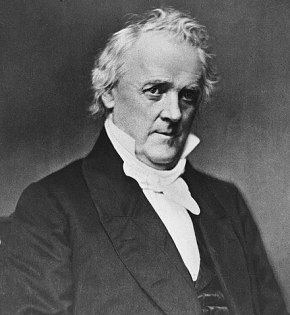
The worst ever president of the United States of America is…

…likely this guy: James Buchanan.

James Buchanan

And this piece makes the case for why he — and not the current guy — is the worst: No, Trump isn’t the worst president ever – Indivisible Movement – Medium. In a nutshell:

In order to wrest the title of worst president from Buchanan, a contemporary commander in chief would need to wreck the economy, revoke all human rights from an entire race, violate the constitutional separation of powers, and plunge the country into a ruinous civil war that kills nearly 2% of the US population.

With all the staggering incompetence and corruption of the 45th presidency, it may seem hard to believe anyone could be worst. I believe in time Trump will be in the bottom 5 presidents. But to wrestle the title of worst President ever, he still needs to do worse. Let’s hope he does not.

The comeuppance of Silicon Valley

It’s not in full decline, but Silicon Valley is on its heels these days, whether due to the practices at Uber or Facebook or Google or …well, the companies that belong there as a whole. Here’s three pieces that all touch on the some of the problems there, but really I could have put three dozen recent articles instead of just these three:

  1. There’s Blood In The Water In Silicon Valley
  2. Privilege and inequality in Silicon Valley – Tech Diversity Files – Medium
  3. Silicon Valley is confusing pseudo-science with innovation – The Verge

Everything I see tells me that they are not equipped to deal with the challenges on their own. If this is true, then expect these high tech companies to come in for a political bruising soon.

On the recent German election

Good news: Merkel won by moving to the center.

Bad news: AfD, a far right party, has surged and won seats.

This could either be a blip and AfD could fade after this election.

Or it could be the start of big and bad changes for Germany, Europe and the world.

For more on this, see this good piece: Angela Merkel wins 4th term as chancellor of Germany in Vox

Where is Facebook now and why should you care

Facebook and politics

John Lanchester manages in a review of a number of books to extensively pin down where Facebook is, here:

John Lanchester reviews ‘The Attention Merchants’ by Tim Wu, ‘Chaos Monkeys’ by Antonio García Martínez and ‘Move Fast and Break Things’ by Jonathan Taplin · LRB 17 August 2017

Here’s some reasons why you should care, even if don’t use Facebook

Facebook has an ability to influence politics in ways that no one understands, except possibly Facebook. I don’t imagine they are going to share that information readily. Politicians need to push back on Facebook and discover the extent of their influence.

My belief is that the strength and influence of social media like Facebook is going to decline in the next few years. That’s not anywhere certain at this point, though, and the power they have needs to be limited now.

On statues and awards and the naming of things

The Edmund Pettus Bridge
Statues and awards and the naming of things (schools, hospitals, museums) are about many things, but first they are about power. Those with political or organizational or financial power decide what names go on things, what statues and monuments go where, and who should get awards. Sometimes it is simple, and an award or a thing gets named after someone or something powerful as a direct result of their power. Other times it is subtle, and the award or the statue or the naming of a thing reflects the values of those with power.

When people want to tear down statues or rename things or revoke awards, there is an outcry. That outcry is because of a group fearing their loss of power. You won’t hear people talk of it in those terms: you will hear people talk about values instead. But the change is the result of a shift in power. History isn’t erased because something is renamed or revoked or torn down: anyone who wants to know the history can know it in other ways. And history isn’t changed by putting up more statues or naming things differently.

Of all the ways of understanding history, objects are the worst. They are a crude reminder that a history exists, and they are put in place by powers that be or powers that were. As a place changes, the statues should change, the awards should be redistributed, and the things should be renamed. And this will indeed happen, and it will happen due to the new people in power.

Some somewhat objective thoughts on the new Trudeaumania

Lots of chatter on this recently, Justin Trudeau: Canadian Prime Minister, Free World’s Best Hope? – Rolling Stone.

It’s good that the world thinks highly of our leaders, whomever they are. Canada is a significant nation in the world with the ability to influence other nations, and having a leader that is looked up to makes a positive difference.

As a Canadian citizen, I’m more interested in the substance than the PR. And I’m more interested in what the government is doing, not just the Prime Minister. I try to look at the government’s policies, competency in executing on those policies (either through legislation or direction to federal agencies), and how the government supports democracy (through actions to make our country more democratic) or hinders it (by making the country less democratic or by being corrupt).

That means I spend less and less time reading pieces like this, which are along the lines of “if you people were as smart as me you’d realize how bad Trudeau is” . Instead, I look to sites like this which track the government’s progress. For example, this site, TrudeauMeter, has ongoing ratings of the government. Other commentators, like John Ibbitson, provide periodic ratings: Video: Opinion: John Ibbitson rates the Trudeau government as Ottawa wraps up for the summer – The Globe and Mail. Finding sources of information you find comprehensive and objective are always your best bet.

If you don’t support the Liberal government’s policies, then I can see why you would not want the government in place.  Likewise there will be times when you do support the government’s policies but you feel the level of corruption or incompetence is so high you want to turn to a different group. If you are going to rate the Prime Minister and his government, those are good criteria to evaluate them on, not PR like the Rolling Stone magazine, or any other specific good or bad focus pieces on them. The government works for you, and if you are a good boss, you evaluate them mainly on the entirety of their efforts, not just things here and there.

Some other thoughts on Trudeau:

From what I can see so far, his government is starting off unsurprisingly: being successful over things the government has control over (like spending) and having less success over things that requires working with other groups. I suspect they will make no progress on electoral reform unless there is a major push from Canadians. Likewise, there are so many issues and problems with regards to Aboriginal peoples that any progress there will be modest, at best. I wish neither of them were true, but I am not optimistic on those fronts.

I suspect that as long as the economy is doing fine, the government does not appear corrupt or incompetent, and people aren’t tired of his government, then Trudeau and his team will be in power for some time to come. The first one, the economy, will be the one that is most likely to hit him. Corruption takes time to seep in (although major scandals can occur at any time and make the government appear corrupt), and government fatigue takes longer still. Whatever you thought of Chretien or Harper, that was true for them and I suspect it will be true for Trudeau as well.

I will continue to ignore articles that underestimate Trudeau (like the one above). He’s flashy and sometimes appears smarmy, but he’s smart, he has a good team, and politics is in his DNA.  If you oppose Trudeau, underestimating him only works to his advantage and not yours. In addition,  he is as much his mom’s son as his Dad’s. The combination makes him much more effective than his Dad could ever be. His Dad may have had a higher IQ than him, but he has a higher EQ than his Dad ever had and that will make him more challenging to defeat than people who approach politics intellectually realize.

Likewise, I will continue to ignore articles that compare Trudeau to Trump. There is little if anything to be gained by them. Trump is an anomaly. Almost any leader looks good in comparison to the 45th President of the United States.

I like Trudeau for alot of reasons.  That said, it doesn’t matter if I like him or not, anymore than it matters that you dislike him or not. What matters is his ability to do the job. He’s not an entertainer: he’s an elected official. When the next election comes, it won’t matter how good or bad Trudeau’s PR is. What matters is that in comparison to other politicians looking to lead the country, is the government he proposes to lead the best one for the job based on the criteria I have.  That’s the only thing that matters.



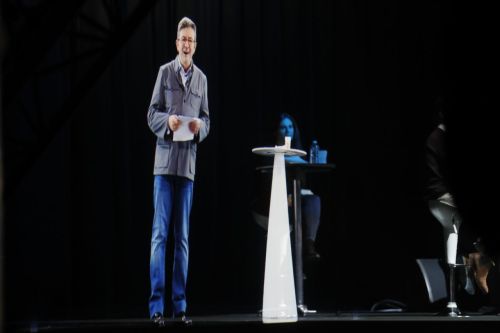
Jean-Luc Mélenchon, a candidate right out of a Philip K Dick Novel

Melenchon hologram
In France, politician Jean-Luc Mélenchon plans to be in seven places at once using  something similar to a hologram. According to Le Parisien:

Strictly speaking, these are not holograms. Jean-Luc Mélenchon will be present in seven different places thanks to … an optical illusion discovered for the first time half a century ago by an Italian physicist

Virtual Mélenchon reminds me of the politician Yance in Philip K Dick’s novel, The Penultimate Truth. We may not be far off where we get virtual candidate that look like people but behind the scenes we have AI or some combination of AI and people.

For more on the technology, see the article in Le Parisien. For more on Dick’s novel, see Wikipedia. Read up now: I think we can expect to see more of this technology in use soon.

Is everything political? What is wrong about thinking that way?

Albert Camus, gagnant de prix Nobel, portrait en buste, posé au bureau, faisant face à gauche, cigarette de tabagisme.jpg

I was thinking this when reading this quote from Orwell: “The opinion that art should have nothing to do with politics is itself a political attitude.” The idea, implied by this quote, is that everything is political. This idea springs like a trap on people who want to escape from politics and focus on other areas of human concern, like arts or sports or science.

Is this trap avoidable? There is an argument, found here, Only a Game: The Activist’s Argument (Everything is Political), that says that saying “everything is political” renders it meaningless. It’s worthwhile reading the piece, but I don’t think the argument that the statement is meaningless holds true.

Instead, I would first accept it and I would expand the notion of “everything is political” to say that

  • everything is political
  • everything is scientific
  • everything is religious
  • everything is philosophical
  • everything is art

For if you can make the case that everything is political, you can also make the case that everything is scientific, religious, and so on. (In fact, you can extend this list to other areas of human thought and human interest.) But how can everything be all of those things at the same time? To see how that can be the case, that I would refine the statements above and replace “everything is” with “everything can be viewed through the lens of”, as in:

  • everything can be viewed through the lens of politics
  • everything can be viewed through the lens of science
  • everything can be viewed through the lens of religion
  • etc.

More than that, everything can be viewed from each of those lens at the same time. For example, if I go see a film about Alan Turing, I can view it through the lens of science and I can view it through the lens of politics or the lens of art. The film has political and artistic and scientific themes and ideas, and anyone watching it can view it from those differing viewpoints. You may not care to do so, but it is possible to do so.

Now take the list and change it to read this way:

  • everything should be viewed through a political lens
  • everything should be viewed through a scientific lens
  • everything should be viewed through a religious lens
  • everything should be viewed through a philosophical lens
  • everything should be viewed through an artistic lens
  • etc.

For some political activists, the phrases “everything is political” and “everything should be viewed through a political lens” are practically the same. Their worldview is a political worldview and they think everyone should have this worldview too. The same can be said for scientists, artists, philosophers, etc.

I disagree that everything should be viewed through only one lens or mainly one lens. For example, if a crowd is watching a film, they may watch it through any or all of these lens, or none of them. If asked later if the film she made is mainly political, the director may agree that there is a political aspect to it, but the main themes and elements of the film for her could be religious or aesthetic or scientific. The film may have something to do with politics, but if you see it only or mainly as political, you miss out on the other aspects of the film.

What is true of a film is also true of our lives. Our lives, and the things that matter to us in our lives, can be seen through a political lens, and a religious lens, and many other lens we may pick up. Sticking with only one such lens provides us with such a restricted view. It is better to look at our lives and the lives of others with as many lenses as possible. We will see more that way. We will hopefully understand ourselves better. And we will acquire a view and a wisdom that those stuck to peering through only one lens will never achieve.

(Image is not of Orwell but Albert Camus, which I felt to be more appropriate. Photograph by UPI –  image  from the United States Library of Congress‘s Prints and Photographs division under the digital ID cph.3c08028.
http://www.loc.gov/pictures/item/93507512/ and Wikipedia)

Eric Holder has a new role – defending California against the Trump Regime

The State of California has a new lawyer to represent it: Eric Holder. The New York Times has the details, here. A good piece, showcasing what we can expect from that State while Trump occupies the White House.

As an aside, I found it fascinating to see how Americans perceived Holder. For a number of Americans, they saw him and his Justice Department as inhibitor of liberty due to how his department cracked down on leaks, among other things. For African Americans, they likely saw him as a provider of liberty, as his DOJ went after those looking to restrict their voting rights.

I think both those activities reflected the wishes of his boss, as well as his own goals.

I think he will be formidable in the next four years as he and his law firm defends the interests of California. It will be interesting, for certain.

Shocked by the image of the Syrian boy in the rubble? Here’s how to help | World news | The Guardian

Syrian civil war as of 08-2016

There is much outrage over the images of dead and injured children. If you feel compelled to do something, here’s a good source of information on how: Shocked by the image of the Syrian boy in the rubble? Here’s how to help | World news | The Guardian

If you are wondering why it is so terrible, especially around the city of Aleppo, then you can read this: Lina Khatib on the Battle of Aleppo – Council on Foreign Relations Lina Khatib on the Battle of Aleppo – Council on Foreign Relations.

Khatib argue that because Aleppo is seen as crucial for success by both regime and opposition forces, much terrible fighting is occurring there. To add to that, partners and proxies are joining the fight, turning it into something that looks like a modern day Stalingrad. At this time, there does not seem to be many (or any) good diplomatic or military solutions. Hence the terribleness that is happening.


Democracy in action – An Introduction to Field Organizing

If you want to do more than vote in an election, especially if you are an American, then read this: THIS ELECTION IS FREAKING ME OUT, WHAT CAN I DO!? (An Introduction to Field Organizing). Obviously this is geared towards Hillary Clinton supporters for president, but read it regardless of you who you plan to vote for and at what level.  It should help you get to the point of at least knowing the right questions to ask and where you might go next to get more involved.

Voting is important, but there is much more to democracy than that. If you step up, your involvement will make a difference, regardless of your role. Good for you for taking that next step.

Nate Silver and Paul Krugman on the importance of good models to understand and predict

This piece by Nate Silver, How I Acted Like A Pundit And Screwed Up On Donald Trump in FiveThirtyEight, is ostensibly about how he messed up in his predictions on the rise of Donald Trump. What I think is worth reading is how he goes about his work and what he learned from his mistakes. Specifically, it’s a great study on how important models are and how a good model works and what it can tell us.

Related, Paul Krugman talks about his model here: Economics and Self-Awareness in The New York Times. Like Silver, he uses models both to understand and predict. Obviously they are modelling different things, but in both cases good models are the basis of their thinking and the work they do.

It’s likely too much to ask now, but eventually anyone doing analysis and making predictions should have to disclose the models they are basing their decisions upon. The opinions of anyone not having such models are likely not worth much.

A better way to follow the US presidential race…

..is to follow this, from Bloomberg:  Who’s Winning the Presidential Delegate Count?

You can still read the news and follow along, state by state, but what really matters more and more is the delegate count.

One thing that surprised me: right now, Ted Cruz is alot closer to Donald Trump than I imagined. Obviously there is a way to go still, but he is doing well. Will Cruz win? I think the odds are against him, but right now they are not insurmountable.

As for the other side, I believe Hillary Clinton is going to win, regardless of the Michigan surprise showing of Bernie Sanders. Sanders is performing better than many imagined, but she has a big lead in delegates and that will only get larger as we go along.

How to tell who the next president of the US will be (ahem, Hillary Clinton)

There’s two ways to tell who will be the next president of the United States.

  1. Listen to the pundits: The Most Likely Next President Is Hillary Clinton – Bloomberg Politics
  2. Follow the betters: 2016 Presidential Election – Next President bet | betfair.com

In this case, at this moment, they are both in agreement: Hillary Clinton will be the next president of the United States. Now, the election is so very far away, anything can happen, a week is a long time in politics, blah blah blah, but right now it is hers to lose.

If you ask me, ignore the pundits and follow the betters: the latter are rarely wrong. Read the pundits if you want to know why she is winning.


Detroit: imploding city

While I knew things were rough in Detroit, this story, Volume of abandoned homes ‘absolutely terrifying’ (from DetroitNews.com), gives you a context of just how incredibly bad it is. Two take aways from that story. First, this statistic:

Since 2005, more than 1-in-3 Detroit properties have been foreclosed because of mortgage defaults or unpaid taxes

Two, this map of foreclosures:

The situation is terrible, but the story is worth reading and the visuals (e.g. a bigger view of that map) really illustrate the damage. Worth reading, especially if you have recently read some pieces, as I have, of good news coming out of Detroit.

The best thing you will read about the upcoming 2016 US Presidential election (and why you can pay much less attention until then)

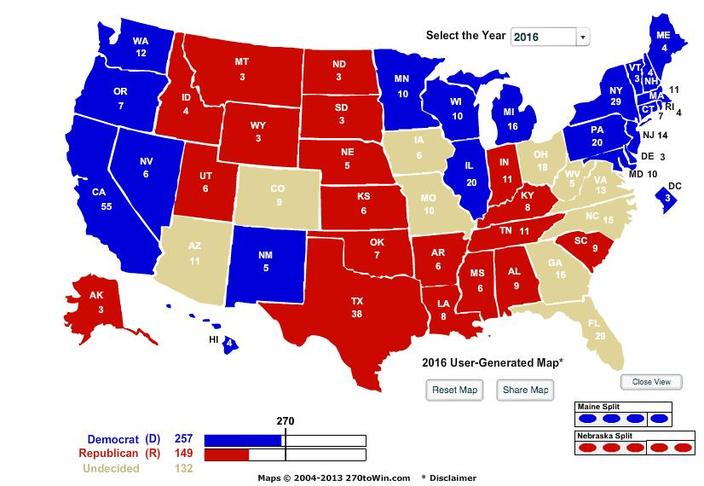
Check out this map:

And then read this piece by a very realistic US Republican on the upcoming US presidential election: A reality-check on the 2014 results

If you are a fan of Hillary Clinton* then it is great news. If you are a supporter of anyone else, you will see why it is going to be very difficult for anyone from the GOP to become president in 2016.

But don’t take my word for it: read the article. Bookmark it until next year. It’s very likely going to be true, regardless of the thousands of articles and millions of words that will be written between now and election day.

(* Yes, in theory, Bernie Sanders could be the nominee. In practice, I think it is very unlikely.)

Obama’s moneyball approach to diplomacy

This Vox piece on how Obama does diplomacy is good. While it focuses on Iran, it’s a much broader and more thoughtful analysis of how Obama approaches foreign affairs. Key quote:

Obama’s “undoctrine” starts from the position that there is no need to find a universal foreign policy framework. It’s enough to find specific wins, he believes, and minimize losses.

In his view, foreign policy isn’t a matter of showing strength or trying to make sure that every US action furthers its interests around the entire world. It’s a moneyball approach to foreign affairs: Don’t focus on playing a beautiful game, focus on racking up points at the lowest possible cost. To Obama, that’s how you win.

Obama plays to win, so this shouldn’t surprise people.

A good Vox piece.

This is why we can’t have interesting politicians or politics

Vox has a good piece on the mistake that Obama recently made (“Randomgate”) and how the resulting follow on stories about that mistake illustrates why we can’t have interesting politicians. Their conclusion?

Long-term, the problem here isn’t just news consumers find themselves listening to bullshit gaffe stories. It’s that politicians learn the same lessons over and over again: unscripted moments are dangerous and generally to be avoided. Don’t give interviews and don’t stray from talking points.

The media will bemoan lack of access and robotic, scripted answers. But it will also punish deviations from the script. And it will do so in the most trivial ways. No minds were changed during Randomgate and nobody learned anything. A couple of spokespeople had a bad afternoon. Some websites (including this one) got some extra pageviews. And every politician learned to be that much more boring in the future.

I think this way of dealing with politicians doesn’t just make them uninteresting: it also make our politics dumber. Here’s hoping this changes, though if anything, I think it will get worse before it gets better.

On avoiding the trap of political outrage

If you are associated with people who are political activists, you will likely be presented with events from time to time and you will be asked  “why aren’t you outraged by this?” It can put you on the defensive. It can make you feel uncaring, selfish, or apathetic. You have to agree that a massacre or child abuse or great poverty is outrageous, and you feel at that moment that a) something should be done and b) you are somehow deficient for not doing something about it.

This is a trap. First off: is there something you can immediately do to stop this? If you can, then do it. Chances are you cannot. So outrage aside, you need to make a plan either to take action in the longer term, or not take action at all. But why would you not take action at all? Simply because there are more terrible things in the world happening than you can possibly tackle. Even if you were to devote your life to them, there would be many many more things you cannot do than you can. You need to have a plan to do what you can.

Feelings like guilt or or pity or outrage may spark you do something. But if things stop there, such feelings are self-indulgent. Instead, pick something that you are motivated to improve and work on.Can you do more? Do more.

Just avoid the trap.

(Originally posted at Posterous on April 24 2011)


Obama takes political campaigning to a whole new (virtual) level

According this article in GigaOM, Obama Is campaigning within games:

‘Last week we noted unconfirmed sightings of an “Obama for President” billboard in the Xbox 360 racing game Burnout Paradise. Today we’re able to report that it is, in fact, an official advertisement placed by the senator’s campaign team.’