It’s spring: out with the old scourge, in with the new! (i.e. the March 2025 edition of my not-a-newsletter newsletter is here)

It’s another spring. Five springs ago was the start of the old scourge, the pandemic. This spring we have the new scourge of the Trump administration. Both had/are having an effect on everyone around the globe. Both moved/are moving fast and caused/are causing major damage.

You might say: wow, I’m not sure if I want to read all this! I understand. If you want to scroll quickly down to the World section…wait, that’s not too cheerful either….to the…ok, maybe scroll down to the bottom. Or come back in five years and read this in perspective! Whatever you do, I don’t mind. For those of you who can manage, let’s start with the old scourge.

Untitled

Pandemic: there’s been much focus in the news on the 5th Anniversary of lockdown. The Toronto Star did a piece on how the COVID-19 pandemic lockdown taught us all some lessons. On the other hand, The Washington Post asked, Five years after covid pandemic: Have we learned anything? and wondered why we are so good at forgeting the pandemic lockdown. To help us remember, WaPo also did this piece on powerful photos that captured their pandemic struggles and then asked, where are they now? Over at the New York Times they presented this, Covid-19: Enduring Images of a Global Crisis, 5 Years On and this: a coronavirus timeline.  The CBC weighed in with this: Five years after pandemic began, COVID-19 has left death, illness, isolation in its wake.

The pandemic was a massive event in our lives. It is good that many are choosing not to simply act like it never happened.  If you choose to look, you can still see markers of the pandemic everywhere. You can still see remnants of COVID warnings still on doors and sidewalks.

Not all pandemic markers are visible. So many people died of COVID that Social Security in the U.S. ended up with a surplus of funds. And while for many of us, life has gone back to normal, those with long COVID continue to suffer. Likewise, young people were often deeply affected by what happened.  The Times talked to teenagers and asked them how the pandemic has changed them. And not just young people: public servants confessed on how sharing science about COVID put them in the crosshairs.

One of the weirdest parts about the pandemic is that it likely led to people resisting getting vaccines, possibly because they felt the COVID-19 vaccines were forced upon them. It appears that vaccination rates are declining and measles cases are climbing. And if that’s not bad enough, here are the preventable diseases could re-emerge next.

There’s some discussions around bringing back waste water surveillance in Canada to look for measles. It’s sad to say, but I hope that comes true. Meanwhile, there is a spring dose of a covid 19 vaccine coming available. Consider getting it, even if you’re in parts of the world, like the U.S., that is having the mildest Covid winter on record. Let’s make sure the old scourge doesn’t return.

On the topic of returning, people like Jamie Dimon wants everyone to return to office. (Like Elon Musk, he says and does a lot of stupid things.) So do other business leaders. Meanwhile people who study this, like the IMF, says working from home continues to lead to increased productivity. I guess CEOs consider increased productivity a bad thing. Funny that.

Trump 2.0: Trump 2.0 is the new scourge and definitely not a funny thing. He and his team have only been in office for a few months, and already they have hastily imposed MAGA rule on the government. Trump quickly assembled his MAGA picks for new White House term, and other than Matt Gaetz (who seems to have been universally reviled) he got most of them through, including such gems as Kristi Noem (his pick for homeland security secretary) and the DOGE boys, Elon Musk and Vivek Ramaswamy. Whoops, did we say Vivek? He was there for a hot minute before he stepped down. Meanwhile, ‘Uncle’ Elon Musk went straight to work, bring a team of such luminaries as teenager “Big Balls” to take a chainsaw to the Federal Government. The DOGE team hacked their way throughout the various parts of the government, doing so much damage that it is hard to keep up. Thankfully people like the staff at TIME have provided summaries.

Meanwhile there has been some pushback from tech workers against Musk’s efforts. In some cases it has led to physical standoffs at the entrances of buildings before staff took DOGE to court. Like with many of Trump and his team, the legal proceedings have led to setbacks, including 3 court losses in 90 minutes.

What will be the impact of this? It’s almost too difficult to say, since it will cause damage in a multitude of ways, including potential loses for the GOP in upcoming elections. Which is why Republicans are pressing the House leadership for help as they face pressure over DOGE cuts at home. So much pressure, in fact, that the leadership told them not to hold Town Halls.

You might think: the US government is too big and this slash-and-burn approach is the only way to shrink it. Let Al Gore via this Doonesbury comic for March 16, 2025 explain otherwise. Newsweek has more on this.

You might also think: at least all those lost jobs will mean the government is going to be flush with cash now. Alas, tax revenue could drop by 10 percent amid turmoil at IRS. The only people who are going to be flush with cash due to DOGE are rich people. Rich people like Musk, who helps himself to government funds by making sure his company Starlink gets an FAA contract (which, of course, raises new conflict of interest concerns).

Musk is not the only one enriching himself while all this turmoil is going on. The Times reported that early Crypto Traders had speedy profits from the crypto Trump Coin. Meanwhile,  many others suffered losses. (For more on that, see this: The ‘Crypto Punks’ Behind Trump’s Murky New Business Venture.) And crypto is just one way the Trump gang will grab that bag. As one story wrote, ‘the gloves are off’: Trump appears poised to cash in from his presidency in new ways.

Enrichment is not the only thing Trump is after. Retribution is another. Every group some consider “elites” have been attacked by Trump and his team. Recently he’s been going after Big Law firms, for example. Especially those who were somehow involved in his pre-election trials. It’s weird to think what would have happened if he lost the election, since the Special Counsel Report said: Trump Would Have Been Convicted in Election Case. It seems Trump thinks of it every day, and has been acting accordingly.

Despite people like Timothy Snyder warning people: Do Not Obey In Advance, people have been doing exactly that. Because of Trump’s war on D.E.I., companies like Google have decided to end their DEI hiring goals. The staff at WaPo were so ‘Deeply alarmed’ by the changes at their paper that they requested a meeting with the owner, Jeff Bezos. I doubt it made any more difference than the massive subscription cancellations. Politicians that Trump did not like were removed from special committees like the House Intelligence Committee. Others tried to win favour with Trump by doing such weird things as hiring Daniel Penny to work at a Venture Capital Firm (whose founder naturally backed Trump).

Though not directly due to some action of Trump, there was lots of changes over at the left leaning MSNBC after the election. Rashida Jones, the MSNBC President, resigned. Then there was a MSNBC  “Bloodbath” of non-white anchors after Joy Reid was forced out. Strange times.

 The World: Trump’s actions have not been limited to the U.S. One of the first and oddest things he did was to decide to rename the Gulf of Mexico to the Gulf of America. Naturally Google fell in line and now we have the Gulf of America on Google maps. That was odd but mostly harmless.

The tariffs he’s been slapping on everyone have not been harmless. Which tariffs, you ask? There have been so many I have lost count. You likely did too. Thankfully AP has put together a timeline. 

By the way, if you are like Trump and think that tariffs are paid by other countries, here is your reminder that the only people paying them is Americans: What is a tariff and who pays it?

Here in Canada, the many tariffs and other threats that Trump is hurling our way has had a big impact on the country. Canadians everywhere have rallied to oppose these Trumpian efforts with the ‘Elbows Up’ cry. You hear it from Mike Myers, who started it, to the every day Canadian, who among other things, have stopped buying American products and have stopped travelling to the U.S. The annexation threats led the Canadian prime minister Trudeau to say ‘you can’t take our country’ after a big hockey win over the U.S.

Or I should say the former prime minister. Trudeau stepped down after months of polling badly, to be replaced by Mark Carney. Carney has taken up the torch of rallying the country to oppose Trump which has led to a resurgence of the federal Liberal party. A party once doomed to defeat could form the next government on April 28th.

Other than Canada, Trump has also threatened Greenland and Panama. If you are asking, “why???” this explains it. This is an alternative explanation: American Foreign Policy Is Being Run by the Dumbest $%&*@#! Alive.

That’s alternative explaination is just one perspective on Trump. Many others are trying to get in front of the whirlwind of Trumpian events and try and make sense of it all. Naveet Alang had some thoughts on what it is like living through an inflection point. Bluntly, Bill Gates called Elon Musk’s embrace of far-right politicians abroad ‘insane shit’.  Others are looking back to Nazi Germany, the way the Atlantic did with this piece: How Hitler Dismantled a Democracy in 53 Days. The great actor Joel Grey had similar thoughts, here: ‘Cabaret’ Was a Warning. It’s Time to Heed It. (Related was this piece on how the Germans thought they were free.)

My own belief is the actions of authoritarian governments elsewhere provide clues to where the Trump government will go. Actions like a new anti-LGBTQ+ bill in Hungary that would ban Budapest Pride event and allow the use of facial recognition software. Or the arrest in Turkey of Istanbul’s mayor, a key rival of President Erdogan. There are signs everywhere in the world right now: you don’t have to turn back to Nazi Germany.

Israel: not everything happening in the world revolves around Trump. The Netanyahu regime continues to wage a War that won’t end and not just in Gaza. The Israeli army recently demolished West Bank apartment buildings, displaces tens of thousands of Palestinians. As always, I watch the Times to keep up on this.

Nearby, Syria is continuing to change post civil war. Korea could have had a civil war after it almost succumbed to martial law. I think it is still struggling with that.

Also struggling is Los Angeles. Here’s the mayors plan for dealing with the devestation of the LA fires and her plan for rebuild. (More on that, here: Visualizing the Los Angeles wildfires in maps and charts. Plus, RIP David Lynch, a great citizen of that city. Here’s a really good study of him: David Lynch was America’s greatest conservative filmmaker.)

In other news: Oscar season came and went. The film “Emilia Perez” had the most nominations and seemed destined to sweep. And then, destiny took a turn. To see why, read about  the rise and fall of Emilia Perez and how it went so wrong. As for other things going wrong, the film, ‘Joker: Folie à Deux, was fated to lose $150 Million to $200 Million after bombing at the Box Office. Also bombing recently have been Marvel movies. Which is no doubt why Robert Downey Jr  is set to return to Marvel as Doctor Doom.

In sports news, Chicago also bombed as the Blues piled outdoor misery on the in a  6-2 beating during the recent NHL’s Winter Classic. Glad to see that the Classic is still going on as an annual event.

Not bombing but succeeding has been the Apple TV hit, Severance. If you are fed up with work, you should know ‘Severance’ Season 2 puts things in perspective. You should also know it’s great. I can’t wait for season 3.

Finally: one of my favorite Canadian candies,Cherry Blossom, is going away for good. That’s sad.

This was good:  7 planets aligned in the sky above me recently.

Don’t forget with all this news that The news ≠ your life. Also don’t forget this:


As always, thanks for reading this. See you again in Summer. Meanwhile, enjoy Spring.

The joy of being able to go close to great works of art

The following snapshot is a close up of a painting at the AGO. I like how few brushstrokes it took to add the people and the bridge details:

If you step back then you can see them in the context of the full painting:

It’s one of Monet’s, and from a distance you can see it’s no mere painting. He captures wonderfully the evening sky and of course the reflection of the bridge in the water. The people may be simply jottings but the overall work is much more sophisticated.

I love to be able to go up close to paintings and see the brushstrokes and other markings a painter uses. You gain a better insight into the work. I highly recommend that you try looking at paintings in museums from all distances. I think you’ll gain much more from the paintings when you do that. Give it a go next time.

Can you still get a good bottle of wine for under $10 at the LCBO? (or how to find “exceptional” wines of “good value” in 2025)

It is possible to find a really good bottle of wine for under $10 at the LCBO in 2025, but it is very difficult. It’s much easier if instead of “under $10”, you try and find something “under $12” or “under $15”.

To see what I mean, try this search for Exceptional products at the LCBO. You get back 2 750ml bottles of wine under $10:

  1. Adesso Merlot D’Italia
  2. Toro Bravo Tempranillo Merlot

If you search for great value wines, you get the first two plus:

  1. Candidato Oro Tempranillo Garnacha
  2. Santa Carolina Cabernet Sauvignon

All in all, a pretty short list. (Yes, there are wines that may be great value or even exceptional that don’t show up in such searches, but let’s go with this for now.)

If you search for Exceptional wines under $12, you get to add a few more to your list of possibilities:

  1. Fuzion Shiraz Malbec $10.95
  2. Stormy Bay Cabernet Sauvignon $11.45
  3. Fantini Pinot Grigio IGP $11.50
  4. Pelee Island Pinot Grigio $11.95
  5. Caliterra Cabernet Sauvignon Reserva $11.95
  6. Robertson Winery Chenin Blanc $11.95

And if you expand that to under $15, then you have a longer list still:

  1. Misterio Malbec $12.95
  2. Peller Family Reserve Cabernet Merlot VQA $13.95
  3. Straccali Chianti DOCG $12.95
  4. Alaris Trapiche Malbec $12.95
  5. Two Oceans Cabernet Sauvignon Merlot $12.95
  6. Peller Family Vineyards Red $13.25
  7. Argento Estate Bottled Cabernet Sauvignon $13.85
  8. Piekenierskloof Six Hats Shiraz 2022 $13.95
  9. Bodega Norton Barrel Select Malbec $13.95
  10. Santa Carolina Reserva Cabernet Sauvignon $14.00
  11. Reif Estate Riesling VQA $14.75
  12. Six Hats Chenin Blanc 2024 $14.95
  13. Jackson-Triggs Reserve Chardonnay VQA $14.95

As for wines of great value, here’s everything I found under $15:

  1. Pelee Island Shiraz Cabernet $10.95
  2. Stormy Bay Cabernet Sauvignon $11.45
  3. Fantini Chardonnay $11.50
  4. Santa Rita 120 Reserva Especial Cabernet Sauvignon $12.95
  5. Piekenierskloof Six Hats Shiraz 2022 $13.95
  6. Grand Sud Chardonnay VdFrance (PET) $14.50
  7. Famille Fabre Le Cerf et le Vigneron Cabernet Sauvignon 2022 $14.95

All in all, there are 4 bottles of wine under $10 that are great value or exceptional, 10 bottles under $12, and 30 bottles under $15. (Not counting Vintages, which if there are wines there under $15 tend to be good value.)

Note, those are mostly red wines. There are no white wines listed here under $10. There are only 4 under $12. And 7 under $15. Perhaps Toro Bravo Verdejo Sauvignon Blanc should be on the list at $9.95.

Searching for wines that are great value or exceptional is one way to find a good bottle of wine for under $10/$12/$15 at the LCBO. There are other ways, such as looking for wines recommended and rated by noteworthy sources such as “Decanter” or “Wine Enthusiast”. You can also take a chance and assume that if the Santa Rita 120 Reserve Cab Sauv you picked up is good, then other wines by the same producer are also good.

However you go about it, it’s likely the days of good wine under $10 at the LCBO are coming to an end. Inflation hits everything (except this great Bordeaux). Look for exceptional wines of good value, though, and you will be fine.


On the inconspicuous data centres of Toronto’s

Unlike skyscrapers or shopping malls, most people pass by data centres and not realize that they are there. There’s rarely a sign denoting their identity. Sometimes there are clues, like the lack of windows in my favorite data center at 45 Parliament Street (shown above). But mainly they are inconspicuous.

If you were to check out the data centres here, Toronto Data Centers, there’s a good chance you’ve passed these buildings and haven’t even noticed them. Same is true for these buildings listed by CDML Consulting Ltd. Data centres are special on the inside, but on the outside they tend to look like many other buildings.

As for what they look like inside, I wrote a piece in 2013 about that. Even though that piece is 12 years old, I suspect they haven’t changed much on the inside, other than for the type of IT housed there.

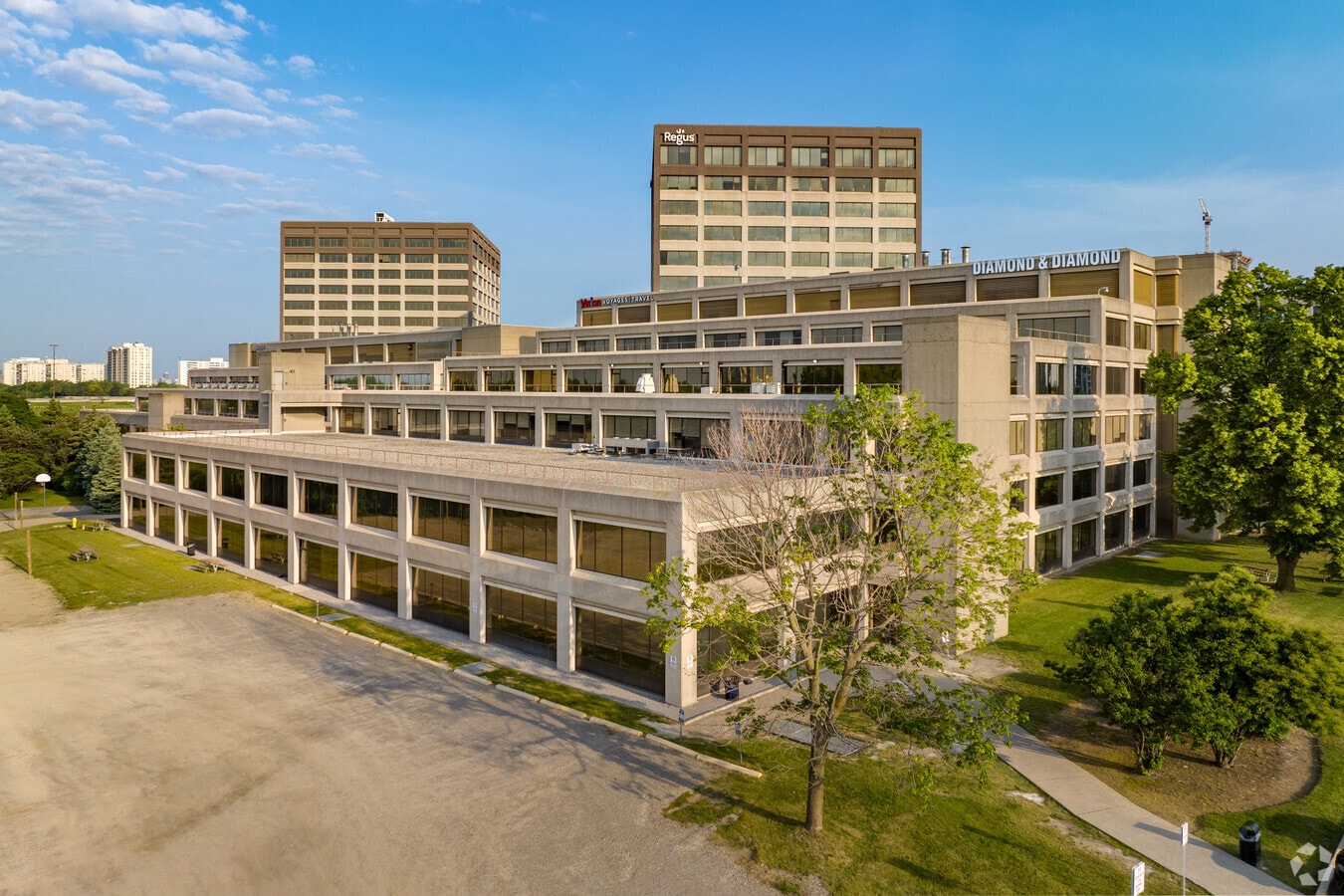
I started working for IBM in this data centre at 245 Consumers Road in 1983 (seen below). I suspect it is still housing IT.

Data centres are something people are worried about lately. It’s understandable. But if they were more familiar with them, I would hope that worry would subside somewhat. Perhaps this post can help with that.

Free zines and other good things from Austin Kleon


Of all the people I follow and pay attention to on the Internet, Austin Kleon may be my favorite. I look forward to his newsletter every Friday: it’s always the same format, and always good and often great.

While he does a lot of great things digitally, I admire his creation of analog material, like zines. In this post, What does a seed look like?, he’s shows us one of the handmade zines he created. In another, More light!, he provides the reader a zine to print and make. While here in this post, Love is not a gadget, he has created both a zine and a cassette tape.

Seeing all these zines of his got me making my own again. There’s something about handcrafting anything — from zines to cassette tapes to…well, whatever you prefer! — that is very satisfying. I’d encourage you to follow our lead and create your own…it’s not hard!

I’d encourage you to read more Kleon too. Maybe start with this: Study something you love in depth!


A brief programming note about the blog’s new appearance

Well, sometimes an accident can lead to good things. The accident today was mistakenly replacing the theme on this blog, instead of my new blog.  When I realized the error, I thought: no problem, I’ll just reapply my old Coraline theme. I thought wrong: the Coraline theme no longer appears on wordpress.com.

Turns out I did fine a theme that was somewhat close: Colinear. At first I was not happy with the change. But I managed to get it close enough back to the old theme I am ok with it. Colinear also has features that Coraline does not have, like the ability to be looser with images inserted in posts. (Before I always had the specify a maximum width of 500. No more!) So some good with the bad.

I hope most people don’t care or notice too much. It will still have the same type of content, regardless of font changes and other design differences. I hope you will continue to like the blog.

What’s both new and old in Toronto (random updates from the Big Smoke, March 2025)

Toronto: a city where what’s old and what’s new are often bundled up in the same topic. Take the topic of bike lanes. The mayor and the premier have been fighting over this for some time, yet it stays in the news. Having recently been reelected in a landslide win, Premier Ford is expected to soon rip some of them out. Meanwhile, Mayor Chow now is planning to expand them in other ways.

There are plenty advocating for more bike lanes. Meanwhile, there are a handful of toronto businessmen and more advocating the other way. Personally I think we need more bike infrastructure, if for the food delivery people on bikes alone. Is ripping up bike lanes a good look for the city? No it is not.

Another old thing in the news is the Santa Claus parade. It has fallen on such bad times that there was a a “go fund me” set up for it. At least for 2024 it was saved, thanks to funding from the Federal government. Here’s hoping it gets more funding for 2025 and beyond.

Another old thing getting new life is the TTC. In this case, the TTC is getting some newness in the form of a $2.3 billion fleet of modern subway trains. That’s a welcome injection of goodness into transit. As for other transit developments, it looks the Eglinton LRT may open in July. Amazing. Not so amazing is the ripped up streets at Yonge and Eglinton. Looking forward to the day that type of activity in my neighborhood is old news. It’s just one thing after another in midtown Toronto.

The restaurant scene in Toronto is a great mixture of old and new. I started thinking about that when I read this piece on the favorite old restos of Toronto chefs. From that I went down a rabbithole and checked out the 10 oldest restaurants in Toronto, then I read this piece on old school Toronto restaurants. Followed up with this, on the oldest restaurants in toronto you can still visit. And since I couldn’t get enough, I watched this entire blogTO slideshow on old school restaurants in Toronto.

Of cours there’s lots of great new places to dine. Check out thislist of  the best new Toronto restos for 2024. I’ve been to General Public, and it’s great, and I want to get to Linny’s soon. There’s also a number of places on this best of  Winterlicious 2025 that I need to see. You should go to see them too, if you can.

In other developments over the last 6 months:

Finally, happy 50th anniversary to courage my love in Kensington. It’s not just a store name: it’s also a good commandment. Have courage! Thanks for reading my random Toronto notes. I’ll pen another one in September.


What’s good on a Friday in March, 2025

Muji fountain pen

Here’s a list of random good things I thought worth sharing this fine Friday:

This Muji fountain pen shown above is one of my favourite writing instruments. But don’t take my word for it, read this: Mini-Review: Muji Fountain Pen – The Well-Appointed Desk. If you can’t find the Muji version of the pen, this pen is also good: Platinum Preppy. (You can order one here.)

This is a really good use of AI: it helps turn waste wood into usable lumber.

I posted this on Bluesky and people loved it: you can go here and listen to different forests!

This piece on the friendship of CS Lewis and JRR Tolkien is wonderful.

Do you want to watch some feel good movies this weekend? Then click on that link.

Speaking of movies, it turns out that people love going into the Criterion Closet. It’s a good vehicle.

This is a good story: “Vienna”, a 50-year-old Billy Joel B-side, is now one of his most streamed songs. (Click here for the story.) I was a fan of the song ever since I heard it half a century ago. Glad so many young people love it still.

Also a good thing: finding out that there is a causal effect of video gaming on mental well-being, according to this study done in Japan 2020–2022.

Finally, I love the furniture of Phillip Keefe (seen below). Is it functional? Is it art? I know for one thing: it’s cool and it’s well made. Very good, if not excellent.

On old blogs and bloggers and blogging

Recently I’ve been thinking about the old days of blogging. A few things happened to put me in that frame of mind. First I was reminded of two old blogs I used to love: Sunshine+Design and Color Me Katie. Both of them ended in 2013. I wondered why they suddenly stopped, so I poked around a bit and noticed that Katie moved to posting on flickr and later on Instagram. I suspect that’s how many old bloggers moved away from blogging: migrating from original social media sites like Blogger and WordPress to newer social media like flickr and Instagram etc. They moved on and their blogging days came to an end.

Not everyone who was an old school blogger gave it up, though. Kevin Drum was one of the original political bloggers who kept blogging until his passing just recently. Many of those who started blogging with him went on to have substacks or columnist jobs or even started small companies, but Kevin was still actively blogging in 2025.

Like Kevin, I am an old school blogger who somehow managed to keep at it into 2025. I use other social media, like Instagram and Bluesky and I’ve even recently started some tumblrs which I will talk about at some time. I’ve started some new blogs too. But I still keep blogging here. Blogs are a medium like anything else: you use them as a way of putting things out in the world.  I suspect I will continue to post things on this site and other blogging sites until my end too. It’s good technology, good media.

In the meantime, R.I.P., Kevin. And rest in peace old bloggers and blogs everywhere.

P.S. More on Kevin Drum here: Kevin Drum Dead: Influential Early Political Blogger Was 66 in The New York Times

P.S.S. I noticed an account I follow on Instagram, @evgrieve, also has an ongoing blog that started in 2007! For fans of the East Village in NYC — my favorite part of that city — it is recommended.

On zines


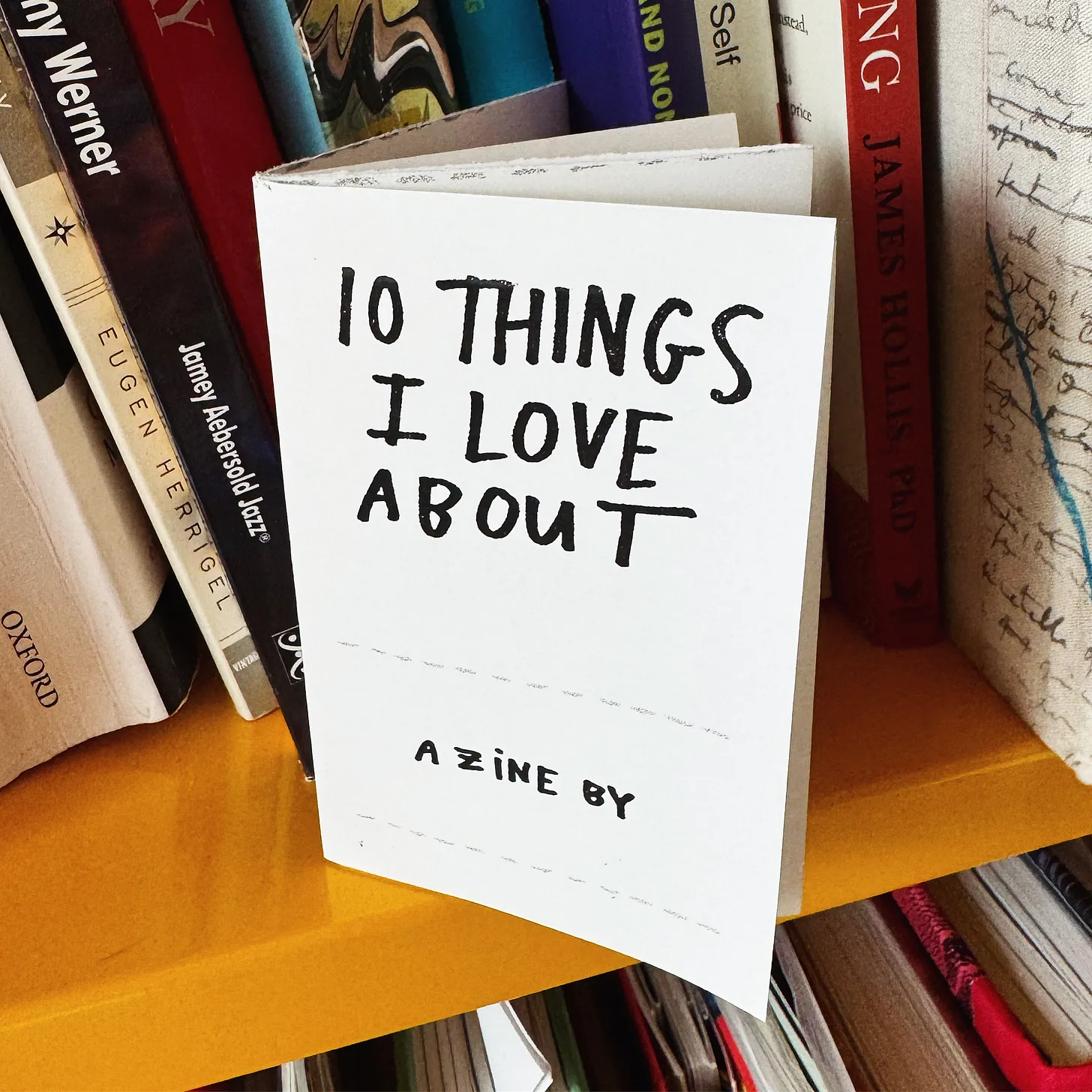
I started making zines again. I made some in the early days of the pandemic, but then stopped. I recently restarted making them because I was inspired by all the current zines posts of Austin Kleon. (You can see his here.)

Kleon’s are mostly the one sheet of paper kind you see in the image above. If you want to have a low key fun thing to make, I recommend making a zine of that kind.

Need more info? Here’s some links on how you can make your own, as well as some other good material:


Restaurants loved and living: The Senator

Like Okonomi House and Le Paradis, the Senator restaurant is a much loved restaurant I’ve been going to for a long time (the 1980s), though it predates that era by many years. It has the same 1930s ambiance of Le Swan and The Lakeview, two other Toronto restaurants I love. And while it has many fine things on the menu, the one reason I go there for is the breakfast.

The last time I went I splurged and got the steak and eggs (seen above), as opposed to the bacon and eggs, which was my Usual. Either dish is excellent. Also excellent: their coffee. Make sure when you go there to get some of their excellent brew: it’s hot and tasty and endless and served up in an old school diner mug.

When the pandemic hit I feared it would be one of the places to go under. Fortunately it held on, and the last time I went for brunch on a Sunday, it was packed with theatre people who planned to go to the Ed Mirvish show next door once they had their fill. That busyness was great to see.

When I was younger I would make my birthday a vacation day and I would start it with a trip to the Senator. I did that for decades. In all that time, the food and coffee and decor has been consistent and great. While they seem to no longer offer breakfast dishes on the week days, you can still get that and more if you hit them up for brunch on the weekend.

Whenever you go to the Senator, by all means go and soak up all that 1930s diner goodness. Get some coffee too. You’ll be glad you did.

It’s time for PI (What I find interesting in tech, special raspberry pi edition, Mar. 2025)


Over the last year I’ve been working with various Raspberry Pi products, from the Pi Pico to the all-in-1 400 series. Along the way, I’ve found these links / articles to be useful for me. I hope they might help you too.

How To Guides: Here’s a variety of how to articles for various Raspberry Pi products:

LCD/OLED output: If you want to use LCD or oled displays with your Pi, check out how to get Billboard Scrolling with LCD Display & Raspberry Pi Pico. Here’s how to get your raspberry pi working with your oled. More on that, here: using ssd1315 oleds with the raspberry pi pico. Also here .

RPis’ config.txt: If you want to use your Pi with an old composite display, then you need to learn more about the config.txt file. So here’s click on the links to know about the config.txt file: here and here and here and here.

If you are having problems with output display, check those out. Also, how do i shrink the screen with composite out is good. So is this: how to add an rca tv connector to a raspberry pi zero. 

Pin settings: Pin settings articles for the Raspberry Pi are here and  here and  here. Finally, here’s the pin layout for the  Digispark Pro. More on the Digispark here.

P.S. Posted on 3/14 for obvious reasons. 🙂

On letting go of the last of Twitter (with a PS on ephemerality of tweets)

A few weeks ago I downloaded my twitter archive from X.com and deactivated my main account there. I assume this will result in blm849 being deleted, but who knows with that site.

I was unsure of what to do with this archive of mine. I had a lot of good memories of posting and interacting with people on that site, but the archive was taking up too much space for the value it contained, so I deleted it.

I still have all the blog posts I wrote about twitter, here. And an old tumblr of mine still has quite a few tweets contained in it. But overall it was time to let it go. Twitter was good while it lasted.

P.S. I always knew tweets were ephemeral. All digital media is, but tweets seemed more ephemeral than most. If you want to create or maintain a presence or a record, consider less ephemeral ways to do it.  Don’t depend on a site or a tool that can be easily taken away from you, or a record that is hard to replay.

The mongolian horde approach, or why you don’t have to be a fool to think that Elon Musk is incompetent

Is Elon Musk incompetent? Is he a genius? Or is he something else?

While some think his recent actions at Twitter and in DOGE indicate he is  incompetent, Noah Smith came out and defended Musk in this Substack post: Only fools think Elon is incompetent – by Noah Smith.

Smith starts off by saying that Musk …

is a man of well above average intellect.

Let’s just pass on that, since we don’t know the IQ or any other such measure of the intellect of Musk. Plus, competent people don’t need to have a high IQ.

Indeed Smith gives up on IQ and goes for another measure:

And yet whatever his IQ is, Elon has unquestionably accomplished incredible feats of organization-building in his career. This is from a post I wrote about Musk back in October, in which I described entrepreneurialism as a kind of superpower

So it’s not high IQ that makes Elon Musk more competent than most, it’s his entrepreneurialism. In case you think anyone could have the same ability, Smith goes on the say why Musk is more capable than most of us:

Why would we fail? Even with zero institutional constraints in our way, we would fail to identify the best managers and the best engineers. Even when we did find them, we’d often fail to convince them to come work for us — and even if they did, we might not be able to inspire them to work incredibly hard, week in and week out. We’d also often fail to elevate and promote the best workers and give them more authority and responsibilities, or ruthlessly fire the low performers. We’d fail to raise tens of billions of dollars at favorable rates to fund our companies. We’d fail to negotiate government contracts and create buzz for consumer products. And so on.

Smith then drives home this point by saying:

California is famously one of the hardest states to build in, and yet SpaceX makes most of its rockets — so much better than anything the Chinese can build — in California, almost singlehandedly reviving the Los Angeles region’s aerospace industry. And when Elon wanted to set up a data center for his new AI company xAI — a process that usually takes several years — he reportedly did it in 19 days

And because of all that, Smith concludes:

Elon Musk is, in many important ways, the single most capable man in America, and we deny that fact at our peril.

Reading all that, you might be willing to concede that whatever Musk’s IQ is, not only is he more than competent, but he must be some sort of genius to make his companies do what they do, and that you would be a fool to think otherwise.

But is he some kind of entrepreneurial genius? Let’s turn to Dave Karpf for a different perspective. Karpf, in his Substack post, Elon Musk and the Infinite Rebuy, examines Musk’s approach to being successful by way of example:

There’s a scene in Walter Isaacson’s new biography of Elon Musk that unintentionally captures the essence of the book: [Max] Levchin was at a friend’s bachelor pad hanging out with Musk. Some people were playing a high-stakes game of Texas Hold ‘Em. Although Musk was not a card player, he pulled up to the table. “There were all these nerds and sharpsters who were good at memorizing cards and calculating odds,” Levchin says. “Elon just proceeded to go all in on every hand and lose. Then he would buy more chips and double down. Eventually, after losing many hands, he went all in and won. Then he said “Right, fine, I’m done.” It would be a theme in his life: avoid taking chips off the table; keep risking them. That would turn out to be a good strategy. (page 86) There are a couple ways you can read this scene. One is that Musk is an aggressive risk-taker who defies convention, blazes his own path, and routinely proves his doubters wrong. The other is that Elon Musk sucks at poker. But he has access to so much capital that he can keep rebuying until he scores a win.

So Musk wins at poker not by being the most competent poker player: he wins by overwhelming the other players with his boundless resources. And it’s not just poker where he uses this approach to succeed. Karpf adds:

Musk flipped his first company (Zip2) for a profit back in the early internet boom years, when it was easy to flip your company for a profit. He was ousted as CEO of his second company (PayPal). It succeeded in spite of him. He was still the largest shareholder when it was sold to eBay, which netted him $175 million for a company whose key move was removing him from leadership. He invested the PayPal windfall into SpaceX, and burned through all of SpaceX’s capital without successfully launching a single rocket. The first three rockets all blew up, at least partially because Musk-the-manager insisted on cutting the wrong corners. He only had the budget to try three times. In 2008 SpaceX was spiraling toward bankruptcy. The company was rescued by Peter Thiel’s Founders Fund (which was populated by basically the whole rest of the “PayPal mafia”). These were the same people who had firsthand knowledge of Musk-the-impetuous-and-destructive-CEO. There’s a fascinating scene in the book, where Thiel asks Musk if he can speak with the company’s chief rocket engineer. Elon replies “you’re speaking to him right now.” That’s, uh, not reassuring to Thiel and his crew. They had worked with Musk. They know he isn’t an ACTUAL rocket scientist. They also know he’s a control freak with at-times-awful instincts. SpaceX employs plenty of rocket scientists with Ph.D.’s. But Elon is always gonna Elon. The “real world Tony Stark” vibe is an illusion, but one that he desperately seeks to maintain, even when his company is on the line and his audience knows better. Founders Fund invests $20 million anyway, effectively saving the company. The investment wasn’t because they believed human civilization has to become multiplanetary, or even because they were confident the fourth rocket launch would go better than the first three. It was because they felt guilty about firing Elon back in the PayPal days, and they figured there would be a lot of money in it if the longshot bet paid off. They spotted Elon another buy-in. He went all-in again. And this time the rocket launch was a success. If you want to be hailed as a genius innovator, you don’t actually need next-level brilliance. You just need access to enough money to keep rebuying until you succeed.

It seems that the path to success for Musk is not to be good at something, but to be tenacious and throw massive amounts of resources at a problem until you defeat it.

In IT, there is an approach to solving problems like this called the Mongolian horde approach. In the Mongolian horde approach, you solve a problem by throwing all the resources you can at it. It’s not the smartest or most cost effective approach to problem solving, but if a problem is difficult and important, it can be an effective way to deal with it.

It’s interesting that Smith touches on this approach in his post. He brings up Genghis Khan, the leader of the Mongols:

Note the key example of Genghis (Chinggis) Khan. It wasn’t just his decisions that influenced the course of history, of course; lots of other steppe warlords tried to conquer the world and simply failed. Genghis might have benefited from being in just the right place at just the right time, but he probably had organizational and motivational talents that made him uniquely capable of conquering more territory than any other person in history. The comparison, of course, is not lost on Elon himself

It appears that Musk is familiar with the Mongolian Horde approach as well. Indeed, Karpf illustrates the number of times Musk used this approach in order to be successful, whether it’s playing poker or building rockets.

If you can take this approach, with persistence and some luck, you can be successful. Success might come at a great cost, but it likely will come. And in America, if you are successful, people assume you are intelligent and highly competent regardless of your approach. That’s what Smith seems to assume in his post on Musk.

Even with this approach, you do have to have some degree of competency. If you are using this approach to play poker, you have to know enough about the game to win when the opportunity presents itself. But you don’t have to be the world’s best poker player or even a good poker player.

The same holds true for Musk and his other companies. He’s not incompetent, but he’s not necessarily great or even good at what he does. He just hangs in there and keeps applying overwhelming resources until he eventually wins. His access to resources and his tenacity are impressive: his competency, not so much.

P.S. Like many others, I used to think Musk was highly competent. I stopped thinking that when he took over Twitter and turned it into X. This “Batshit Crazy Story Of The Day Elon Musk Decided To Personally Rip Servers Out Of A Sacramento Data Center” in Techdirt convinced me his IT competency is not much better than his poker competency. Indeed, if success was a metric, then he is incompetent at running tech companies, based on this piece in the Verge: Elon Musk email to X staff: ‘we’re barely breaking even’. I won’t count him out until he abandons X, but if the time comes when X is successful, it will be because of him applying massive amount of resources (time, money, etc) to it, not because he is an IT genius.


Improve your life with ikigai, kaizen, and other concepts from Japan

Recently I was doing some research on ikigai and kaizen and that research led me to collect these lists of ideas and concepts originating from Japan. I found they helped me reflect on life in a new and better way. I also found they could help anyone not already familiar with these Japanese ideas, so I give you:

Finally, I thought the ideas behind the design of  Naoto Fukasawa furniture was worthwhile, too. (Images above are his designs.)

Something for fans — like me — of Hockney, Bacon, Guston and more

Here’s a fine collection of links on some of my favorite artists, as well as new artists who had work that intrigued me:

Keith Haring work from Victoria Beckham's collection

SNL turns 50

It’s been a year of celebration for the television show, Saturday Night Live. And why not? Any show that can last for 50 years deserves to be celebrated. And celebrate they did with a three hour prime time special.

I’ve started watching the show on TV at the very first season, when it was a new way to fill the dead hours of Saturday night. Now 50 years later I watch it mostly on Instagram. The Media has changed dramatically, but the Message has been consistent: 90 minutes of music and comedy every Saturday night in a strict format of cold open, monologue, sketches, music, Weekend Update, more sketches and music, closing. That it could continue to do that for half a century is a tremendous credit to the talented writers and comedians and musicians who create the show. And especially it is a credit to the producer, Lorne Michaels.

The influence of Michaels was apparent in how the show started with Paul Simon and Steve Martin and ended with Paul McCartney and Martin Short. But while it had a lot of his favourite old timers laced throughout on the show, it was not just a nostalgia trip. Which is why you had Paul Simon perform with Sabrina Carpenter and the new cast mixed in with the old. This show, like all shows, aimed to be current and successful. It was a bullseye.

For those who missed it, the New York Times has a good run down of the special: ‘S.N.L.’ Celebrates 50 Years With Star-Studded Prime-Time Special, while CNN has what they considered the best moments from ‘SNL’s’ 50th anniversary special, here. CBC also had a piece on it: Saturday Night Live celebrates 50 years with comedy, music and many, many famous friends. Of course being CBC they also had something on some of its best moments that have featured Canadians.

Theres been many a story written on the show this season. Here’s one on performers  breaking on SNL. This is a good set of interviews of the original  snl 1975 cast and crew.

Even with it being double a normal show’s time slot, it could not be all things to all people. This is a lament for what was not on the 50th special, here. And while it seemed like everyone who was ever on the show was there, a few big stars like Dan Ackroyd and Bill Hader could not make it.

P.S. I’d be remiss without mentioning this year’s film of the first episode of SNL. Sadly it got mixed ratings, such as this: Saturday Night mild? Jason Reitman’s SNL recreation doesn’t quite match the original’s rebellious spirit.