I create a super simple set of tools to secure your Ubuntu server

And you can get it here: blm849/supersimplehardening: A super simple way to harden your server.

I create a lot of Ubuntu test servers, and I find that as soon as I create a Ubuntu server on a cloud environment, it gets immediately attacked by automated software. This is obviously a concern. A bigger concern is that when I went  searching for recommendations on how to harden such a server, I found  a wide variety of recommendations! It can be hard to know what to do. Still, I needed something. As a result, I created this package of scripts. The scripts do a number of things:

  • prevent direct root login to your server via ssh. This was one of the things I saw consistently happen and once someone cracks the root access on your machine, it’s game over.
  • stop some basic security holes, like IP spoofing
  • download some useful software, like logwatch, ufw and others
  • upgrade all software on the server

This is just a very very limited number of things to prevent attacks. But it is better than nothing.

If you install Apache, PHP, MySQL or other software on your machine, there are even more attacks that will be launched against it. I recommend you get a firewall up and running and at least run logwatch on a regular basis to look for potential attacks being launched against you.

Finally, if it is important for you to secure your server, don’t stop with my scripts. Go out and consult with IT security specialists right away.

Good luck!

How technology can enhance work and not simply eliminate it

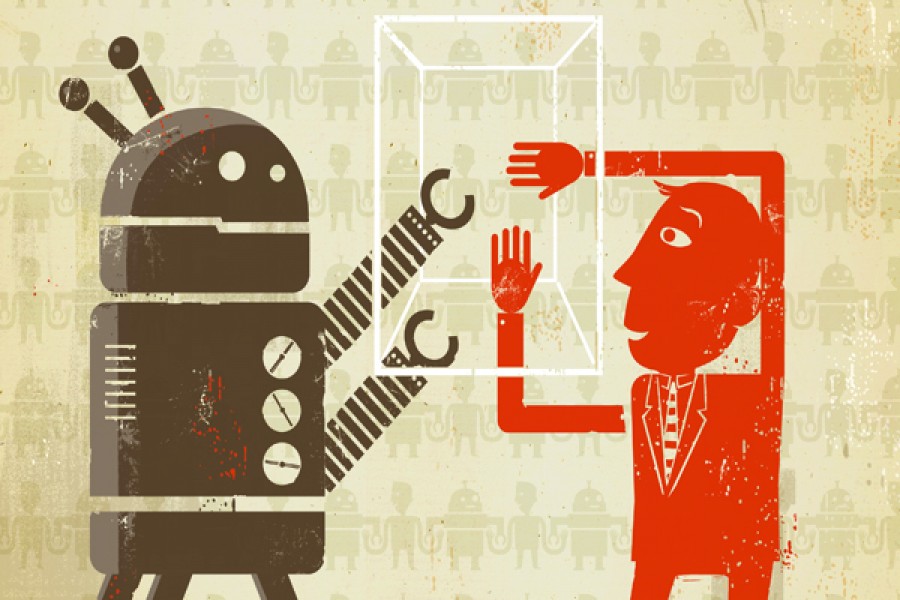
robot and human working together

This piece: What it’s like to be a modern engraver, the most automated job in the United States — Quartz, reminded me once again that the best use of technology is to augment the people doing the work, and not simply take away the work. Must reading for anyone who’s believes that the best way to use AI and other advanced tech is to eliminate jobs. My believe is that the best way to use AI and other advanced tech is to make jobs better, both for the employee, the employer, and the customer. The businesses that will succeed will have that belief as well.

(Image from this piece on how humans and robots can work together.)

Cindy Sherman is on Instagram and is doing something new

And the New York Times has a good analysis of here work so far. I really enjoyed the analysis. As for me, I found it interesting that she has transitioned the account from a basic one that recorded events the way most of us do into something that extends her art in a way few of us can do. I also like that great artists like Sherman can take new media and incorporate it into their work but also extend it. David Hockney did something similar with the Brushes app. Here's hoping more artists do such things.

Uber is reaching an inflection point (and may be reaching a crisis point)

Why? According to Bloomberg:

After touting profitability in the U.S. early this year, the ride-hailing company is said to post second-quarter losses exceeding $100 million.

A main source of the losses: subsidizing Uber drivers. As Christopher Mims commented on Twitter, “So Uber is a giant machine for transferring wealth from venture capitalists to underemployed Americans”. This is both clever and something that can’t go on indefinitely. It makes clearer to me now why Uber is keen to make self driving cars work. Sure, Uber could charge more for cabs or pay cab drivers less, but in either case, they risk losing market share.

The losses this quarter certainly are an inflection point. It remains to be see if it is a crisis point. That will depend on how the VCs see this loss. I believe they will have patience and they haven’t reached a crisis point yet. Uber should hope that their investors have the same patience that Amazon’s investors have.

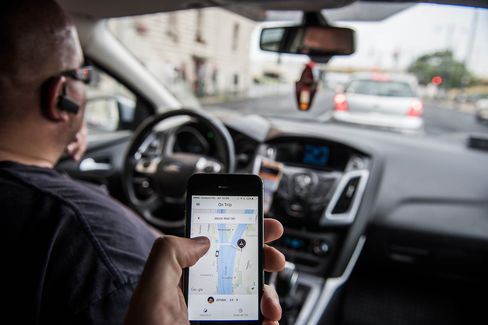
For the rest of the story, see: Uber Loses at Least $1.2 Billion in First Half of 2016 – Bloomberg (Image above via the Bloomberg article)

Anil Dash says: ‘There is no “technology industry”’. In reality….

There is a technology industry. Specifically, there is an information technology industry. There are lots of companies, big and small, whose sole aim is providing information technology products and services. Take a look at this list: they are some of the largest companies in the world whose purpose is I.T. They don’t focus on food, or entertainment, or logistics, or advertising: they focus on information technology.

The point he seems to be raising in his piece: There is no “technology industry” — Humane Tech — Medium is that there are companies leveraging I.T. that are considered tech companies, but aren’t. That’s a valid point. But that doesn’t mean there isn’t a technology industry. Should we treat these companies differently that I.T. companies? Possibly. Companies like Theranos, for example, partially ran into trouble because they were treated the way a I.T. startup should be treated, when in my opinion they should have been treated more like a pharmaceutical or medical equipment company is treated. It’s important to look at what the companies do and not just how they model their business.

Towards the end of the piece, he says, “All it takes is a little discipline in how we communicate”. I agree.

This article about body cameras is asking the wrong questions, which is not surprising, since everyone is.

This article,  Will Body Cameras Work? – The Atlantic, is asking the wrong questions. The wrong questions are occurring because the initial answer to the question of “how do we deal with bad policing?” was often, “body cameras”. The better question to repeatedly ask: “how can we make police more accountable?” because if “body cameras” is the first answer to that question, the next question should be concerning the information captured by those body camera. How are police accountable for that? Which should then lead to another question: how are police accountable for information they capture generally? Because with new technology, police will soon be able to capture alot more information about you than just images. It will soon be possible for police to look at you or your vehicle and have that information feed back to centralized computer systems, essentially collecting information about you without you even knowing it. How will police be accountable for that?

Police accountability will come, likely through the courts. In the meantime, we will likely struggle with the fallout of police forces capturing more information.

Why do Apple’s Macbook chargers cost so much?

Simple: they are a complex piece of technology. The photo above shows a Macbook charger from Apple on the left: the charger on the right is from another company. You can clearly see that the one from Apple has a lot more technology packed in there. And for good reasons. To understand what those reasons are, see this piece:  Macbook charger teardown: The surprising complexity inside Apple’s power adapter. It was surprisingly interesting, from an engineering and design perspective.

Thanks to Tom Plaskon for sharing this on Twitter!

Newt Gingrich reviews the Apple Watch and it’s worthwhile

Mashable seems to have taken Newt on staff to do tech reviews and here he is the first piece of his I’ve come across: Newt Gingrich reviews the Apple Watch.

I was surprised, but I found his review well suited for non-technical people who are wondering if such and such technology is worth it for them.  If you fall into that category, you should get some benefit out of what he writes.

Personal drones are getting smaller and cheaper. What that leads to.

As you can see, this new drone (Micro Drone 3.0: Flight in the Palm of Your Hand,  Indiegogo) is really small. Also relatively cheap. Like other IT, I expect personal drones will only get smaller and cheaper. The only limit will likely be how big they have to be in order not to get blown away.

I have heard people come up with innovative ways of using personal drones. For example, some home inspectors are using them to check out hard to reach parts of people’s house in order to see if they are in good shape or not. That’s great.

But there are going to be lots of other ways that people use them which may not be so desirable. The most obvious one is invading people’s privacy. It is one thing to inspect a house when no one is in it: it’s another to do so when someone lives there. Instead of prank phone calls, we’ll have prank drone visits.

How people protect their rights in such cases will be difficult. Drones will raise a number of legal questions. For example, what is your recourse if someone has a drone follow you around? Or if someone has a drone hovering in a public place outside your home? Can you fly a drone above an outdoor concert so you can record it? Can you attack drones that fly into your personal airspace? Will there be security drones that keep other drones off people’s property? If you post a video of a drone visit to a property on YouTube and someone uses that video to help them rob that property, are you an accomplice?

There has been some good work on drones being done by government agencies like Transport Canada, but I think the technology is going to challenge governments and courts to keep up. Expect to see more and more debate on drones in the coming months and years.

As far as this particular drone, Mashable has more on it here.

Forget Google Glass: here is where wearable technology is going

As digital technology gets more and more compact, expect to start seeing it combined with new and unexpected things. Wearables will not just be watches and sports-bands, but clothing and jewellery. For example: Meet Ear-o-Smart The World’s First Smart Earring.

Anything you wear, anything you touch, anything you own: all of it will soon have sensors and digital technology in it to talk to your computer and your phone. This is just starting.

Google Glass is dead

And the BBC has a good story on it here: BBC News – Google Glass sales halted but firm says kit is not dead, including this comment that sums things up in a nutshell:

Google has tried to present this announcement as just another step in the evolution of an amazing innovation. But make no mistake – Google Glass is dead, at least in its present form.

I would say it’s been dead for sometime, and while wearable technology is alive and well, this piece of it is long overdue to be written off.

Read the BBC story: it has a good review of the history of Glass, what will happen next, and why Glass never had traction.

Two takes on robots that stem from one fact

Take 1: Over at Make,  A Peek Into the Design of The Robot Anyone Can Afford | MAKE.

Take 2: Over at Kottke is a good post on why we shouldn’t be blase about robots replacing us (Humans need not apply).

The one fact is that as microprocessors get small, cheaper, and faster, the ability to make robots gets easier and cheaper. That means more people can experiment with them, from individuals to corporations. Soon robots will be ubiquitous, just like personal computers and now smart phones are ubiquitous.  And just like now there are fewer and fewer jobs without computers  or smart phones involved, soon there will be few jobs without robots involved.

I don’t think this will result in robots taking all the jobs. My belief is that there will be a mix of robots and people doing work for some time to come, rather than just robots replacing people. But robots in work and play and all aspects of our lives in inevitable and coming soon. (Depending on your work day, you may not see this as a bad thing.)


Movies on flash drives: how not to think about technology

At the nytimes.com is a article on movies on flash drives. It’s a good example of how not to think about the future. It’s essentially a list of points arguing against movies on flash drives. And what are the points?
1) it’s hard to make money from it
2) flash drives are too expensive
3) you have to have every movie on a separate card
4) People like buying things
5) It would take too long to download a movie onto flash

None of these hold water. 1) Movie viewers don’t care if it is hard to make money from it: ask the music business. 2) They may be expensive now, but watch chip makers gear up if they see there is demand for them: they will get cheap soon. 3) This is just an assumption: there are many delivery models to choose from. 4) This one is laughable on so many levels, it’s not worth arguing. 5) This is in line with number 3: again, delivery models will take care of this.

And the line: “And by that time, the technological, business and social problems of downloading movies are likely to be solved.” Well, that is pure: stick your head in the sand and hope the problem goes away. The problem – at least it is a problem for the movie business – is that the movie business will be in the same boat that the music business is in very soon. It’s part way there already. Moore’s Law will get it all the way there.

Read the article Buying Movies on Flash Drives: Nice Idea That Doesn’t Work – Bits – Technology – New York Times Blog and see what you think.

(Image from wikipedia)