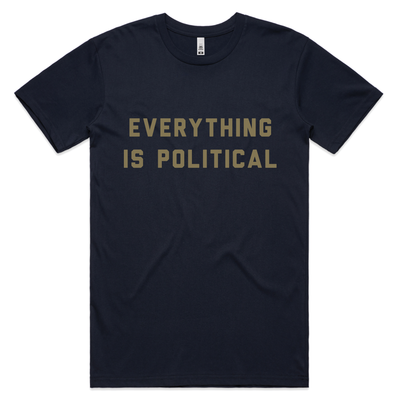
The Bitter Southerner has the apparel for the times we live in


I’ve written about The Bitter Southerner before and the wonderful apparel they sell. The t shirts I mentioned then were mostly about food. While I love those shirts, I’d be remiss if I didn’t mention their political apparel line too. You can find it, here.

While I may disagree on the idea that everything is political — I wrote about that, here — I do support the message on most of their shirts. Go check them out (and the rest of their merchandise as well).

Remember:

Just because you don’t want to see poverty, doesn’t mean it has gone away

It is easy to forget the poor. When you have enough of your own problems, or when other world problems loom large, the problem of the homeless and destitute tend to fall out of focus. So it’s understandable that people’a attention goes elsewhere. I’d like to bring your attention back to it for a moment with this post with links to stories on it. Thanks for taking the time to do so.

The rise of Nazi thoughts and deeds in American politics – a marker

Around a decade ago, I put a marker on my blog regarding Peter Thiel, because I thought it worthwhile to track his decline. Last week the pattern of Nazi related activities in the American right got to the point where I thought: I need to start noting these.

First off, Peter Thiel is giving a lecture on “The Antichrist: A Four-Part Lecture Series” of all things. One thing that stood out for me was the reference to Carl Schmitt. In case you don’t know much about Schmitt and his relationship with the Nazis, you can read this.

Next up, JD Vance (who is also aware of Schmitt), said, “I don’t know why we accepted that it was reasonable to have crazy people yelling at our kids. You should not have to cross the street in downtown Atlanta to avoid a crazy person yelling at your family. Those are your streets.” Read that, I thought, I wonder if we should be prepared for someone in the Trump administration to propose Aktion T4. This is a marker to see if they are going to go down that road.

None of this Nazi infused thinking is new. Mike Godwin in 2023 said comparing Trump to Hitler was not wrong, in light of Trump “calling people vermin” and “talking about blood poisoning”.

Godwin’s Law — “As an online discussion continues, the probability of a reference or comparison to Hitler or to Nazis approaches 1.”  — is good to keep in mind. It’s easy to reach for comparison of the American right wing to the Nazis, and that comparison should be resisted. Many authoritarian actions that the Trump administration has been doing are terrible but such actions are not strictly limited to Hitler and company. But as these actions pile up, and as right wing thought and action echo behaviors of Germany after 1933, it’s worthwhile keeping track. Actions like the formation of a secret police, the use of concentration camps, the attacks on the museums and the arts, or the takeover of cities by the military.

(Photo of Miller, Hegseth and Vance with the National Guard in Washington D.C.)

P.S. For people who say, Americans would never do anything terrible, I would simply start by by pointing out CIA Black Sites, where Americans would “detain, interrogate, and often torture suspected enemy combatants” in extrajudical locations outside the U.S.

Andor is good for many reasons, and enjoyable for all. You should watch it.

Even if you don’t normally watch Star Wars movies, consider watching Andor. Like the movie it arises from, Rogue One, it stands apart from much that is Star Wars. There’s no light sabre battles, no Force, none of the things you may associate with the franchise. It is still in the Star Wars universe, which is why you will see Storm Troopers in their white uniforms, as well as other such things. But it really is a good dramatic series that’s well written and well acted. For fans of Star Wars, it’s good TV. But people indifferent to Star Wars will find it is good TV too.

I could go on, but Don Moynihan is miles ahead in terms of making a strong and thoughtful case for it, here. Don writes about governance, so he sees the series from that lens. And quite the lens it is. I highly recommend you read his piece.

One thing I noticed that wasn’t in his piece is the colonialism that comes through in the series. The Empire has taken over planets in a way not unlike earthly empires take over countries, and the series explores what that does to both those loyal to the Empire and those fed up with it.

Andor starts up season 2 this month. Go watch season one on Disney+ now. Check out Rogue One too (though you can watch Andor independently of it and the rest of the Star Wars films). Hopefully season 2 will be worthwhile TV too.

Strategic Voting in 2025 – what you should know

Canada flag on brick wall

I am still a supporter of strategic voting in Canada. My thoughts on it haven’t changed much since I wrote this in 2019: Strategic Voting in Canada – some thoughts.

What has changed is the site you should go to if you  also want to vote that way. It doesn’t look like this site, strategicvoting.ca, is working any more. However this site SmartVoting.ca, seems up to date, at least for the Ontario election this week. And it looks like they are preparing to work on the soon to come Federal election.

It’s good to check out regardless of how you plan to vote.

On how I am understanding Trump 2.0

Photo by charlesdeluvio on Unsplash.com

Since the inauguration it’s been difficult to avoid thinking about Donald Trump. Even if you avoid social media or the news, if you care about the world at all you are forced to consider what he and the people in his administration are up to.

With the flurry of actions his team has taken, many people I follow have been trying to make sense of it all. I’m no exception. So I wrote out this list of what I think are the things that motivate him or are in his comfort zone:

  1. making money
  2. being the center of attention / good publicity
  3. power / being the boss
  4. rewarding those who treat him well
  5. punishing those that treat him poorly
  6. not having to work hard
  7. not thinking (i.e. doing whatever someone recommends)
  8. real estate
  9. the 80s
  10. Mar-a-Lago

That list hasn’t changed much since Trump 1.0 and his first term in office. What is different is the intensity.

Unlike other presidents, he is not motivated to work hard, to give back to others, to be virtuous in any way, or to stay current with the culture. He may appear to concede some of these (e.g., letting Elon be the center of attention) if he thinks it will help him with something else (making money, not having to work hard).

The next time you see him doing something, you can look to this list and at least one if not more of these items for an explanation. Getting into crypto? #1. Taking over the Kennedy Center? #2.  Running for president? #3. Appointing people like Kristi Noem for anything? #4. You get the idea.

I’m sure there will be things you might add to that list. But if you see Trump doing something and ask yourself “what possessed him to do that”, it’s likely one of the items on this list.

On how to assess political leadership reviews

Not too long ago Danielle Smith in Alberta had a leadership review in which she won with 91.5% approval. 91.5 certainly sounds like a win. But what if she got 80%? Or 70%? Is that still a win? What about 55%?

If you are wondering that, then I highly recommend this piece by Jason Markusoff: Danielle Smith’s UCP leadership test: here’s what history says about how safe she is. He analyzes her win in the context of other leadership reviews where leaders scored that result or less and then summarizes what happened next.

Something to keep in mind in Canadian politics for 2025 and years to come.

On voting Against, as opposed to voting For


After an election, people may wonder: how could people vote for that candidate? Many people believe a vote is for a candidate, and someone’s vote means they favor that candidate.

I don’t believe that. I believe that for many voters, the logic they employ is this:

  1. has the incumbent done a good job in their last term in office? If they have, vote FOR them so they win.
  2. has the incumbent done a bad job in their last term in office? If that’s true, vote AGAINST them so they lose.

I believe this is why many incumbents hold on to power for a long period of time. Voters feel they are doing the job well enough and they don’t want to fire them from and take the risk of bringing in someone who can’t do the job.

It also explains why people can vote for someone who others think is a bad candidate. They are voting for the bad candidate because they want to vote against someone they consider a worse candidate. To them, the best way to defeat the worse candidate is to vote for the bad candidate.

The assessment of who is a good, bad or worse candidate will depend on how much information you bring into the equation. For low information voters, they might think candidate A has done a bad job managing the economy, so they will vote against candidate A by voting for a candidate who can cause the defeat of candidate A. If candidate B has the best chance of beating candidate A, they will vote for candidate B. They may dislike candidate B in numerous ways, but that is the candidate most likely to prevent candidate A from remaining in office.

Many high information voters will look at an election results and say most voters voted for candidates running on issues X, Y, and Z. That may be the case for a percentage of voters. Many voters, though, are not voting for a candidate, they are voting against a candidate, and they will vote for someone who can defeat that candidate, regardless of many of the issues.

P.S. I thought of this when I read many such posts like this on social media:

jamelle‬ ‪@jamellebouie.net‬ (on Bluesky -b):

Also, if anyone is looking for someone to blame, it should be focused on the people who looked exactly at what Trump was selling and said “yes.”

No doubt there were some percentage of voters who voted for Trump because they wanted to see him in office. Those voters said “yes”. But I think there were many more voters who wanted to vote against Biden/Harris and thought the best way to remove them from office was to vote for Trump. To them, Harris was the worst candidate to vote for, even if Trump was a bad candidate. I don’t agree with that at all, but I am trying to understand how some voters could vote for Trump without assuming they are simply terrible people.

On low information voters


High information voters believe that voters should understand many of the issues of an election and the stances of the candidates on those issues before they vote for someone. High information voters also believe that most voters should be like that.

I am a high information voter who believes something different. I believe that most voters are not like that and never will be. I believe most information are low information voters.

Low information voters vote for or against a candidate based on one or two pieces of information. This limited information could be:

  • Party affiliation: they vote for a candidate because they belong to a party they like. Or they vote against one candidate of a party they hate by voting for a  less hateful candidate.
  • One overriding issue: they vote for a candidate because that candidate supports the issue they care about more than any other candidate
  • Character: they vote for a candidate because they consider them the strongest or the least corrupt or the most forthright about matters.
  • Alignment: they vote for the candidate that is most aligned with them, however they see themselves. Or they vote for the candidate they see as most aligned with being a leader, whatever that is.

Once a low information voter has this information, they will make their choice.

As a high information voter, you might have a hard time understanding why someone chooses to be a low information voter. But there are many reasons why someone chooses to be this way, such as:

  • The voter votes on one issue because they feel that nothing is more important than this issue. Once they know how the candidates stand on this issue, they can cast their vote without discovering much more.
  • The voter votes for one party and their candidates consistently. They believe that  members of that party govern best.
  • The voter doesn’t have the ability to find out about all or most of the candidates. This is especially true of candidates for minor offices.
  • The voter doesn’t feel they have the ability to understand the issues at stake in an election. The information is at hand, but they can’t process it.
  • The voter has important or difficult things to deal with in their lives and so they lose their ability to focus on the issues.
  • The voter feels the responsibility of voting but they dislike politics and politicians and would prefer not to think too much about it.
  • The voter feels the system is wrong somehow and wants to limit their involvement in the system.

Of course there are a number of invalid reasons that low information voters vote, too, such as:

  • prejudicial or bigoted reasons (e.g. they only vote for white men)
  • silly reasons (e.g., they don’t vote for bald men or men that are short or wear glasses)
  • corrupt reasons (e.g. they vote for a candidate because the candidate buys their vote)

Regardless of what their reasoning is, this is how many voters vote and they will not be persuaded by a flurry of facts from a high information voter. Either they will not have the ability to weigh the facts provided, or they don’t think those additional facts matter to them.

It should be noted that low information voters are not uneducated or stupid. A single issue voter may be highly educated and decide that only candidates that support better healthcare. An intelligent voter may vote against a candidate because of a major scandal, even if they voted for the candidate repeatedly in the past. A vote is a limited instrument: what the meaning is of the vote is only known to the voter.

In the future, when you read a piece about the election (or rejection) or a candidate who stood for A, B, C, D, E, F and G on the issues, don’t assume that most voters voted for or against him/her because of the sum of A to G. Assume many voters voted for or against the candidates based on just one of those.

P.S. This was inspired by many things I’ve seen on social media that read like this:

‪Michael Hobbes‬ ‪@michaelhobbes.bsky.social‬

This is the whole ballgame for me: You cannot run a functioning democracy in a media environment where voters do not know basic facts about what candidates do and believe.

Voters are living in a post-internet world and legacy institutions have not kept up.

The last 200 days and the next 4 years in America


If anyone wants to know what happened in the last 200 days or what will happen in the next four years, then this is a good place to start: Donald Trump wins presidential election, defeating Harris to retake White House (The Washington Post). Specifically, when it comes to the economy, he promises this.

Trump did everything wrong in the campaign and Biden and Harris did everything right and none of it mattered.  The economy is doing great now but the economy has also been terrible for the last few years because of a pandemic. Beyond that, housing is simply unaffordable for many people, so having a job doesn’t necessarily make you feel good about your place, economically speaking. For those voters, the hope is Trump will fix that.

While Trump will have the Senate to make changes, he may not have the House. In terms of passing laws, that could provide him with difficulties. Difficult or not, it may not make much difference to him personally.  He will likely continue to use the office to get richer. And few if any of the charges against Trump will remain, so he will likely spend his time at the White House rather than a cell.

If anything, Trump will delegate governing to others, like Musk and RFK Jr and the Heritage Foundation. He’s not much interested in the job of the presidency, while others around him are. He’s content to be the Boss of the country and use it to get wealthy.

I suspect this is the end of Ukraine as a free country, though the rest of Europe may decide otherwise. I imagine things will only heat up in the Middle East as Netanyahu feels more impowered, but it is risky to make predictions in that part of the world.

It’s also risky to make any sorts of predictions about what will happen in the US, but unlike 2016, there’s more to base any prediction on. Generally, if you are a fan of Trump, you’re going to predict things will be great again. If you are a foe of the man, your predictions will be full of darkness and difficulty.


How to predict who will win the US Presidential Election?


Here’s two ways to predict who will win the presidential election:

First: look at the 13 keys of Allan Lichtman, Presidential Predictions Guru. According to Lichtman, there are 13 keys to determine who will win the next election:

  1. Midterm gains
  2. Incumbency
  3. Primary Contest
  4. Third Party
  5. Short-term economy
  6. Long-term economy
  7. Policy Change
  8. Social Unrest
  9. White House Scandal
  10. Incumbent Charisma
  11. Challenger Charisma
  12. Foreign Policy Failure
  13. Foreign Policy Success

Of the first 11, Lichtman says Trump comes out ahead on 1, 2, and 10 (in italics) while Harris comes out ahead on the rest (e.g. there was no primary contest, no third party, the economy is doing well, no policy issues, no major social unrest, and no scandals for her.)  That’s enough to assume she will win the election, regardless of foreign policy (which he skipped over).

Mind you, based on this, Biden was set to win the election, but I am not alone in thinking that was not going to happen.

Still, I think there is alot to agree with in the 13 keys. As people go to vote one or more of these keys will be on their minds as they cast their ballot. Check out the link above to get more insights from the man saying Harris is the next US President.

Second: look at the Electoral College map and the swing states. That’s certainly what the candidates are doing on their campaigns. Two states in particular could make all the difference as to who is the next US President: Georgia and Pennsylvania. The Washington Post takes a closer look at the two states that loom largest in 2024 election.

How can you learn about Project 2025? Three ways

If you are curious about Project 2025 — and if you are an American, you should be — there are at least three ways you can learn more about it.

The first way is to go to a web site set up to describe it, Project 2025: Presidential Transition Project.

Personally, and as a progressive person, I found this the best way to understand the effects it could have, 25and.me: How Does Project 2025 Affect Me?

However, if all that is hard to get a handle on, or if you want something more neutral, you can also check out: Project 2025 in Wikipedia.

Chances are if Donald Trump is reelected president, many of the things proposed in Project 2025 will come to fruition in the four years he is in office. So before you vote, read up on Project 2025 and know what you might be in store for.

Homelessness and poverty in Nova Scotia and elsewhere


Nova Scotia: like many places in the world, Nova Scotia is struggling to deal with homelessness and poverty. There were a number of homeless encampments in Halifax, and the government took steps to deal with this, although not always successfully. The stories I have been following were around building new places to live and getting rid of the encampments, like these:


The rest of the world: while I was focused on what was being done in Nova Scotia, I also have been following stories on poverty and homelessness in the rest of the world

Finally: VOX had a good piece on how you can help others suffering  homelessness. And the New York Times has a section called Headway which is Exploring the world’s challenges through the lens of progress and touches on homelessness and other social issues.

P.S. Remember, the problems of poverty are simple and solvable. Also, homelessness is a concurrent disorder.

The wheels of Justice in America are turning forward

It is interesting to see the wheels of Justice turning in America. For a time they did not seem to turn at all. As Josh Marshall illustrates in this piece on January 6th, for some time there was a perception that right wing militant groups could act out the way they wanted to and no one could stop them. That changed on January 6th, as groups like the Oath Keepers and the Proud Boys are discovering. No doubt these groups may continue to exist in some form, despite their head being cut off. But it is something to see these groups finally being brought to justice after some time of being able to engage in riots and more with impunity.

After crushing some of the right wing militia, the wheel of Justice seems to be bearing down on members of Donald Trump’s inner circle, from Ron Navarro to Rudy Giuliani. Trump himself is under so many investigations that the New York Times had to build a special tracker so people can keep up with them all.

(If you thought this would change his behavior, you would be wrong. He continues to be a fountain of lies: the only difference now is how the news media covers him, as you can see here. He also continues to stiff people, as this story on Rudy Giuliani’s legal finance woes show.)

The wheels of Justice don’t just go right, they go left too, as the protestors of “Cop City” in Atlanta are about to discover via this indictment. Is it a bad use of RICO? Possibly. No doubt Trump and people would say the same thing. Regardless, it will be interesting to see if the Georgian prosecutors can make the cases, left or right.

P.S. Other American things I found noteworthy: Some school in Florida put restrictions on Shakespeare in their classrooms, which lead to this  really good essay on how Shakespeare is ribald and great. This story of disputes between left and right business in a small town of Virginia says more about America than a dozen essays can. Finally, the image below is of “the Byrna Mission 4. This pneumatic rifle shoots non-lethal rounds, incapacitating intruders without causing permanent harm.” Like the story of the business dispute, it too says alot about the America.

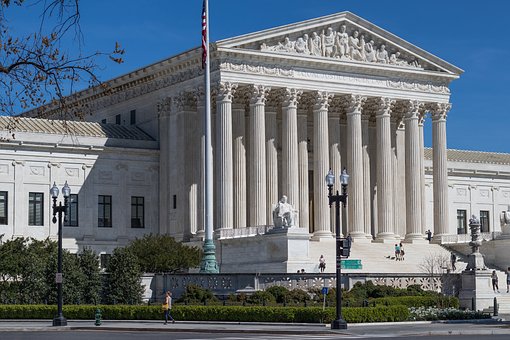
Thinking about the SCOTUS and America on July 4th, 2023

Canadians can fool themselves into thinking they understand America and Americans. I certainly can. But America is different and there are many things I don’t really understand, try as I might.

The Supreme Court, SCOTUS, is one of those things. In Canada, the Supreme Court acts like a supreme court should, I believe. It barely gets any notice in Canada, and when it does, it’s usually for a very good reason. No one thinks of it in a politicized way.

That’s very different than SCOTUS, it seems to me. That court comes across as highly political. Which is why people talk all the time about their political leanings. Which is also why I find this feature in the New York Times so fascinating: major supreme court cases for 2023.  For certain cases, the court lines up the way you’d expect. But for a majority of the cases, that isn’t true. Take a look: you’ll see the court is more complex than you think.

That said, SCOTUS has many problems. The corruption of Alito and Thomas, for one. This fact that many of decisions are based on errors which are not hard to find, is another.

Finally, I don’t agree with everything in this, but I think that what Josh Barro wrote on the recent supreme court moves worthwhile. Likewise these pieces by Jamelle Bouie, and Steve Vladeck and Adam Liptak.


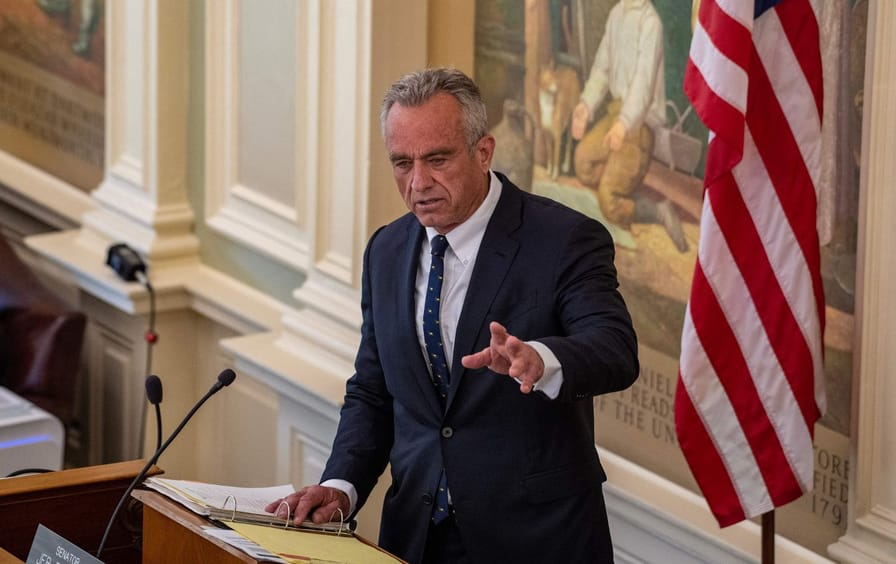
On RFK Jr and the people that are supporting him

RFK Jr is in the news a lot recently. One obvious reason is that he is trying to run for President. The other reason is because some of the worst of people are jumping on his bandwagon and amplifying his campaign.

If you are unsure about him, then I recommend this piece on RFK Jr for several reasons. First, it sums up how I think I now think about RFK Jr:

His noxious views on vaccines, the origin of AIDS, the alleged dangers of wi-fi and other forms of junk science deserve no wide hearing. Polls showing he’s favored by 20 percent of likely Democratic voters over President Biden are almost as laughable as Kennedy’s views. It’s early; he’s got iconic American name recognition; and there’s almost always an appetite, among Democrats anyway, for anybody but the incumbent.

Second, it also has a list of articles at the beginning that debunk RFK Jr’s ridiculous claims. And if that’s not enough, here’s more on RFK Jr from the New York Times and People Magazine.

As for the people jumping on his bandwagon and amplifying him, here’s a break down on the horrible harassment of  Dr Peter Hotez by Joe Rogen, Elon Musk and others. As for why you don’t want to debate science on a podcast, here’s a good piece on what it’s like to go on  Joe Rogan and debate anything 

Here’s hoping RFK Jr and the cranks he attracts fade into the background soon.

On Barney Frank and Isaac Chotiner too

There is a serial killer quality about Isaac Chotiner and his interviews. He  finds someone who likes to talk  and who is in the wrong and he proceeds to eviscerate them through a series of questions in the New Yorker. He’s done it so often that people like Dan Drezner wrote this: Why Do People Talk to Isaac Chotiner?

Barney Frank was the one person who I saw stand up to him in an old interview and avoid being sliced up.  I was impressed  then. I was less impressed recently when Chotiner interviewed him about working for Signature Bank. Frank comes across as pugnacious still, but clearly he is wounded and on the defensive. Here’s some excerpts.

On Frank’s own actions to weaken Dodd-Frank:

Do you see any connection between the weakening of Dodd-Frank a few years ago and the collapse? I came to the conclusion shortly after we passed the bill that fifty billion dollars was too low. I decided that by 2012, and, in fact, said it publicly. The reason I say that is that I didn’t go on the board of Signature until later. In fact, I had never heard of Signature Bank at the time when I began to advocate raising the limit. This is relevant, obviously, because Signature was a beneficiary of that.

On why it was on the regulators to choose to go after banks like Signature Bank, here is what Frank had to say:

The power to look at liquidity, to increase liquidity and to say, You have too little—they had every power they needed to do that. [The bill allowed regulators to keep liquidity and capital requirements on banks with total assets between a hundred billion and two hundred and fifty billion, but no longer mandated they do so.] I will tell you, as a member of the board of Signature, we underwent some discussions about liquidity, and the need to increase liquidity or maintain it.

On the limits of stress tests (The bold part is Chotiner: the part in italics is Frank):

But isn’t the point of stress tests to see how a bank will do under different scenarios, like the one we saw? Yeah, that is what a stress test does. It’s an artificial but valid test. I do not think that a stress test would have helped in this situation. Because? Well, this all came up very suddenly. I don’t know what a stress test would have shown. A stress test might have been helpful, but part of it was that stress tests were for institutions large enough that it wouldn’t just be about them failing—it would be that their failing could cause great waves. I think that the impact of this failure has been contained, which it wouldn’t have been if it were JPMorgan.

On why he went to work for Signature Bank:

No, that’s the answer to, “Why are you doing this? It’s inconsistent.” No, I went on it, frankly, for two reasons. One: it paid well. I don’t have a pension and, having quit, I wanted to make some money. [Frank declined to participate in the congressional pension system.]

In short: weakening Dodd-Frank was a good thing and removing mandatory  liquidity requirements from banks like Signature Bank was a good thing and also the stress tests are not that good. Also its fine for political leaders to go work the people they used to regulate and make lots of money.

The whole interview is worth reading. Unless you were a fan of Barney Frank, they way I once was. Now he just sounds like an character from The Big Short.

The crucial fact to remember when it comes to Debt Ceiling discussions in the USA

There’s a great quote in this piece on how the Republicans demand spending cuts to lift the debt limit. They won’t say what to cut. It’s this:
“If you exempted defense, veterans, Social Security and Medicare spending, you’d have to cut everything else by 85%,” said Marc Goldwein, an expert at the Committee for a Responsible Federal Budget, a think tank that advocates for reducing red ink. “It’s possible as a mathematical proposition. But the question is: Is it possible as a policy proposition? And the answer is no.”

The crucial fact is this: the US government is an Insurance Company with an Army. (From Paul Krugman’s blog of over 11 years ago,) That leave any one governing with really two choices: cut the insurance or cut military spending if you want to make significant reductions in the budget. If you cut the insurance, good luck getting reelected. And while I think they could easily still dominate the world with a much smaller military, good luck as well persuading many American voters of that.

Some Republican politicians love to imagine they can reduce government spending significantly during these Debt Ceiling discussions. All the best with that. (Even Mitch McConnell is moving on this time.)

On the good and bad aspects of Dark Brandon

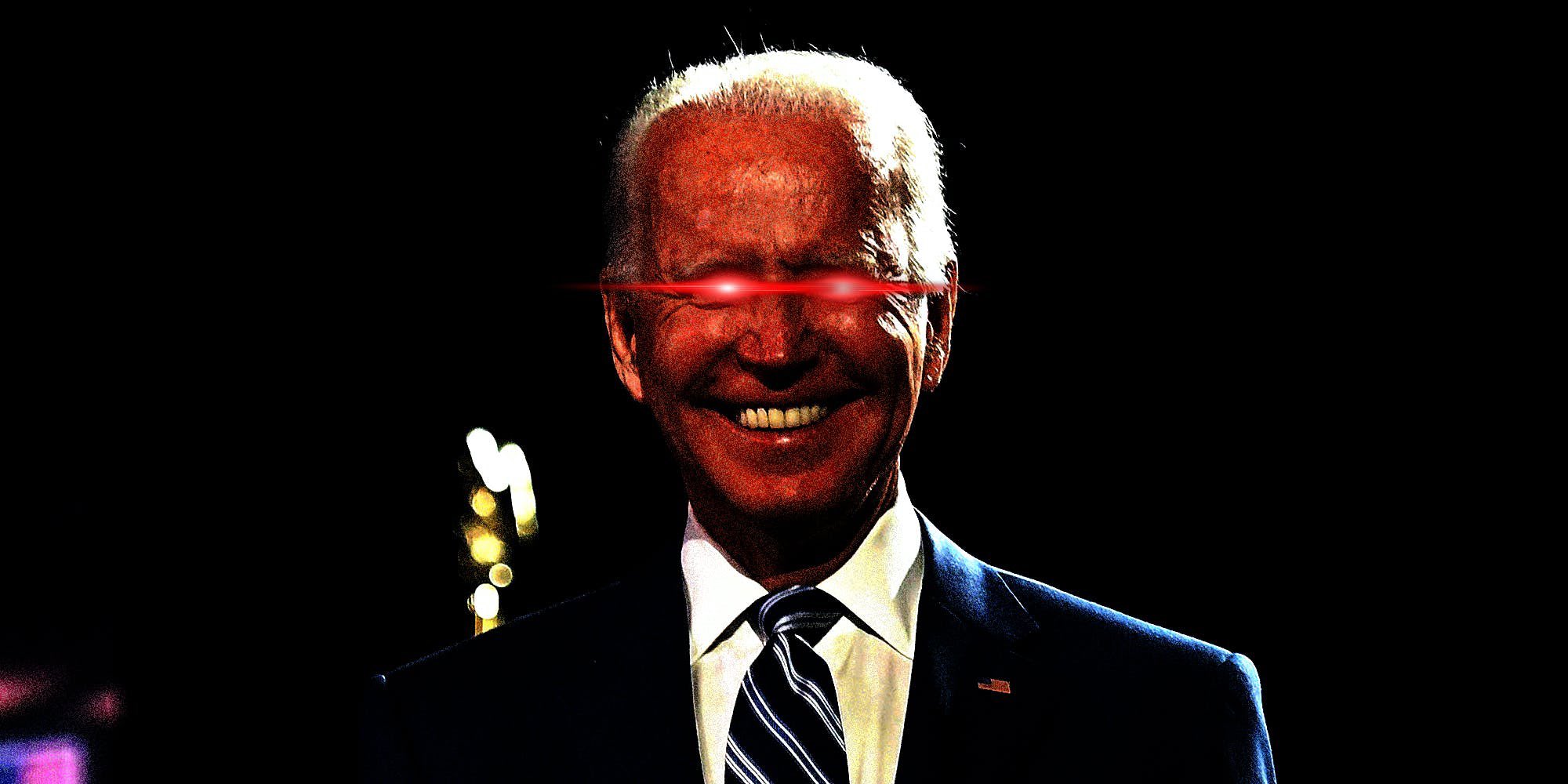
There have been lots of pieces explaining Dark Brandon. (Too many!) If you want to read what I thought was the best one, I think it was this: Dark Brandon, explained – by Matthew Yglesias.

As for my two cents….part of me likes the Dark Brandon meme. It a political jiu-jitsu move, taking the use of memes and shitposting that comes from trolls, the alt-right, and basic straight up Nazis, and using it effectively against them. That part I am good with.

But I think the warning that comes from this piece is worth considering:

… experts warn there are risks to embracing this type of political iconography. “You don’t want to take a trend that is precipitated by fascists and Nazis and then sort that into your arsenal. That’s just not great,” says extremist researcher Daniel Grober, who co-authored with Hampton Stall a definitive report on the Dark MAGA trend in far-right online networks. “What it does is it normalises the aesthetic, and it gives kind of a platform for it to be solidified into the general media.”

I agree with that. Essentially the use of memes like Dark Brandon risks getting into the mud with the worst of the Internet and wrestling with them. As G.B. Shaw(?) once warned:

“Never wrestle with pigs. You both get dirty and the pig likes it.”

As an example of this, one of the Democrats grabbed a Dark Brandon meme that contained some Dark Knight/Batman imagery and tweeted it, only to have to pull it when someone pointed out the Nazi Eagle in the background.  See? The mud gets on you even as you fling it.

The badness of America


America is great in many ways, but when it’s bad, it’s terrible. Much of this has to do with the Republican party and the people who support it. That support means that people in Republican Counties Have Higher Death Rates Than Those in Democratic Counties.  People are stupid, but it doesn’t help when those that lead them are evil or incompetent.  Speaking of evil, here’s a piece on  Tucker Carlson and why it is pointless to interview him. It’s not all evil though, some of it is just incompetent, like the Texas power grid. Also dumb are Republicans thinking they should have the right to spam people. Back to evil, this piece on Citizen Bopp, explains how much toxic legislation gets drafted. Now back to freedumb and how Americans will sooner metaphorically shoot themselves in the foot for freedom than to act reasonably.

Besides the GOP, much of the badness of the US rises out of political Christians, which has lead to the rise of Christian nationalism . Evil. As for dumb? What Happens To Christian Influencers When They Get Married?

All that helps explain why the American right falls over terrible world leaders like the bigot Victor Orban from Hungary. (Not that we Canadians should be smug: our ex PM Harper is apparently a fan.)

America still reserves the right go assassinate people around the world, and because the weapons are getting better and the targets are awful, no one blinks an eye at stories like this:  Little-known modified Hellfire missiles likely killed al Qaeda’s Zawahiri.

Anyway, those are just some of the links I’ve saved over the last while on the badness of America. Never mind their Supreme Court and how evil and incompetent they are.  It’s one thing to be right wing, but they had a chance to limit Roe v Wade in a way that would be less damaging and they refused to take it.

Maybe next week I’ll be in a better mood and I will write about why American is great.  Often times they are great because of their enemies and the challenges they pose. Some of those enemies are foreign, but many of them are domestic.

The worst of the Supreme Court of the US?


With all the news concerning the US Supreme Court, I did some digging to see how the current court measures up against its predecessors. Here some pieces I found on the worst decisions ever made:

And here are two articles on the worst members of that court:

Judge for yourself. 🙂


On July 4th, here’s some links on politics to consider

Like many people, I am riveted to what is happening in the USA lately. It seems to be coming undone as right wingers try and pull the country to a place that will be bad for Americans and in some cases bad for the world. To support that opinion, here’s some links I’ve recently collected. (As well as other links related to politics in general.)

Jan 6th: First up, there is the January 6th committee investigating the insurrection that happened on that day. Mike Pence featured prominently in the beginning, leading to pieces like this, Why Democrats Should Honor Mike Pence, and this and this. Then there were others, like  Rusty Bowers in Arizona.  More on the role of the GOP in the hearings. I respect all those who did their job/duty and pushed back on Trump and those who tried to subvert democracy. I don’t think we need to make them all into heroes, but we should respect their courage and determination. And who knows, but here’s how Merrick Garland might play into this.

Trump: On the other side, here’s a piece on Trump’s legal defence. A key player, Rudy Giuliani used to be looked up to. Hard to believe now. This piece explores his decline. Here’s a piece on the Congresswoman Nancy Mace and limits of Trump’s influence.  Here’s Bob Woodward and Carl Bernstein comparing Nixon and Trump in terms of corruption.

Media: As an aside, this was good:  Bob Woodward explains key scenes in All the President’s Men. This was not so good: The Washington Post’s social media meltdown. Finally, people who are political junkies might like this:  The Rise and Fall of the Star White House Reporter.

The right, SCOTUS, and Roe: To understand what is happening in the US, you need to understand the Religious Right. This helps with that: The Real Origins of the Religious Right. But it helps to know what other players are up to as well, such as Peter Thiel. Or this $%&*, Tucker Carlson.

Which leads to the overturning of Roe vs Wade by the Supreme Court of the US (SCOTUS). Two pieces on that: the Roe opinion and the case against the Supreme Court of the United States and SCOTUS’s argument for overturning Roe v Wade and Casey. Relatedly, this piece was wrong: The leaked draft Roe opinion is a disaster for the Supreme Court. They lived.

Other things worth reading: More on SCOTUS and how they are dishonest in their judgments; this oped, A Requiem for the Supreme Court After Roe’s Demise; and this, Decades Ago Alito Laid Out Methodical Strategy to Eventually Overrule Roe.

To get more of a handle on this, I read these  pieces trying to understand what happens next in the US by these studies of  Oklahoma and Ireland. Here’s a piece on how legislatures play into this. Here’s how right wing extremists will be collecting data potentially to go after women seeking abortion. Finally, this on the doctrine of potential life and what’s wrong with it.

Politics and Tech: here’s four pieces on how tech intersects with politics:  1) On period trackers, 2) Microsoft reportedly censors searches for politically sensitive Chinese data, and 3) Canada and how Russian hackers come after it and 4) The Surreal Case of a C.I.A. Hacker’s Revenge.

Generally: the war is still ongoing in Ukraine. Here’s two pieces on it: here and  here. Elsewhere in Europe: Hungary: where replacement theory reigns supreme. And to wrap up: How Asian Civilizations Will Change The World Order….nope;  The Meaning of Machiavelli.…Yep;  For Tens of Millions of Americans the Good Times Are Right Now….maybe?

If you’ve read this far, thanks. All comments are moderated and any I deem thoughtful I’ll approve. The rest go in the trash.

Thinking about left wing social media

300I read these two tweets from someone recently and they struck me as a form of progressive writing that bothers me and I was trying to figure out why. Because I agree with parts of them.

In the first one about Alberta politics:

Shock doctrine 101. Exploiting a burnt out & disoriented populace to ram through commodification of public goods. Expanding duplication of programming via private operators using public funds furthers competition model of education which ultimately fragments society.

I disagree with the idea that the shock doctrine applies to Alberta’s current state or that the Premier needs it in order to pursue such goals. Kenney doesn’t need a pandemic to do this. If anything, the pandemic has slowed down conservative premiers from doing anything like this. Conservative politicians have been forced to act compassionately during the pandemic, because no one wants to lead a province with dead people filling hospital hallways.

In the second one:

One year ago today, hate rooted in white supremacy + misogyny took the lives of 6 Asian women and 2 bystanders. This was a fatal act stemming from long standing erasure, objectification, and entitlement to Asian women’s bodies. Know their names. May they rest in power.

This was a terrible event that should be remembered. But this tweet is a left wing laundry list of issues: white supremacy, misogyny, erasure, objectification, know their names, rest in power. I know that there are limits with what you can tweet: it’s just that tweets like this limit the effectiveness of what you are trying to communicate.

I wish progressive thinkers knew how to preach to others outside the choir. I wish progressive writers could talk to people other than hectoring them. I wish they were more doubtful about it all. It leaves me in the back pew, wishing for a better sermon and looking for a reason to step outside.

I don’t mean to pick on the person who wrote these tweets. These are just two examples. There are thousands of such tweets like this out there every week. Plus websites, like The Jacobin, are full of such writing.

Thanks for reading this. I am just trying to work out why such writing bothers me and how I can think of it better. Maybe my thinking is woolly and wrong headed. It wouldn’t be the first time.

On the deadly leadership of Jason Kenney and Scott Moe regarding the pandemic

Here is Jason Kenney on twitter in July, 2021, celebrating removal of health restrictions:

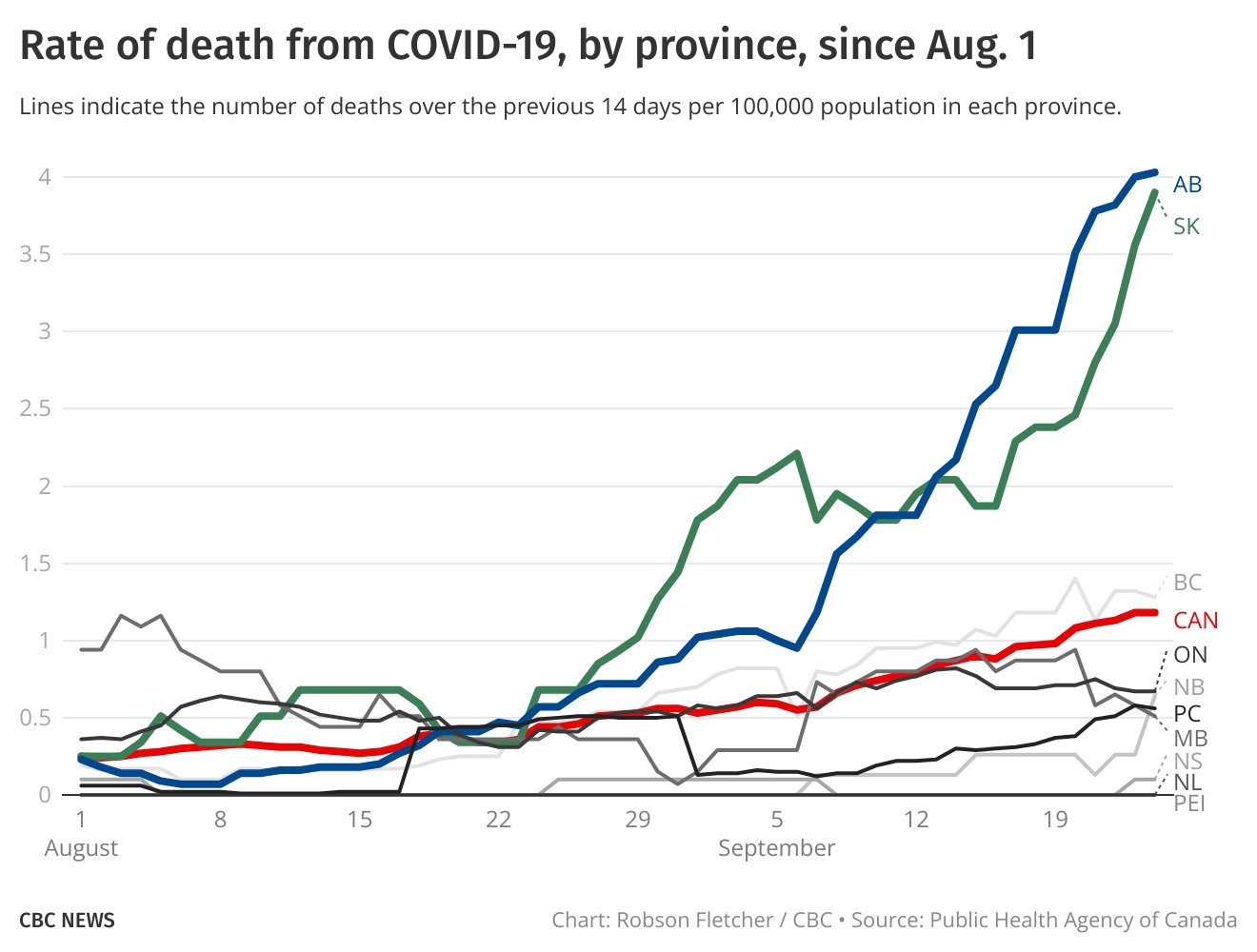
Here is a tweet from Robson Fletcher of the CBC on Kenney’s  province and Scott Moe’s province in September of the same year:

I mean, if people in your province are dying at 4X the rate of the other provinces because of direct policy changes you made, you are essentially killing people in your province under your leadership. I don’t know how else to put it.

Also, Jason Kenney should not speak for the Prairies or the West. Both Manitoba and British Columbia are doing better than Alberta and Saskatchewan. It’s not just right wing leaders either. Other right wing provincial parties have been much better stewards of their regions. Kenney and Moe and their leadership are to blame here.

It is terrible when leaders fail their provinces. But this is way beyond typical failure.  I feel great sympathy for the people of this province who have died unnecessarily on their watch.


If you contribute to political campaigns, you should read this

If you come across this article, How Trump Steered Supporters Into Unwitting Donations – The New York Times,  you might initially think a) well yeah Trump is a crook so no surprise b) his supporters are dumb so also no surprise. You can think that.

However, consider it from the point of view of people working on campaigns. Some of them on both sides might be thinking: this is a good way to bring in money. It’s hard to raise money, they might think, and this is a way to make it easier. These campaign workers might be working on campaigns for people you support. They might think the ends justifies the means.

So if you do contribute to political campaigns, consider doing it from an account that has a limited amount of funds in it. That way even if they trick you into overdonating, you won’t run into some of the trouble that Trump’s supporters did.

(Image comes from a link to an image in the New York Times piece)

What is going on with Google and Facebook in Australia and why you should care

Map of Australia
Have you been following what is happening with Google and Facebook in Australia?  I found it interesting for a number of reasons. One, it seems Facebook and Google have taken very different approaches, with Google coming to an agreement with the Australian government while Facebook has not. (At least not as of Feb 20, 2021.) Two, I believe whatever happens in Australia will have an effect on what is happening in Europe and the United States when it comes to the big digital giants.

I’ve read a number of pieces on it, but I found this one especially detailed: Australia’s Proposed “Fox News Tax” | by James Allworth | Jan, 2021 | Medium

If you want to get a deeper dive into what is driving things with regards to Facebook and Google in Australia, start there.

(Photo by Joey Csunyo on Unsplash)

Everything you wanted to know about the Filibuster


That is an odd title, because while there is much talk in the United States about the Filibuster, they are really only talking about the use of the filibuster in the U.S. Senate. Mind you, because of the composition of that current political body, there will be much more talk about it. If you want to have some context regarding it, read this: The History of the Filibuster

If you just want to know about filibusters in general, read this.

(Photo by Joshua Sukoff on Unsplash)

Will interest in the topic of fascism fade in the US?


Looking at this Google Trends line, there were two peak periods when there was a strong interest in fascism in the US: at the beginning of Trump’s term and towards the end. While those were peaks, there was much talk about fascism through his period in office. As he fades away (rots in jail?), I expect that interest to die off now the US has a new president. Let’s hope.

Meanwhile, the more and more I became convinced of the fascist behavior of the Trump administration, the more I started to read about it. Two links I found interesting were these:

  1. What 1930s political ideologies can teach us about the 2020s | Aeon Essays
  2. The Best Books on Fascism | Five Books Expert Recommendations

If you are interesting / worried about the rise of neo-fascism, I recommend those links.

(Image is one of the best books on fascism).

The worst ever president of the United States of America (revised) is…

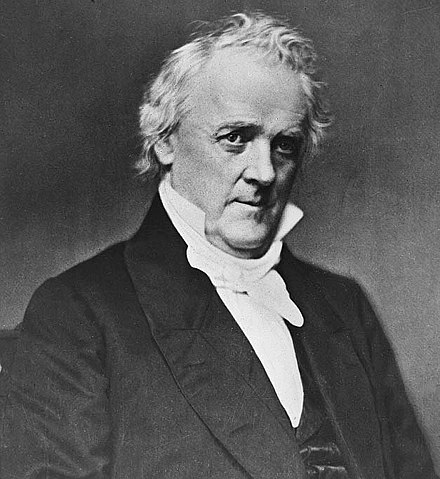
No longer this guy:

Three years ago I argued Buchanan was the worst president, here:
The worst ever president of the United States of America is… | Smart People I Know

But a lot has happened in three years, and I now agree with Tim Naftali who argues that: Trump Is the Worst President in History – The Atlantic.

He makes a strong case. Not only that, but we haven’t even begin to know all the bad things Trump has done.

There have been many bad presidents, from Harding to Johnson to Nixon. But Trump takes the “prize” for being the worst.

On Jacobin magazine – a marker

Occasionally I like to capture and post markers on things in this blog as a reminder for myself. I have this one on Peter Thiel. This post is on a tweet from a Jacobin magazine author that captures what I think of that publication.

It’s a good reminder of me that some people further to the left of the political spectrum will always focus their attacks not on the right but those in the center and not quite as left wing as them.

To improve society, you need governments to want to improve society


To improve society, you need governments to want to improve society. This seems obvious, unless you see government function as either wasting money or punishing the worst off in our society. But governments can function very effectively to improve society, and these two articles illustrate this:

  1. Trudeau’s Child Benefit Is Helping Drive Poverty to New Lows – Bloomberg
  2. Jobs, Houses and Cows: China’s Costly Drive to Erase Extreme Poverty – The New York Times

In both countries, poverty isn’t declining by magic or the invisible hand of capitalism. It’s being driven down by specific policies and programs with an aim to eliminate poverty.

A better world is possible. Progress is possible. We just need people and their governments to want it to become possible. Never believe that progress is impossible or an illusion.

(Chart above from here. The downward line is people living in extreme poverty, while the upward line is people not living in extreme poverty.)

On the ghosts of segregation

This is a link to a powerful essay on the remnants of segregation in the United States. You can see these remnants faintly in the essay’s photographs, like this one above. Off to the left is the entrance to the balcony where the “coloreds” had to go while the “whites” entered through the door on the right and sat separately on the main level closer to the stage. There are many such images in this essay.

It’s good that such images are captured. Soon enough these buildings will all be gone, and the remnants too. That’s why things like this essay are good, because they call our attention to and remind us of what occurred.

The essay is not just filled with moving images, but the words themselves are worth taking the time to take in. I hope you can find the time to take it in and linger over it.

On US Politics, Money, and the recent election

Money
American politics is about many things. One of the main things it is about is money.  For a while it was believed that after the “Citizen United” case, the flood of money  would almost guarantee whoever had the most money would win.  Now it’s not just about what money can do, but what it cannot do.

As some states like Maine and South Carolina showed, vastly outspending the incumbent will not guarantee election: The Democrats Went All Out Against Susan Collins. Rural Maine Grimaced. – The New York Times. That’s not to say money is irrelevant. It’s just that it has limits. It’s no longer enough to bombard people with ads bought with all that money. You need to spend smarter. I am not sure if anyone in the US has that figured out.

Speaking of money, this article by Jamelle Bouie highlights the importance of money especially when it comes to low information voters: Opinion | A Simple Theory of Why Trump Did Well – The New York Times. High information voters might scoff at “Donnie Dollars” (cheques issued by the government with Trump’s name on them). But I agree with Bouie: things like that make a difference with many voters. People might not closely weigh one politician’s promises versus another, but they all remember the jobs and services and other benefits that the incumbents brought their way.

(Photo by Matthew Lancaster on Unsplash)

On Mitch McConnell

Two good pieces on Mitch McConnell, here and here.

The first piece is analyzing if he is good at his job. The second piece has a snarky title but gets to the essence of McConnell.

I’d argue he is good at his job. He’s a strong parliamentarian who knows his caucus . He has a simple agenda and he strives to get it done. If you are a progressive, that stinks. But if you are a conservative,  it’s great.

People struggling to understand McConnell usually do so because they imagine him to be someone else. But he is simple to understand. How you feel about that is different.

A lesson in politics from Noam Chomsky

This whole interview with Chomsky is worth reading, regardless of your political leanings. Some of the things that struck me were:

On how the left should be:

Well, there is a traditional left position, which has been pretty much forgotten, unfortunately, but it’s the one I think we should adhere to. That’s the position that real politics is constant activism. It’s quite different from the establishment position, which says politics means focus, laser-like, on the quadrennial extravaganza, then go home and let your superiors take over.

The left position has always been: You’re working all the time, and every once in a while there’s an event called an election. This should take you away from real politics for 10 or 15 minutes. Then you go back to work….The left position is you rarely support anyone. You vote against the worst. You keep the pressure and activism going.

On Hume:

We can go back to my favorite philosopher, David Hume. His Of the First Principles of Government, a political tract in the late 18th century, starts off by saying that we should understand that power is in the hands of the governed. Those who are governed, they’re the ones who have the power. Whatever kind of state it is, militaristic or more democratic, as England was becoming. The masters rule only by consent. And if consent is withdrawn, they lose. Their rule is very fragile.

On the letter controversy:

But now segments of the left are picking up part of the same pathology. It’s harmful; they shouldn’t be doing it; it’s wrong in principle. It’s suicidal. It’s a gift to the far right. So here’s a quiet statement saying, “Look, we should be careful about these things and not undertake this.” Should’ve been the end. Then comes the reaction, which is extremely interesting….This criticism is much to the pleasure of the right wing, which hates these statements. So it’s another massive service to the right wing. … You want to play their game? Do it straight. Don’t pretend you’re on the left.

On how to participate in politics:

Well, we have no shortage of immediate ways of getting involved. But immediate changes are another story. There’s kind of an instant gratification culture. I worked for Bernie Sanders, he didn’t win. I’m going home. That’s not the way political change takes place. It takes place step by step, small changes to bigger ones, and so on.

On personality politics:

I’m not much interested in his (Joe Biden’s) personality. I don’t have any opinion. I’m interested in how things get done. And the way things get done is not by Biden having a religious conversion and saying, “Oh, we’ve got to really work on the climate.” That’s not what happened. The DNC probably hates the program, but they have no choice, because their popular base is not only demanding it, but is working constantly, hard, to force them to do it. That’s politics. Not the personality of leaders. I don’t know what’s in his mind. I don’t care, frankly.

On social media:

Social media, like most technologies, are pretty neutral. What matters is how you use them. You can use a hammer to build a house; you can use a hammer to smash somebody’s head in.

Social media are being used in very different ways. They’re used to organize activists, set up demonstrations, to give people the opportunity to interact, think, develop opinions, deliberate. But they can also be used to drive people into bubbles in which you hear only the same thing over and over. Your prejudices get reinforced, and you hate everybody else. They can be used either way. And they are being used both ways.

So the question comes back to us: How are we going to use the technology that’s available? It doesn’t care. We can use it any way we like. The net effect of social media probably, by and large, I suspect, has been mostly negative. Doesn’t have to be, but I think that’s the way it’s turned out.

On his legacy:

I don’t really think about a legacy. What I’m interested in is the people who are doing things. Mostly their names will never be known. I’m sure you can’t tell me, or I can’t tell you, the names of the kids who sat in at the lunch counter in Greensboro. These are the people who carry things forward. If there’s a legacy of people who try to do what they can to stimulate it, it’s theirs. The ones I most respect in the world, I can’t remember their names.

I don’t agree with all of Chomsky’s beliefs, but I do agree with his approach to politics. You can draw those lessons from the interview. I’ve extracted some of them, but it’s worthwhile to read the rest of it.

How would proportional representation have shaped the last Canadian election’s results?


Changing the way Canadians get to decide who forms the government federally has been a hot topic for some time. Before the last election, the government tried and failed to implement reform. There hasn’t been much talk about it recently, but it is a subject for debate that is not going to go away.

If you have an opinion about this one way or another, I recommend you review this: How would proportional representation have shaped this election’s results? | CBC/Radio-Canada.

The CBC ran the results of the last election through alternative forms of representation and analyzed the results. It is fascinating to see how representation changes, depending on the format followed. Kudos to the CBC for a superb visual representation.

I think reform is needed. I am still in favor of having a local MP and having the ability to have him or her voted out of office by the constituents of the MP’s riding. But I am also in favour of the percentage of each party’s MP aligning with the percentage of national votes that they received. Obviously I need to think about it some more.

In the meantime, take a look at what CBC has done, and decide for yourself.

(Image via Owen Farmer)

Discrimination in design can come in two forms


Discrimination in design comes in two forms. One is through direct action. When you see benches designed to prevent homeless people from sleeping on them, that’s one example. Many more examples can be found in this ProPublica piece: Discrimination by Design — ProPublica.

Ignorance is the second way discrimination can occur in design. Just this week Twitter rolled out an audio feature that is inaccessible for deaf people. No one at twitter set out to discriminate against deaf people. The designers at Twitter just didn’t take them into account. (Apparently Twitter doesn’t have an accessibility review team for their software updates, which is bad for a technology company as large as they are.)

Keep in mind both forms when you see something that seems designed to discriminate against certain people. It may be intentional, or it may be an omission. Either way, steps should be taken to eliminate that discrimination.

(More on twitter’s audio tweets, here.)